
Follow the Festivals

Christmas Market Tallinn

Christmas Market Tallinn

Tallinn, Estonia

2026-11-20 - 2027-01-06

The Story

Festival Overview

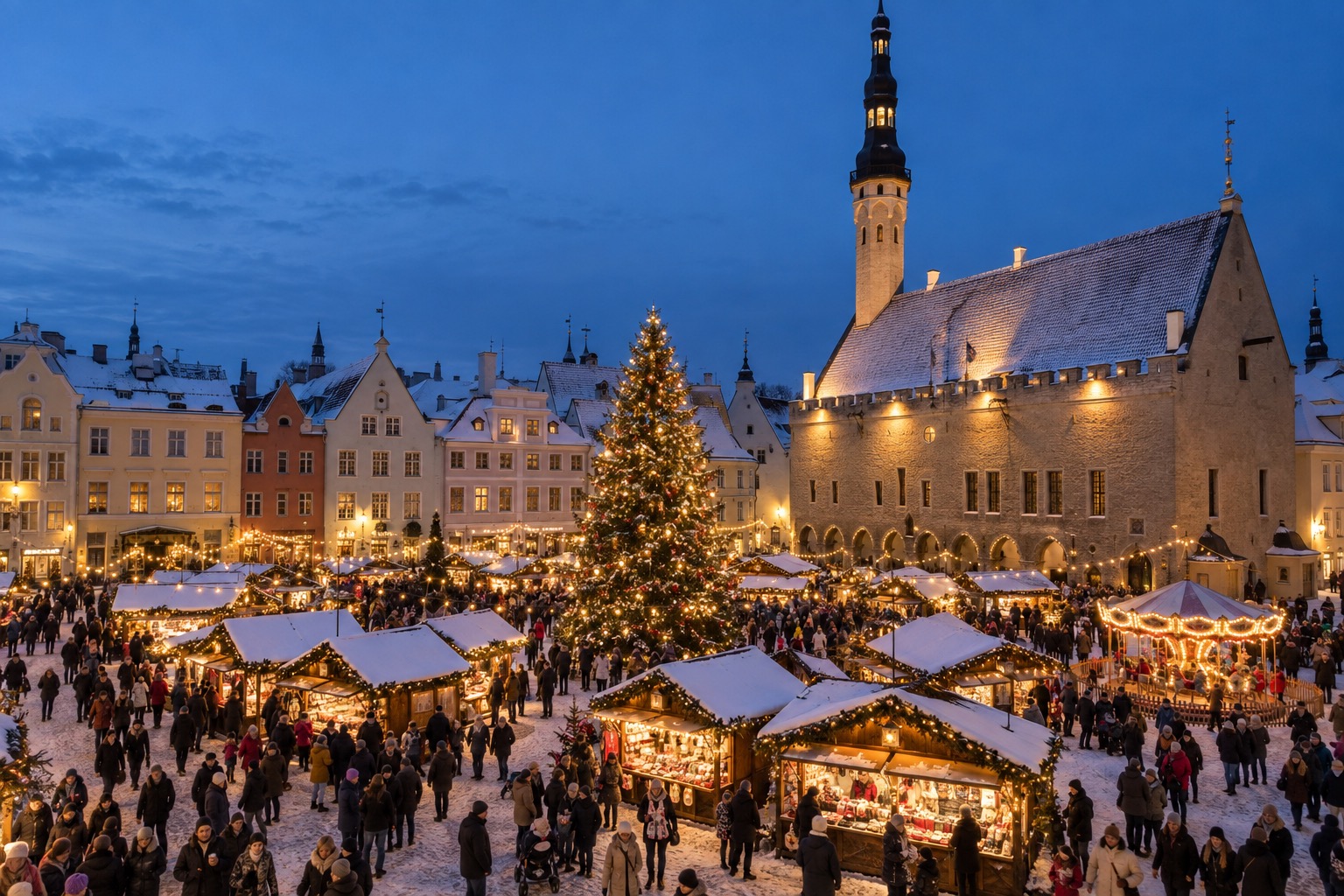
Tallinn in December is a northern city of short daylight, limestone walls, steep lanes, church towers, and snow or rain reflecting from cobbles after dark. Its Christmas market gathers around Town Hall Square, where a decorated tree, wooden stalls, food, craft, and performance sit inside one of Europe’s most coherent medieval settings.

The visual impression is immediate, but the experience gains depth through Estonian winter traditions, wool work, woodcraft, black bread, smoke-sauna culture, and a national history that extends far beyond picturesque Old Town facades. The central market is compact enough to understand in one evening; Tallinn deserves several days so Kalamaja, Kadriorg, museums, and neighborhood kitchens can prevent the trip from becoming a single postcard.

Why This Festival Is Special

European Christmas markets share many products and rituals, but Tallinn’s medieval square, early darkness, northern food, and Estonian cultural context create unusual coherence. The market is small enough for the architecture to remain dominant and for a traveler to return at several times of day without exhaustion.

The strongest reason to choose it is contrast: Gothic civic space and contemporary national identity, public Christmas tradition and post-Soviet history, fairy-tale light and a serious Baltic winter that refuses to behave like stage scenery.

Festival Experience

What to Expect

Morning is quiet enough to examine wool, ceramics, wood, candles, and food without constant crowd movement. By afternoon, school groups, visitors, and residents fill the square as hot-drink steam and grill smoke gather in cold air.

Darkness arrives early, intensifying the tree, stage lighting, and medieval facades. Choirs or folk performance periodically pull people toward one side of the square, while food queues block circulation elsewhere.

Expect cash and card variation, cup deposits, heavy clothing in narrow stalls, uneven ice, and products of mixed origin that reward questions about where and how they were made.

Festival Highlights

  • Medieval civic architecture enclosing an illuminated winter gathering in Town Hall Square
  • The central Christmas tree continuing a public tradition closely associated with Tallinn’s history
  • Estonian wool, wood, ceramic, and textile craft rewarding direct conversation with makers
  • Choirs and folk performance adding local language and sound to the visual spectacle
  • Black bread, sausages, sauerkraut, and hot berry drinks connecting the market to northern food culture
  • Early darkness giving the Old Town walls and towers a dramatic Baltic winter presence

Getting There & Around

Where It Happens

Town Hall Square in Tallinn’s Old Town forms the principal market, framed by the Gothic town hall, merchant houses, and lanes leading toward the city walls. Stalls, stage activity, the central tree, food, and gathering areas occupy a confined open space. Smaller seasonal events and decorated streets extend beyond it, while Kalamaja, Kadriorg, and the seafront supply the wider destination context.

Getting Around

Walking is the natural method inside the Old Town, but steep lanes, stairs, ice, and cobbles make short routes slow.

Use tram or bus for Kalamaja, Kadriorg, the airport, and neighborhoods beyond the walls, then return to foot travel near the square. Taxis have little advantage inside pedestrian areas and should use recognized applications for outer transfers.

Begin the market in daylight, group nearby churches and museums, and finish near the chosen hotel exit rather than crisscrossing the Old Town after several hot drinks. Traction devices and waterproof boots are more useful than relying on cleared pavement.

Visitor Guide

Festival Food & Drink

Estonian winter food favors rye, pork, cabbage, potato, forest berries, fish, and dairy, all suited to a cold square. Blood sausage with sauerkraut is a Christmas staple rather than a dare, while black bread carries a deeper everyday cultural identity. Mulled wine appears widely, but nonalcoholic hot berry drinks provide warmth without weakening footing on icy streets. Eat one market snack, then reserve a proper meal for elk or game, Baltic fish, mushroom dishes, or contemporary Estonian cooking away from the square. Ask whether pastries and preserves are locally made. Warm alcohol does not prevent hypothermia; water and indoor breaks remain essential.

Must Try

• Verivorst — Estonian blood sausage commonly served at Christmas with sauerkraut and potatoes.
• Leib — Dense fermented black rye bread central to everyday Estonian food culture.
• Mulgikapsad — Sauerkraut cooked with barley and pork into a substantial winter dish.
• Piparkoogid — Thin, crisp gingerbread cookies cut into festive shapes and decorated.
• Hot blackcurrant drink — Tart-sweet berry drink served warm as a useful nonalcoholic alternative.

Budget & Costs

Market access is public, while Old Town lodging, restaurant meals, craft, hot drinks, and winter clothing determine the cost.

Rotermann or Kalamaja may offer better hotel value with a short walk or tram. Set a craft budget and favor one locally made object over several generic decorations.

Use bakeries and lunch specials to balance an evening restaurant meal. Public transit is inexpensive compared with taxis.

Include traction aids, museum admission, and weather-flexible days. A cheaper room up a steep unmaintained lane may not be good value during ice.

Tips for First-Time Visitors

Visit the market before lunch once, when craft conversations are possible and the square’s architecture remains visible. Ask makers about material, region, and production instead of assuming every Nordic-looking object is Estonian.

Carry removable traction, warm mittens, a waterproof outer layer, and a phone battery kept inside clothing. Return deposit cups promptly and stand clear of narrow pedestrian routes while eating.

Churches remain sacred spaces despite seasonal concerts. Add the Estonian History Museum, Vabamu, or an art museum so the country’s identity is not reduced to medieval scenery.

Safety

Ice, cold, pickpocketing, and alcohol on steep streets are the practical concerns. Take short steps, use handrails, and avoid staring at a phone while moving over cobbles.

Keep valuables closed in dense evening crowds and retain control of hot drinks. Alcohol can obscure cold stress and should not precede a difficult walk.

Seek warmth for persistent numbness, confusion, or uncontrollable shivering. Stay within marked public areas near the walls after dark, and use recognized transport rather than an unlicensed curbside offer.

Cultural Significance

The market connects the Old Town’s historic role as a trading center with contemporary Estonian language, craft, food, and public celebration.

Tallinn’s claim to an early public Christmas tree gives the square symbolic prominence, but present meaning also comes from choirs, families, artisans, and the adaptation of winter traditions after periods of foreign rule and Soviet occupation. The event matters when it presents the city as culturally alive rather than frozen inside Hanseatic architecture.

Plan Your Journey

When to Go

Weekday late afternoons provide the best balance of illuminated atmosphere and manageable movement, while weekend evenings bring the fullest entertainment and greatest pressure on the square’s narrow exits.

Visit once in morning light to study craft and architecture, then return after dusk for the tree and music. December can bring snow, freezing rain, wind, or wet cold from the Baltic, with ice on steep cobbles.

Two nights allow contrasting market visits and an indoor museum day. Three or four nights make room for Kadriorg or Kalamaja without forcing outdoor sightseeing through the darkest and coldest hours.

Where to Stay

The Old Town provides immediate market access and unmatched early-morning atmosphere, but medieval buildings can have stairs, uneven heating, and late noise. Rotermann Quarter offers modern hotels, restaurants, and a short walk to the walls with smoother accessibility and less historic intimacy.

Kalamaja provides wooden-house neighborhoods, creative spaces, and local food west of the center, requiring a tram or longer winter walk. Kadriorg gives elegant calm near museums and parkland but sits farther from evening activity.

Choose reliable heating and footwear storage over a romantic room whose steep approach becomes hazardous in ice.

Bottom Line & Key Days

Bottom Line

Tallinn’s Christmas market is at its best before the square becomes only an image. Speak with a wool or wood maker in morning light, return for choir music after darkness settles over the town hall, and eat black bread or verivorst with an understanding of the northern table.

Then leave the walls for Kalamaja or Kadriorg, where contemporary Estonia complicates the postcard. The journey endures because Tallinn offers more than seasonal prettiness: a winter capital using craft, food, language, and historic public space to tell its own story in the dark.

Key Days

Old Town Orientation
Walk the walls, slopes, and square in daylight while identifying the safest route back to lodging.

Market Morning
Browse craft before crowds, ask about local production, and study the town hall architecture.

Illuminated Evening
Return for the tree and music, eat carefully, and leave before icy exits become congested.

Estonian Context
Use museums, Kalamaja, or Kadriorg to understand the country beyond medieval imagery.

Baltic Farewell
End with a quiet bakery breakfast or seafront walk before the next winter transfer.

Ready to Experience Christmas Market Tallinn?

You've explored what makes this festival special. Now it's time to plan your trip. Compare flights, book your hotel, arrange transportation, and take care of your travel essentials—all in one place.

✈ Find Flights

Loading booking widget...

Booking is completed on Expedia in a new tab.

🏨 Find Hotels

Search places to stay

Powered by Booking.com

Booking is completed on Booking.com in a new tab.

Rail & Bus Travel

Compare train and coach routes for the journey.

Compare Routes

Things to Do

Discover tours and attractions before or after the festival.

Explore Experiences

eSIM Mobile Data

Stay connected abroad without traditional roaming charges.

Get an Airalo eSIM

Travel bookings are provided by our trusted partners. We may earn a commission when you book through these links, at no additional cost to you.

Independent Editorial Standards

Every Follow the Festivals guide is independently researched and regularly reviewed using official festival information, destination resources, and trusted travel references. We also welcome verified updates from festival organizers, destination marketing organizations, tourism partners, and local experts to help keep our guides accurate, current, and useful for travelers.

Represent this festival or have a verified update to share? We'd love to hear from you through our contact page.