
Follow the Festivals

Cambodian Water Festival

Cambodian Water Festival

Phnom Penh, Cambodia

2027-11-23 - 2027-11-25

The Story

Festival Overview

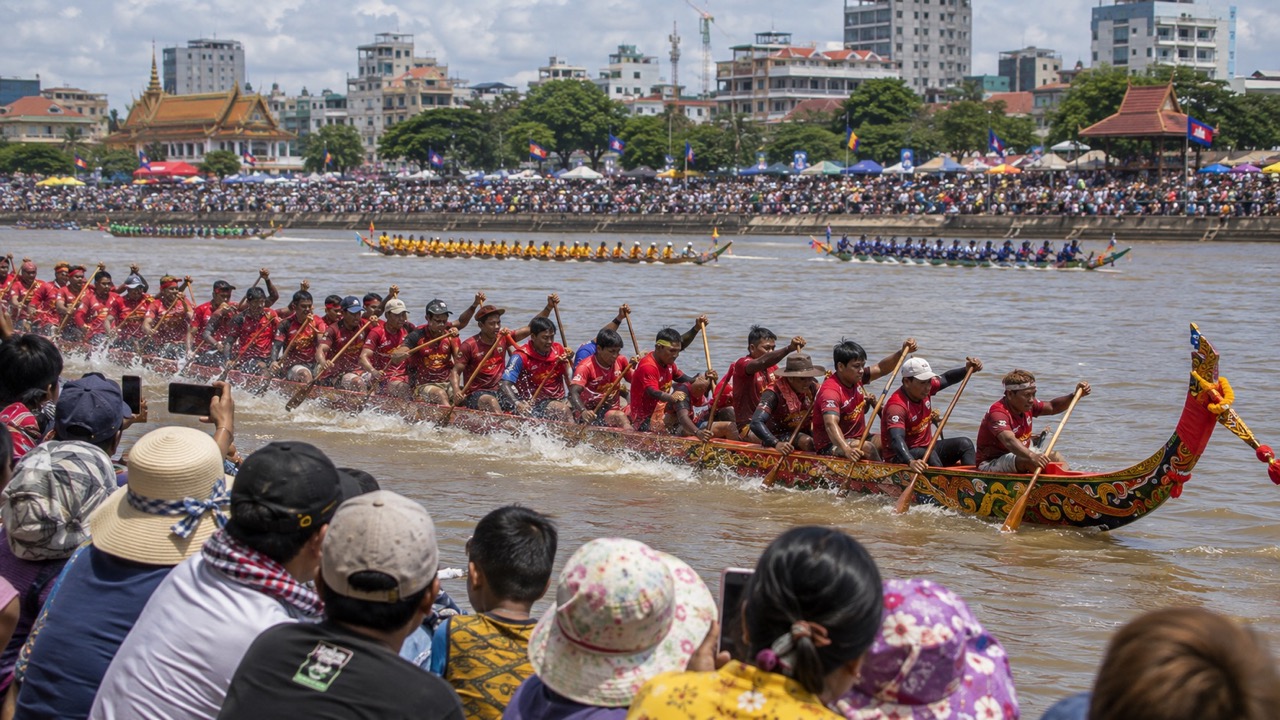
Before the first race, a long boat must be lowered into the river.

Its hull may carry the name and pride of a community far beyond Phnom Penh. Rowers settle into narrow positions, paddles rise and the boat moves only when many bodies accept the same rhythm.

Bon Om Touk, commonly known in English as the Cambodian Water Festival, is a three-day Water and Moon Festival observed across Cambodia. Its largest public celebration is traditionally held along the Phnom Penh riverfront, where boat races, illuminated vessels, fireworks and enormous crowds mark the end of the rainy season and the changing flow of the Tonlé Sap River.

During the monsoon, the rising Mekong forces water northwest through the Tonlé Sap River and into Tonlé Sap Lake, expanding one of Southeast Asia’s most important freshwater systems. When the Mekong falls, the river changes direction again and water begins draining from the lake toward Phnom Penh.

That movement shapes fishing, farming, transportation and daily life across Cambodia. Bon Om Touk turns the seasonal change into public time.

By day, racing boats bring provincial communities onto the water before the Royal Palace. At night, illuminated vessels move along the river while families observe the full moon and share ambok, rice that has been roasted and pounded flat.

In Cambodia, the river is not simply part of the landscape.

It is a calendar the country can watch move.

Why This Festival Is Special

The Tonlé Sap River performs something extraordinary without spectacle.

For part of the year, it carries the force of the swollen Mekong toward Tonlé Sap Lake. Later, as the Mekong subsides, the current turns and the lake begins releasing water again.

Cambodian life has learned to read that movement.

The expanding lake creates flooded habitats essential to fish, agriculture and communities across the Tonlé Sap basin. Its seasonal retreat changes what can be caught, cultivated, reached and carried. Bon Om Touk recognizes that the year has entered another phase.

The racing boats translate this relationship into human movement. One rower cannot force a longboat toward victory. Strength becomes useful only after it has accepted timing, coordination and the pace of everyone else aboard.

The crews arrive with communities behind them. Their boats bring provinces, pagodas, villages and local loyalties into the capital, allowing Phnom Penh to gather a country whose relationship with water extends far beyond the city.

The river changes direction.

Thousands of paddles agree upon one.

Festival Experience

What to Expect

Phnom Penh changes dramatically during Bon Om Touk.

Visitors arrive from across Cambodia to support community boat teams, join family celebrations and spend several days beside the water. Roads near the central riverfront close or become heavily restricted, while Sisowath Quay and the streets surrounding the Royal Palace fill with spectators, vendors and people moving between races and evening ceremonies.

The longboat races dominate the daylight hours. Crews paddle in tight synchronization along a course visible from designated parts of the riverfront. Individual races may pass quickly, but the complete programme unfolds over many hours.

The river changes after dark. Illuminated boats, often associated with public institutions, move across the water carrying large designs made from light. Fireworks and concerts may add to the public celebration, while moon observances and the sharing of ambok take place within families and communities.

Bon Om Touk is not a water-fight festival. Visitors do not attend to throw water at strangers.

The national holiday and the principal Phnom Penh programme must also be distinguished. Cambodia may continue observing Bon Om Touk even when major boat races or public events in the capital are altered or suspended.

Confirm the Phnom Penh programme before building a journey around the riverfront.

Festival Highlights

  • – The arrival of the racing boats reveals the national scale of Bon Om Touk. Long hulls reach Phnom Penh carrying crews whose preparation began in communities far from the capital. Look for the names and colors that identify each boat before reducing the day to winners and losers.
  • – The races depend upon synchronization. Watch the paddles rather than following only the bow. A crew gains speed when dozens of movements become nearly indistinguishable, while a small break in rhythm travels visibly through the boat.
  • – The Royal Palace riverfront provides the ceremonial center of the Phnom Penh programme. It also attracts the greatest crowd pressure. Choose one authorized viewing area and remain long enough to understand the race sequence rather than continually pushing through spectators for a different angle.
  • – Loy Pratip, the procession of illuminated boats, transforms the water after dark. Large designs made from light pass across a river that carried racing crews during the day. The pace slows, allowing the river itself to return to view.
  • – Sampeah Preah Khae, the salutation to the moon, connects the festival with gratitude, harvest and the lunar calendar. Public visitors may see only part of this observance. Family and religious practices should not be treated as staged attractions or entered without invitation.
  • – Auk Ambok centers upon the eating of ambok. Rice is roasted in its husk, pounded flat and mixed or served with ingredients such as banana and coconut. The food carries the harvest and moon observance into a form that can be shared.
  • – The final races reveal what several days have required. Crews who appeared effortless at the beginning now carry visible fatigue, while supporters wait for one more passage along the water. Victory belongs to a particular boat; the river has received them all.

Getting There & Around

Where It Happens

Bon Om Touk is observed throughout Cambodia, but Phnom Penh traditionally hosts its largest public programme.

The principal boat races take place along the riverfront near the Royal Palace, where the Tonlé Sap River approaches its meeting with the Mekong and Bassac. Sisowath Quay becomes the main spectator corridor.

The location gives the festival national meaning. Boats arriving from provincial communities race before the capital while the river carries water shaped by a much larger system extending toward Tonlé Sap Lake and the Mekong basin.

Illuminated boats and fireworks are generally viewed from the riverfront after dark, although exact staging and controlled areas can change.

Road closures may extend well beyond Sisowath Quay. The apparent distance between a hotel, restaurant and viewing area can become misleading once barriers and crowd routes are established.

Provincial celebrations may include their own races and community gatherings. They should not be presented as smaller copies of Phnom Penh. Their relationship with local waterways and participating communities can be more immediate than the capital spectacle.

Confirm where the public programme will occur.

The national festival is enduring; its largest stage is operational.

Getting Around

Walking becomes the principal form of movement near the Phnom Penh riverfront.

Tuk-tuks, taxis and ride services may approach the closure zone but cannot be expected to reach Sisowath Quay. Arrange a drop-off beyond the crowd and complete the final distance on foot.

Identify authorized crossings and exits before settling into a viewing area. A route that appears direct on a map may pass through controlled ceremonial space or a crowd corridor that cannot be crossed.

Avoid continually moving along the river in search of a perfect view. The crowd becomes denser around recognizable landmarks, while race boats pass too quickly for repeated relocation to improve the experience.

After dark, walk away from the most compressed streets before requesting transportation. Mobile service and driver availability may weaken when large numbers of people leave together.

River cruises and private boats should be used only when officially authorized for festival operation. The racing course and ceremonial water space are not open navigation simply because a vessel can enter the river.

Phnom Penh usually moves through traffic.

During Bon Om Touk, the river decides where much of the city stops.

Visitor Guide

Festival Food & Drink

Bon Om Touk carries the changing season into a bowl of rice.

Ambok begins as newly harvested rice. It is roasted in its husk, pounded flat and shared during the moon observance, often with banana and coconut. Its importance does not come from rarity. It comes from placing harvest, gratitude and family participation into the same food.

The river shapes the wider meal. Fish from Cambodia’s freshwater systems enter soups, grilled preparations, fermented condiments and everyday dishes whose presence extends far beyond the festival. Water is not scenery beside the table. It helped determine what reached it.

Phnom Penh adds its own morning rhythm. Rice with grilled pork appears early. Noodle soup arrives with herbs, lime and condiments adjusted by the person eating it. Market stalls serve workers, families and visitors before the riverfront becomes difficult to cross.

Eat away from the densest crowd when possible. A seated meal provides shade, water and enough quiet to notice whether heat or fatigue is changing the day. Food carried through a compressed riverfront crowd quickly becomes another object that must be protected.

Choose busy vendors cooking food thoroughly, particularly when buying meat or fish. Drink sealed or properly treated water and remain cautious with ice when its source is uncertain.

#### Must Try

– **Ambok** — Rice roasted in its husk and pounded flat, traditionally shared during the moon observance with banana, coconut or other accompaniments.

– **Bai sach chrouk** — Grilled pork served over rice, often accompanied by pickled vegetables and light broth.

– **Kuy teav** — Rice-noodle soup commonly eaten in the morning with pork, beef or seafood and fresh garnishes.

– **Nom banh chok** — Khmer rice noodles served with a fragrant fish-based curry gravy, herbs and vegetables.

– **Fish amok** — Fish cooked with coconut milk, aromatics and kroeung spice paste, often steamed until softly set.

– **Grilled freshwater fish** — A direct expression of Cambodia’s relationship with its rivers and lake system.

– **Num ansom** — Sticky-rice cakes wrapped in banana leaves, prepared with sweet or savory fillings.

The racing boats leave the water at the end of the day.

The fish and rice remain on Phnom Penh’s tables.

Budget & Costs

The principal public boat races and much of the riverfront celebration are generally free to watch.

Accommodation creates the largest festival premium, particularly near Sisowath Quay and the Royal Palace. River-facing rooms can become expensive and should be booked only after confirming cancellation terms and the actual view.

Food, tuk-tuks and ordinary city travel can remain affordable, but prices and availability may change near the most concentrated crowds.

Reserved pavilions or controlled viewing areas may operate under separate access arrangements. Do not assume that every grandstand or ceremonial zone is open to the public.

Travelers visiting provincial celebrations need to account for road transport, local accommodation and the possibility that schedules will be communicated less formally than in Phnom Penh.

A moderate budget can provide a complete experience. Spend for a safe base, reliable transportation and enough time to remain beyond the busiest hours without rushing.

The riverfront does not require a premium view to reveal what is happening.

It requires patience.

Tips for First-Time Visitors

Confirm the Phnom Penh boat races independently from the national holiday. A calendar entry for Bon Om Touk does not guarantee that every large public event will proceed.

Choose one daytime viewing area and one evening plan. Trying to follow the boats along the riverfront adds exhaustion without producing a fuller understanding.

Arrive before the riverfront reaches its greatest density. Use the early hours to identify exits, drinking water, medical assistance and the walking route back to the accommodation.

Carry only what can remain secure against the body. Large bags, tripods and open food containers become difficult in dense crowds.

Learn the difference between the boat races, illuminated vessels, moon salutation and ambok observance. They belong to one festival without performing the same cultural function.

Ask before photographing rowers at rest, religious activity or families observing the moon. Public visibility does not remove personal boundaries.

Do not enter boats, team areas, pagodas or family gatherings without invitation.

Watch the river between races.

It is the only participant present through every part of the festival.

Safety

Crowd movement is the most serious consideration.

Phnom Penh’s Water Festival carries the memory of the fatal Koh Pich crowd disaster in 2010. Visitors should treat bridges, narrow exits, barriers and sudden changes in pedestrian flow with particular caution.

Avoid compressed areas from which movement in more than one direction is impossible. Leave before discomfort becomes panic, and never move against instructions from police or festival officials.

Establish a meeting point with companions outside the densest riverfront area. Mobile service may become unreliable, and separated visitors may be unable to cross the crowd.

Heat and humidity remain significant during daylight. Carry water, use sun protection and take seated breaks away from exposed viewing areas.

Remain behind barriers and away from unprotected river edges. Do not enter the racing course, climb structures or board unauthorized vessels.

Keep money and phones secured. Carry minimal valuables and use transportation booked through recognized services.

Follow official announcements closely. Weather, water conditions, security decisions or national circumstances can alter or suspend the public programme.

The safest viewing place is one that still allows a clear way out.

Cultural Significance

Bon Om Touk recognizes a hydrological system upon which Cambodian life has long depended.

When monsoon-swollen Mekong waters push into Tonlé Sap Lake, the lake expands across forests and floodplains. These habitats support fish reproduction, agriculture and livelihoods throughout the region. When the water retreats, another season of movement, fishing and cultivation begins.

The festival therefore carries ecological knowledge into public culture. The river’s reversal is not presented as an abstract scientific curiosity. It is understood through boats, food, moonlight, harvest and the gathering of communities.

Historical explanations also connect the boat races with Cambodia’s naval traditions. Bas-reliefs at sites including Bayon and Banteay Chhmar depict waterborne conflict and long vessels, giving the contemporary races a visual relationship with the Angkorian past.

No single explanation needs to displace the others. Bon Om Touk can carry gratitude for water, changing season, agricultural hope, religious observance, historical memory and community competition at the same time.

The racing crews demonstrate how that continuity survives.

A wooden boat moves because knowledge has passed between generations: how to build it, balance it, call the rhythm and persuade many paddles to enter the water together.

Plan Your Journey

When to Go

Bon Om Touk follows the Khmer lunar calendar and is observed around the full moon of Kadeuk, usually in October or November.

The exact dates change each year. Confirm them through Cambodia’s official holiday calendar, then verify whether the principal Phnom Penh boat races and riverfront programme will proceed.

Arrive two days before the festival if possible. The city becomes increasingly congested as teams and spectators gather, and reaching a riverfront hotel can become difficult once road controls begin.

The first festival day introduces the racing rhythm before the largest evening crowds have fully formed. The full-moon observances and illuminated boats give the nights a different character, while the final races carry the accumulated attention of crews that have progressed through the competition.

Remain for the morning after the public programme. The riverfront slowly returns to ordinary movement as barriers are removed, vendors pack away and visiting communities begin leaving Phnom Penh.

The water continues moving long after the calendar declares the festival complete.

Where to Stay

Daun Penh and the riverside place visitors closest to the boat races, Royal Palace and evening activity. That proximity also brings intense crowds, street closures, noise and difficult vehicle access.

A river-facing room should never be assumed from a hotel name or map. Confirm the actual room position, balcony access and whether festival structures may obstruct the view. A private balcony can reduce time in dense crowds, but it should not be treated as guaranteed access to every ceremony.

Boeung Keng Kang offers restaurants, cafés and greater separation from the riverfront. The area suits visitors who want a quieter night while accepting that the final approach may need to be walked.

Tonlé Bassac provides another central base with dining and access to several parts of Phnom Penh. Transport still becomes complicated near closed streets, particularly after evening events.

Tuol Kork and more distant neighborhoods can offer quieter accommodation, but journeys toward the riverfront take longer and may be affected by congestion well beyond the visible festival area.

Ask the hotel how guests enter during road closures and whether the front desk remains reachable by vehicle. The best location is not always the one nearest the river.

It is the one from which the river can be reached and left safely.

Bottom Line & Key Days

Bottom Line

Before Bon Om Touk reaches Phnom Penh, the river has already changed.

Water that entered Tonlé Sap Lake during the rains begins moving outward. Communities respond by preparing boats, gathering rowers and carrying local names toward the capital.

For three days, paddles enter the water together. Illuminated vessels replace racing crews after dark. Families look toward the full moon and share rice altered by fire, pounding and patient hands.

Then the boats leave.

The barriers come down along Sisowath Quay. Visiting crews begin their journeys home, and ordinary traffic returns to streets that had belonged to the river.

Beside the capital, the current continues carrying the season forward.

Key Days

The opening day brings the first racing crews onto the Phnom Penh course. It is the best time to learn how boats are identified, how races begin and where supporters gather.

The middle day allows the competition to deepen. Crews return with greater familiarity while the city receives more visitors and the riverfront grows increasingly crowded.

The full-moon night carries Sampeah Preah Khae, the salutation to the moon, and Auk Ambok, the sharing of flattened rice. These observances extend beyond the public spectacle and may occur within families, temples and communities.

Loy Pratip fills the river with illuminated boats after dark. Its slower movement contrasts with the daylight racing and changes how the water is seen.

The final racing day carries decisive contests, accumulated fatigue and the strongest attention from supporters who have traveled with their teams.

The morning afterward belongs to departure. Boats, crews and families begin moving back toward the provinces whose names they carried through the capital.

Ready to Experience Cambodian Water Festival?

You've explored what makes this festival special. Now it's time to plan your trip. Compare flights, book your hotel, arrange transportation, and take care of your travel essentials—all in one place.

✈ Find Flights

Loading booking widget...

Booking is completed on Expedia in a new tab.

🏨 Find Hotels

Search places to stay

Powered by Booking.com

Booking is completed on Booking.com in a new tab.

Rail & Bus Travel

Compare train and coach routes for the journey.

Compare Routes

Things to Do

Discover tours and attractions before or after the festival.

Explore Experiences

eSIM Mobile Data

Stay connected abroad without traditional roaming charges.

Get an Airalo eSIM

Travel bookings are provided by our trusted partners. We may earn a commission when you book through these links, at no additional cost to you.

Independent Editorial Standards

Every Follow the Festivals guide is independently researched and regularly reviewed using official festival information, destination resources, and trusted travel references. We also welcome verified updates from festival organizers, destination marketing organizations, tourism partners, and local experts to help keep our guides accurate, current, and useful for travelers.

Represent this festival or have a verified update to share? We'd love to hear from you through our contact page.

Photo Credits