
Follow the Festivals

Annecy International Animation Film Festival

Annecy International Animation Film Festival

Annecy, France

2027-06-13 - 2027-06-19

The Story

Festival Overview

A pencil line crosses a sheet of paper.

Another follows it, almost identical but not quite. Between them, a hand has changed the angle of a shoulder, lifted one foot or moved an expression closer to a smile. When the drawings begin passing quickly before the eye, the figure moves.

During the Annecy International Animation Film Festival, that movement escapes the studio.

The festival is a major international celebration of animation held each summer in Annecy, France. Competitive screenings, premieres, short films, feature films, student work, commissioned productions, immersive experiences, masterclasses and works in progress bring filmmakers and audiences together across the city. Mifa, the festival’s professional market, runs alongside the public programme and gathers studios, distributors, recruiters, students and other members of the animation industry.

Inside cinemas, films reveal how widely animation can speak. A morning of experimental shorts may be followed by a family feature, an unfinished production, a conversation with a director or work created for television, advertising and digital platforms.

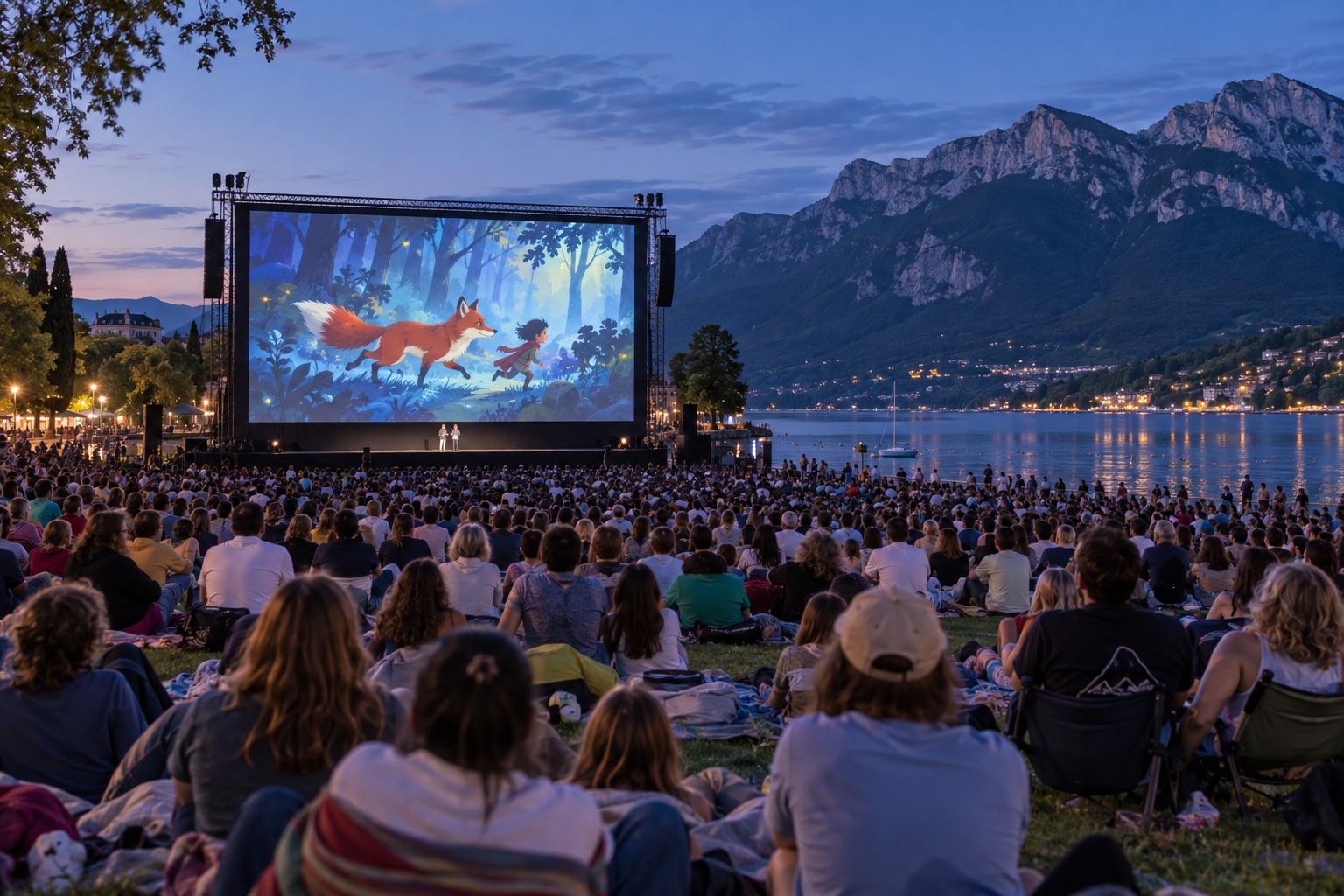
Outside, Annecy continues the movement. Artists fill café tables with sketchbooks. Industry conversations travel along the lakeshore. Audiences cross the old town between screenings, and animated films appear after dark on a giant outdoor screen at Le Pâquier.

The first image moves because someone drew the next one.

By the end of the festival, an entire city is carrying it forward.

Why This Festival Is Special

Animation is usually encountered after most of its labor has disappeared.

The audience sees movement, not the hundreds or thousands of decisions required to create it. Annecy returns those decisions to view. A finished film may be followed by a director describing an abandoned approach, an animator demonstrating a character’s movement or a production team revealing how sound changed a scene.

Different techniques occupy the same programme. Hand-drawn work, stop-motion, computer animation, cut paper, paint, puppetry and experimental forms demonstrate that animation is not one visual language. It is a way of creating motion from materials that began by remaining still.

Annecy allows those discoveries to continue outside the cinema. Students compare drawings beside the canal. Professionals identify possible collaborators over lunch. Families gather for an outdoor film, while artists who may have spent years constructing its images watch those images become public.

The city strengthens that transition. Cinemas, cultural venues, the old town and Le Pâquier are connected by streets that invite walking. The festival does not remain isolated behind one controlled entrance.

An image appears in one room.

Then it begins moving through Annecy.

Festival Experience

What to Expect

Annecy becomes intensely animated in both senses of the word.

Festival banners appear across the city. Cinema queues form early. Conversations about storyboards, sound design and visual styles continue through restaurants, public squares and lakeside paths. Professionals carrying badges move among families, students, devoted animation audiences and travelers attending a single public screening.

The programme is large enough to require selection. Competitive short-film collections, features, premieres, retrospectives, masterclasses, making-of sessions and works in progress frequently overlap. No visitor can attend everything, and access conditions differ among events.

Accreditation provides the broadest festival experience but does not guarantee entry to every screening. Many indoor events require advance reservations, and badgeholders may need to arrive well before the scheduled start to retain priority. Popular screenings can fill quickly.

Travelers without accreditation still have legitimate ways to participate. Designated public screenings sell individual tickets at participating cinemas, exhibitions and public activities extend beyond the theatres, and the free open-air programme at Le Pâquier creates one of the festival’s most inclusive experiences.

Mifa is different. It is a professional market rather than a public attraction, and many of its pitches, recruitment sessions and business events require the appropriate credentials. A general visitor should not plan a trip around access that has not been granted.

Days stretch from morning screenings into late-night films and outdoor gatherings. Build pauses into the schedule. Several hours spent watching screens can make Annecy’s lake, canals and mountain air feel less like scenery than necessary restoration.

Festival Highlights

  • Attend at least one competitive short-film programme. Several films arrive together without asking the audience to commit to a single style, country or narrative length. The sequence may move from comedy to abstraction, hand-drawn intimacy to technical experimentation, allowing animation’s range to emerge more clearly than it can through one feature.
  • Choose one feature because its technique or country of origin is unfamiliar rather than because its characters are already recognizable. Annecy’s international selection makes it possible to encounter visual traditions and storytelling choices that rarely receive broad theatrical distribution. Read the language and subtitle information before reserving.
  • A work-in-progress or making-of session reveals decisions that a finished film conceals. Storyboards, test animation, rejected designs and unfinished sound allow visitors to see creation before every uncertainty has been removed. Access may depend on accreditation and reservations, so identify these sessions early rather than assuming a seat will remain available.
  • A masterclass or filmmaker conversation provides a different kind of encounter. The strongest sessions move beyond promotion and allow artists to discuss timing, failure, collaboration and the long distance between an idea and a completed sequence. Choose one participant whose work is known and another whose process is the attraction.
  • Spend time with exhibitions, signings and public installations around Annecy. These activities make the festival valuable even between screenings and can provide access to artists without pretending that private industry events are open to everyone. Confirm operating hours; an exhibition may close before the evening cinema programme begins.
  • The nightly open-air screening at Le Pâquier is the festival’s great public gathering. Arrive while daylight remains, bring something suitable for sitting on the grass and protect a clear view without crowding others. The atmosphere matters as much as the selected film: thousands of people face the same screen while Lake Annecy and the mountains gradually disappear into darkness.
  • Enter a late-night or stylistically challenging programme only after checking its content guidance. Animation is a medium, not an age classification, and some screenings include violence, sexuality, disturbing imagery or intense sound. The same festival that welcomes families also creates serious work intended entirely for adults.

Getting There & Around

Where It Happens

The festival occupies Annecy rather than a single enclosed site.

Bonlieu, near the lake and old town, serves as an important festival center. Cinemas and auditoriums elsewhere in Annecy and neighboring districts host different parts of the programme, while exhibitions, public meetings and temporary activities appear across the city.

Pathé Annecy provides public and festival screenings near the center. Other participating cinemas may include venues in Seynod and additional parts of greater Annecy. Their distance matters. A screening that begins soon after another ends may be impossible to reach even when both appear beneath the same festival heading.

Mifa traditionally concentrates much of its professional activity around the Impérial Palace and associated facilities beside the lake. Access is controlled by accreditation type. Travelers should admire the setting without treating the professional market as an attraction they can enter informally.

Le Pâquier is the great public room. This broad lawn lies between central Annecy and the lake, with mountains rising beyond the water. During the festival, a giant screen turns the open landscape into an outdoor cinema.

The old town provides the connective tissue. Arcaded streets, canals, bridges, restaurants and public squares absorb the movement between formal venues. It can become crowded, but it keeps the festival in contact with ordinary city life.

Lake Annecy never becomes part of the screen.

It changes how every image is remembered.

Getting Around

Annecy’s central festival area is highly walkable, but the complete programme is geographically wider than the historic center.

Begin by marking every reserved screening on a map. Group events by venue when possible. Crossing central Annecy is pleasant; repeatedly traveling between the center, Seynod and more distant sites wastes the attention the festival demands.

Local buses connect the principal districts and lakeside communities. Festival transport may supplement those services for eligible participants, but routes, access requirements and operating times should be confirmed close to arrival.

A bicycle can make travel between some venues faster, provided secure parking is available and the route is understood. Crowded pedestrian areas near the old town and Le Pâquier require patience. Walk the bicycle when conditions demand it.

Annecy station connects the city with the French rail network. Geneva Airport is a common international gateway, followed by a coach, shuttle or private transfer. Border crossings and road congestion make generous arrival time essential.

Driving into central Annecy during the festival creates more problems than it solves. Parking is limited, traffic builds around the lake and a car offers little advantage between central venues. Leave it at the accommodation or use a peripheral parking strategy.

Screening queues belong inside the movement plan. Reaching the theatre at the scheduled start is not sufficient. Badgeholders may lose reservation priority if they arrive too late, while public ticket buyers may need time for on-site sales.

The distance between two venues is measured from the end of one queue to the beginning of the next.

Visitor Guide

Festival Food & Drink

Annecy eats between frames.

Bakery counters fill early with travelers collecting something portable before a morning screening. Café tables turn over between programmes. Lunch contracts into the space between two reservations, while dinner may not begin until the last indoor film releases its audience into the old town.

The city rewards anyone willing to protect one proper meal each day. Savoyard cooking was shaped for Alpine appetites rather than cinema schedules: cheese, potatoes, cured meats and generous baked dishes require time. Save the richest meal for an evening without another immediate screening.

Lake fish provides a quieter expression of the destination. Depending on season and supply, restaurants may serve perch, Arctic char or other freshwater fish with restrained preparations that keep the lake present on the plate.

The old town contains many restaurants within easy reach of the festival, but convenience creates queues. Walk a few streets beyond the busiest canals or reserve dinner when the day’s schedule is known. A market lunch or bakery picnic can protect both time and budget.

Le Pâquier invites an evening picnic before the outdoor film. Bring food that can be eaten cleanly on the grass, carry reusable water and remove everything afterward. The gathering works because thousands of individual picnics do not permanently occupy the public lawn.

**Must Try**

• **Tartiflette:** Potatoes baked with reblochon, onions and lardons, suited to a cool evening without another urgent engagement.

• **Raclette:** Melted cheese served over potatoes with pickles and cured meats, best treated as a complete meal rather than a hurried festival snack.

• **Diots:** Savoyard sausages often cooked with onions and white wine.

• **Freshwater fish:** A lighter connection to Lake Annecy when local and responsibly sourced options are available.

• **Croûte savoyarde:** Bread baked with cheese and wine, sometimes accompanied by ham or mushrooms.

• **Local cheese:** Reblochon, tomme de Savoie and other regional cheeses gathered from a market or specialist shop.

• **Bakery breakfast:** Bread, viennoiserie and coffee before the first screening queue forms.

• **Lakeside picnic:** Market produce, cheese, fruit and bread eaten on Le Pâquier before the open-air programme.

The lights fall inside the cinema.

Outside, someone is already unfolding a blanket for dinner.

Budget & Costs

Accommodation is the greatest cost driver.

Central rooms provide valuable walking access but become scarce early. Booking before the full programme appears can save substantially, especially when the reservation allows changes. Staying farther from the center may reduce the nightly rate, but transport time and eligibility for festival shuttles must be considered.

Accreditation makes sense when several days will be built around festival screenings and events. A traveler attending only a few films may spend less through individual public tickets and free programming. Compare access, not just price: the cheapest credential has little value if it excludes the intended sessions.

Travel through Geneva can be efficient for international visitors, but transfers add cost. Rail through France may take longer while connecting more naturally with a broader itinerary. Book the complete route rather than assuming the short geographic distance from Geneva guarantees a simple arrival.

Meals near the busiest venues carry a convenience premium. Bakery breakfasts, market provisions and a picnic before the outdoor screening can balance one deliberate Savoyard dinner.

Allow for a larger incidental budget than at a conventional cinema trip. Books, prints, festival merchandise and artist signings can become meaningful expenses for animation enthusiasts.

The most valuable savings come from early accommodation, the correct access category and a schedule that avoids crossing the city unnecessarily.

A missed reservation cannot be made cheaper after the door closes.

Tips for First-Time Visitors

Decide which kind of access you need before buying travel. Accreditation suits visitors planning an intensive week of screenings and festival events. Individual public tickets and free programming can support a shorter, less expensive visit without creating false expectations about professional access.

Learn the reservation system as soon as accreditation becomes active. Popular screenings fill quickly, but cancellations can return seats. Check the current rules rather than relying on previous procedures.

Build each day around two or three priorities. Fill the surrounding hours only after those essential screenings have been protected. A schedule containing every available slot leaves no room for queues, food, delays or discoveries.

Arrive early. A reservation may cease to guarantee priority shortly before the screening begins, and unreserved badgeholders are admitted only when capacity remains.

Do not carry bulky luggage between venues. Large bags and potentially dangerous objects may be prohibited, while security checks slow entry. Store luggage before collecting a badge or joining a cinema queue.

Check the audience guidance for every child attending. Brightly colored animation is not automatically suitable for young viewers, and late-night or experimental programmes may be created specifically for adults.

Keep a light layer and rain protection available for Le Pâquier. A warm afternoon can become cool beside the lake, and outdoor screenings may be disrupted by dangerous weather.

Leave one film unresearched.

Sit down before knowing exactly what kind of movement will begin.

Safety

Summer sun reflects from the lake and accumulates during queues on exposed pavement or grass. Carry water, use sunscreen and seek shade between screenings.

Thunderstorms and strong winds can affect outdoor programming. Follow official warnings and leave Le Pâquier when instructed. An outdoor film should never take priority over a weather alert.

Crowded pedestrian routes require attention, particularly near the old town, festival entrances and lakeside cycle paths. Keep bicycles at walking speed when mixing with dense foot traffic.

Cinema content varies widely. Review age and content guidance before bringing children or viewers sensitive to flashing images, intense sound or disturbing material.

Long screening days produce fatigue, headaches and eye strain. Eat properly, hydrate and spend time outside before returning to another dark room.

Keep accreditation, identification and valuables secured. A lost badge can disrupt reservations and access far beyond the inconvenience of losing an ordinary ticket.

Do not bring oversized bags, glass bottles, knives or other prohibited objects to venues. Security restrictions may also cover helmets, scooters and skateboards. Use approved storage rather than arguing at the entrance.

Swimming in Lake Annecy should occur only in designated areas and under local conditions. Do not enter the water after drinking, during storms or simply because a screening ended beside the shore.

Cultural Significance

Annecy has helped animation speak about itself as an art, craft and international industry.

The festival brings together work created for cinemas, television, advertising, digital platforms, games, immersive environments and forms that resist simple classification. Student films share the wider programme with established studios. Independent artists enter conversations that also include global production companies.

Mifa reveals animation as a field of employment, financing, distribution and technological change. The public festival reveals what those systems ultimately produce: images offered to an audience.

That relationship can be uncomfortable as well as productive. Commercial ambition, artistic experimentation, new technology and human labor occupy the same week. Questions about authorship, working conditions and the tools used to make images do not disappear beneath celebration.

The international programme allows animation to move across languages with unusual freedom. Dialogue still matters, but gesture, color, rhythm and visual composition can communicate before every word is translated.

Annecy gives that exchange a public landscape. The work leaves professional meetings and controlled cinemas through exhibitions, conversations and outdoor screenings.

A film may have been created by hundreds of people across several countries.

For one night, they all face the same lawn.

Plan Your Journey

When to Go

The festival takes place during early summer, when Annecy’s long evenings support a full programme of indoor screenings and outdoor activity.

Arrive at least one day before the first essential reservation. Accommodation demand becomes intense, and reaching the city through Geneva, Lyon or another regional connection can introduce delays. An early arrival also allows time to collect accreditation, understand the reservation system and locate the principal venues without sacrificing a screening.

The beginning of the festival carries anticipation, major presentations and the first competitive programmes. It is valuable for visitors who want to enter the week before conversations begin referring to films everyone else has already seen.

The middle days provide the most complete rhythm. Audiences understand the venues, professional activity is fully underway and the outdoor screenings have established their nightly place beside the lake. This is the strongest period for combining films, talks and time in the city.

The closing days bring awards, final screenings and a growing sense that opportunities are disappearing. They can be emotionally rewarding but should not carry the entire visit. A film that seemed possible earlier in the week may no longer have another screening.

Remain in Annecy for a morning after the programme ends if time allows. The walk from Le Pâquier into the old town feels different once the temporary screens, queues and badges have begun to disappear.

Where to Stay

Central Annecy provides the strongest base for a screening-focused visit.

Accommodation near the old town, Bonlieu or the lakefront places several venues, restaurants and Le Pâquier within walking distance. This reduces dependence on late-night transportation and makes short returns to the room possible between screenings.

The convenience is expensive and limited. Rooms fill far ahead of the festival, and waiting for the complete programme before booking can remove the most practical options. Reserve flexible accommodation early, then adjust the precise screening strategy later.

Staying near Annecy station helps travelers arriving by rail and provides a manageable walk into the center. It is particularly useful for visitors carrying luggage or planning an early departure after the festival.

Properties farther around Lake Annecy may offer quieter evenings and extraordinary scenery, but beauty does not replace a transport plan. Check the final bus or festival shuttle before booking. A room that appears close across the water may require a slow journey around the shore.

Seynod and other parts of greater Annecy can provide access to cinemas outside the historic center and may ease accommodation costs. Their value depends on the screenings selected. Plot each venue against the room rather than assuming every event happens beside the lake.

Visitors with accreditation should confirm whether any dedicated transport serves participating accommodation areas. Public visitors should not assume professional shuttle access applies to them.

A balcony facing the mountains is memorable.

A bed reached easily after the final screening is more useful.

Bottom Line & Key Days

Bottom Line

The outdoor film ends after the mountains have disappeared.

For a moment, the screen remains bright above Le Pâquier. The final image holds while music crosses the lawn and thousands of people wait through the credits. Then the light changes.

A white rectangle stands beside the dark lake.

Blankets begin folding. Children are lifted from the grass. Animators, families, students and travelers gather their bags and enter the same narrow streets. Conversations separate at bridges, continue beside canals and disappear into hotel doorways.

By morning, another drawing will appear on another screen.

For now, the images move through Annecy without one.

Key Days

The arrival day should be used to understand the city. Collect accreditation if applicable, test the route from accommodation to the principal venues and walk from Bonlieu through the old town to Le Pâquier. Finish with an outdoor screening if the programme and weather allow.

The opening days introduce the competitive programme, major presentations and the first shared conversations. Prioritize films likely to shape the week, but avoid filling every reservation slot before understanding how quickly you can move.

The middle days are strongest for depth. Combine one competitive screening, one process-focused event and one unfamiliar film. Add an exhibition or lakeside break rather than another automatic booking.

A professional visitor should treat the principal Mifa days separately. Recruitment sessions, pitches and business meetings require preparation, correct credentials and travel time between the market and public festival venues.

The final programme days provide last opportunities, awards and repeat screenings. Use them to recover something missed earlier rather than forcing another completely new schedule.

Public visitors with only one day should choose a cluster of accessible screenings, spend time in the old town and remain for Le Pâquier. One coherent day is more rewarding than chasing inaccessible events across Annecy.

Ready to Experience Annecy International Animation Film Festival?

You've explored what makes this festival special. Now it's time to plan your trip. Compare flights, book your hotel, arrange transportation, and take care of your travel essentials—all in one place.

✈ Find Flights

Loading booking widget...

Booking is completed on Expedia in a new tab.

🏨 Find Hotels

Search places to stay

Powered by Booking.com

Booking is completed on Booking.com in a new tab.

Rail & Bus Travel

Compare train and coach routes for the journey.

Compare Routes

Things to Do

Discover tours and attractions before or after the festival.

Explore Experiences

eSIM Mobile Data

Stay connected abroad without traditional roaming charges.

Get an Airalo eSIM

Travel bookings are provided by our trusted partners. We may earn a commission when you book through these links, at no additional cost to you.

Independent Editorial Standards

Every Follow the Festivals guide is independently researched and regularly reviewed using official festival information, destination resources, and trusted travel references. We also welcome verified updates from festival organizers, destination marketing organizations, tourism partners, and local experts to help keep our guides accurate, current, and useful for travelers.

Represent this festival or have a verified update to share? We'd love to hear from you through our contact page.