
Follow the Festivals

Montreal International Jazz Festival

Montreal International Jazz Festival

Montreal, Canada

2027-06-25 - 2027-07-04

The Story

Festival Overview

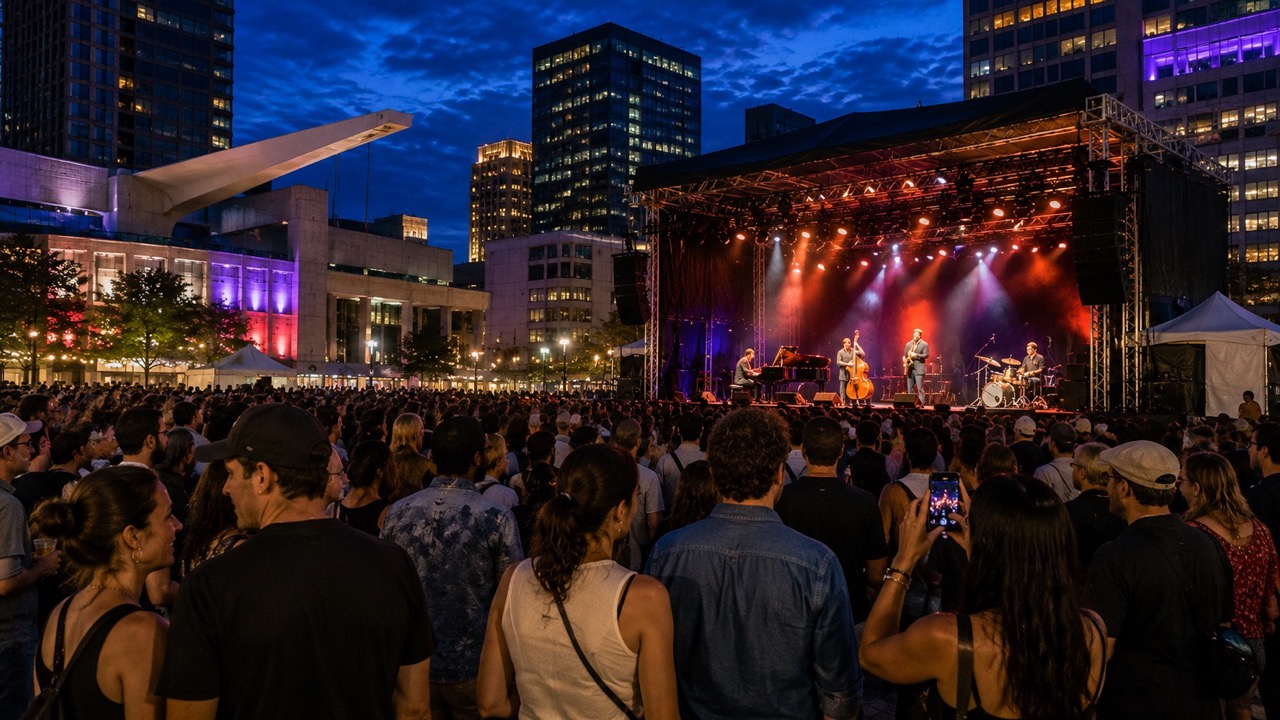
Montréal’s Quartier des Spectacles becomes a listening district during the jazz festival. Outdoor stages pull pedestrians into free concerts, theater doors open onto denser ticketed programs, and clubs carry the music beyond the hour when the main plazas begin to empty. The scale is considerable, yet the defining experience remains intimate: musicians listening across a bandstand, changing direction in real time, and bringing an audience into the risk of improvisation.

The city makes that range possible. Montréal’s bilingual culture, strong local scene, compact downtown, Metro network, cafés, and late-night rooms allow visitors to move from a large public performance to a close club set without losing the sense of one musical conversation. The best itinerary resists constant switching, pairing one anchored concert with space for a Québec artist, a free-stage discovery, or an unplanned collaboration.

Why This Festival Is Special

The festival’s size can hide its subject. Jazz is not abundance; it is attention under changing conditions. The memorable set is often not the biggest booking but the one where musicians listen visibly, alter course, and bring the room with them. Montréal is special because the city offers enough stages for chance to operate—yet the listener still has to resist the schedule and stay present when that chance arrives.

At the most responsive sets, the advertised centerpiece gives the event scale, but a rehearsal, early aisle, installation detail, food counter, or conversation after the crowd moves on explains how it is made. Montréal International Jazz Festival becomes memorable when the visitor connects that quiet evidence to the public moment. At the most responsive sets, the transformation is temporary; the knowledge and relationships behind it remain.

At the most responsive sets, that connection between visible celebration and invisible preparation is the editorial heart of the story. At the most responsive sets, it gives the traveler something more durable than scale: a specific understanding of why this event could not simply be moved elsewhere without becoming a different experience.

Festival Experience

What to Expect

A good festival day starts late enough to survive the night. Use the morning for a neighborhood café, record shop, or river walk, then study the updated schedule over lunch. Midafternoon brings talks, smaller stages, or an early ticketed set. The outdoor district becomes busiest around dinner, when free concerts overlap and pedestrian routes tighten. A reserved theater show gives structure to the evening; afterward, a club set or jam can reveal the improvisational heart of the festival. Stop before exhaustion turns every performance into background sound.

Across that progression, prepare for summer heat, thunderstorms, huge free-show crowds, overlapping set times, sold-out halls, street closures, and late-night transit decisions. As the sets accumulate, eat before fatigue becomes hunger, carry water, and take one deliberate pause away from the loudest or most concentrated setting. As the sets accumulate, immersion does not require constant movement; staying with one performance, artwork, competition, or street position often reveals more than completing a route.

As the sets accumulate, plan dispersal as carefully as arrival. As the sets accumulate, crowds leave in waves, roads and venues reopen on different schedules, and a working phone cannot be assumed. As the sets accumulate, set a meeting point, keep the lodging address offline, and finish near dependable transport.

As the sets accumulate, allow the experience to change the plan. As the sets accumulate, a conversation, delayed start, difficult artwork, close competition, or unexpectedly strong performance may deserve more time than the next scheduled stop. As the sets accumulate, the day gains narrative shape when it can build toward a meaningful center and release gradually, rather than becoming a sequence of arrivals and exits.

Festival Highlights

  • Hearing a major outdoor concert turn downtown into a shared listening space
  • Choosing an intimate club set over another large-stage checklist item
  • Following a Québec artist whose work complicates the festival’s international scale
  • Leaving room for a late collaboration or unplanned discovery
  • Using the Metro to connect the festival district with Montréal’s neighborhood music life

Getting There & Around

Where It Happens

The event uses the pedestrianized Quartier des Spectacles around Place des Arts, major concert halls, outdoor stages, clubs, theaters, and late-night rooms across central Montréal. Across the music district, each space has its own purpose: a gallery, barn, parade assembly point, theater, or historic façade should not be treated as interchangeable public territory.

Across the music district, use event map and exact entrances. Across the music district, group activities geographically, remain outside working areas, and keep resident, participant, animal, service, and emergency routes clear.

Getting Around

Use the Metro, walking inside the closed downtown zone, night buses where needed, and taxis from designated pickup streets. Around central Montréal, confirm the entrance and return point against the event map, then save both offline.

Allow for summer heat, thunderstorms, huge free-show crowds, overlapping set times, sold-out halls, street closures, and late-night transit decisions. Around central Montréal, prebook late transport, use authorized vehicles and pickup areas, and move with the crowd rather than stopping in its path.

Around central Montréal, before leaving each location, identify the next leg and its fallback. Around central Montréal, this small pause prevents the schedule from dictating unsafe or exhausting movement.

Visitor Guide

Festival Food & Drink

Between performances, food should support the event’s rhythm and explain the destination. Between performances, begin with a dependable meal before the busiest program, then use one or two smaller items for energy rather than grazing without context. Between performances, choose established kitchens or high-turnover vendors with clear handling of meat, dairy, seafood, or ice.

Between performances, make room for one seated break away from the principal crowd, where staff can identify a local ingredient, producer, or seasonal tradition. Between performances, carry safe water even when alcohol, sweet drinks, or cold weather makes thirst less obvious. Between performances, share oversized portions, ask about allergens, and avoid treating regional food as a stunt.

Must Try

• Montréal bagel — Hand-rolled, boiled in lightly sweetened water, and baked in a wood-fired oven; compare it on its own terms.
• Smoked meat sandwich — Peppery cured beef piled on rye, best treated as a full meal rather than a snack.
• Poutine — Fries, cheese curds, and gravy, useful after a late set when bought from a kitchen with good turnover.
• Québec cheese or cider — Try a producer-identified selection during a quieter meal away from the outdoor stages.

Between performances, the best food choice should restore attention as well as satisfy appetite, leaving the traveler ready for the next part of the experience.

Budget & Costs

In a jazz-festival budget, budget separately for lodging, local transport, admission, premium events, food, and disruption. In a jazz-festival budget, a free public program can still create high costs through scarce rooms, late rides, parking, or extra nights.

In a jazz-festival budget, use official ticket channels and support local producers, kitchens, artists, and recognized cultural groups where possible.

Tips for First-Time Visitors

For a first festival night, choose fewer priorities than the schedule appears to allow. For a first festival night, carry stable footwear, water, phone power, weather protection, medication, and hearing protection where appropriate.

For a first festival night, ask before close photography or recording. For a first festival night, do not touch art, costumes, animals, instruments, sacred objects, or working equipment, and never enter preparation areas without permission.

Safety

Prepare for summer heat, thunderstorms, huge free-show crowds, overlapping set times, sold-out halls, street closures, and late-night transit decisions. During major outdoor shows, hydrate, eat, protect skin and hearing, and identify first aid, shelter, and an exit before peak crowding. During major outdoor shows, keep valuables close.

During major outdoor shows, follow staff and emergency directions. During major outdoor shows, never cross barriers, obstruct participants, touch animals or installations, imitate dangerous acts, or let a photograph override another person’s safety and dignity.

Cultural Significance

Founded in 1980, the festival helped make Montréal an international summer music destination while drawing on the city’s existing jazz clubs, broadcasters, musicians, and audiences. Its programming stretches beyond narrow genre borders, but jazz remains the ethical center when improvisation, dialogue, lineage, and individual voice guide the music. The festival’s importance also lies in free public access alongside formal concert presentation.

Within Montréal’s music culture, the visible program rests on months or years of teaching, rehearsal, husbandry, design, curation, fundraising, and maintenance. Within Montréal’s music culture, children and newcomers learn by working alongside experienced participants, which makes transmission as important as spectacle.

Within Montréal’s music culture, visitors should notice who organizes, who receives credit, who absorbs disruption, and where spending goes. Within Montréal’s music culture, celebration can create pride and income while also producing congestion, waste, pressure on sacred space, or unequal access. Within Montréal’s music culture, responsible travel writing keeps those truths together.

The event also reads Montréal, Quebec beyond familiar branding. Within Montréal’s music culture, its choices about space, tradition, artistic authority, competition, and public access reveal what the destination values—and what it is still debating.

Plan Your Journey

When to Go

The festival belongs to early summer, when long evenings support outdoor music and the city remains active well after sunset. Weekdays favor theater programs, club listening, and easier movement through the district; weekends bring the largest free-show audiences and a more crowded downtown atmosphere.

Begin the day slowly, study schedule changes over lunch, and use midafternoon for a talk, smaller stage, or neighborhood visit. A reserved evening concert provides structure, while a late club set should be chosen only when attention and transport remain strong.

Where to Stay

The most useful base is Downtown, the Quartier des Spectacles, the Plateau, or another neighborhood with direct Metro access. For a Montréal base, judge it by the return after the final program, not by distance in ordinary daytime traffic. For a Montréal base, confirm late entry, accessibility, climate control, and secure storage.

For a Montréal base, book early with flexible terms. For a Montréal base, a lower rate can become poor value if it requires uncertain transport after midnight or repeated cross-city travel. For a Montréal base, save the address offline and make sure every traveler can identify it independently.

Bottom Line & Key Days

Bottom Line

Montréal’s jazz festival is ideal for listeners who value discovery as much as marquee names and who are willing to stay with a set long enough for improvisation to matter. The city offers abundance, but the real reward is concentration: a room growing quiet, a musician taking an unexpected turn, and strangers recognizing the change together. That shared instant is Montréal at its most musical.

Key Days

Opening Period

Learn the pedestrian district with one outdoor program and one reserved performance rather than overloading the first evening.

Midfestival Weeknight

Choose a focused theater or club set when crowds are lighter and close listening comes more easily.

Headline Weekend

Book major concerts early while leaving room for a local artist or late discovery outside the largest stages.

Ready to Experience Montreal International Jazz Festival?

You've explored what makes this festival special. Now it's time to plan your trip. Compare flights, book your hotel, arrange transportation, and take care of your travel essentials—all in one place.

✈ Find Flights

Loading booking widget...

Booking is completed on Expedia in a new tab.

🏨 Find Hotels

Search places to stay

Powered by Booking.com

Booking is completed on Booking.com in a new tab.

Rail & Bus Travel

Compare train and coach routes for the journey.

Compare Routes

Things to Do

Discover tours and attractions before or after the festival.

Explore Experiences

eSIM Mobile Data

Stay connected abroad without traditional roaming charges.

Get an Airalo eSIM

Travel bookings are provided by our trusted partners. We may earn a commission when you book through these links, at no additional cost to you.

Independent Editorial Standards

Every Follow the Festivals guide is independently researched and regularly reviewed using official festival information, destination resources, and trusted travel references. We also welcome verified updates from festival organizers, destination marketing organizations, tourism partners, and local experts to help keep our guides accurate, current, and useful for travelers.

Represent this festival or have a verified update to share? We'd love to hear from you through our contact page.

Photo Credits