
Follow the Festivals

One World International Human Rights Film Festival

One World International Human Rights Film Festival

Prague, Czech Republic

2027-03-10 - 2027-03-18

The Story

Festival Overview

The lights rise, but no one reaches immediately for a coat.

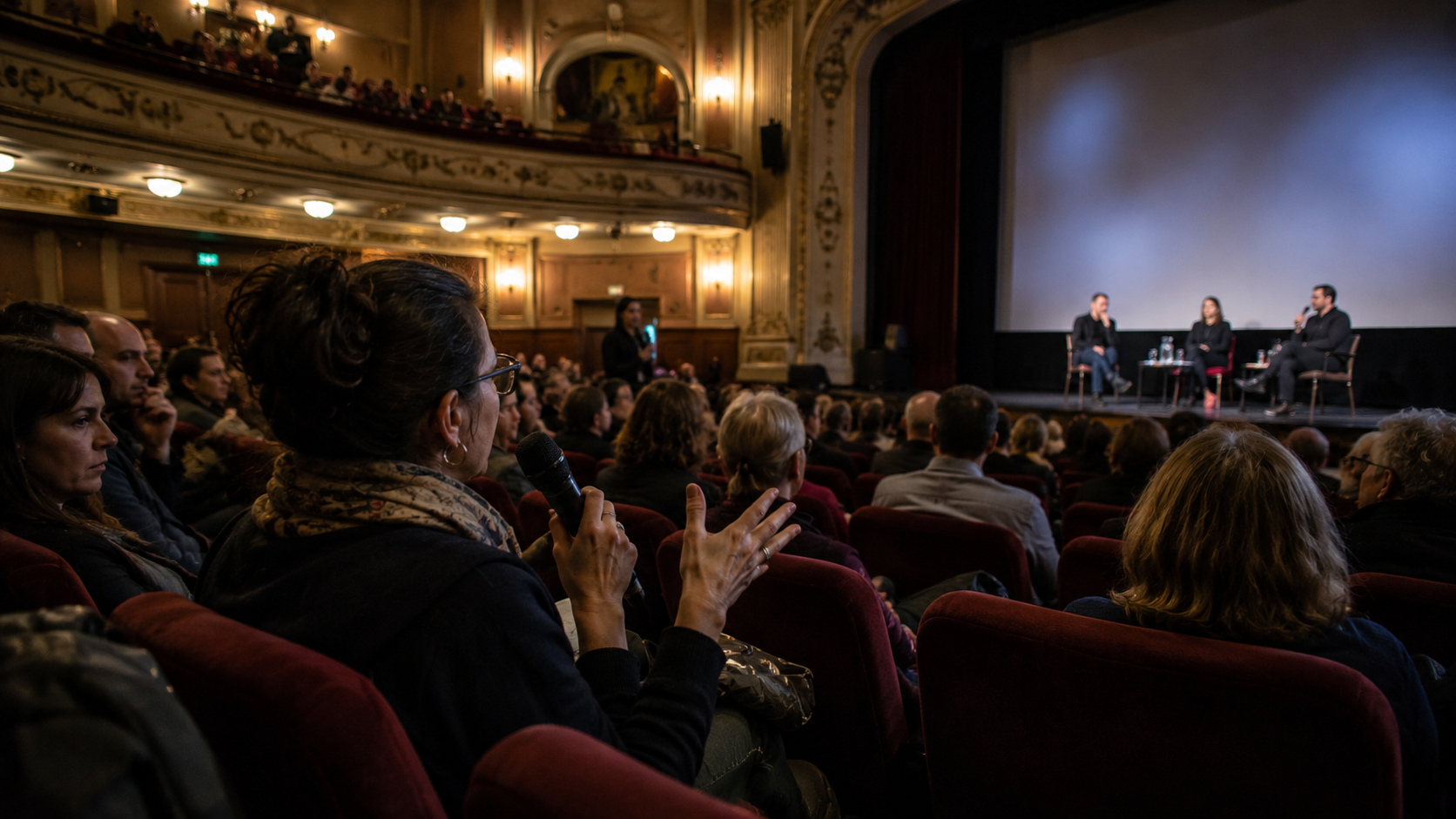
A face that filled the screen moments earlier has disappeared. The room remains occupied by what that person said. Onstage, a moderator adjusts a microphone. Someone in the audience raises a hand.

One World International Human Rights Film Festival is a public film and discussion festival organized by the Czech humanitarian organization People in Need. Its principal programme takes place across Prague cinemas before continuing through towns around the Czech Republic and in Brussels.

Documentaries form much of the programme, joined by fiction films, immersive work, family screenings, competitions and public debates. Filmmakers, protagonists, journalists, advocates and subject experts often remain after screenings to speak with audiences.

The festival does not ask Prague to provide a beautiful backdrop for difficult stories. It uses the city’s cinemas as meeting places where experiences from elsewhere can enter public conversation.

The film ends.

The witnessing continues.

Why This Festival Is Special

Human-rights films can become private encounters when watched at home.

Prague makes them public.

A cinema gathers people who may not share a nationality, profession, political history or conclusion. They watch the same testimony at the same pace. No one can skip forward when the material becomes uncomfortable or pause indefinitely before hearing what follows.

The discussion afterward does not guarantee consensus. Its value lies in allowing uncertainty, disagreement and unanswered questions to remain visible rather than reducing the film to a message everyone must receive identically.

Prague gives that exchange particular resonance. The city carries memories of occupation, censorship, underground culture, dissident writing and the public demonstrations that preceded the end of communist rule. Its history does not make every contemporary judgment correct. It does make civic speech feel inseparable from place.

One World brings distant experiences into that inherited public space.

The audience must decide what to do with them.

Festival Experience

What to Expect

One World spreads across independent cinemas, cultural institutions and screening rooms rather than occupying a single festival center.

A day may begin with an intimate documentary in a small neighborhood cinema, continue through a debate with a director and finish with a premiere in a grand central hall. Walking and public transport become part of the interval in which one film settles before another begins.

The programme addresses war, displacement, political repression, inequality, environmental damage, disability, identity, technology and forms of courage that rarely fit neatly into one category. Some films are confrontational. Others reach the same questions through family life, work, humor or ordinary decisions.

Post-screening discussions distinguish the experience from watching the films alone. A director may explain what happened after filming. A journalist may supply missing political context. A protagonist may challenge the audience’s interpretation of a story they have just watched.

Language information matters. Films may be presented in their original language with Czech and English subtitles, but discussion language and interpretation arrangements can vary. Check both the screening and the conversation rather than assuming one English marker covers the entire event.

One World also places unusual emphasis on accessibility. Venue information and programme filters can identify features such as step-free access, accessible toilets, captioning, audio description, relaxed screenings or other forms of assistance.

The festival teaches attention before it asks for agreement.

Festival Highlights

  • – Choose one film from the international competition to understand the festival’s global reach and cinematic ambition. Do not select only by subject. Read how the filmmaker approaches the story, because form determines whether the audience is being asked to observe, investigate, remember or question.
  • – Attend a Czech film or a work connected to Central Europe. Prague becomes more than a host city when local filmmakers examine the region’s institutions, histories and present-day responsibilities. The discussion afterward may also reveal how Czech audiences understand an issue differently from international visitors.
  • – Make at least one post-screening debate central to the itinerary. A shorter film with the right guest may provide more insight than a celebrated title without conversation. Sit close enough to hear the room and remain until the moderator closes the exchange.
  • – Explore an immersive work if the format genuinely suits the subject. Virtual reality can alter the distance between viewer and story, but technological immediacy should not be confused with complete understanding. Read the content guidance and accessibility information before reserving.
  • – Choose one programme strand outside your existing interests. Human-rights festivals become intellectually narrow when viewers use them only to confirm concerns they already carry. Let the catalogue introduce a community, region or question you would not have searched for independently.
  • – Visit cinemas in different parts of Prague. A historic hall near Wenceslas Square, an independent neighborhood cinema and a cultural institute create different audiences around the same festival. The movement between them reveals how widely the conversation has entered the city.
  • – Leave one screening without immediately discussing it. Walk until Prague’s ordinary sounds return: trams at an intersection, cups being cleared from café tables, footsteps beneath an arcade. Some films need distance before they can become conversation.

Getting There & Around

Where It Happens

One World uses cinemas and cultural venues across Prague.

Central screening rooms near Wenceslas Square provide some of the festival’s largest and most visible gatherings. Their location makes consecutive screenings convenient, but queues and surrounding pedestrian traffic require extra time.

Smaller neighborhood cinemas change the atmosphere. Audiences may feel more local, discussions more intimate and the distance between screen and speaker less formal.

Cultural institutes and specialized venues can host films connected to particular languages, regions or artistic forms. Their accessibility, admission procedures and discussion arrangements should be checked separately.

There is no universal entrance or central gate. Each venue controls its own seating, accessibility conditions, concessions and arrival process.

The city between screenings belongs to the festival as surely as the cinemas do. Prague’s trams, passages, squares and cafés carry audiences from one account of the world toward another.

Getting Around

Prague’s metro and tram network makes a dispersed festival practical.

Build each day geographically. Two films in adjacent central cinemas may require only a short walk, while a neighborhood screening can demand a tram transfer and additional time locating the entrance.

Use the official programme’s venue addresses rather than relying on cinema names alone. Some institutions operate multiple rooms, and similar venue names can lead travelers to the wrong building.

Purchase the appropriate public-transport pass for the length of the stay and validate or activate it according to current rules. A pass removes the temptation to walk too far between tightly scheduled screenings.

Allow at least 45 minutes between different venues, more when crossing the river or traveling during the evening rush. Discussion overruns are common precisely when the conversation becomes valuable.

Trams are useful after late screenings, but service patterns can change overnight. Save the hotel route before entering the cinema and confirm the final connection when leaving.

Walking remains essential in the center. Prague’s stone paving, steps and tram tracks require more attention in rain or early-spring cold than the compact map suggests.

Visitor Guide

Festival Food & Drink

Prague’s cafés give the festival somewhere to continue speaking.

A screening may end with an urgent debate inside the cinema, but the slower conversation often begins after coats are collected. Two people carry disagreement toward a table, order soup or beer and discover which part of the film neither can leave behind.

Do not schedule every meal as a destination restaurant. A café beside the next cinema may provide exactly what the day requires: warmth, a simple plate and enough quiet to read programme notes.

Czech cooking offers substance between screenings. Soup restores attention without consuming an entire interval. Open-faced sandwiches fit a short transfer. Dumplings, roasted meats and sauces belong to the longer evening when the next film can wait.

Prague’s Vietnamese community forms another important part of the city’s contemporary food culture. A bowl of phở or plate of bún reveals a Prague that cannot be represented only through historical Czech dishes.

Beer remains part of the city’s social rhythm, but intoxication weakens the attention the festival asks viewers to maintain. Let conversation determine the length of the evening rather than the number of glasses.

#### Must Try

– **Chlebíčky** — Czech open-faced sandwiches topped with combinations of egg, cheese, meat, vegetables or spreads.

– **Kulajda** — Creamy soup commonly prepared with mushrooms, potatoes, dill and egg.

– **Svíčková** — Beef served with a smooth vegetable sauce, bread dumplings and traditional sweet-tart accompaniments. **Bramboráky** — Crisp potato pancakes seasoned with garlic and marjoram.

– **Ovocné knedlíky** — Fruit-filled dumplings served with sweet toppings in several regional forms. **Phở** — Vietnamese noodle soup reflecting one of Prague’s most established immigrant food cultures.

– **Czech lager** — Carefully poured beer whose foam, temperature and serving style form part of the experience. **Káva** — Coffee taken between screenings when the mind needs time more than stimulation.

The table does not resolve the film.

It gives the questions somewhere to remain.

Budget & Costs

Individual tickets make it possible to build a modest festival visit without purchasing access to an entire programme.

The greatest expense is usually central Prague accommodation. Staying in Vinohrady, Žižkov or another well-connected neighborhood can reduce costs while preserving easy tram or metro access.

Book irreplaceable screenings first. Popular evening films and guest appearances create the strongest pressure, while daytime or repeat screenings may offer greater flexibility.

Food costs remain manageable when cafés, bakeries and simple Czech lunch menus are used between films. Expensive dining becomes counterproductive when service time threatens the next screening.

Transport passes are generally more useful than repeated single journeys during a multi-venue stay. The saving is both financial and practical: changing plans becomes easier when another tram journey requires no new decision.

Do not overbuy tickets. An unused reservation costs money, but a used ticket attended without sufficient attention costs something less visible.

The most valuable space in the budget may be an empty hour.

Tips for First-Time Visitors

Begin with the film descriptions, then check language, subtitles, discussion language, accessibility and content guidance. A compelling subject does not automatically make a screening usable or appropriate for every traveler.

Reserve one major film, one Czech or regional work and one unexpected selection. This creates structure without turning the festival into a checklist.

Arrive early enough to settle before the lights dim. Late entry can disrupt a room already concentrating on sensitive testimony and may not be permitted.

Remain for the discussion when one is offered. The film provides evidence through one constructed form; the conversation reveals what the camera included, missed or could not safely show.

Ask concise questions that invite the guest’s knowledge. Do not use the microphone to retell the film, display personal expertise or demand that a protagonist represent an entire community.

Read content warnings honestly. Leaving a screening that has become overwhelming is responsible, not disrespectful. Choose a seat near the aisle if that possibility concerns you.

Avoid photographing guests who have requested privacy. Public appearance does not erase risks faced by activists, survivors or people connected to ongoing conflicts.

Keep space after the strongest films.

Attention also requires recovery.

Safety

One World presents material that can include war, violence, abuse, displacement, discrimination, imprisonment and death. Read programme guidance and decide what you can responsibly absorb.

If a film becomes overwhelming, leave quietly. Venue staff can help identify exits, accessible routes or a calmer space when available.

Public discussions may involve people whose safety remains vulnerable. Follow all restrictions on photography, recording and identifying information, even when other audience members appear less careful.

Demonstrations or heightened security may accompany politically sensitive events. Respect venue instructions, keep entrances clear and avoid confronting protesters or counterprotesters.

Late screenings end after some central streets have quieted. Prague is generally manageable by public transport, but travelers should preserve a charged phone, know the night route and avoid becoming disoriented after an emotionally difficult programme.

Early-spring weather can bring rain, wind and cold. Shoes with traction matter on cobblestones and tram tracks, particularly when moving quickly between venues.

The festival asks audiences to witness risk.

It does not ask them to create more of it.

Cultural Significance

One World was founded in Prague by People in Need, a Czech nonprofit whose humanitarian and human-rights work connects public education with events beyond the cinema.

The festival emerged within a society still negotiating the legacies of communist rule, censorship and democratic transition. Prague’s associations with writers, artists and dissidents give public speech a visible history, but One World does not allow that history to become self-congratulation.

Its programme directs attention outward and inward. International films bring distant struggles into Czech cinemas. Domestic work asks how rights, power and responsibility operate within the Czech Republic itself.

The festival’s regional screenings extend that conversation beyond the capital. School programmes bring film into education, while Brussels screenings connect storytelling with audiences near European institutions.

One World treats cultural access as part of its human-rights purpose. Accessibility is not an accommodation added after the programme has been designed; it influences how films, venues and information reach audiences.

The institution opens the room.

Authority remains with the people whose lives enter it.

Plan Your Journey

When to Go

The principal Prague programme is generally held in March. Exact dates, venues and screening times belong in the current festival calendar.

Arrive before the opening day if premieres and major guest appearances matter to you. Stay through a weekday if smaller screenings and less pressured discussions are the priority.

Do not wait until arrival to build the programme. Popular films, evening screenings and events with notable guests can fill early. Read the catalogue when ticketing opens and reserve the experiences that cannot be replaced.

Schedule no more than two emotionally demanding films in one day. A third screening may appear efficient on paper, but attention becomes less generous when the previous story has not been absorbed.

Leave at least one unscheduled evening. Audience recommendations, added screenings and conversations with other attendees may change what deserves priority.

The strongest visit remains flexible enough for one film to alter the next day.

Where to Stay

New Town is the most practical base for a screening-heavy visit. Its central cinemas, tram lines and metro stations reduce transfer time while preserving easy access to Old Town and Vinohrady.

Vinohrady offers residential streets, cafés and strong public transport close to the center. It suits travelers who want somewhere calmer to return after difficult films without becoming isolated from evening venues.

Old Town places Prague’s historic architecture immediately outside the hotel, but accommodation costs and visitor density can be high. It is visually compelling rather than automatically efficient for a dispersed cinema programme.

Žižkov offers independent nightlife, local restaurants and useful tram connections. It can provide better value while keeping central cinemas within reach, though the final late-night route should be checked before booking.

Holešovice is appropriate when northern cinemas and contemporary cultural spaces dominate the selected programme. It feels less ceremonial than central Prague and often reveals a more lived-in part of the city.

Choose accommodation near intersecting tram or metro routes. No single hotel can sit beside every screening, and reliable movement matters more than proximity to the opening venue.

Bottom Line & Key Days

Bottom Line

The moderator closes the discussion.

Microphones are switched off. Coats emerge from beneath seats. A filmmaker remains near the screen while the first audience members reach the aisle.

Outside, a tram passes the cinema windows.

Two strangers leave through the same door.

At the corner, they are still talking.

Key Days

**Arrival Day:** Collect the programme, confirm ticket details and walk between the first two venues. Visit one café that can become a reliable pause during the week.

**Opening Stretch:** Attend a major Prague screening or premiere to understand the festival’s public scale. Remain for the discussion rather than scheduling an immediate departure.

**Middle Days:** Pair one international film with one Czech or regional work. Use different cinemas and allow the neighborhoods around them to change the rhythm of the experience.

**Weekend:** Expect greater demand and broader audiences. Family programmes, immersive work and prominent guest events may concentrate here, depending on the current schedule.

**Final Days:** Watch an awarded or strongly discussed film if repeat screenings are offered. Return to a question raised earlier rather than treating the closing programme as a race to see what remains.

**Following Morning:** Walk through Prague without a ticket waiting. Notice which image from the festival enters the city beside you.

Ready to Experience One World International Human Rights Film Festival?

You've explored what makes this festival special. Now it's time to plan your trip. Compare flights, book your hotel, arrange transportation, and take care of your travel essentials—all in one place.

✈ Find Flights

Loading booking widget...

Booking is completed on Expedia in a new tab.

🏨 Find Hotels

Search places to stay

Powered by Booking.com

Booking is completed on Booking.com in a new tab.

Rail & Bus Travel

Compare train and coach routes for the journey.

Compare Routes

Things to Do

Discover tours and attractions before or after the festival.

Explore Experiences

eSIM Mobile Data

Stay connected abroad without traditional roaming charges.

Get an Airalo eSIM

Travel bookings are provided by our trusted partners. We may earn a commission when you book through these links, at no additional cost to you.

Independent Editorial Standards

Every Follow the Festivals guide is independently researched and regularly reviewed using official festival information, destination resources, and trusted travel references. We also welcome verified updates from festival organizers, destination marketing organizations, tourism partners, and local experts to help keep our guides accurate, current, and useful for travelers.

Represent this festival or have a verified update to share? We'd love to hear from you through our contact page.

Photo Credits