
Follow the Festivals

Lightning in a Bottle

Lightning in a Bottle

Bakersfield, United States

2027-05-26 - 2027-05-30

The Story

Festival Overview

The first structure is not a stage.

Someone stretches shade cloth between two vehicles. Another person carries water across bare ground. Tent stakes enter hard soil, coolers disappear beneath tables and a strip of colored fabric is tied high enough to be recognized after dark.

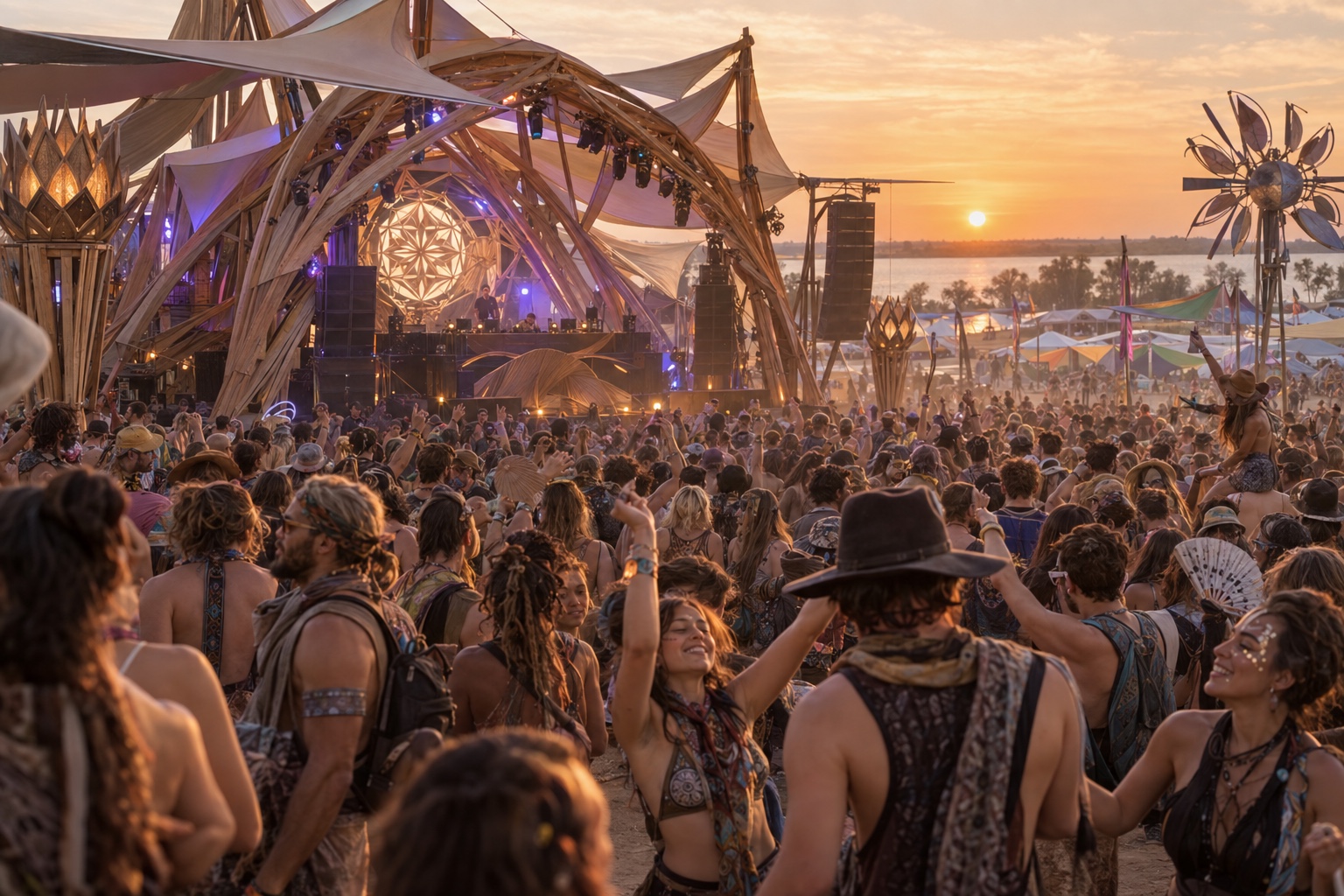
Lightning in a Bottle is a multi-day camping festival held at Buena Vista Lake in California’s Kern County. Its programme combines electronic and live music with large-scale art, workshops, talks, movement practices, food, lake recreation and late-night gatherings.

The festival grounds and campgrounds form separate but connected parts of a temporary settlement. Walk-in camping is generally included with admission, while car camping, RV access, reserved group space and pre-set accommodations require their own arrangements.

Buena Vista Lake gives the weekend water, horizon and distance. The surrounding environment supplies the harder facts: heat, dust, wind, cold nights and long walks. Music may provide the reason to arrive, but the quality of the experience depends on decisions made before the first performance begins.

Shade must be built.

Water must be found.

Friends must know where they are sleeping.

Only then can the temporary city begin pretending it appeared by itself.

Why This Festival Is Special

Lightning in a Bottle allows its audience to build part of the experience.

People bring flags, shade structures, camp kitchens, clothing, gifts and small acts of invention. Art invites interaction. Workshops ask for attention rather than applause. The campgrounds create relationships that no stage schedule could arrange.

Participation can become an empty festival claim when it means only dressing visibly or dancing enthusiastically.

Buena Vista Lake makes the standard more concrete.

Participation means securing a loose tent before wind arrives. It means refilling another person’s bottle, respecting a boundary, lowering the camp’s noise when neighbors need sleep and carrying waste out after the final night.

The environment exposes the difference between expressing community and maintaining one. Heat makes shared shade valuable. Distance makes accurate directions an act of care. A crowded dance floor tests consent more honestly than any slogan printed at the entrance.

Music, art and workshops create extraordinary moments because practical responsibilities continue beneath them.

The temporary city feels open only when enough people protect the conditions that keep it open.

Festival Experience

What to Expect

Lightning in a Bottle begins with arrival logistics.

Vehicles approach through Kern County during limited gate hours. Camps are assigned or established according to the passes held, and groups hoping to remain together generally need to arrive together or secure an appropriate group arrangement. Visitors parked outside the campgrounds may need to carry equipment a considerable distance.

Set up completely before entering the main festival grounds. Daylight makes tent lines, road boundaries and neighboring landmarks easier to understand. A campsite that appears obvious in the afternoon can disappear into hundreds of similar structures after dark.

The programme runs across several music stages and environments devoted to art, learning, movement and community activity. Electronic music carries much of the night, while daytime hours can include talks, yoga, workshops, performances and interactive installations.

The lake provides relief from heat but requires independent judgment. There are no lifeguards, and entering the water is at the swimmer’s own risk. Weather, fatigue, alcohol, submerged surfaces and distance from shore can turn recreation into an emergency.

Expect dust. Wind and vehicle movement can lift fine soil across campgrounds and stage areas. Respiratory protection, eye protection and sealed food storage are practical equipment rather than costume accessories.

The weekend is physically demanding. Long days, short sleep, heat and continuous stimulation accumulate. The festival provides water, medical care, harm-reduction support and safety personnel, but those systems do not replace personal preparation.

Freedom here begins with knowing where the water station is.

Festival Highlights

  • Begin with one complete walk through the festival grounds during daylight. Locate the principal stages, workshop areas, lake access, medical services, water stations and route back to camp. The site changes after dark, and early orientation prevents every later decision from depending on a phone battery.
  • Choose one daytime workshop or conversation that requires genuine participation. Arrive early, remain for the complete session and allow the subject to determine whether joining is appropriate. Do not enter late simply to collect a photograph or claim another festival experience.
  • Experience a large music stage after sunset, when lighting and sound transform the exposed landscape. Establish a meeting point outside the densest crowd before separating, protect hearing and remain aware of the route back to camp.
  • Spend time with the art before the night makes it spectacular. Daylight reveals construction, materials and how an installation interacts with the ground around it. Return after dark to see what lighting changes, but do not climb, alter or enter a work unless participation is explicitly invited.
  • Use the lake only when alert, sober enough to judge risk and prepared with suitable footwear or flotation support. Swim with other people, remain within personal ability and leave the water before exhaustion or darkness removes the margin for error. No performance schedule makes an unsafe swim necessary.
  • Protect one late afternoon for camp. Prepare food, refill water, check tent lines and sit in the shade before returning to the programme. The hour that appears least exciting on paper may preserve the entire night.
  • Attend one performance without treating the front of the stage as the only valid place to experience it. Distance can provide airflow, easier movement and enough space to dance without crossing another person’s boundaries. The strongest position is sometimes the one from which everyone can leave safely.

Getting There & Around

Where It Happens

Lightning in a Bottle takes place at Buena Vista Lake in Kern County, California.

The venue lies in an open inland landscape outside Bakersfield. Lake, grass, low hills and dusty ground divide the festival into areas for camping, music, workshops, art and recreation.

This is not a city festival with shops, pharmacies and air-conditioned rooms beyond every gate. Supplies forgotten at home can require a substantial journey or expensive replacement. Arrive prepared to remain on site.

The festival grounds and campgrounds have separate entrance rules. Items allowed at camp may be prohibited inside the programmed area. Learn both sets of regulations before packing.

The lake shapes movement and temperature but should never be treated as a supervised swimming facility. Entry is at personal risk, and natural water may contain uneven surfaces or biological hazards not visible from shore.

Bakersfield provides the nearest major concentration of hotels, supermarkets and transport connections. Smaller communities in Kern County may appear closer, but services and accommodation are limited.

The venue becomes a temporary city because ordinary city infrastructure is distant.

Every practical decision begins there.

Getting Around

Most visitors arrive by car, organized festival bus or another prearranged transfer.

Drivers need the correct vehicle pass before reaching the site. General parking, car camping and RV access are different products with different placement and movement rules. Follow the arrival guide rather than relying only on a map application.

Gate hours are limited. Do not arrive overnight, wait along nearby roads or assume entry will resume because a vehicle has reached the property.

Groups planning to camp together should enter in the same vehicle caravan where permitted and safe. Once placement begins, holding undeveloped space for people arriving later may not be allowed.

Festival bus services can reduce driving and the need for a vehicle pass. They also impose fixed departure times and luggage limits, so camping equipment must be selected accordingly.

Within the venue, walking is the principal transportation. Distances among camp, stages, lake and workshop areas accumulate quickly. Supportive footwear, lake shoes and a wagon for arrival serve different purposes.

Identify the camp with a distinctive marker visible from the main approach, then record its position on the current festival map. Do not rely on flags alone; many camps use similar ones.

Cars inside campgrounds must move at the posted low speed. Pedestrians, tent lines and people resting close to access roads make even slow vehicle movement consequential.

Departure traffic can take time. Fuel the vehicle before arrival and keep food, water and medication accessible while waiting to leave.

Visitor Guide

Festival Food & Drink

The first important meal is prepared before anyone becomes hungry.

Camp food must survive heat, dust, insects and several days of diminishing ice. Strip unnecessary packaging before arrival, place ingredients in sealed containers and separate foods that require dependable cooling from those that remain safe at ambient temperature.

Breakfast stabilizes the day. Oats, fruit, nut butter, bread, eggs prepared safely and electrolyte-rich drinks can restore the body after a short night. Cook beneath secure shade with an approved enclosed propane stove, away from tents and dry vegetation.

Food vendors inside the festival offer meals across a wide range of dietary needs, including vegetarian, vegan and gluten-free choices. Use them strategically. One complete vendor meal can replace the effort of camp cooking when heat or fatigue makes safe preparation difficult.

Kern County enters the guide before and after the gates. Bakersfield carries a distinctive Basque restaurant tradition, while Central California agriculture supplies fruit, nuts, vegetables and other ingredients rarely associated with the dry festival landscape in which they are eaten.

Hydration must continue beyond plain water. Heat, dancing and perspiration also remove salt. Eat properly, use electrolytes appropriately and refill bottles whenever passing a water station rather than waiting for thirst.

**Must Try**

• **Camp breakfast:** Oats, fruit, eggs or another substantial meal prepared before the heat and programme gather pace.

• **Bakersfield Basque meal:** Family-style courses connecting the regional stopover with one of the city’s most distinctive food traditions.

• **California fruit:** Oranges, grapes, stone fruit or other seasonal produce kept shaded and washed before eating.

• **Tri-tip:** A Central California barbecue cut often seasoned simply and cooked over heat.

• **Festival bowl:** A grain, vegetable and protein combination capable of supporting several more hours of walking and dancing.

• **Tacos:** A practical California meal with enough substance to replace several smaller snacks.

• **Electrolyte drink:** A useful supplement during sustained heat and exertion, taken alongside water rather than instead of it.

• **Shared camp dinner:** A meal divided among neighbors before everyone returns to separate parts of the programme.

The camp kitchen does not need to be impressive.

It needs to keep functioning.

Budget & Costs

Admission is only the beginning of the budget.

Camping access may be included with a festival pass, but the sleeping strategy changes the total cost substantially. Walk-in camping requires personal equipment and physical transport. Car camping, RV space, reserved group areas and pre-set accommodations add convenience at increasing cost.

Visitors who already own reliable camping gear can control expenses most effectively. Buying cheap equipment for one weekend often creates waste and performs poorly in heat, wind or dust. Rent, borrow or invest in gear that will be used again.

Transportation is another major driver. A shared vehicle can distribute fuel and pass costs, while festival buses reduce driving but limit baggage and timing. Flights into California require an additional route to Kern County.

Food can be prepared at camp, purchased from vendors or balanced between both. Safe storage, ice replacement, cooking fuel and time must be included when comparing apparent savings.

Shade, respiratory protection, water containers, lighting and sturdy footwear are essential costs. They should be funded before costumes, decorative camp pieces or additional merchandise.

Preserve an emergency reserve for replacement supplies, medical needs, vehicle trouble or a hotel after departure.

The greatest savings come from arriving in a well-organized group, sharing durable equipment and bringing only what can return home.

Abandoned gear is not a bargain.

Tips for First-Time Visitors

Build shade before decorating the campsite. A beautiful camp that becomes unsafe at midday has failed its first purpose.

Carry a reusable water bottle and refill it whenever the opportunity appears. Keep a larger water reserve at camp without allowing stored containers to overheat in direct sun.

Bring properly fitted respiratory protection for dust. A bandana can help with larger particles, but an N95 or equivalent mask offers more meaningful protection when fine dust becomes heavy.

Use eye protection during wind. Contact-lens wearers should bring glasses, saline and clean hands for removing lenses safely.

Wear stable footwear on land and separate shoes for lake entry. Bare feet are vulnerable to hot ground, sharp objects, insects and unseen material beneath the water.

Create a group check-in system. Choose a physical meeting place and specific times rather than depending entirely on mobile service.

Ask before photographing strangers, touching anyone or entering personal camp space. Clothing, dancing and festival atmosphere never replace consent.

Plan sleep. Earplugs, an eye mask, shade and a correctly ventilated tent are performance equipment for the following day.

Carry every item brought to the festival back out or deliver sorted waste to the designated collection system. Do not leave damaged tents, chairs or air mattresses beside the road.

Safety

Heat can become dangerous quickly. Build shade immediately, drink water throughout the day, replace electrolytes appropriately and rest during the hottest hours. Confusion, faintness, vomiting or cessation of sweating can indicate a medical emergency.

Dust may contain fungal spores associated with Valley Fever. Bring effective respiratory protection, minimize unnecessary dust exposure and seek medical advice after the festival if respiratory symptoms develop or persist.

There are no lifeguards at the lake. Never swim alone, while severely fatigued or impaired, or beyond personal ability. Wear lake shoes, use appropriate flotation support and leave the water during storms, darkness or unsafe conditions.

Rattlesnakes, insects and other wildlife may occupy the natural grounds. Stay on established routes, use a flashlight at night, keep tents closed and never reach blindly beneath equipment or vegetation.

Open flames and charcoal cooking are prohibited. Use only currently permitted enclosed propane stoves in designated camping conditions. Portable gas-powered generators may also be prohibited because of fire risk.

Locate medical services, harm-reduction support, safety personnel and guest services during the first daylight walk. Seek help early rather than waiting for a condition to become severe.

Protect hearing at every amplified stage. Carry high-fidelity earplugs and take breaks from loud environments.

Only affirmative, enthusiastic consent permits physical or sexual contact. A person who is unconscious, severely impaired or unable to communicate cannot consent. Report harassment, assault or a vulnerable person in danger to festival safety personnel immediately.

Cultural Significance

Lightning in a Bottle emerged from Southern California’s culture of electronic music, immersive art and participatory gatherings.

Its programme places music beside workshops, environmental initiatives, movement practices and harm-reduction services. That combination encourages attendees to see themselves as contributors rather than passive ticket holders.

Participation brings responsibility. The freedom to construct a camp, create a costume, dance through the night or interact with art depends on boundaries that protect other people and the site.

The festival’s explicit emphasis on enthusiastic consent gives that responsibility human form. Only an affirmative yes creates permission for touch or sexual interaction. Intoxication, clothing and familiarity do not provide consent.

Environmental language is tested through material behavior. Free water stations can reduce single-use packaging only when attendees bring reusable bottles. Waste systems function only when camps sort and deliver what they cannot carry home. The lake and ground recover only when equipment is removed.

Kern County is not an empty canvas. It is a living landscape containing wildlife, dust, water and communities that continue after the temporary population departs.

The festival can invite participation.

The condition of the ground reveals whether people accepted it.

Plan Your Journey

When to Go

Lightning in a Bottle generally gathers around the transition from spring toward the hotter Central California summer.

Arrive during the earliest gate period included with the ticket if building camp well matters. Additional time allows the group to enter together, secure shade, learn the grounds and recover from the drive before the main programme intensifies.

Later arrival can reduce the number of nights outdoors, but it may create longer equipment carries, fewer camping choices and less daylight for setup. Never plan to reach the site after gates close. Entrance hours are operational limits, not suggestions.

The first complete day is best used to establish orientation. Walk from camp to the festival entrance, locate water and medical services, identify the lake access areas and choose a reliable meeting point.

Middle days carry the fullest rhythm. Camp systems have begun functioning, the programme spans day and night, and fatigue has not yet reached its highest level. Keep at least one afternoon open for rest, swimming under safe conditions or an unplanned workshop.

The final night can be musically compelling and physically deceptive. Visitors who have slept poorly may misjudge heat, hydration and the energy required to dismantle camp the following morning.

Departure deserves its own schedule. Packing in darkness or peak heat increases mistakes. Preserve water, food and patience for the hours after the last performance.

Where to Stay

Camping is the defining accommodation.

General walk-in camping suits visitors prepared to carry shelter, bedding, food and water containers from the assigned parking area. A sturdy wagon can make that distance manageable, but narrow wheels struggle on rough or dusty ground.

Car camping allows a vehicle to remain with the campsite when the correct pass has been purchased. This simplifies storage and shade construction, though vehicle placement is controlled and departure rules may prevent re-entry once the car leaves.

Groups should arrive together or reserve an official group area. Informally saving large amounts of campsite space for later arrivals creates conflict and may violate campground rules.

RV camping provides a protected sleeping environment but requires a specific pass. Power, water filling and waste service depend on the category purchased. Do not assume an RV space includes utilities.

Pre-set or premium camping reduces setup and equipment transport. The additional cost can be worthwhile for visitors flying into California or anyone unable to carry a conventional camp across the grounds.

Family camping provides an environment intended for adults attending with children, but it does not transfer parental responsibility to the festival. Minors must remain with the parent or legally recognized guardian required under current admission rules.

Bakersfield is the nearest major urban base for supplies, hotels and transportation services, but it is not a practical substitute for camping if the traveler intends to experience the full programme. Leaving and returning may be restricted by gate hours and vehicle-pass conditions.

A hotel becomes most valuable after departure.

The festival itself belongs to the camp.

Bottom Line & Key Days

Bottom Line

By departure morning, the stages are quiet.

Shade cloth comes down, exposing rectangles of ground that have not seen direct sun for several days. Tents collapse into bags. Coolers are drained, camp signs disappear and vehicles begin joining the slow route away from the lake.

One group finishes packing and climbs inside.

Before the door closes, someone notices a metal tent stake lying where the kitchen had been. They step back into the dust, pick it up and walk the campsite once more.

Nothing else remains.

The vehicle leaves.

Key Days

Arrival day determines the quality of the weekend. Enter during the correct gate hours, establish camp in daylight, build shade, secure tents, locate water and walk the route to medical services before joining any programme.

The first full day should remain exploratory. Attend one planned performance, one workshop and one unfamiliar area while learning how distance and heat affect the schedule.

Middle days carry the broadest experience. Begin with food and water, use daytime for learning, art or safe lake recreation and preserve enough energy for the principal evening music.

The final full day requires more restraint than the programme suggests. Check the vehicle, organize camp and begin packing anything no longer needed before darkness.

The last night should include a departure agreement. Decide when the group will sleep, wake and dismantle the remaining structures. No one should discover after sunrise that the driver has not rested.

Departure morning is a festival day. Eat, hydrate, inspect the entire campsite and carry waste to the appropriate collection point. Walk the area again after the vehicle is packed.

The last responsibility is leaving safely.

Book Your Festival Trip

You've explored what makes this festival special. Now it's time to plan your trip. Compare flights, book your hotel, arrange transportation, and take care of your travel essentials—all in one place.

Tickets

Check current ticket availability and prices.

Check Tickets →

✈ Find Flights

Loading booking widget...

Booking is completed on Expedia in a new tab.

🏨 Find Hotels

Search places to stay

Powered by Booking.com

Booking is completed on Booking.com in a new tab.

Rail & Bus Travel

Compare train and coach routes for the journey.

Compare Routes

Things to Do

Discover tours and attractions before or after the festival.

Explore Experiences

eSIM Mobile Data

Stay connected abroad without traditional roaming charges.

Get an Airalo eSIM

Travel bookings are provided by our trusted partners. We may earn a commission when you book through these links, at no additional cost to you.

Independent Editorial Standards

Every Follow the Festivals guide is independently researched and regularly reviewed using official festival information, destination resources, and trusted travel references. We also welcome verified updates from festival organizers, destination marketing organizations, tourism partners, and local experts to help keep our guides accurate, current, and useful for travelers.

Represent this festival or have a verified update to share? We'd love to hear from you through our contact page.