
Follow the Festivals

Mammoth Festival of Beers and Bluesapalooza

Mammoth Festival of Beers and Bluesapalooza

Mammoth Lakes, United States

2027-01-20 - 2027-01-20

The Story

Festival Overview

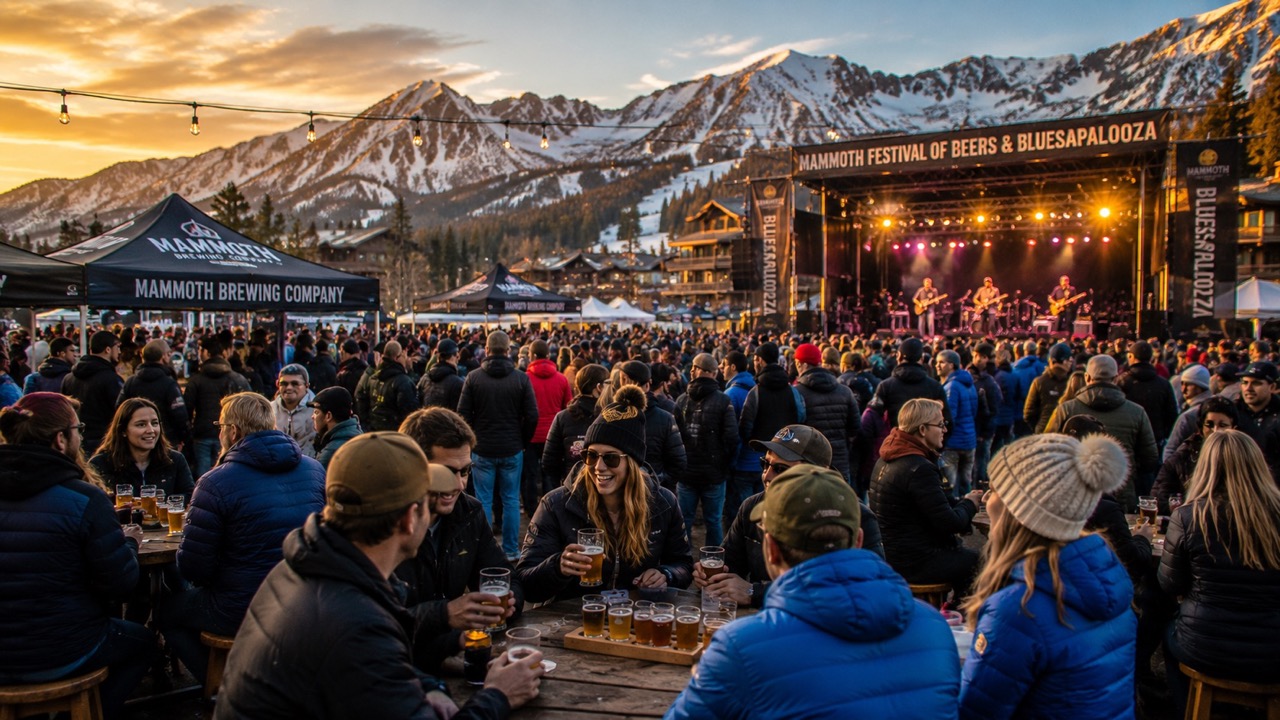
Mammoth Lakes rises beneath the eastern Sierra with pine forest, volcanic ridges, clear mountain air, and an outdoor culture that treats a long afternoon under open sky as its natural state. Bluesapalooza brings craft beer and blues into that landscape, creating a festival where tasting and listening develop together rather than competing for attention. Brewers pour across a broad garden while guitar, horns, and voices carry from the stage, and the crowd shifts between serious sampling and full-set immersion. The altitude sharpens both sun and flavor; the mountains remain visible beyond tents and trees; and the compact town makes the gathering feel like a temporary neighborhood of music lovers and beer makers. This is not a winter brewery stop or a generic concert with taps nearby. It is a warm-season Sierra ritual whose appeal comes from the meeting of independent brewing, American roots music, and Mammoth’s expansive outdoor setting.

Why This Festival Is Special

Travelers choose Bluesapalooza because the beer and music carry equal authorship. At many festivals, one is merely a concession beside the other; in Mammoth, independent brewers explain their work while accomplished blues artists command the stage, and the crowd’s attention moves naturally between them. The Sierra setting provides another distinction. High-altitude light, pine air, cool evenings, and mountain silhouettes turn a tasting session into a destination weekend. The event also reveals a warm-season Mammoth Lakes that winter visitors may never see. It is a maker-driven gathering—brewer, musician, and mountain town each contributing a voice.

Festival Experience

What to Expect

Expect an adult social festival with two equally serious audiences: craft-beer drinkers interested in brewers and styles, and blues fans prepared to settle in for complete performances. Tasting sessions begin with energetic comparison and conversation, but palate fatigue arrives quickly if every booth becomes a target. The music provides a natural reset, drawing people toward the stage for guitar-driven blues, soul, funk, roots, and related sounds. Afternoon sun can be powerful at elevation, while evening temperatures drop once the light leaves the trees. Food, water, shade, and nonalcoholic pauses are essential parts of the experience. Crowds remain good-humored, but pour lines and stage fronts compress around sought-after breweries and performers.

Festival Highlights

  • Grand Tasting — Independent breweries pour a broad range of styles, making direct conversation and careful comparison central to the day.
  • Blues Stage — Major roots, soul, and blues performances give the festival musical weight beyond background entertainment.
  • Brewer Encounters — The chance to ask about ingredients, process, and place distinguishes tasting from ordinary bar service.
  • Sierra Setting — Pines, altitude, dry air, and mountain views make every set and sample unmistakably Mammoth.
  • Shared Rhythm — The crowd’s gradual movement from tasting lanes toward evening music gives the festival a satisfying natural arc.

Getting There & Around

Where It Happens

The festival occupies an outdoor site in Mammoth Lakes where beer tents, tasting lanes, food, shade pockets, and the main music stage form one walkable circuit. Pine trees and mountain ridges give the space a sense of enclosure without hiding the Sierra setting. The tasting field is busiest soon after gates open, then audience weight gradually transfers toward the stage as major blues sets begin. Mammoth’s village, brewery, lodging, and shuttle network support the event outside the gates. Although the footprint is compact, altitude and sun make repeated loops tiring. Learn the water stations, exits, restrooms, and designated-driver resources before tasting, then use the stage schedule to shape movement rather than wandering from tap to tap without a plan.

Getting Around

Use Mammoth’s local shuttle network, walk from central lodging, or appoint a sober driver before the first tasting token changes hands. Parking near the event can fill early, and leaving by car after a long session is both slow and unsafe. The town’s elevation makes even modest walks feel more demanding, especially in sun, so do not choose distant lodging based on map distance alone. Rideshare availability can be limited during concentrated departure times. Cyclists also need a sober plan. For arrival in the region, mountain roads require patience and weather awareness even in warm months; schedule the return after rest, food, and a full night’s sleep.

Visitor Guide

Festival Food & Drink

Beer is the headline beverage, but the richest experience comes from tasting with discipline rather than collecting volume. Begin with lighter lagers, wheat beers, or crisp pale ales; move toward hop-forward, sour, dark, or barrel-aged styles only as the palate adjusts. Speak with brewers and learn why a particular water profile, yeast, grain, or local ingredient matters. Food should be substantial and early: barbecue, sausages, pretzels, and grain bowls provide salt, protein, and starch before the strongest pours. Mammoth’s altitude and arid air accelerate dehydration, so alternate every sample with water and treat the dump bucket as a tasting tool, not a failure.

Must Try
• West Coast IPA — A bright, bitter ale driven by citrus, pine, resin, or tropical hop aromas.
• Sierra lager — A clean, cold-fermented beer whose crisp finish refreshes between richer samples.
• Barrel-aged stout — Dark ale matured in spirits barrels for layered notes of roast, oak, vanilla, and warmth.
• Smoked barbecue — Slow-cooked meat with bark, fat, and smoke substantial enough to support an extended tasting session.
• Soft pretzel — A chewy, salted bread made for sharing with mustard and resetting the palate between beers.

Budget & Costs

Admission and tasting access are the central festival expenses, while Mammoth lodging often becomes the largest trip cost. Groups can reduce spending through shared condominiums, kitchens, and shuttle-friendly locations. Budget separately for food, merchandise, additional concerts, and a recovery-day activity. Premium pours may be limited, but chasing them should not determine value; brewer conversations and complete music sets are included in the experience. A designated-driver arrangement may cost less than repeated rides and carries far greater practical value. Book rooms early, compare the full fee structure, and resist lodging far away if the savings create an unsafe transport problem.

Tips for First-Time Visitors

Hydrate and eat before entry, then study the brewery list and choose a short priority set rather than attempting the entire field. Start with delicate beer styles before strong hops, smoke, sourness, or high alcohol overwhelm the palate. Use small sips, share impressions, and discard anything you do not genuinely want to finish. Wear sun protection and carry a warm layer for the music after dusk. Give at least one major blues set undivided attention instead of treating the stage as background for another queue. Altitude can magnify alcohol and fatigue, so pace more slowly than you would at sea level and keep the next morning free.

Safety

Alcohol, altitude, sun, and dehydration compound one another. Drink water from arrival onward, eat substantial food, use sunscreen, and slow down immediately if headache, dizziness, nausea, or unusual fatigue appears. Never drive, cycle on roads, or attempt a difficult hike after tasting. Watch for uneven ground, spilled beer, tent stakes, and crowded stage edges. Evening temperatures can fall sharply, making a layer necessary even after a hot afternoon. Keep the tasting cup and personal belongings controlled in dense lines. If mountain weather becomes threatening, follow staff direction promptly and do not shelter beneath isolated trees.

Cultural Significance

Bluesapalooza connects two independent American traditions: blues as a foundational musical language and craft brewing as a producer-led movement built on place, experimentation, and community. Bringing brewers into direct contact with drinkers gives the tasting educational value, while the music keeps the gathering connected to performance rather than consumption alone. Mammoth Lakes adds the culture of a mountain town accustomed to seasonal visitors, outdoor gatherings, and shared public space. The festival has become part of the region’s warm-season identity, demonstrating that Mammoth is more than a snow destination. Its strongest cultural statement is the equal respect given to makers onstage and behind the taps.

Plan Your Journey

When to Go

Arrive in Mammoth Lakes at least a day before the principal tasting session so altitude, travel, and dry air do not collide with the first pour. Early festival hours offer shorter brewery lines and better conversations with producers, while late afternoon shifts attention toward the strongest stage sets. If attending several days, alternate a tasting-heavy session with a music-led day rather than treating every pour as essential. Mountain weather can bring intense sun, cool shade, wind, or a sudden shower within hours. Protect the morning after the final concert for breakfast and an easy lakeside or forest walk instead of scheduling an immediate high-speed departure.

Where to Stay

The Village and central Mammoth Lakes offer the easiest access to restaurants, shuttles, and festival movement, making them the strongest base for visitors who will be drinking. Condominiums suit groups because kitchens, living rooms, and multiple beds reduce both meal costs and logistical friction. Hotels along Main Street can provide useful transit access, while quieter properties toward the lakes basin trade convenience for mountain atmosphere. Book early because summer weekends compress the town’s lodging supply. Confirm parking, shuttle stops, and walking conditions before choosing a cheaper room at the edge of town. No accommodation bargain justifies a plan that requires driving after a long tasting session.

Bottom Line & Key Days

Bottom Line

Bluesapalooza deserves a place on the itinerary when you want Mammoth Lakes to taste and sound as vivid as it looks. Sample with intention beneath the pines, let a guitar set pull you away from the beer list, eat well, and stay until cool Sierra air settles over the final notes. The memorable takeaway is not the number of pours but the harmony among independent craft, American roots music, and a mountain town fully alive outside ski season. That combination is impossible to bottle and worth traveling for.

Key Days

Arrival

Reach Mammoth early, hydrate at altitude, settle near shuttle service, and avoid making the first tasting session your first hours in town.

Opening

Survey the brewery field, begin with lighter styles, and learn the site before the busiest queues and stage crowds develop.

Tasting Day

Follow a short brewery priority list, alternate water and food, and reserve uninterrupted time for brewer conversation.

Blues Evening

Shift attention toward the stage, add a warm layer, and let complete performances carry the festival beyond tasting culture.

Departure

Sleep fully, eat breakfast, and leave mountain roads for a sober daylight journey after an easy recovery morning.

Ready to Experience Mammoth Festival of Beers and Bluesapalooza?

You've explored what makes this festival special. Now it's time to plan your trip. Compare flights, book your hotel, arrange transportation, and take care of your travel essentials—all in one place.

✈ Find Flights

Loading booking widget...

Booking is completed on Expedia in a new tab.

🏨 Find Hotels

Search places to stay

Powered by Booking.com

Booking is completed on Booking.com in a new tab.

Rail & Bus Travel

Compare train and coach routes for the journey.

Compare Routes

Things to Do

Discover tours and attractions before or after the festival.

Explore Experiences

eSIM Mobile Data

Stay connected abroad without traditional roaming charges.

Get an Airalo eSIM

Travel bookings are provided by our trusted partners. We may earn a commission when you book through these links, at no additional cost to you.

Independent Editorial Standards

Every Follow the Festivals guide is independently researched and regularly reviewed using official festival information, destination resources, and trusted travel references. We also welcome verified updates from festival organizers, destination marketing organizations, tourism partners, and local experts to help keep our guides accurate, current, and useful for travelers.

Represent this festival or have a verified update to share? We'd love to hear from you through our contact page.