
Follow the Festivals

Peter Anderson Arts and Crafts Festival

Peter Anderson Arts and Crafts Festival

Ocean Springs, United States

2026-11-06 - 2026-11-08

The Story

Festival Overview

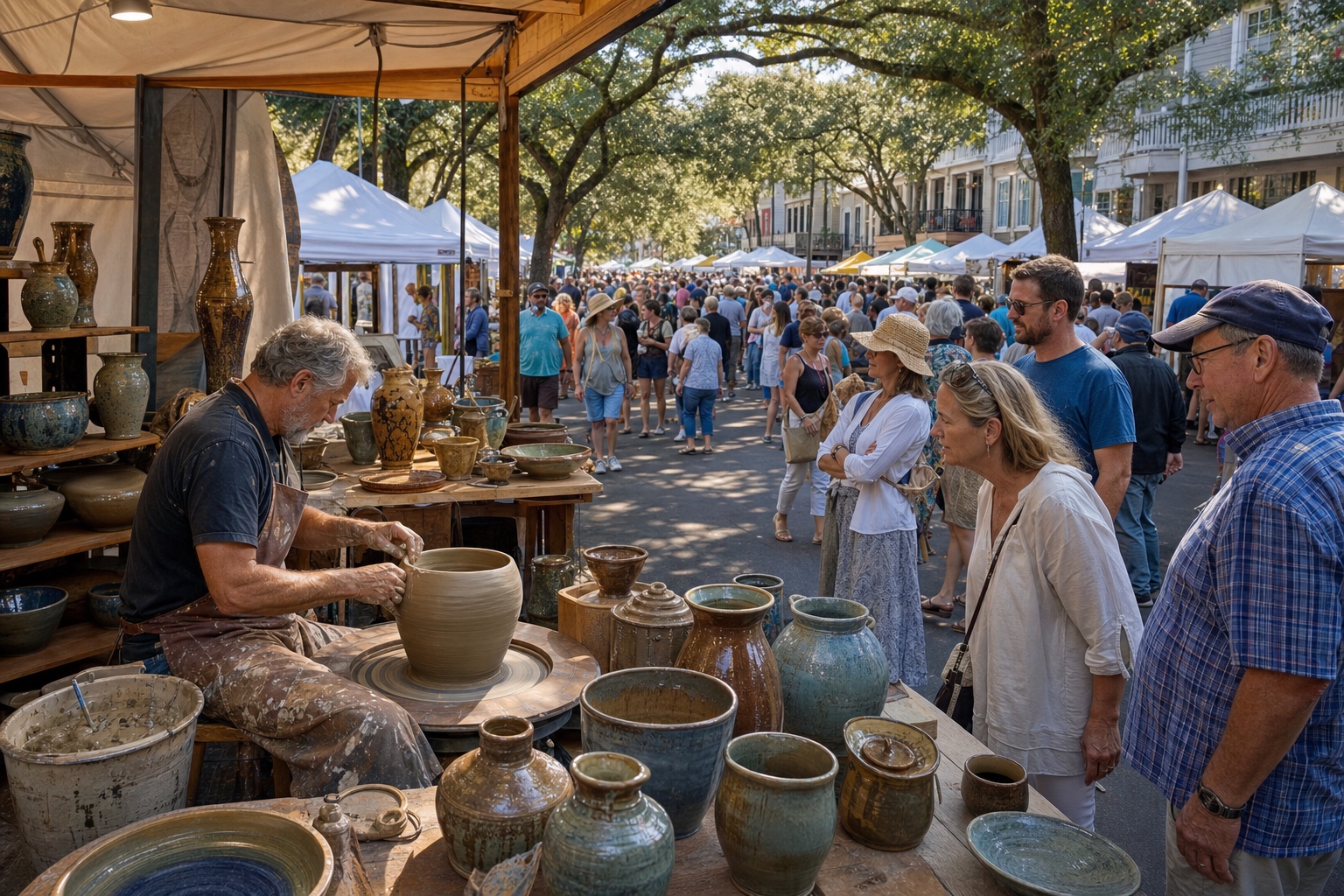
The Peter Anderson Arts & Crafts Festival fills downtown Ocean Springs with artists, makers, food vendors, music, and tens of thousands of visitors during the first weekend in November. Created to honor Peter Anderson, the master potter associated with Shearwater Pottery, it has become Mississippi’s largest fine-arts festival and a public expression of the Gulf Coast town’s creative economy. Booths spread through streets lined with live oaks, independent shops, galleries, and restaurants rather than occupying an isolated fairground.

The strongest visit is an act of looking. Ceramics carry special weight because the Anderson family and Shearwater helped establish Ocean Springs as an arts center, but the field extends through painting, printmaking, jewelry, wood, glass, fiber, sculpture, photography, and mixed media. Artists are present to discuss process, so questions about clay bodies, firing, joinery, editions, or materials reveal more than a quick price comparison. Demonstrations and hands-on activity make craft legible as labor.

The festival is also a town-scale economic event. Restaurants, shops, nonprofits, and residents share crowded streets with exhibitors from across the region. Buying directly from a maker is the most meaningful participation, but attention matters too. Slow down, avoid blocking booths, and distinguish original work from generic merchandise. Ocean Springs rewards an overnight stay that allows the art, coast, and town to settle into one experience.

Why This Festival Is Special

Few large art festivals are so inseparable from a small town’s artistic origin story. Travelers choose Peter Anderson for the density of original work, the special strength of ceramics, and the ability to move from a maker’s booth into Ocean Springs galleries, restaurants, and live-oak streets without leaving the creative district. Its scale exceeds a neighborhood market, yet conversations with artists remain possible. The Gulf Coast setting and Shearwater legacy give the event a material identity that generic urban craft fairs lack. It is both shopping opportunity and living survey of Southern making.

Festival Experience

What to Expect

In the morning, the streets are easier to read and the first stretch through Washington Avenue feels more manageable, with room to actually look at the artist and craft vendor booths before the thickest crowds arrive. By late morning and into midday, the festival hits its busiest stretch, and the central downtown blocks turn into slow, stop-and-go browsing as people cluster around standout booths, food stands, and storefront displays. Through the afternoon, the pace stays busy but shifts a little as some visitors break for barbecue sandwiches, fried seafood baskets, lemonade, or sweet tea, then make another loop through side streets and gallery spaces. Toward late afternoon, the crowd starts to thin, vendors begin winding down, and it gets easier to revisit a booth you marked earlier in the day.

Festival Highlights

  • Artist and craft vendor booths packed along Washington Avenue and into the Government Street area.
  • Washington Avenue street fair atmosphere with constant browsing, bag-carrying shoppers, and storefronts folded into the festival.
  • Local galleries and downtown shops adding indoor stops between outdoor booth rows.
  • Regional handmade art and craft buying that rewards slow wandering instead of a single straight pass

Getting There & Around

Where It Happens

Downtown Ocean Springs is the festival district, but the experience is really organized around Washington Avenue, the main corridor where the densest vendor rows and heaviest foot traffic build first. From there, people branch into the Government Street area when the center gets too packed, then drift back toward Washington Avenue after checking side booths, local galleries, and downtown shops. For an attendee, those places work as one connected walking loop rather than separate stops: the main street for the biggest concentration of browsing, the Government Street blocks for a little breathing room, and the indoor gallery and storefront spaces as short breaks before heading back outside.

Getting Around

Downtown streets close to vehicles and become a dense pedestrian grid. Use designated satellite parking and shuttles when available rather than circling residential blocks. Comfortable shoes matter because the festival footprint is larger than it first appears. Photograph booth numbers before moving on, carry a small tote, and arrange pickup or shipping for heavy art. Wheelchairs and strollers can use the street surface, though crowds and curb transitions require patience. Establish a meeting point beyond the busiest intersection.

Visitor Guide

Festival Food & Drink

Gulf Coast eating centers on seafood, smoke, and portable festival comfort. A shrimp po’boy fills crusty French-style bread with fried or grilled shrimp, lettuce, tomato, pickles, and sauce. Gumbo is a roux-thickened stew whose versions may feature seafood, chicken, sausage, okra, or filé; it is not simply spicy soup, and each cook’s base matters. Red beans and rice pairs slow-cooked beans with seasoning meat over rice for a sustaining meal.

Look for Gulf shrimp, crab cakes, oysters, and local bakery sweets, but choose vendors keeping seafood at safe temperatures. Biloxi-style seafood often reflects Croatian, French, African American, and Vietnamese Gulf Coast influence. Pralines are intensely sweet candies of sugar, dairy, and pecans; one is usually enough. Pimento cheese is a spread of cheese, mayonnaise, and peppers served in sandwiches or with crackers.

Eat before the peak lunch crush and keep hands clean before touching artwork. Save a messy seafood plate for a seated area rather than carrying it into a ceramics booth.

Must Try

• Shrimp po’boy — Gulf shrimp in crusty bread with vegetables, pickles, and sauce.
• Gumbo — Dark-roux stew with seafood or meat, aromatics, and regional seasoning.
• Red beans and rice — Slow-cooked seasoned beans served over white rice.
• Pecan praline — Rich sugar-and-cream candy studded with local pecans.

Budget & Costs

You can attend without a big spend if you treat it as a walking day through Downtown Ocean Springs and just pick up snacks like kettle corn, lemonade, or a funnel cake, but handmade purchases can push the total up quickly once you start buying from multiple booths on Washington Avenue and the surrounding downtown blocks. Parking farther from the center may save hassle only in the sense that you are more likely to find a spot, though it can mean a longer walk in. The biggest variable is not admission from the row data here; it is how much art, craft work, food, and drinks you decide to carry home.

Tips for First-Time Visitors

Start with the booths on Washington Avenue, then peel off into the Government Street area once the main corridor gets packed; that gives you a better shot at seeing more work without spending the whole day shoulder to shoulder. If you spot something you really want from a handmade booth, buy it when you see it rather than planning to circle back late. Keep one hand free for bags and food, and give yourself more time than you think you need, because the day turns into repeated loops between vendor rows, local galleries, and downtown shops.

Safety

The biggest issue here is crowding on Washington Avenue, where people stop abruptly at booths and the pace can get very slow, so keep your bag zipped and stay patient at crossings and barricade edges. If you park on the outskirts, expect a longer walk into downtown and keep track of where you left the car before you get absorbed in the festival. Midday sun and fatigue can sneak up on you during hours of browsing, so take shade and drink breaks before you feel worn out.

Cultural Significance

The festival honors Peter Anderson not as a celebrity name but as part of a Gulf Coast craft lineage rooted in Shearwater Pottery, founded in 1928. That legacy helped Ocean Springs develop a durable identity around makers, galleries, and independent businesses. The event translates that history into direct economic support: artists meet buyers, nonprofits raise funds, and visitors encounter craft as skilled work rather than decoration. Its survival through Gulf Coast storms and economic disruptions also reflects the region’s reliance on creative networks. The festival’s cultural value is strongest when original art and local enterprises remain central.

Plan Your Journey

When to Go

Saturday morning offers the broadest energy but quickly becomes crowded; Sunday morning is often calmer for serious buying and conversation. Arrive before the central streets fill, preview exhibitor categories, and revisit favorite booths before making a major purchase. Early November on the Mississippi Gulf Coast can be warm, rainy, windy, or unexpectedly cool. Carry water, sunscreen, and light rain protection. Give the festival at least half a day; rushing one aisle produces fatigue and reduces hundreds of makers to visual noise.

Where to Stay

Downtown Ocean Springs is ideal because it permits walking, an afternoon rest, and dinner after day visitors leave. Rooms are limited, so Biloxi provides the widest nearby inventory across the bay, including casino hotels and conventional chains. Gulfport adds airport convenience but a longer drive. Choose lodging with dependable parking and a route unaffected by central street closures. For a purchase-focused weekend, space to store fragile art safely is more useful than resort amenities. Ask accommodations how festival traffic changes arrival before setting out.

Bottom Line & Key Days

Bottom Line

Come early, stay downtown if possible, and budget for at least one direct purchase from an artist whose process you understand. Peter Anderson is best for travelers who value ceramics, craft, regional art, and towns where creativity is woven into everyday commerce. Use shuttles, protect fragile work, and eat Gulf Coast food away from crowded booths. The festival’s size can overwhelm, but a thoughtful route and willingness to talk with makers turn it into one of Mississippi’s most rewarding cultural weekends. Leave time after the booths close to experience Ocean Springs as a functioning arts community rather than treating downtown as temporary festival infrastructure.

Key Days

Saturday brings maximum selection and crowd energy; Sunday morning rewards unhurried conversations and considered purchases before the festival closes.

Ready to Experience Peter Anderson Arts and Crafts Festival?

You've explored what makes this festival special. Now it's time to plan your trip. Compare flights, book your hotel, arrange transportation, and take care of your travel essentials—all in one place.

✈ Find Flights

Loading booking widget...

Booking is completed on Expedia in a new tab.

🏨 Find Hotels

Search places to stay

Powered by Booking.com

Booking is completed on Booking.com in a new tab.

Rail & Bus Travel

Compare train and coach routes for the journey.

Compare Routes

Things to Do

Discover tours and attractions before or after the festival.

Explore Experiences

eSIM Mobile Data

Stay connected abroad without traditional roaming charges.

Get an Airalo eSIM

Travel bookings are provided by our trusted partners. We may earn a commission when you book through these links, at no additional cost to you.

Independent Editorial Standards

Every Follow the Festivals guide is independently researched and regularly reviewed using official festival information, destination resources, and trusted travel references. We also welcome verified updates from festival organizers, destination marketing organizations, tourism partners, and local experts to help keep our guides accurate, current, and useful for travelers.

Represent this festival or have a verified update to share? We'd love to hear from you through our contact page.