
Follow the Festivals

Sun Valley Film Festival

Sun Valley Film Festival

Sun Valley, United States

2026-12-02 - 2026-12-06

The Story

Festival Overview

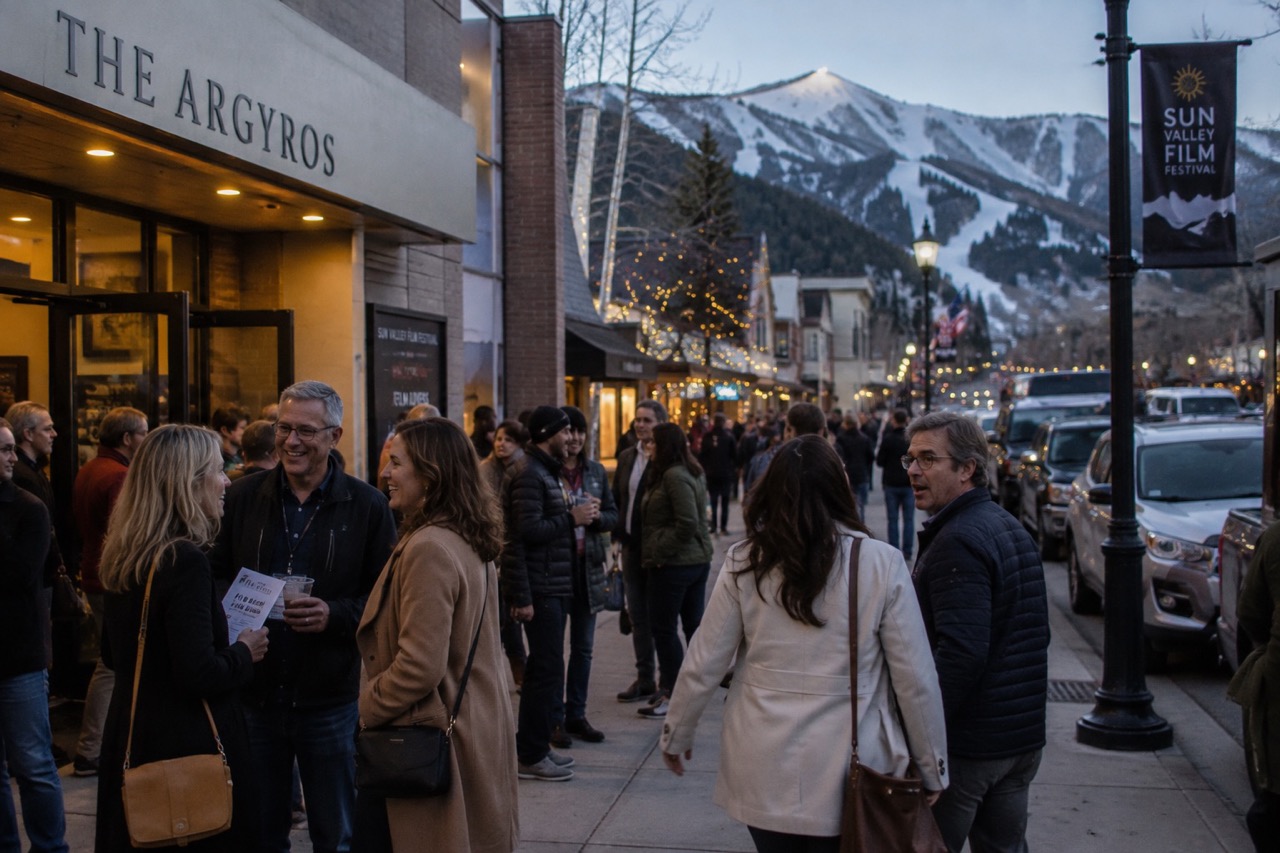
A screenwriter crosses Main Street carrying pages that have not yet become a film.

The title is printed on the first sheet. Nearly everything after it remains uncertain. A scene may be removed before lunch. A conversation could change the final act. The people passing on the pavement cannot know whether the story will reach a screen.

Beyond Ketchum, snow covers the mountains surrounding a destination whose modern identity was partly created through finished images. Sun Valley Resort opened as a carefully presented winter escape, attracting actors, writers and other public figures whose photographs helped carry its mythology across the country.

Sun Valley Film Festival returns cinema to the valley through screenings, television premieres, filmmaker conversations, Coffee Talks, awards, parties and programmes supporting emerging storytellers. Events unfold across Ketchum and Sun Valley, bringing established artists into unusually close proximity with audiences, students and filmmakers still developing their work.

That mixture gives the festival its purpose.

A celebrated actor may discuss a career already familiar to the room. Elsewhere, an unknown director waits to learn how an audience will receive a first feature. A student discovers that filmmaking involves years of revision before anyone poses beside a finished poster.

Sun Valley was shaped by completed images.

For several days, it reveals the unfinished work behind them.

Why This Festival Is Special

Many destination film festivals use intimacy as a promise of celebrity proximity.

Sun Valley becomes more meaningful when proximity creates understanding instead.

Its scale allows the festival to keep encountering itself. Someone who spoke from a stage in the morning may appear later in a café. A filmmaker hears audience members continuing a discussion outside the venue. Students and emerging artists can observe how established professionals speak about revision, rejection and the collaborative labor hidden beneath a finished film.

The valley’s cinematic history deepens that encounter. Sun Valley was developed as America’s first destination ski resort and promoted through a world of carefully constructed elegance. Actors and public figures helped shape its identity, while Ernest Hemingway became closely associated with the region’s literary history.

The festival inherits that glamour without needing to remain trapped inside it.

Education, mentorship and financial support for emerging voices redirect attention toward people whose careers have not yet become part of the destination’s mythology. Awards recognize completed work, but the more consequential moment may occur before any outcome is visible: a writer receives useful criticism, a young filmmaker meets a collaborator or an audience asks a question that reveals what the film has not yet resolved.

Success arrives at the festival carrying a history.

Possibility arrives carrying pages.

Festival Experience

What to Expect

The festival moves between screenings, public conversations, industry gatherings and social events rather than remaining inside one cinema.

Films form the foundation. Narrative features, documentaries, shorts, television work and Idaho-connected productions introduce audiences to stories at different stages of recognition. Some arrive with established names; others depend upon the festival to provide their first sustained attention.

Coffee Talks create a more conversational encounter with filmmakers and performers. Rather than presenting only polished acceptance speeches, these sessions allow guests to discuss decisions, uncertainty, collaboration and the work that preceded public success.

The physical festival remains relatively compact, but Ketchum and Sun Valley are distinct places. Ketchum supplies the walkable downtown rhythm of cafés, restaurants and cultural venues. Sun Valley Resort carries a different atmosphere through its lodge, village and winter-recreation infrastructure. A schedule that moves between them requires travel time.

Passes provide different levels of entry priority. Holding one does not eliminate capacity limits, and arriving after the recommended admission window can surrender its advantage. Individual tickets offer another route into selected screenings, while rush lines may release unoccupied seats shortly before an event.

Outside, winter continues regardless of the programme. Snow softens the streets, darkness arrives early and ice changes the time required to move between a parked vehicle and a theatre door.

Inside, the lights fall.

Another unfinished reputation receives an audience.

Festival Highlights

  • Film screenings introduce new narrative work, documentaries, shorts and television projects to audiences gathered in the Wood River Valley. Smaller productions often benefit most from the setting because viewers encounter them before publicity has supplied an accepted interpretation.
  • Coffee Talks bring filmmakers, actors and other industry figures into public conversation. Their value lies less in proximity to fame than in hearing accomplished people describe process: scenes that failed, roles that changed, financing that disappeared and decisions made before anyone knew whether the project would succeed.
  • The Screenwriters Lab places particular attention on the written foundation of cinema. Writers examine work still capable of changing, allowing the festival to acknowledge that every finished image once existed as language awaiting interpretation.
  • Programmes supporting Idaho filmmakers and emerging voices connect the festival to its region. Grants, awards, education and student opportunities help distinguish cultural development from temporary industry visitation.
  • The Awards Bash provides the festival’s most visible recognition. Filmmakers gather, prizes are presented and several uncertain journeys receive a public milestone.
  • Yet an award does not complete a film’s life.
  • Its next audience may still decide where the story travels.

Getting There & Around

Where It Happens

The festival occupies the connected communities of Ketchum and Sun Valley within Idaho’s Wood River Valley.

Ketchum provides much of its everyday movement. Main Street, cafés, restaurants and cultural venues allow audiences to cross between screenings and conversation without leaving the town’s civic life.

Sun Valley Resort carries the region’s destination history. Its lodge and village preserve the atmosphere of a resort conceived during the early growth of American skiing, when architecture, publicity and celebrity helped turn a remote Idaho valley into a national image.

Festival venues can include dedicated performing-arts spaces, cinemas, resort rooms and temporary gathering places. Exact locations and uses should be taken from the official programme because the distribution can change.

Hailey, farther south, belongs to the wider Wood River Valley and may enter through accommodation, local film culture or selected programming. Travelers should not assume every event occurs within walking distance merely because the festival carries one destination name.

The geography reflects the editorial idea.

Ketchum offers the working conversation.

Sun Valley carries the finished image.

The festival moves between them.

Getting Around

Walking works best within central Ketchum when sidewalks are clear and venues are nearby.

Winter footwear remains essential. A short route can become slow when snow accumulates or melted surfaces refreeze. Allow more time than the map suggests, particularly after dark.

Moving between Ketchum and Sun Valley Resort requires a car, local transportation, shuttle or regional bus service. Study the current programme beside the transit schedule rather than treating them as separate plans.

Mountain Rides operates public transportation through the Wood River Valley and can connect Ketchum, Sun Valley and communities farther south. Festival-specific arrangements may supplement regular service, but they should be confirmed for the relevant programme.

Parking can tighten around popular venues. Arriving early preserves both admission priority and the ability to enter the room without bringing the anxiety of the road into the screening.

Friedman Memorial Airport in Hailey provides the closest commercial air access. Winter disruptions remain possible. Visitors driving from a more distant airport should prepare for mountain conditions, limited daylight and routes that may require several hours.

Do not schedule a final screening against an inflexible departure.

A film deserves its last scene.

Winter deserves enough time to change the road.

Visitor Guide

Festival Food & Drink

Ketchum begins the festival day with coffee, warm bread and windows clouded slightly by the difference between indoor heat and winter air.

Breakfast carries people toward the first screening. Eggs, potatoes and something substantial arrive before anyone knows whether lunch will be protected by the schedule. Another coffee follows a Coffee Talk, extending a conversation that the venue had to end.

Idaho potatoes appear naturally, but the valley’s food identity is broader than its most familiar crop. Trout reflects the state’s rivers and cold-water landscapes. Lamb, beef and game connect the table to ranching country. Mushrooms, grains and seasonal vegetables enter menus shaped by both the Mountain West and a resort community accustomed to receiving travelers.

A bowl of soup becomes particularly useful between venues. It restores warmth without requiring the festival to stop. Dinner asks for more time: perhaps trout, lamb or a carefully prepared regional plate while two people disagree about the afternoon’s documentary.

The festival’s parties create another food-and-drink rhythm, but access depends upon the selected credential. A reception should never become the only place a visitor expects conversation to occur. Ketchum’s compact center allows discussions to continue at restaurant counters and communal tables without an invitation list.

A filmmaker joins friends after a screening.

The meal arrives before the verdict does.

#### Must Try

• **Idaho trout:** A clean expression of the state’s cold-water rivers, often served with restrained accompaniments.

• **Idaho potato dish:** Roasted, mashed or crisped, the familiar crop becomes most persuasive when treated simply rather than as a novelty.

• **Regional lamb:** A connection to the ranching landscapes surrounding the resort’s cultivated image.

• **Elk or other regional game:** Available on selected menus and best approached as part of the Mountain West’s food culture rather than a culinary dare.

• **Hearty winter soup:** A practical bridge between screenings when snow and early darkness begin cooling the town.

• **Locally roasted coffee:** The fuel behind early conversations, programme changes and another hour spent discussing a film.

• **Idaho craft beer:** Best enjoyed after the final screening, accompanied by food and an honest assessment of the next morning.

• **Warm bakery breakfast:** Bread, pastry or a breakfast sandwich eaten before the first venue begins admitting its audience.

The film may have required years to reach Sun Valley.

The table gives its first audience somewhere to decide what they saw.

Budget & Costs

Sun Valley Film Festival can become an expensive trip, but several forms of attendance are possible.

Pass levels differ considerably in price and access. Higher tiers may include earlier admission, parties, special events or hospitality spaces. A film-focused pass or selected individual tickets can provide a more economical experience for visitors who do not need every social component.

Accommodation forms the largest expense for many travelers. Ketchum and Sun Valley are premium winter destinations, and festival demand can narrow affordable options. Hailey or shared lodging may reduce nightly costs while increasing transportation needs.

Flights into the Wood River Valley offer convenience but can carry higher fares. Driving from another regional airport may lower the ticket price while adding rental costs, fuel, winter-road exposure and several hours of travel.

Restaurants range from casual counters to destination dining. Breakfast included with accommodation, café lunches and one reserved dinner can balance cost with the pleasure of experiencing the valley’s food culture.

Skiing adds lift tickets, equipment and clothing to an already substantial festival budget. Include it only when the mountain experience matters independently, not because the resort setting makes it feel obligatory.

The most valuable access may occur inside a modest screening.

Price does not determine which film will remain unfinished in the viewer’s mind.

Tips for First-Time Visitors

Begin by deciding which part of the festival matters most: screenings, Coffee Talks, social events, industry access or a balanced experience. Passes provide different privileges, and the most expensive option is unnecessary for someone primarily interested in films.

Read the admission priority attached to the selected credential. Arrive within the required window; a pass does not preserve priority indefinitely or guarantee entry after capacity has been reached.

Purchase individual tickets early when building a smaller itinerary. If an event moves to rush status, join the designated line with the understanding that admission depends upon seats remaining shortly before showtime.

Leave breathing room between events. A tightly constructed schedule may look efficient until a filmmaker Q&A continues, snow slows the walk or a conversation becomes more valuable than the next opening credits.

Attend work without famous names. Smaller festivals become interchangeable when audiences pursue only the people they already recognize.

Ask filmmakers questions about choices visible in the work rather than requesting career advice disguised as praise. Attention is a more meaningful form of access than proximity.

Dress for the conditions outside and the prolonged stillness inside. Removable layers, waterproof footwear and a compact coat make venue transitions easier.

If combining skiing and cinema, choose one or two deliberate mountain sessions rather than exhausting both experiences.

The festival creates access to the process.

It does not make another person’s time public property.

Safety

Winter conditions shape every movement through the festival.

Wear footwear with reliable traction and watch for ice on pavements, stairs and parking areas. Allow the person ahead enough space to move cautiously rather than forcing a city pace onto a mountain surface.

Dress in layers. Heated venues can feel warm after a cold walk, while queues may require standing outside longer than expected. Gloves, a hat and weather protection should remain accessible rather than buried beneath festival materials.

Drivers should monitor road and weather conditions throughout the visit. Keep the vehicle properly equipped for winter travel and avoid unfamiliar mountain routes when tired after a late screening.

Altitude can cause headache, fatigue, nausea and shortness of breath, particularly after air travel or alcohol. Hydrate, eat regularly and reduce activity when the body asks for time. Worsening symptoms require medical attention.

Venue safety depends upon orderly audiences. Silence phones, do not record screenings or conversations, keep aisles clear and follow staff instructions regarding seating and admission.

Respect personal boundaries at parties, receptions and informal encounters. A credential, introduction or shared industry does not imply consent to physical contact, photography or continued conversation.

In an emergency, contact local services and alert festival staff.

The valley makes proximity feel natural.

Respect keeps it possible.

Cultural Significance

Sun Valley was built partly through storytelling.

Union Pacific developed the resort during the growth of recreational skiing in the American West, using architecture, publicity and famous visitors to establish an image of mountain elegance. Film personalities became part of the destination’s identity, while writers and artists added another layer to the valley’s cultural reputation.

That history contains both achievement and construction. The resort did not emerge in an empty landscape. The Wood River Valley is connected to Shoshone, Bannock and Lemhi peoples whose relationships with the region precede mining, rail travel and resort development.

The film festival enters this inherited destination with an opportunity to do more than repeat its glamour.

By supporting students, screenwriters, Idaho filmmakers and emerging artists, it expands the question of who receives the resources to tell a story. A famous guest may attract attention, but education and financial support determine whether another voice gains the means to continue working after the audience leaves.

Cinema shapes places by deciding what becomes visible.

A responsible film festival must also notice who has historically remained outside the frame.

Plan Your Journey

When to Go

The festival takes place in early winter, when Sun Valley has entered its snow season and the holiday atmosphere begins gathering around the resort and Ketchum.

Arrive before the first scheduled event. Regional air travel can be affected by winter conditions, and an itinerary built around a tight connection leaves little room for delayed flights or difficult roads. An additional evening allows the traveler to understand the relationship between Ketchum, Sun Valley Resort and the principal venues.

Attend for several days if possible. A single screening can introduce a strong film, but it cannot reveal the conversation connecting premieres, Coffee Talks, workshops and emerging-artist programmes. The festival becomes more coherent after audiences begin recognizing the same concerns in different rooms.

Winter recreation can enrich the visit, but it should not quietly replace the festival. A morning on Bald Mountain may fit naturally before an evening screening. Attempting to ski from opening lift until the last possible descent before every programme usually produces hurried meals, missed conversations and an audience too tired to listen closely.

Remain through the concluding awards and final gatherings when the itinerary allows. They show which work received formal recognition.

The conversations afterward reveal what recognition cannot settle.

Where to Stay

Ketchum provides the most practical base for travelers who want screenings, meals and daily festival movement close together.

Staying downtown allows visitors to walk to cafés, restaurants, shops and cultural venues when weather and the programme cooperate. It also makes short intervals useful: an hour between events can become lunch rather than a complicated transportation exercise.

Sun Valley Resort offers the destination’s historic experience. The lodge, village and surrounding facilities place visitors within the resort landscape that helped establish the valley’s international identity. It suits travelers combining the festival with skiing or preferring a self-contained mountain stay.

The distance between Ketchum and Sun Valley is short, but it should not be ignored. Snow, event traffic, parking and waiting for transportation can turn an apparently easy transfer into a missed introduction.

Hailey offers additional accommodation farther south in the Wood River Valley. It may provide greater availability or value, though the daily journey to Ketchum and Sun Valley requires a car, shuttle or dependable public transportation plan.

Reserve early. Festival demand overlaps with winter tourism, and waiting for the full programme may reduce both choice and affordability.

The most cinematic hotel is not necessarily the most useful one.

Choose the room that allows the next morning’s conversation to begin without a race through snow.

Bottom Line & Key Days

Bottom Line

The screenwriter crosses Main Street again.

The pages remain held beneath one arm, protected from falling snow. No production has been announced. No actor has accepted a role. Nothing visible from the pavement suggests that the story is closer to becoming a film.

Yet the script is no longer exactly the one that arrived.

A scene has been questioned. Several lines have been marked. Someone who listened closely asked why a character remained silent when the story most needed them to speak.

Around the writer, Sun Valley continues presenting its finished image: lodge windows glowing against early darkness, snow arranged along the streets, mountains rising beyond a resort whose mythology has traveled for generations.

The pages carry no such certainty.

They may be revised for months. They may wait years. They may never reach a screen.

But inside this valley of completed images, an unfinished story has received something more useful than admiration.

Someone asked what happens next.

Key Days

#### Arrival in the Wood River Valley

Travelers settle into Ketchum, Sun Valley or Hailey, identify the principal venues and learn the winter routes connecting them. The destination becomes legible before the programme begins.

#### Opening Screenings

The first films establish the festival’s range. Audiences encounter premieres, emerging work and familiar artists while the valley’s cafés begin carrying conversations beyond the theatres.

#### Coffee Talks and Craft Conversations

Filmmakers and performers discuss the decisions preceding finished work. The most useful moments often concern uncertainty rather than achievement.

#### Screenwriters and Emerging Voices

Developing projects receive attention through labs, awards, educational programming and encounters with audiences or mentors. Pages arrive capable of leaving differently.

#### Awards and Closing Gatherings

Recognition gives several films and artists a public milestone. Parties gather the festival socially, while quieter conversations continue elsewhere in Ketchum.

#### Departure

Snow-covered mountains recede through a windshield or aircraft window. Finished films leave with awards and new audiences.

Other stories leave with revisions.

Ready to Experience Sun Valley Film Festival?

You've explored what makes this festival special. Now it's time to plan your trip. Compare flights, book your hotel, arrange transportation, and take care of your travel essentials—all in one place.

✈ Find Flights

Loading booking widget...

Booking is completed on Expedia in a new tab.

🏨 Find Hotels

Search places to stay

Powered by Booking.com

Booking is completed on Booking.com in a new tab.

Rail & Bus Travel

Compare train and coach routes for the journey.

Compare Routes

Things to Do

Discover tours and attractions before or after the festival.

Explore Experiences

eSIM Mobile Data

Stay connected abroad without traditional roaming charges.

Get an Airalo eSIM

Travel bookings are provided by our trusted partners. We may earn a commission when you book through these links, at no additional cost to you.

Independent Editorial Standards

Every Follow the Festivals guide is independently researched and regularly reviewed using official festival information, destination resources, and trusted travel references. We also welcome verified updates from festival organizers, destination marketing organizations, tourism partners, and local experts to help keep our guides accurate, current, and useful for travelers.

Represent this festival or have a verified update to share? We'd love to hear from you through our contact page.