
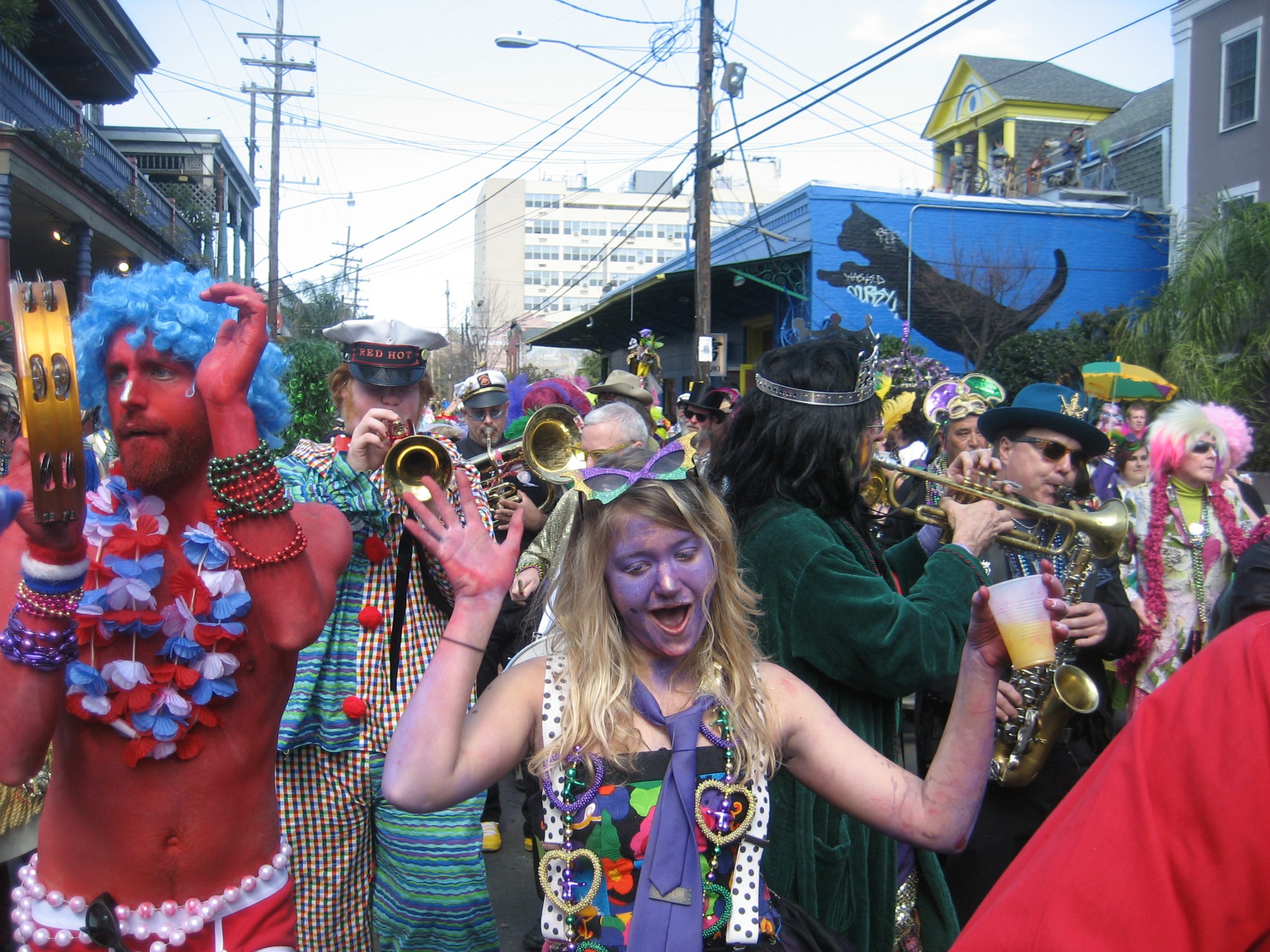
Festival Overview
Galveston’s Mardi Gras unfolds among Victorian commercial buildings, iron balconies, port history, and the damp salt air of a Gulf barrier island. Along The Strand and through the historic downtown entertainment district, parades roll between brick façades as marching bands, krewe floats, costumed riders, and crowds trading shouts for beads transform the streets. Balcony parties add a vertical layer, while family events, music, food, and nighttime revelry give different hours distinct personalities. Galveston began celebrating Mardi Gras in the nineteenth century, and its revival created one of the largest such gatherings in the United States outside Louisiana. The result is unmistakably Texan and island-shaped: more compact than New Orleans, closely tied to a historic port district, and always within reach of the seawall and Gulf. It is both public ritual and street party, with spectacle built into architecture that has survived storms, commerce, decline, and renewal.