
Follow the Festivals

Québec Winter Carnival

Québec Winter Carnival

Québec City, Canada

2027-02-05 - 2027-02-14

The Story

Festival Overview

Québec City rises above the St. Lawrence in stone walls, steep streets, church spires, and roofs built to carry serious snow.

Winter Carnival makes that climate the substance of public life, never an inconvenience to escape. Bonhomme’s Ice Palace, snow sculpture, night parades, outdoor music, slides, snow bathing, and the ice canoe race spread celebration across the upper city and river.

The cold gives every sound and color sharper definition: breath clouds under parade lights, snow squeaks beneath boots, and the Château Frontenac appears above a landscape of ice. This is not a warm festival staged outdoors; it is a declaration that winter itself can become civic culture.

Why This Festival Is Special

Québec Winter Carnival makes climate the substance of civic life. Ice architecture, snow sculpture, parades, slides, outdoor music, Bonhomme, and the river race transform cold from private hardship into a shared public language.

Fortified streets and the moving ice of the St. Lawrence give the celebration a geography no generic winter event could reproduce. Its deeper achievement is social: residents gather outside because winter belongs to the city’s identity.

Festival Experience

What to Expect

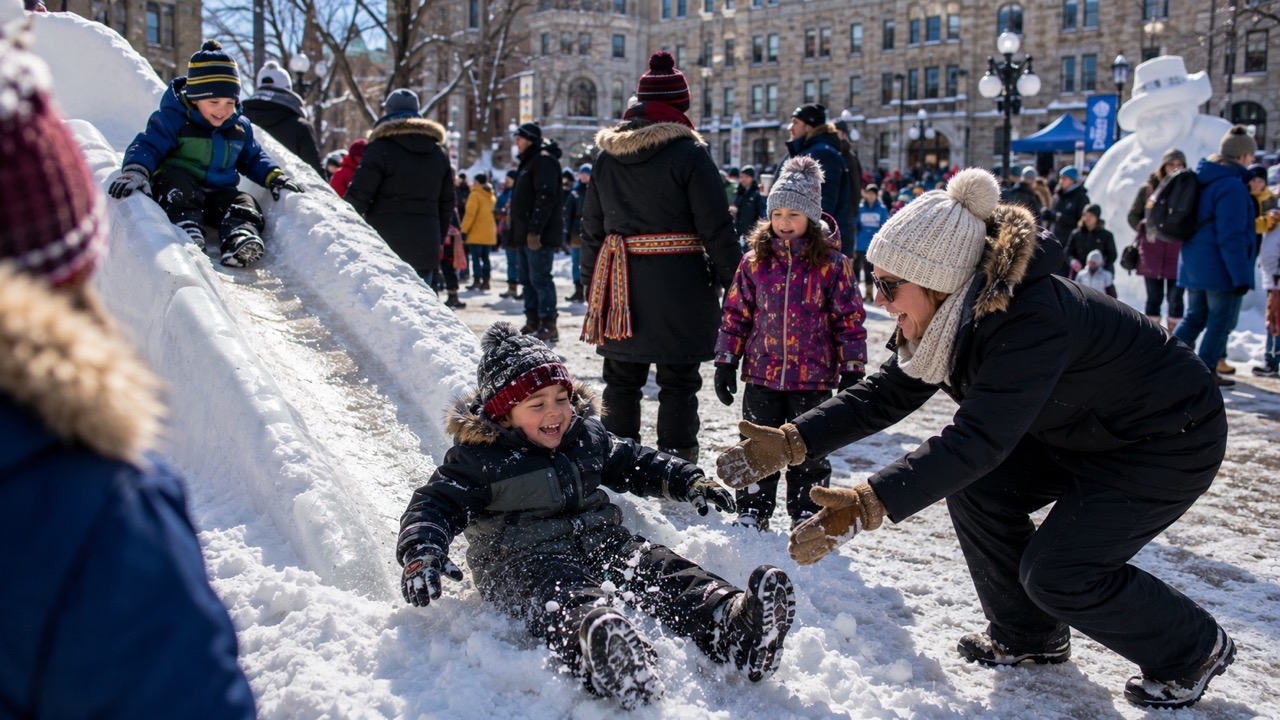
Daylight hours bring families through ice architecture, sculptures, games, tubing, and warming spaces, with Bonhomme appearing as civic host, not a peripheral mascot.

Food kiosks, music, and bright snow create a playful atmosphere even in severe cold. Parade evenings intensify through illuminated floats, dancers, brass, and spectators packed along snowy streets.

The ice canoe race delivers a different drama as teams alternately paddle and haul heavy craft across broken St. Lawrence ice.

Expect the Effigy pass, changing access rules, security, French and English, wet gloves, crowded indoor warm-up points, and activities modified by weather. Successful days alternate exposure with deliberate recovery.

Festival Highlights

  • Bonhomme’s Ice Palace turning blocks of frozen water into the carnival’s symbolic home
  • The ice canoe race combining river knowledge, strength, and moving St. Lawrence ice
  • A night parade throwing color, music, and steam-breath energy across snowy streets
  • Snow sculptures changing with light, temperature, and the marks of winter weather
  • Maple taffy hardening instantly when hot syrup meets clean snow
  • A cold dusk above the river when fortified Québec feels built for the season

Getting There & Around

Where It Happens

The principal carnival zone occupies the Parliament and Old Québec area, where Bonhomme’s Ice Palace and outdoor activity sites stand near the fortified city. Night parade routes use broad upper-city streets, while snow sculpture and slides may occupy nearby parks. The ice canoe race belongs to the St. Lawrence waterfront, linking the celebration to the river’s moving ice. These districts are close on a map but separated by slopes, walls, stairs, and winter footing.

Getting Around

Walking connects most upper-city sites, but snowbanks, ice, steep streets, stairs, and wind make short distances physically demanding. RTC buses reduce climbs and connect Sainte-Foy or Saint-Roch bases; use the network before parade road closures alter normal routes.

Driving into Old Québec creates parking and navigation problems, so leave the car at the hotel or a planned facility. The funicular can help between Lower Town and Dufferin Terrace when operating, though queues may grow.

Group upper-city activities together, then make one deliberate waterfront trip for the canoe race. Carry traction aids when conditions warrant and allow twice the normal transfer time before a reserved event.

Visitor Guide

Festival Food & Drink

Québec’s carnival table is built for cold: rich sauces, pastry, meat, legumes, maple, and dishes meant to restore energy after hours outdoors. Food is part of the climate culture because warmth, hospitality, and public celebration depend on planned indoor intervals.

Eat a full meal before a night parade, use maple sweets as a treat, not a substitute for fuel, and take fortified drinks slowly because cold can hide intoxication. One dependable indoor restaurant break belongs in each full day.

#### Must Try

• **Poutine:** Hot fries, fresh cheese curds, and gravy provide practical cold-weather fuel with a strong Québec identity.

• **Tourtière:** The spiced meat pie carries French Canadian household tradition into a substantial winter meal.

• **Soupe aux pois:** Pea soup offers warmth and a direct connection with enduring Québécois cooking.

• **Maple taffy on snow:** The preparation turns winter conditions themselves into part of the taste and ritual.

• **Caribou in moderation:** The carnival-associated fortified drink belongs in a controlled tasting followed by warmth, water, and no driving.

Budget & Costs

Budget: Use public spaces and parade viewing, stay on a transit route, carry proven winter gear, and plan one indoor meal.

Mid-Range: Add central lodging, activity access, museums, and two full days with warm-up intervals.

Higher Spend: Old Québec accommodation and flexible transport reduce cold exposure, while weather-flexible nights protect the trip from cancellations or severe conditions.

Tips for First-Time Visitors

Dress in moisture-wicking base layers, insulating midlayers, a windproof outer shell, warm boots, wool socks, toque, neck protection, and mittens that permit a dry backup pair. Fashion matters far less than keeping feet and hands functional.

Buy the Effigy or activity access before reaching the gate, then learn which experiences require separate reservations. Schedule indoor food or museum breaks before shivering begins.

For the parade, use insulation between your feet and the snow and choose a route position with an easy exit.

Protect phone batteries inside a warm pocket. The ice canoe race demands both an early viewpoint and respect for barriers along the river.

Safety

Cold injury is the central risk. Monitor wind chill, cover exposed skin, change wet socks or gloves immediately, and enter a heated space when numbness, confusion, or uncontrollable shivering begins.

Ice and packed snow demand traction and slower walking, especially on slopes and stairs. Alcohol accelerates heat loss and weakens judgment despite a temporary feeling of warmth.

Keep children within reach in parade crowds and label their outerwear with contact information.

Respect barriers at the river, ice structures, and slides; conditions are professionally managed but never inert. Drivers should clear the vehicle fully and avoid travel during severe snow or freezing rain.

Cultural Significance

The modern carnival emerged as Québec City sought to turn a harsh season into collective identity and winter tourism. Bonhomme, the arrow sash, ice palace, canoe racing, snow sculpture, and outdoor conviviality translate French Canadian history into accessible public symbols.

The event matters locally because it refuses the idea that civic life must contract until spring; residents gather under conditions that demand preparation, humor, and mutual endurance.

Ice canoe racing reaches deeper than spectacle, recalling practical river crossings before modern transportation. At its strongest, the carnival presents winter as lived knowledge held in clothing, architecture, food, movement, and community—far beyond decorative whiteness.

Plan Your Journey

When to Go

Stay three nights and include a weekend, since the ice canoe race, major parade, and largest gatherings often cluster around specific days. Opening periods offer fresh snow structures and strong ceremonial energy; later days can feel more relaxed but depend on weather wear.

Daytime is best for the Ice Palace, sculpture, and family activities, while darkness transforms the parade and illuminated sites. Temperatures may range from manageable cold to dangerous wind chill, with snow or freezing rain changing movement.

One day can cover the palace and an evening event, but two full days allow warm-up intervals and river spectacle without rushing. Build the trip around one enduring anchor, not every activity.

Where to Stay

Old Québec places the walls, Place d’Youville, Parliament area, and many carnival sites within walking distance; choose it for atmosphere and easy warm-up returns, accepting steep grades and premium winter rates.

Saint-Roch offers restaurants, breweries, and lower-city energy with funicular, bus, or uphill walking required for upper sites. Montcalm provides quieter streets near the Plains of Abraham and practical access to parade areas.

Sainte-Foy offers broader hotels and parking at lower prices, but each festival day begins with bus or car movement. A central room with reliable heating, boot storage, and flexible cancellation is more valuable than a scenic view when severe weather alters plans.

Bottom Line & Key Days

Bottom Line

The carnival’s defining image joins fortified stone, falling snow, warm light, and a crowd choosing to remain outdoors together. Build each day around one enduring anchor, return inside before cold becomes risk, and let Québec City show how winter can organize public joy.

Key Days

Winter Arrival
Settle near the upper city, test clothing, and walk the main sites before deep cold and crowds.

Palace Day
Explore Bonhomme’s Ice Palace, sculpture, and outdoor activities with a planned indoor meal break.

River Challenge
Reach the St. Lawrence early for the ice canoe race and respect every waterfront barrier.

Parade Night
Protect feet from the snow, choose an exit route, and let illuminated floats define the evening.

Warm Farewell
Finish with a Québécois breakfast and a slower look at Old Québec after the largest gatherings.

Ready to Experience Québec Winter Carnival?

You've explored what makes this festival special. Now it's time to plan your trip. Compare flights, book your hotel, arrange transportation, and take care of your travel essentials—all in one place.

✈ Find Flights

Loading booking widget...

Booking is completed on Expedia in a new tab.

🏨 Find Hotels

Search places to stay

Powered by Booking.com

Booking is completed on Booking.com in a new tab.

Rail & Bus Travel

Compare train and coach routes for the journey.

Compare Routes

Things to Do

Discover tours and attractions before or after the festival.

Explore Experiences

eSIM Mobile Data

Stay connected abroad without traditional roaming charges.

Get an Airalo eSIM

Travel bookings are provided by our trusted partners. We may earn a commission when you book through these links, at no additional cost to you.

Independent Editorial Standards

Every Follow the Festivals guide is independently researched and regularly reviewed using official festival information, destination resources, and trusted travel references. We also welcome verified updates from festival organizers, destination marketing organizations, tourism partners, and local experts to help keep our guides accurate, current, and useful for travelers.

Represent this festival or have a verified update to share? We'd love to hear from you through our contact page.

Photo Credits