
Follow the Festivals

Binche Carnival

Binche Carnival

Binche, Belgium

2027-02-07 - 2027-02-09

The Story

Festival Overview

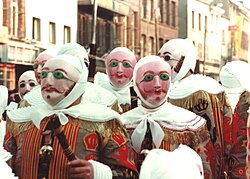
Behind medieval walls in Belgium's Hainaut province, a compact town spends much of the year preparing for three days that belong completely to local tradition. Drums begin before dawn, feathered hats rise above the crowd, wax-masked Gilles advance in a measured step, and the Grand-Place becomes the center of a ritual far older and more disciplined than a generic carnival parade.

Shrove Sunday introduces elaborate costumes, Monday carries youth and neighborhood participation, and Tuesday brings the Gilles into their most recognizable public role. Spectators fill narrow streets, but the celebration is not arranged around them.

Families, societies, musicians, and craftspeople sustain it across generations, giving the experience its power: an entire community performs a tradition it understands from within.

Why This Festival Is Special

Many European carnivals emphasize spectacle, but this one is distinguished by disciplined local roles and a three-day ritual owned by the town. The Gilles' wax masks, bells, wooden clogs, ostrich plumes, drums, and oranges form a coherent tradition rather than a costume theme available to anyone. Travelers choose the journey to witness continuity in motion—a community using its streets, families, music, and ceremonial societies to transmit identity carefully across generations.

Festival Experience

What to Expect

Sunday brings imaginative costumes and formal group processions, revealing visual creativity before the most famous Tuesday traditions. Monday has a more youthful and locally social character, with neighborhood activity and music continuing through the center.

Before dawn on Tuesday, drums call participants from homes and meeting places. Gilles appear in wax masks during the morning, move to the rhythm of drums and brass, and later wear towering ostrich-feather hats when conditions allow.

Oranges are thrown toward spectators as gifts of good fortune, not missiles to be returned. Crowds thicken sharply around the Grand-Place, music echoes between façades, and the final night combines exhaustion, ceremony, and celebration.

Festival Highlights

  • Predawn drum calls drawing participants through dark streets on Shrove Tuesday
  • Gilles appearing in distinctive wax masks during the formal morning procession
  • Towering ostrich-feather hats transforming the afternoon movement through the old center
  • Oranges offered to the crowd as symbols of generosity and good fortune
  • Brass and drum rhythms echoing through narrow lanes before groups reach the Grand-Place
  • Three successive days revealing different generations, costumes, and responsibilities within the tradition

Getting There & Around

Where It Happens

The historic center is the stage. The Grand-Place acts as the principal gathering point, while narrow streets, society meeting rooms, cafés, and family houses form the routes through which costumed groups and musicians circulate. Gates and approach roads mark the boundary of the old town, but no single fenced venue contains the tradition. Movement between private preparation and public square gives each procession its meaning.

Getting Around

Once the processions begin, the old center belongs to pedestrians and ceremonial groups. Regional trains can reach the local station, followed by a short walk uphill, but service times must be checked against the predawn Tuesday start and late finish.

Drivers should park outside closure zones and accept a significant walk; attempting to move the car between procession periods creates unnecessary difficulty. Inside the walls, follow steward directions, keep to the edge of routes, and never cut through a society or between musicians.

Choose one side of the Grand-Place before the densest crowd forms. At night, return by a known lit route or use prearranged regional transport rather than searching for a last-minute taxi.

Visitor Guide

Festival Food & Drink

Carnival eating follows cold hours, interrupted sleep, and crowded streets. A warming bowl of soup, fries, sausage, or a substantial café plate is more useful than continuous sweets during the long Tuesday program. Belgian waffles and pastries provide quick energy, while local beer belongs to the social life around the square but should be paced carefully before predawn activity. Hainaut's brewing tradition includes strong ales whose alcohol is easy to underestimate in winter. Oranges carry ceremonial meaning when thrown by the Gilles; catching one is part of the encounter, and throwing it back is disrespectful. Reserve a proper regional meal for Sunday or Monday, when kitchens and tables are easier to reach than during the peak procession.

Must Try
• Belgian frites — Twice-fried potatoes served crisp with mayonnaise or another sauce from a high-turnover stand.
• Gaufre de Bruxelles — Light rectangular waffle with deep pockets and a crisp exterior.
• Hainaut farmhouse ale — Regional beer with complex malt and yeast character, enjoyed slowly with food.
• Boulet sauce lapin — Meatballs served in a sweet-sour onion sauce with fries.
• Carnival orange — A fruit offered by a Gille as a token of luck, kept rather than thrown back.

Budget & Costs

Street processions do not require a grandstand ticket, so accommodation and transport are the largest expenses. Rooms in the old center command a premium and disappear early, but they protect access to predawn and late-night rituals.

A Mons base may cost less while adding rail or driver expenses and limiting flexibility. Food, hot drinks, and beer accumulate across long outdoor hours; plan one seated meal and carry small cash for quick purchases.

Add winter gear, regional train fares, and a reserved return to the real budget. Paid tours are unnecessary for viewing, though a museum or locally informed cultural visit can add context worth supporting.

Tips for First-Time Visitors

Learn the three-day structure before arriving so every costume is not mistaken for the Tuesday Gilles. Reach the center well before dawn, wear insulated waterproof footwear, and keep both hands free in the crowd.

A Gille's orange is a gift: catch it when possible, protect the face, and never throw it back. Do not touch masks, hats, baskets, bells, instruments, or costumes.

Ask before close photographs during preparation or family moments, even when public streets feel theatrical. Stand behind barriers and leave a clear route for groups.

The most valuable perspective comes from patience—hearing drums approach, watching formation, and understanding repetition rather than chasing every visible hat.

Safety

Dense streets, cold weather, wet cobbles, thrown oranges, moving groups, alcohol, and predawn darkness require attention. Protect eyes during the orange procession and never step into the route to retrieve fruit.

Slippery pavement and packed square entrances make rushing hazardous. Keep children close, establish a meeting point, and secure valuables beneath outer clothing.

Use hand warmers or indoor breaks to prevent cold stress, especially after standing still. Respect barriers and stewards; ceremonial participants need uninterrupted space.

Pace strong beer with food and water, and do not drive after drinking or extended sleep loss. Seek official help if crowd pressure prevents comfortable movement.

Cultural Significance

The carnival is recognized as intangible cultural heritage because its knowledge lives through societies, families, musicians, costume makers, and repeated local practice. Becoming a Gille is governed by community tradition, and the roles, rhythms, masks, dress, and movement are not interchangeable entertainment.

Preparation occupies much of the year and connects generations to the town's identity. Its significance lies in collective continuity: residents do not merely preserve an old form but renew it publicly through disciplined participation.

Plan Your Journey

When to Go

The decisive experience is Shrove Tuesday, beginning before sunrise and continuing through the orange-throwing processions and evening return to the Grand-Place.

Arrive by Saturday to understand the old center before closures, then attend Sunday and Monday for costumes, music, and the changing roles of participants. Three nights reveal far more than a Tuesday day trip, especially because the early drum calls and late communal gatherings frame the public procession.

February weather is cold, damp, and occasionally icy; standing still in narrow streets magnifies it. Those with only one day should arrive the previous evening, sleep within walking distance, and treat the predawn start rather than the afternoon crowd as essential.

Where to Stay

A room inside or immediately beside the historic center offers the rare advantage of reaching predawn gatherings on foot and returning between procession periods. Inventory is extremely limited, noise continues late, and road access becomes difficult.

Mons provides a larger hotel and restaurant base with regional rail connections, but the final service and early-morning timing may not suit the most important rituals. La Louvière is another practical regional option for travelers with arranged transport.

Choose the old center for immersion, Mons for comfort and choice, or a nearby town only with a dependable sober driver. The true tradeoff is sleep versus access: distance can cost the very hours that explain the carnival.

Bottom Line & Key Days

Bottom Line

The lasting memory is a sound before it is an image: drums approaching through a dark lane, steady enough to wake an entire town into tradition. Feathered hats and flying oranges provide the famous photographs, but the deeper reason to travel is the seriousness beneath them.

Arrive before dawn, stand aside, and watch how every family doorway and society route feeds the Grand-Place. The carnival reveals a rare form of civic inheritance—joyful, demanding, and unmistakably rooted in the streets that have carried it for centuries.

Key Days

Arrival
Settle within walking distance, learn the old-center entrances, and visit the carnival museum or principal streets before closures.

Shrove Sunday
Watch imaginative costumed societies introduce the visual creativity and formal movement of the celebration.

Shrove Monday
Follow youth and neighborhood traditions while preserving energy for the predawn Tuesday start.

Shrove Tuesday
Enter the center before dawn, observe the masked morning ritual, and remain for feathered hats and oranges.

Final Night
Return to the Grand-Place for music and communal release, then leave through the prearranged route.

Ready to Experience Binche Carnival?

You've explored what makes this festival special. Now it's time to plan your trip. Compare flights, book your hotel, arrange transportation, and take care of your travel essentials—all in one place.

✈ Find Flights

Loading booking widget...

Booking is completed on Expedia in a new tab.

🏨 Find Hotels

Search places to stay

Powered by Booking.com

Booking is completed on Booking.com in a new tab.

Rail & Bus Travel

Compare train and coach routes for the journey.

Compare Routes

Things to Do

Discover tours and attractions before or after the festival.

Explore Experiences

eSIM Mobile Data

Stay connected abroad without traditional roaming charges.

Get an Airalo eSIM

Travel bookings are provided by our trusted partners. We may earn a commission when you book through these links, at no additional cost to you.

Independent Editorial Standards

Every Follow the Festivals guide is independently researched and regularly reviewed using official festival information, destination resources, and trusted travel references. We also welcome verified updates from festival organizers, destination marketing organizations, tourism partners, and local experts to help keep our guides accurate, current, and useful for travelers.

Represent this festival or have a verified update to share? We'd love to hear from you through our contact page.