
Follow the Festivals

Kanda Matsuri

Kanda Matsuri

Tokyo, Japan

2027-05-15 - 2027-05-16

The Story

Festival Overview

Tokyo’s Kanda district sits between the old merchant city and the modern business core, with Kanda Myojin shrine overlooking streets threaded by rail lines, offices, shops, and historic neighborhoods. Kanda Matsuri brings sacred processions, portable shrines, mounted participants, musicians, and neighborhood groups into that dense urban fabric.

As one of the capital’s great Shinto festivals, it joins ritual authority to street-level energy: priests perform formal observances, elaborate floats carry historical imagery, and mikoshi teams move with rhythmic force through commercial districts.

The festival’s largest public expressions occur in alternating years, so the character of a visit depends on the cycle. At its fullest, the event reveals Tokyo not as a frictionless megacity but as a collection of communities carrying inherited responsibilities through contemporary streets.

Why This Festival Is Special

Tokyo contains many celebrated matsuri, but Kanda Matsuri places neighborhood Shinto identity within the symbolic center of national commerce and technology. A mikoshi can pass beneath railway lines near Akihabara before returning to a shrine with roots far older than the surrounding skyline. The grand cycle adds historical pageantry without reducing the event to reenactment. Travelers choose it to see the metropolis behave like connected parish communities rather than an anonymous mass.

Festival Experience

What to Expect

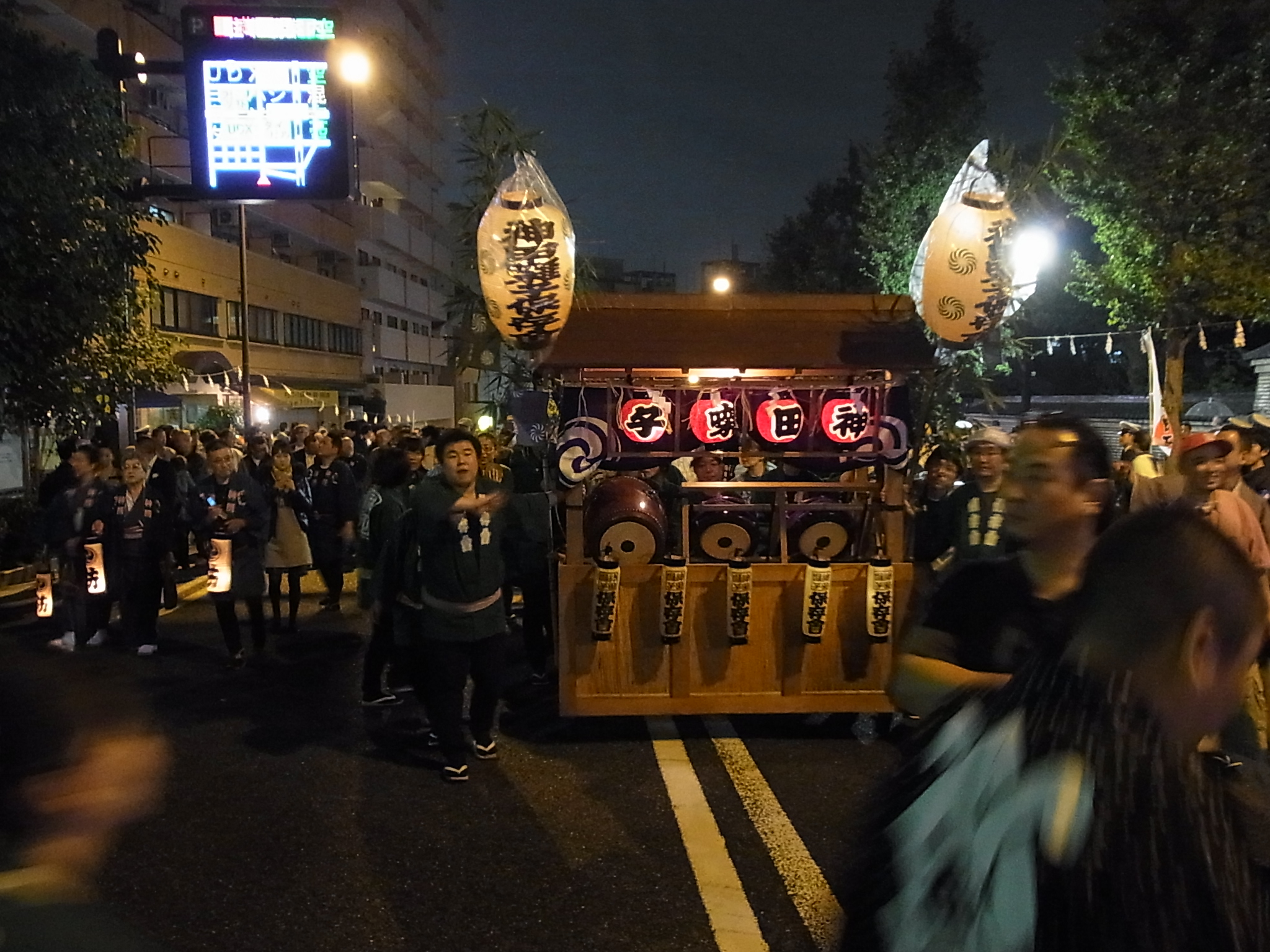
Shrine grounds begin with purification, prayer, offerings, and the controlled movement of priests and representatives. On the grand procession day, mounted figures, historical costumes, musicians, floats, and sacred palanquins travel a long route through the city, with waits between sections and intermittent street access.

Mikoshi activity feels more immediate: teams chant, shoulder heavy portable shrines, respond to leaders, and negotiate turns through dense crowds before approaching Kanda Myojin.

Spectators must remain outside working lanes and obey stewards. Photography is common, but ritual moments deserve silence and space rather than aggressive positioning.

Festival Highlights

  • Kanda Myojin providing a vivid sacred counterpoint to nearby Akihabara and modern rail infrastructure
  • The grand procession carrying historical costume and Shinto ritual through the metropolitan core
  • Neighborhood mikoshi teams demonstrating coordination, endurance, and local identity
  • Nihonbashi and Kanda merchant traditions remaining visible within a contemporary business city
  • Musicians, mounted participants, and ceremonial objects creating layers of sound and movement
  • The final approach to the shrine concentrating public energy without erasing religious purpose

Getting There & Around

Where It Happens

Kanda Myojin is the spiritual anchor, set near Ochanomizu and Akihabara. Processional routes extend through Kanda, Nihonbashi, Marunouchi, and surrounding central districts according to the festival cycle, while neighborhood mikoshi converge on the shrine through narrower streets. The experience therefore alternates between sacred precinct, grand avenues, commercial blocks, and local association territory.

Getting Around

Rail is the foundation, followed by substantial walking. Ochanomizu, Akihabara, Kanda, and nearby subway stations provide multiple approaches, but the closest exit may be closed or overwhelmed during a convergence.

Use one station to enter and another to leave rather than forcing a return through the same crowd.

The grand procession covers too much territory to chase continuously; choose two viewing points linked by rail and accept that street crossings may delay the transfer. Around mikoshi routes, stay behind stewards and never step into the path for a photograph.

Visitor Guide

Festival Food & Drink

The surrounding districts reward small, deliberate meals rather than treating shrine stalls as the entire culinary experience. Kanda is known for long-standing soba shops, curry restaurants, izakaya, and sweet makers serving office workers, merchants, students, and residents. Eat before the main procession reaches the area, then use a quieter interval for taiyaki or senbei without blocking shrine approaches. In Nihonbashi, refined shops connect the festival route to Edo-era commercial food traditions; around Akihabara, casual curry and noodle counters provide faster options. Sake belongs to shrine culture and neighborhood celebration, yet public ritual calls for moderation and respect.

Must Try

• Kanda soba — Buckwheat noodles served hot or cold in shops associated with the district’s old commercial life.
• Japanese curry rice — Thick, savory curry over rice, a practical specialty around Kanda and nearby Jimbocho.
• Taiyaki — Fish-shaped cake filled with sweet red bean paste or other fillings.
• Senbei — Crisp rice crackers seasoned with soy sauce, salt, or seaweed for an easy street-side snack.
• Amazake — A sweet, low- or non-alcohol fermented rice drink often encountered near shrines and seasonal events.

Budget & Costs

Public viewing and shrine access keep the core experience affordable. Accommodation and metropolitan transport form the main costs, with Ochanomizu and Akihabara commanding convenience premiums.

A reloadable transit card, modest food budget, and one paid cultural activity elsewhere in the city are generally more useful than a packaged viewing product.

Reserve lodging early for the major cycle and avoid taxis during processions, when road controls make them slow as well as expensive. Carry some cash for small shops, shrine offerings, and food stalls without displaying a large wallet in crowds.

Tips for First-Time Visitors

Determine whether the visit falls in a grand or reduced cycle before building expectations. Study the difference between the formal procession and neighborhood mikoshi so the schedule matches the desired experience.

Arrive at Kanda Myojin early enough to observe the shrine before crowd control narrows access. A small towel, water, and shoes suited to long pavement walks are useful in warm spring conditions.

Bow or remain quiet during prayers, avoid touching sacred equipment, and ask before photographing participants at close range. Learning a little about the local merchant associations makes the group identities far more legible.

Safety

Portable shrines are extremely heavy and move with collective momentum; remain outside their working corridor and follow leader or police instructions immediately.

Procession edges, station stairs, and shrine approaches create crowd pressure, especially when spectators stop suddenly for photos. Heat and long standing can cause dehydration even in spring.

Keep children close, avoid climbing walls or street furniture, and use a quieter station when the nearest entrance becomes saturated. Sacred horses or mounted participants require additional distance and calm behavior.

Cultural Significance

The festival is associated with protection, prosperity, and the historic life of Edo’s merchant districts. Kanda Myojin’s deities and neighborhood parish relationships connect religious observance with commercial communities that helped shape the capital.

Processions once affirmed ties between shrine, townspeople, and political power; modern routes now pass corporate towers, rail hubs, and electronics districts. That continuity demonstrates how Tokyo preserves local obligations inside immense metropolitan change.

Plan Your Journey

When to Go

The major biennial cycle provides the grand procession and the broadest neighborhood participation, while intervening years are more restrained. Within a full celebration, the formal procession day offers historical scale and a long city route; the mikoshi-centered day brings more concentrated energy around the shrine.

Spring weather is generally mild but can turn rainy or warm, and many viewing areas provide little shade. Two days are worthwhile because the dignified procession and the physical intensity of portable shrines express different sides of the tradition.

Arrive a day early to understand the terrain around Kanda Myojin before closures and spectators complicate movement.

Where to Stay

Ochanomizu places travelers near Kanda Myojin with excellent rail access and a quieter academic atmosphere, making it the most practical base for early shrine visits. Akihabara offers more hotels, late dining, and a vivid contrast between electronics and historic ritual, though crowds and sensory intensity continue beyond festival hours.

Nihonbashi provides refined accommodation and ties to the merchant districts included in the festival’s cultural geography, with longer walks or rail transfers to the shrine. Ueno adds museums and broad transport options at a modest distance.

Choose a station served by more than one line because street controls can alter the final walking approach.

Bottom Line & Key Days

Bottom Line

Kanda Matsuri makes Tokyo’s scale intelligible through human responsibility. Priests, merchants, musicians, and mikoshi teams carry tradition across streets otherwise defined by trains, offices, and electronics.

Watch from the edge with patience, learn which neighborhood is approaching, and let the procession come rather than chasing every image. The enduring impression is of an ultramodern capital held together by old routes, shared weight, and a shrine still commanding attention above the city noise.

Key Days

Shrine Orientation
Visit Kanda Myojin early, learn the precinct, and identify rail approaches before crowd controls begin.

Procession Morning
Choose a fixed route position and allow ceremonial groups to unfold without constant relocation.

City Passage
Use rail for one carefully planned second viewpoint in the merchant or business districts.

Mikoshi Gathering
Stand behind stewards as neighborhood teams carry portable shrines toward the sacred precinct.

Quiet Return
Revisit the shrine after peak movement and explore Kanda’s food and commercial history at a slower pace.

Ready to Experience Kanda Matsuri?

You've explored what makes this festival special. Now it's time to plan your trip. Compare flights, book your hotel, arrange transportation, and take care of your travel essentials—all in one place.

✈ Find Flights

Loading booking widget...

Booking is completed on Expedia in a new tab.

🏨 Find Hotels

Search places to stay

Powered by Booking.com

Booking is completed on Booking.com in a new tab.

Rail & Bus Travel

Compare train and coach routes for the journey.

Compare Routes

Things to Do

Discover tours and attractions before or after the festival.

Explore Experiences

eSIM Mobile Data

Stay connected abroad without traditional roaming charges.

Get an Airalo eSIM

Travel bookings are provided by our trusted partners. We may earn a commission when you book through these links, at no additional cost to you.

Independent Editorial Standards

Every Follow the Festivals guide is independently researched and regularly reviewed using official festival information, destination resources, and trusted travel references. We also welcome verified updates from festival organizers, destination marketing organizations, tourism partners, and local experts to help keep our guides accurate, current, and useful for travelers.

Represent this festival or have a verified update to share? We'd love to hear from you through our contact page.

Photo Credits