
Follow the Festivals

Isle of Man TT

Isle of Man TT

Douglas, Isle of Man

2027-05-31 - 2027-06-12

The Story

Festival Overview

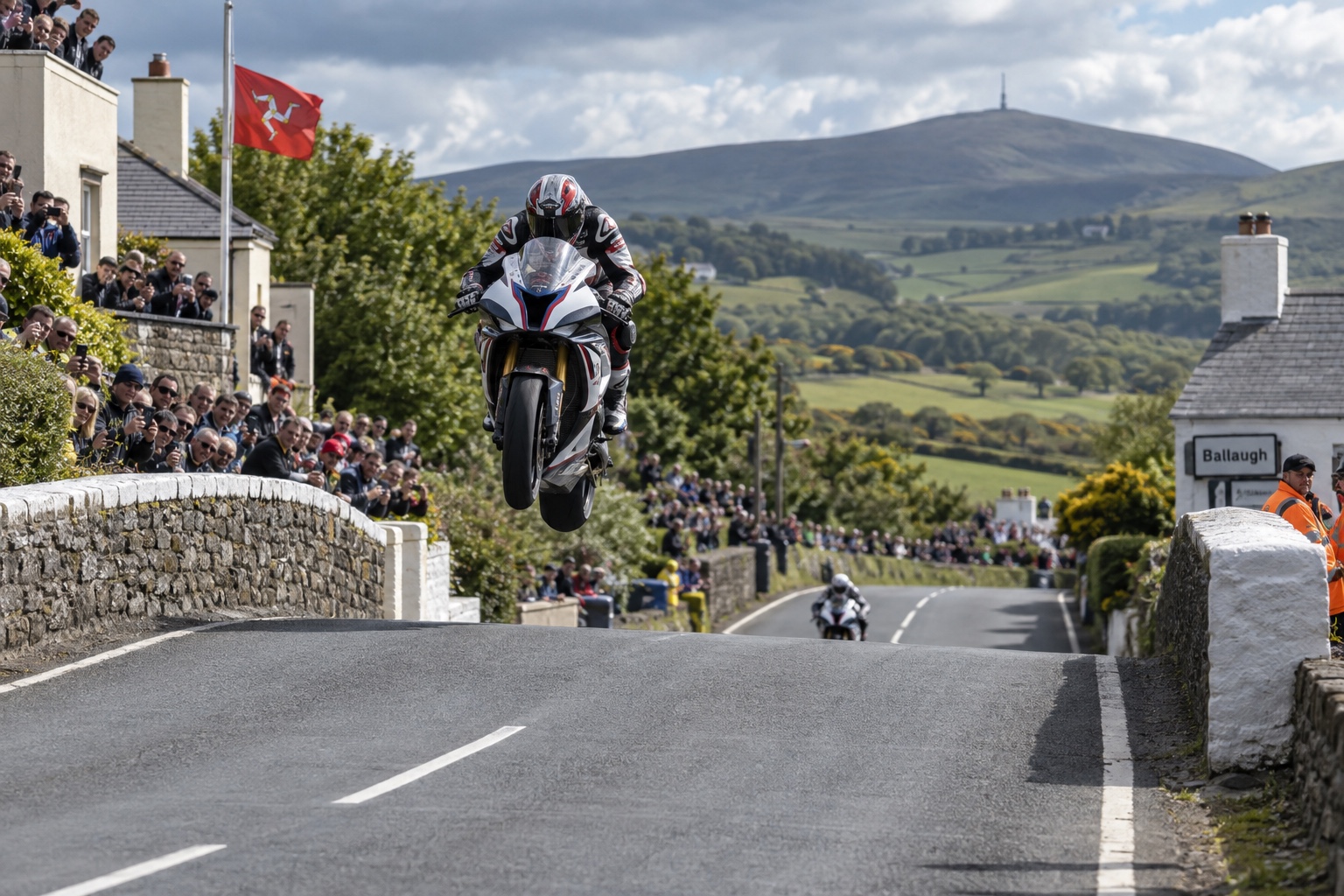
The road looks ordinary until everyone stops speaking. Houses face the course, hedges hold the wind and spectators wait behind a boundary that must not be crossed. The motorcycle is heard before it is seen. Sound approaches with terrifying speed, passes through the landscape and leaves the same road physically unchanged but impossible to understand in the same way.

The Isle of Man TT turns public roads across the island into the Snaefell Mountain Course for qualifying and racing. Villages, mountain ground and everyday routes become part of one dangerous circuit. The traveler is not visiting a stadium imposed upon the destination. They are entering an island temporarily reorganized by speed, closures, weather, residents, marshals and risk.

Why This Festival Is Special

Most races separate competition from ordinary geography. The TT asks the island’s roads to remain recognizable while becoming something radically different. A wall, bend or rise used in daily travel acquires meaning through the speeds carried past it. Residents do not simply live near the event; many live inside its logistical consequences.

That altered geography creates awe and obligation together. The spectacle depends on riders accepting profound risk, marshals controlling public space and communities adapting their movement. The TT is special because speed cannot be detached from place. To admire it responsibly, the traveler must understand the road as route, racecourse, workplace and boundary at the same time.

Festival Experience

What to Expect

The event unfolds across qualifying and race periods, with schedules vulnerable to weather, incidents and road conditions. Viewing ranges from grandstands and organized areas to permitted roadside locations, each carrying different access, comfort and escape limitations. Once roads close, movement may stop for far longer than a first-time visitor expects.

Expect waiting to be inseparable from racing. A viewing position may require early arrival, carried food, warm layers, sun protection and patience before a brief passage of extraordinary intensity. The course is long enough that conditions vary around it. Official live information and marshal instructions matter more than assumptions made from another part of the island.

Festival Highlights

  • The First Distant Engine – Sound travels through the landscape before the rider appears. Anticipation becomes physical and teaches why silence matters near the course.
  • Bray Hill Descent – The road falls through Douglas with buildings close around it, making ordinary urban scale feel startling beside racing speed.
  • The Mountain Section – Exposure, weather and open terrain reveal how dramatically the course changes beyond the towns.
  • A Village Viewing Point – Residents, gardens and public road sit beside competition, showing that the island is not background scenery but part of the race structure.
  • The Marshal’s Signal – A small gesture controls spectator behavior and reminds everyone that safety authority outranks the desire for a better view.
  • The Long Weather Wait – Conversation, food and layered clothing fill hours of uncertainty. Patience becomes part of understanding the event.
  • The Road Reopens – Traffic returns to the same tarmac after racing. Traveling it slowly reveals bends, walls and elevation that speed compressed into seconds.

Getting There & Around

Where It Happens

The Snaefell Mountain Course begins and ends in Douglas but travels through towns, villages, farmland and mountain landscape across the Isle of Man. Famous sections differ radically in visibility, facilities, exposure and access. Choosing a place to watch is therefore a decision about the destination as much as the race.

Public roads form the circuit, and closures can divide places that seem adjacent. Private property, restricted zones and prohibited areas must be respected even when other spectators appear nearby. The safest understanding comes from official maps, marshals and local hosts. The landscape does not become public simply because racing passes through it.

Getting Around

Arrival depends on limited sea and air links, both heavily pressured during the TT. Reserve transport early and understand baggage or vehicle conditions. Once on the island, buses, rail services, walking and private vehicles can all help, but race closures determine which routes function and when.

Plan each day backward from the road-closure notice. Reach the viewing position early, know whether it has an escape route and never expect to cross the course after closure. When roads reopen, traffic builds quickly and tired spectators move at once. Patience after racing is as important as patience before it.

Visitor Guide

Festival Food & Drink

Carry enough food and water for the full closure period at a chosen viewing point. Once the road shuts, a café visible across the course may be unreachable. Pack for weather changes and remove every piece of waste. Rural verges and private land should look unchanged after spectators leave.

Douglas and island towns offer pubs, cafés and restaurants where race discussion continues into the evening. Book selectively but allow for delayed racing. A rigid dinner can conflict with the event that justified the trip.

**Must Try**
• Manx Kippers – Smoked herring with a strong island identity, well suited to breakfast.
• Queenies – Small local scallops served simply so their sweetness remains clear.
• Bonnag – Traditional Manx bread, practical with butter or preserves.
• Loaghtan Lamb – Distinctive local meat best enjoyed in a settled evening meal.
• Manx Ale – A pub companion to race conversation when consumed responsibly.

Budget & Costs

Sea or air travel and scarce accommodation form the largest costs. Add vehicle transport or rental, local movement, grandstands or hospitality, food and contingency nights. Booking late can make the trip either expensive or impossible, and weather disruption may extend the stay.

Free roadside viewing is not cost-free when it requires transport, supplies and specialized clothing. Paid seating may improve facilities and predictability for some travelers. Compare options by safety, access and closure consequences rather than view alone. Keep a reserve for changed sailings, delayed racing and the practical needs of remaining on an island longer than planned.

Tips for First-Time Visitors

Choose one or two well-understood viewing areas rather than chasing the course. Research facilities, terrain, access and closure rules, then carry clothing, food and water for a longer wait than expected. Download official updates and keep a battery reserve.

Obey marshals immediately and never enter the road, restricted ground or private land without permission. Do not lean beyond walls or place equipment where it can fall onto the course. After reopening, drive the route modestly. Public roads are not an invitation to imitate racing, and local residents should not bear the risk created by a visitor’s excitement.

Safety

The course boundary is absolute. Follow marshal directions, remain in permitted areas and never cross, reach onto or drop anything near a closed road. Riders arrive faster than ordinary perception expects. A position that appears harmless can be lethal when viewed without course knowledge.

Wear hearing protection where needed, prepare for sun, cold, wind and rain, and secure children closely. Do not drink to the point that judgment weakens. After roads reopen, expect congestion and resist copying race behavior. Check official updates repeatedly because conditions change. Safety is not a restriction placed around the TT; it is the discipline that allows anyone to witness it.

Cultural Significance

The TT is woven into Manx identity through roads, volunteer marshalling, family memory, engineering culture and the island’s relationship with visiting riders and fans. Its history has made places along the course internationally recognizable without removing their ordinary local lives.

The event also carries unavoidable debate because extraordinary achievement exists beside fatal risk. Respectful coverage does not romanticize danger or treat loss as atmospheric detail. The TT’s cultural meaning includes courage, skill and continuity, but also collective responsibility and grief. The traveler should allow all of those truths to occupy the same road.

Plan Your Journey

When to Go

The TT generally occupies late spring and early summer, but island weather remains changeable. Sun, low cloud, wind and rain can alter comfort and racing across the course. Qualifying offers repeated opportunities to learn locations and rhythm, while race days concentrate stakes and closure pressure.

Choose the visit around transport and accommodation before selecting every viewing point. Ferry and flight capacity is limited, and bringing a vehicle creates different opportunities and constraints from traveling without one. Build spare days around essential racing because postponements are normal possibilities. Always confirm official dates, the current schedule, road-closure notices and safety information before movement.

Where to Stay

Douglas offers the broadest combination of transport, dining, fan activity and access to sections of the course. It works well for first-time visitors and those arriving without a vehicle, though event demand fills rooms early and the town can remain lively long after racing ends.

Staying elsewhere can place the traveler near a preferred section and reveal more of island life, but road closures may isolate the property or complicate every race-day movement. Ask the host exactly what happens when the course closes, where supplies can be obtained and whether walking access is safe. A beautiful rural room is only practical when the closure map has already been understood.

Bottom Line & Key Days

Bottom Line

The Isle of Man TT changes the meaning of a road. What first appears to be a line between towns becomes a racecourse, a controlled boundary, a source of livelihood, a place of memory and a landscape of real danger. The traveler earns the spectacle by learning all of those meanings rather than choosing only speed.

After the closure ends, ordinary vehicles return. Riding or driving the course slowly reveals stone walls, blind rises, houses and junctions that the racing compressed into sound. Awe becomes more mature at that pace. The island has taught that admiration without discipline is incomplete, because the road belongs again to residents, workers and everyday journeys. It was never only a stage, and that is precisely why the racing felt impossible.

Key Days

• Qualifying Period – Repeated sessions allow travelers to learn sound, pace, locations and closure routines before race pressure intensifies.
• Opening Race Period – Competition changes the emotional stakes and attracts heavier movement around established viewing areas.
• Middle Race Period – Weather adjustments and accumulated fatigue make official information, rest and flexible transport increasingly important.
• Senior Race Day – The traditional culmination carries the greatest intensity and demand. Prepare early, obey every boundary and allow the island time to reopen afterward.

Ready to Experience Isle of Man TT?

You've explored what makes this festival special. Now it's time to plan your trip. Compare flights, book your hotel, arrange transportation, and take care of your travel essentials—all in one place.

✈ Find Flights

Loading booking widget...

Booking is completed on Expedia in a new tab.

🏨 Find Hotels

Search places to stay

Powered by Booking.com

Booking is completed on Booking.com in a new tab.

Rail & Bus Travel

Compare train and coach routes for the journey.

Compare Routes

Things to Do

Discover tours and attractions before or after the festival.

Explore Experiences

eSIM Mobile Data

Stay connected abroad without traditional roaming charges.

Get an Airalo eSIM

Travel bookings are provided by our trusted partners. We may earn a commission when you book through these links, at no additional cost to you.

Extend Your Trip

Continue your journey with festivals in the same destination, country, or region.

Regional Festival Ideas

Independent Editorial Standards

Every Follow the Festivals guide is independently researched and regularly reviewed using official festival information, destination resources, and trusted travel references. We also welcome verified updates from festival organizers, destination marketing organizations, tourism partners, and local experts to help keep our guides accurate, current, and useful for travelers.

Represent this festival or have a verified update to share? We'd love to hear from you through our contact page.

Photo Credits