
Follow the Festivals

TCS New York City Marathon

TCS New York City Marathon

New York City, United States

2026-11-01 - 2026-11-01

The Story

Festival Overview

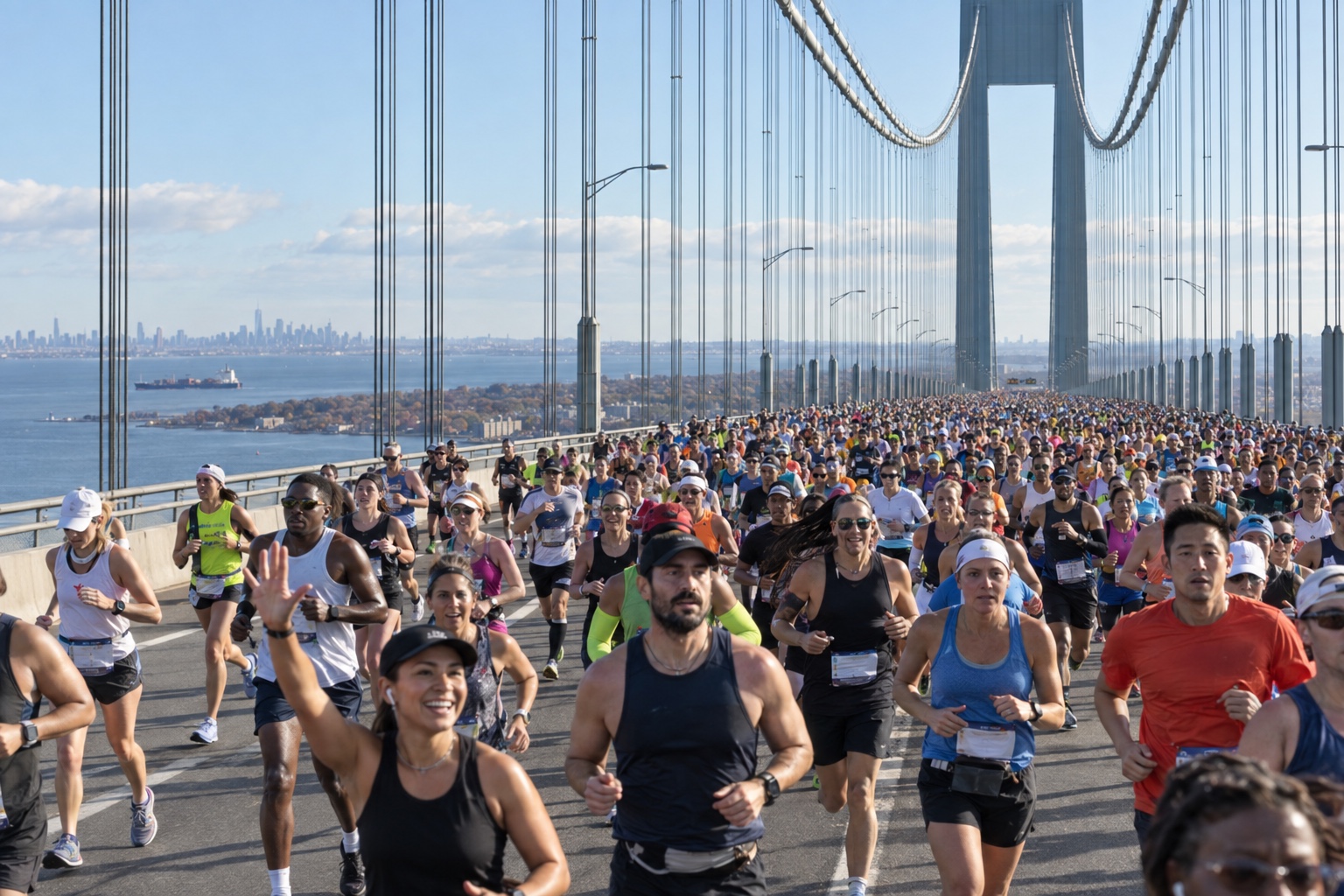
The Verrazzano-Narrows Bridge rises ahead while the city remains mostly out of sight. Runners move across the span carrying private reasons for being there. In the boroughs beyond, strangers are already taking places along sidewalks, preparing to return those reasons as sound.

The New York City Marathon crosses Staten Island, Brooklyn, Queens, the Bronx and Manhattan before finishing in Central Park. Its governing experience is collective propulsion. The runner supplies the stride, but neighborhoods repeatedly restore momentum through music, signs, volunteers and names called from bibs. The course does not merely tour New York. It joins separate communities into one sustained act of carrying people forward.

Why This Festival Is Special

Many races are supported by crowds. New York feels assembled by them. Each borough offers a different texture of encouragement, and the runner repeatedly enters places where strangers act as though the outcome matters personally. A name printed on a shirt can become an invitation for an entire block to participate.

That exchange makes the marathon more than an athletic route through famous streets. The city’s density, diversity and habit of public expression become practical sources of endurance. Runners discover that effort can be private without being solitary. Spectators discover that attention given for a few seconds may travel much farther than the person who shouted it.

Festival Experience

What to Expect

Race morning begins long before the first mile. Official transport, security, waiting areas, start waves and bridge exposure require runners to manage warmth, food, nerves and time before effort becomes visible. Once underway, the course changes through wide avenues, bridges, neighborhood crowds and quieter stretches where pacing feels more private.

Spectators experience a different logistical event. Road closures prevent simple following, and subway choices determine which parts of the course can realistically be reached. A good plan chooses a small number of viewing points and protects the final reunion. Both runner and spectator must accept that New York’s scale cannot be solved through enthusiasm alone.

Festival Highlights

  • The Ferry Morning – Runners cross the harbor toward Staten Island while the skyline recedes, turning transportation into the first emotional movement of the race.
  • The Bridge Start – Thousands climb before the city fully appears. The scale of the task becomes visible through bodies rather than distance markers.
  • Brooklyn Welcome – Long avenues, music and dense neighborhood support establish the sense that the city has accepted responsibility for the runners.
  • Queensboro Silence – Crowd energy falls away on the bridge, leaving footfall and effort exposed before Manhattan arrives.
  • First Avenue Roar – Sound returns with physical force. The contrast teaches how much spectators can change the body’s perception of fatigue.
  • The Bronx Turn – A brief final borough carries disproportionate meaning because the route has nearly completed its promise to cross the city.
  • Central Park Finish – Hills, trees and narrowing attention reduce five boroughs to the final movement toward one line.

Getting There & Around

Where It Happens

The course begins at Fort Wadsworth on Staten Island, crosses bridges and neighborhoods through every borough and finishes in Central Park. Its geography is the article’s central fact. New York is not represented through a selection of landmarks; it is experienced as distance, elevation, sound and changing community.

For spectators, the same geography creates separation. The start is not generally accessible for viewing, river crossings constrain movement and the finish has controlled access. Official maps and subway routes should guide the day. A point that looks close across water or parkland may belong to an entirely different journey.

Getting Around

Registered runners should use official start transportation and follow the assigned departure procedure. The trip to Fort Wadsworth is a controlled migration, not an ordinary commute. Private vehicles encounter closures, restricted drop-off and no useful parking at the start. Carry only permitted items, know the correct ferry or bus location and allow enough time for screening, village movement and the wait before the assigned wave.

Spectators should use the subway and resist the fantasy of following the runner continuously. Choose viewing points on compatible lines and on the same side of difficult river crossings whenever possible. Brooklyn can support more than one appearance if the stops are planned along a direct route; adding the Bronx and Central Park demands stricter timing. Leave a viewing point before the runner arrives only when the next sighting matters more than the present one.

The finish requires a separate plan. Runners move through controlled exits, baggage and recovery while spectators face restricted park access and overloaded mobile networks. Select a reunion place beyond the immediate finish zone, make it specific enough to find without a phone and agree on how long each person will wait. The final mile for the support crew is often not watching; it is delivering the runner safely back to warmth, food and the hotel.

Visitor Guide

Festival Food & Drink

Runners should rely on foods practiced during training rather than treating race weekend as culinary exploration. Eat familiar carbohydrates, hydrate steadily and avoid a celebratory dinner that creates digestive uncertainty. Spectators need portable food because street closures and movement between viewing points can make ordinary meal timing unreliable.

After the race, New York offers every kind of reward, but appetite may return slowly. Begin with water and gentle food, then let a proper meal become part of recovery.

**Must Try**
• New York Bagel – Familiar carbohydrate and salt in a form suited to breakfast.
• Pizza Slice – Fast, warm and satisfying when the group finally reunites.
• Deli Sandwich – Substantial food for a spectator who has crossed the city all day.
• Chicken Soup – Gentle warmth when cold weather and fatigue have replaced celebration.
• Cheesecake – Best saved for the seated meal after the body has settled.

Budget & Costs

Entry, travel, accommodation and food create a costly weekend before merchandise or celebration. International runners may use recognized tour arrangements when appropriate, while charity entry can include a serious fundraising commitment beyond ordinary registration. Understand every obligation, cancellation rule and included service before treating guaranteed entry as a simple purchase.

Accommodation is usually the largest flexible expense. Central lodging may cost more but can reduce predawn transport risk, taxis, post-race walking and the need for supporters to cross the city repeatedly. Compare the room against both race-day journeys rather than its nightly price alone. Booking farther away can work when one direct subway line serves the relevant transport and reunion points.

Spectating can remain inexpensive through public sidewalks and the subway, while reserved finish access and hospitality add substantial cost. Budget for practiced runner nutrition, weather clothing, transit, recovery meals and a flexible post-race night. Leave a contingency for replacing forgotten gear or changing travel when the body cannot manage the original departure plan. The cheapest itinerary is not good value if it removes sleep before the start or warmth after the finish.

Tips for First-Time Visitors

Secure entry only through official or recognized channels, then understand transportation, bib collection, baggage and start-wave rules. Nothing important should be discovered on race morning. Practice clothing, nutrition and footwear under conditions resembling the expected weather.

Spectators should choose encouragement over coverage. Seeing a runner twice with enough time to offer real support is better than missing them repeatedly while chasing the course. Use the tracking app as guidance, not certainty. Runners should write their name visibly if they welcome crowd support. Both groups need a plan that still works when phones, trains or tired judgment fail.

Safety

Runners should arrive adequately trained and follow medical guidance rather than relying on atmosphere to carry an unprepared body. Use familiar clothing, fuel and hydration practices, then adjust honestly for temperature, wind and rain. Early crowds can make a sustainable pace feel unnecessarily slow. That restraint protects the difficult bridges, quieter stretches and final park hills still ahead.

Know the warning signs that require slowing, stopping or seeking medical support. Use official fluid, fuel and aid stations and never try a new supplement because it is convenient on the course. Cold runners should replace wet clothing quickly after the finish; overheated runners should not assume that crossing the line ends the medical risk.

Spectators must remain behind barriers, keep intersections and emergency routes clear and supervise children closely. Crowded subway platforms require patience, particularly after the finish. Runners and supporters should carry identification, accommodation details and a reunion plan that works without mobile service. The city can contribute enormous energy, but personal judgment must remain strong enough to reject a dangerous pace, leave an overcrowded platform or accept help when the day stops unfolding safely.

Cultural Significance

The marathon turns New York’s five boroughs into one public athletic landscape. Neighborhoods that differ in language, architecture and daily rhythm become consecutive parts of a shared journey rather than background behind a televised finish. The route allows the city’s diversity to remain visible: communities support the same runners without needing to sound, look or celebrate in the same way.

The event also democratizes the heroic image of endurance. Elite athletes lead, but charity runners, age-group competitors, first-time marathoners and athletes with disabilities carry thousands of distinct stories along the same road. A spectator may know only one runner personally and still spend hours encouraging everyone else. That generosity turns private goals into public experience.

For travelers, this significance changes how the race should be approached. The boroughs are not interchangeable viewing sectors. Each is a lived community accepting closures and crowds while contributing its own energy. Supporting local businesses, keeping residential access clear and listening to neighborhood rhythm are part of witnessing the marathon well. The city carries runners because residents choose to participate in the carrying.

Plan Your Journey

When to Go

The marathon is traditionally held in late autumn, when New York may offer crisp sun, rain, wind or sudden cold. Runners should arrive with enough time to complete required registration activities, recover from travel and sleep on the local schedule. The day before the race is not the moment for an ambitious walking tour. Save the legs, eat familiar food and prepare every item needed for the start before evening fatigue makes small decisions feel complicated.

Spectators should choose race-day ambitions before choosing where to stay. Someone supporting one runner at several points needs a different transit plan from a visitor who wants to experience one neighborhood deeply and then watch the finish remotely. Subway lines cross the course unevenly, bridge closures distort apparent distance and station platforms become crowded when spectators move at the same time.

The wider weekend includes preparation, community events and post-race recovery, but marathon day governs transportation across all five boroughs. Remain at least one night after the finish when possible; immediate air or rail departure can turn recovery into another endurance test. Always confirm official dates, entry procedures, start transportation, weather guidance and road closures before finalizing the trip.

Where to Stay

Midtown offers the most balanced base for many runners because official start transport, race-week activities and the route back from Central Park can all remain manageable. It also gives spectators several subway choices when one line is crowded or disrupted. The price is substantial, yet a room that removes transfers before dawn and shortens the post-race return can protect both sleep and recovery.

Lower Manhattan may simplify access to the Staten Island Ferry and works well when the runner’s assigned transportation begins there. The trade-off arrives after the finish, when tired legs face a longer journey downtown. The Upper West Side offers easier finish recovery, but reaching the assigned start transport may require an earlier departure. Brooklyn places spectators inside some of the course’s strongest neighborhood atmosphere while making the runner’s start and eventual reunion more complex.

Choose the hotel only after mapping both people’s race-day journeys. The runner needs a reliable route to an assigned departure point and a gentle return from Central Park. The spectator needs subway access that does not require crossing the closed course at street level. A cheaper room loses value quickly if it produces predawn car dependence, several transfers or a long walk after the medal has been collected.

Bottom Line & Key Days

Bottom Line

The New York City Marathon teaches that endurance can belong to one body without being produced by that body alone. The runner crosses five boroughs through personal effort, yet the experience keeps arriving from outside: a volunteer offering water, a band under an overpass, a stranger reading a name and giving it back as encouragement. Practical preparation creates the conditions in which that exchange can be felt rather than merely survived.

After the finish, the medal is visible but the city’s work is harder to photograph. It remains in the runner’s memory as separate voices joined across distance. On the slow walk away from Central Park, another finisher hears their name called once more and turns automatically. The person waving is not someone they know. By then, that no longer feels unusual. New York has spent the day proving that strangers can carry one another without ever meeting.

Key Days

• Expo and Preparation – Runners complete required collection, confirm transport and protect their legs while the city’s anticipation builds.
• Marathon Morning – Official transport, start villages and bridge staging turn waiting into the first major test of planning.
• Borough Crossing – Neighborhood support changes repeatedly as the course joins separate parts of the city.
• Central Park Finish – The journey narrows toward recovery, controlled exits and reunion beyond the immediate finish area.
• Recovery Day – Slow movement, shared stories and ordinary city streets reveal what the body and city carried together.

Ready to Experience TCS New York City Marathon?

You've explored what makes this festival special. Now it's time to plan your trip. Compare flights, book your hotel, arrange transportation, and take care of your travel essentials—all in one place.

✈ Find Flights

Loading booking widget...

Booking is completed on Expedia in a new tab.

🏨 Find Hotels

Search places to stay

Powered by Booking.com

Booking is completed on Booking.com in a new tab.

Rail & Bus Travel

Compare train and coach routes for the journey.

Compare Routes

Things to Do

Discover tours and attractions before or after the festival.

Explore Experiences

eSIM Mobile Data

Stay connected abroad without traditional roaming charges.

Get an Airalo eSIM

Travel bookings are provided by our trusted partners. We may earn a commission when you book through these links, at no additional cost to you.

Independent Editorial Standards

Every Follow the Festivals guide is independently researched and regularly reviewed using official festival information, destination resources, and trusted travel references. We also welcome verified updates from festival organizers, destination marketing organizations, tourism partners, and local experts to help keep our guides accurate, current, and useful for travelers.

Represent this festival or have a verified update to share? We'd love to hear from you through our contact page.