
Follow the Festivals

International Paris Air Show

International Paris Air Show

Paris–Le Bourget, France

2027-06-14 - 2027-06-20

The Story

Festival Overview

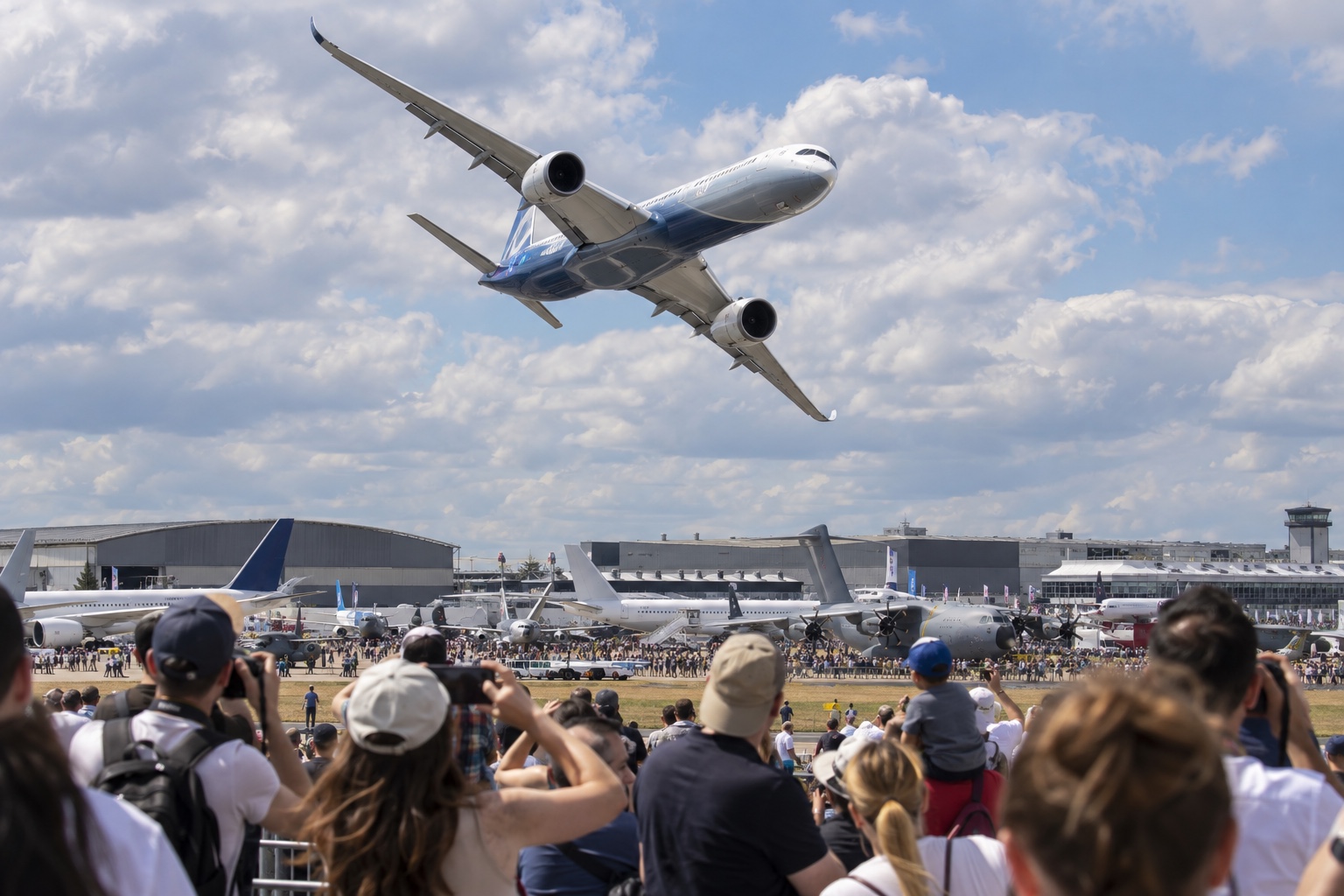
A motionless aircraft stands at Le Bourget with landing gear, rivets and open doors making its scale understandable. Visitors can walk beneath the wing and see engineering as weight. Then engines rise over the field, heads tilt together and the same idea becomes movement in the sky.

The International Paris Air Show joins civil aviation, defense, space, manufacturing, policy and public spectacle. Professional days focus on the industry that designs and purchases flight; public days turn those machines toward wonder and education. The governing idea is physical proof. Aviation’s future stops being a presentation and becomes something visitors can hear, inspect and watch leave the ground.

Why This Festival Is Special

Aviation is often encountered as service: a seat, delay or line through an airport. Le Bourget exposes the machinery, labor and ambition behind that ordinary miracle. Visitors stand beside wings, engines, spacecraft concepts and defense systems large enough to restore physical consequence to abstract claims.

The flying display completes the transformation. A machine understood as metal on the ground becomes lift, noise and maneuver above the crowd. The show is special because it makes innovation testable by the senses while preserving difficult questions about safety, climate, defense and public value. Wonder becomes more mature when it remains connected to what the machine is designed to do.

Festival Experience

What to Expect

Trade and public periods are fundamentally different experiences. Professional days center on exhibits, delegations, meetings and industry debate. Public days add family activity, access to static aircraft and flying displays. Buying the wrong ticket or assuming equal access across the week can undermine the entire journey.

The exhibition grounds are vast, exposed and noisy. Static displays reward close inspection, while flying programs draw attention upward and can reorganize movement across the site. Security and transport queues require patience. Choose a few aircraft, themes or demonstrations and allow time to understand them rather than crossing every hall as though completeness were possible.

Festival Highlights

  • The First Static Aircraft – Standing beneath a wing converts specifications into physical scale and makes engineering understandable through the body.
  • The Exhibition Hall – Engines, materials, spacecraft and systems reveal that flight depends on entire industrial networks rather than one finished machine.
  • The Flight-Line Wait – The crowd faces the same empty sky until distant sound turns anticipation into collective attention.
  • The Flying Display – Weight becomes movement overhead. Performance provides sensory proof while safety boundaries keep awe disciplined.
  • The Historic Le Bourget Setting – Aviation history remains present beneath contemporary prototypes, allowing past ambition and future claims to occupy one field.
  • The Career Encounter – Students meet people who design, maintain and operate aircraft, turning wonder into a possible vocation.
  • The Final Landing – The aircraft returns to ground and becomes inspectable again, completing the journey from object to possibility and back.

Getting There & Around

Where It Happens

The show occupies Paris–Le Bourget Airport and its exhibition grounds north of central Paris. Halls, chalets, static aircraft and flying-display areas form separate zones, and moving among them requires more time than their visual proximity suggests. The airport setting keeps aviation connected to operational space rather than theatrical scenery.

Le Bourget carries its own aviation history, including pioneering long-distance flight and the nearby aerospace museum. Central Paris remains a separate destination reached through transport corridors. Travelers should not imagine stepping directly from a museum boulevard into the show. The journey outward is part of understanding the industrial geography behind flight.

Getting Around

Use the official transport plan rather than a generic Paris route search. Rail, buses and temporary shuttles may work together for the final approach, while roads and parking become heavily pressured. Leave early enough to absorb a missed connection without sacrificing the first essential activity. At closing, allow the initial surge to pass or keep more than one return route available.

The exhibition site should be treated as several zones: professional halls, static aircraft, public activity and flying-display viewing. Mark the day’s anchor in each zone and connect them in geographic order. Crossing the entire field whenever curiosity changes direction spends the body before the main display and can make later appointments impossible.

Families should choose a meeting landmark, place contact details with children and identify toilets, shade and food before the crowd thickens. Trade visitors need generous margins between meetings because security areas, delegations and conversations routinely delay movement. After a flying display, do not immediately join the largest departing flow unless a fixed connection demands it. A deliberate final exhibit or seated pause can turn an unpleasant transport queue into a calmer return.

Visitor Guide

Festival Food & Drink

On-site food protects exhibition time but draws queues around the flying schedule. Eat slightly early, carry water and use a compact snack to bridge long demonstrations. Exposed grounds make hydration important even when wind disguises heat. Check restrictions before packing food or containers.

Paris offers the better meal after the return journey. A neighborhood restaurant or simple café allows the day’s machines and questions to settle into conversation.

**Must Try**
• Croissant – Efficient morning pleasure before an early departure to Le Bourget.
• Jambon-Beurre – A straightforward sandwich that travels well and respects a crowded schedule.
• Quiche – Substantial café food without the weight of a formal lunch.
• Steak Frites – A seated evening meal after hours of walking across exhibition grounds.
• Paris-Brest – A pastry inspired by travel and machinery, suited to a celebratory finish.

Budget & Costs

Budget for admission, transport, accommodation, food and any premium access, then separate professional expenses from public enjoyment. Central Paris lodging may dominate the trip, while a well-connected northern location can reduce both price and journey time. A cheaper hotel requiring several transfers may lose its saving through taxis, missed appointments and exhausted evenings.

Trade attendance can add hospitality, business services, client meals and credential-related costs beyond ordinary admission. Decide which meetings or restricted areas justify premium access. Paying for status without a schedule that uses it is poor value. Public visitors usually gain more from the included static and flying displays than from stacking enhancements onto an already full day.

Food and convenience cost more on site, but leaving for lunch may waste transport time and require another security process. Carry permitted essentials and plan one practical meal. Families should budget for proper hearing protection rather than relying on improvised substitutes. Compare spending by what it protects: a direct route, shade, a second day or a calmer return can add more understanding than merchandise that must be carried across the grounds.

Tips for First-Time Visitors

Confirm whether the chosen day is professional or public and ensure every traveler has the correct credential. Download the current map and schedule, then select a few essential aircraft or themes. Arrive early enough to understand the site before the main flying display pulls attention upward.

Wear strong sun protection, comfortable shoes and hearing protection, especially for children. Bring binoculars only if permitted and travel light through security. Do not spend the entire display filming; scale, vibration and collective reaction are the parts a small screen preserves poorly. Keep children close around machinery and obey every barrier without negotiation.

Safety

Aircraft displays demand strict compliance with barriers, announcements and security instructions. Never enter a restricted apron, touch equipment without invitation or attempt to fly a drone. Ground machinery, service vehicles and demonstration aircraft operate within professional safety systems that ordinary visitors cannot interpret from appearance alone.

High noise levels can damage hearing before discomfort feels serious. Bring properly fitted protection, especially for children, and use it before engines rise rather than afterward. Families should explain that dramatic sound is expected and identify a quieter retreat in case the experience becomes overwhelming.

Heat, sun, sudden rain and long periods of standing create cumulative risk across exposed grounds. Drink water, use shade and rest before fatigue makes crowd movement difficult. Keep bags attended and choose a meeting point before the site becomes dense. After the flying display, station platforms and shuttles may reach uncomfortable capacity. Let one departure go when boarding becomes unsafe. The show demonstrates controlled flight; visitors should bring the same respect for limits to their own movement.

Cultural Significance

The Paris Air Show is one of aviation’s historic international meeting points, bringing manufacturers, governments, armed forces, researchers, workers, investors and the public into the same institutional landscape. Le Bourget connects contemporary prototypes with a long history of pioneering flight, allowing industrial ambition to present itself as both heritage and future.

That breadth makes celebration complicated. Civil aircraft promise connection and economic mobility. Space systems extend scientific and strategic reach. Military aircraft embody defense, deterrence and violence. The same engineering culture can serve goals that visitors understand very differently. The public display should not flatten those differences into noise and maneuver alone.

Environmental pressure adds another layer. Aviation must confront emissions, resource use and the credibility of promised technical solutions. The show matters culturally because these tensions become physically visible beside machines large enough to inspire awe. Visitors can admire design while asking who benefits, who bears risk and what kind of future is being proposed. Wonder is not diminished by scrutiny; it becomes more honest and more useful.

Plan Your Journey

When to Go

The show is held in early summer, when the exposed Le Bourget grounds may be hot, rainy or windy. Trade and public periods are separate products, not merely quieter and busier versions of the same day. Professionals should choose days around meetings, sector priorities and credential access. Families and enthusiasts must select the official public period rather than assuming the full show week admits everyone.

Public visitors should compare the flying schedule with static displays and educational activity before choosing a day. A headline demonstration can justify one date, but weather may alter or cancel flying. Build enough value into the ground program that the visit still succeeds beneath a closed sky. Students should confirm whether any dedicated access requires advance registration.

Arrive near opening if static aircraft and cockpit access matter. Later arrivals face accumulated transport, security and viewing pressure. A multi-day visit can separate exhibition halls from flight demonstrations and reduce the need to abandon one for the other. Always confirm official dates, audience eligibility, entrance times, the current program and prohibited items before arranging travel.

Where to Stay

Central Paris allows the air show to remain part of a broader city visit, but the romance of the address disappears quickly during a crowded multi-transfer journey to Le Bourget. Choose a hotel near a rail line or official shuttle connection that serves the exhibition approach with minimal changes. Being beside a station matters more than being several kilometers closer without direct service.

Northern Paris and areas nearer Le Bourget can shorten the morning and make repeated trade attendance more efficient. The trade-off is a different evening environment and fewer effortless connections to central sightseeing. Business travelers with early appointments may reasonably prioritize reliability over atmosphere. Families staying for one public day may value a central neighborhood more, provided they accept an early departure.

Airport hotels are useful only when they align with the actual gateway and show transport; proximity to an airport name does not guarantee a simple route to the grounds. Test the journey in both directions, including the period after flying displays when crowds leave together. The right hotel reduces transfers, provides easy food after a long outdoor day and does not require the traveler to gamble on the last convenient shuttle.

Bottom Line & Key Days

Bottom Line

The Paris Air Show earns its impact by making aviation physical. Ideas about mobility, defense, climate, industry and exploration become aircraft with weight, workers, noise and operating limits. Standing beneath a wing corrects the abstraction; watching it fly then restores wonder without allowing consequence to disappear.

By the end, the traveler understands that the future of flight is not a clean image moving across an empty sky. It is built in factories, negotiated in halls, tested by crews and judged by the societies beneath it. After the final landing, heat settles over the runway and the crowd begins toward the shuttles. The aircraft is motionless again, but no longer merely an object. It carries the memory of what engineering can make possible and the responsibility attached to every promise that leaves the ground.

Key Days

• Professional Opening – Industry meetings, delegations and product presentations define the show’s commercial and strategic purpose.
• Trade Period – Technical exhibits and business conversations deepen while general-public access remains restricted.
• Student and Career Focus – Education and industry contact turn aircraft from spectacle into possible work.
• Public Weekend – Families and enthusiasts enter for static aircraft, educational activity and flying displays.
• Final Display Period – The show’s physical argument reaches completion as machines return from sky to ground.

Ready to Experience International Paris Air Show?

You've explored what makes this festival special. Now it's time to plan your trip. Compare flights, book your hotel, arrange transportation, and take care of your travel essentials—all in one place.

✈ Find Flights

Loading booking widget...

Booking is completed on Expedia in a new tab.

🏨 Find Hotels

Search places to stay

Powered by Booking.com

Booking is completed on Booking.com in a new tab.

Rail & Bus Travel

Compare train and coach routes for the journey.

Compare Routes

Things to Do

Discover tours and attractions before or after the festival.

Explore Experiences

eSIM Mobile Data

Stay connected abroad without traditional roaming charges.

Get an Airalo eSIM

Travel bookings are provided by our trusted partners. We may earn a commission when you book through these links, at no additional cost to you.

Independent Editorial Standards

Every Follow the Festivals guide is independently researched and regularly reviewed using official festival information, destination resources, and trusted travel references. We also welcome verified updates from festival organizers, destination marketing organizations, tourism partners, and local experts to help keep our guides accurate, current, and useful for travelers.

Represent this festival or have a verified update to share? We'd love to hear from you through our contact page.