
Follow the Festivals

TCS London Marathon

TCS London Marathon

London, United Kingdom

2027-04-24 - 2027-04-25

The Story

Festival Overview

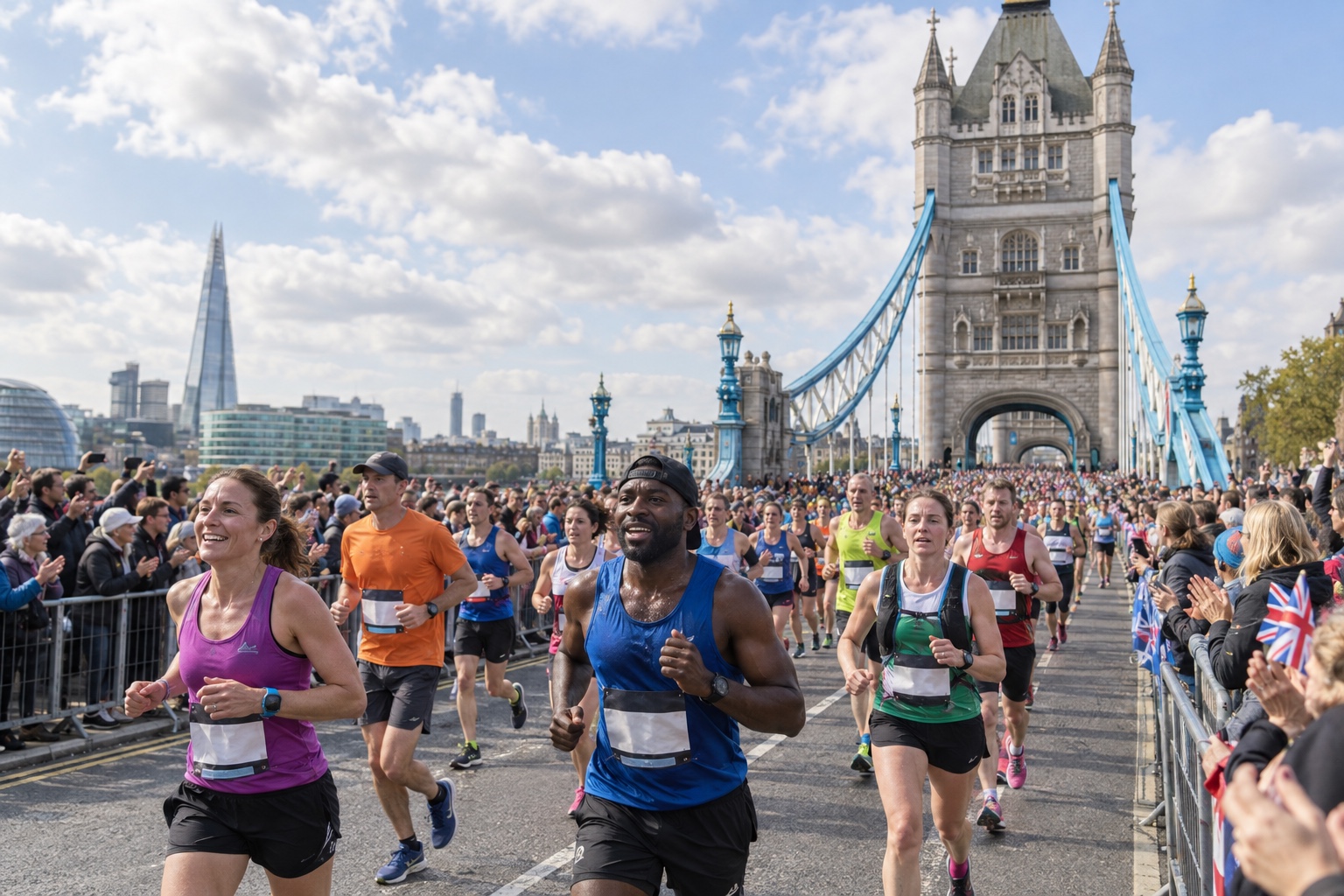
Blackheath begins as a field of separate preparations: charity vests, discarded layers, quiet stretches and runners searching for the correct start area. Hours later, the same private intentions enter central London through noise. Tower Bridge opens the city visually, but the crowd has already been carrying runners through streets most visitors never think to walk.

The London Marathon is both a world-leading road race and a public tour of the capital’s communities. Its governing experience is exposure. The runner’s effort becomes visible to strangers, while London reveals itself through the accumulating distance, long after the landmarks have passed.

That relationship shapes the guide. Runners need a conservative start plan, practiced fueling and an exit strategy from The Mall. Spectators need selective viewing points and a reunion beyond the controlled finish. The day becomes exceptional when neither group tries to master the whole city and instead invests fully in the moments it can reach.

Why This Festival Is Special

London does not allow the marathon to remain a private athletic test. Names on shirts become invitations. Charity stories appear on vests. Neighborhood crowds behave as though effort by a stranger creates a temporary obligation to answer.

The route deepens that exchange by moving from open common to residential streets, river landmark, financial district and ceremonial finish. These are not interchangeable backdrops. Each chapter changes what the runner needs and what spectators can give. The traveler should invest attention where the course is least photogenic but most demanding. A voice in the Docklands may travel farther inside the runner than the image of Tower Bridge.

London is special because public recognition repeatedly converts individual endurance into civic action, then returns the achievement to one exhausted person on The Mall. The landmark shows where the race went; the remembered voice explains how it arrived.

Festival Experience

What to Expect

Runners face a long pre-start period before the race becomes athletic. Assigned transport, security, bag procedures, toilets and wave control require warmth, food and patience. Early miles can feel deceptively easy because crowd energy and dense fields obscure pace. Later, turns through the Docklands and the return toward Westminster expose any decision made too aggressively. Spectators experience a parallel endurance event.

Tracking estimates move faster than crowded stations, mobile service may lag, and barriers restrict crossing. A successful day usually includes a small number of well-timed appearances and no attempt at continuous pursuit.

Expect emotion to arrive unevenly. Tower Bridge may look like the defining moment, yet a quiet sign on a residential corner or a familiar voice near the final miles can matter more. The guide function is to make those encounters possible: get there early, choose the correct side of the road and leave enough time for reunion after the controlled finish exit.

Festival Highlights

  • Blackheath Departure – The open start area reveals the human scale before the city closes around the field. Runners should enter through the assigned route, preserve warm layers and resist spending nervous energy walking between unnecessary zones.
  • Southeast London Crowds – Residential streets build support gradually and make the marathon feel locally owned. Spectators who choose one early neighborhood can offer meaningful encouragement without immediately racing the Underground.
  • Cutty Sark Turn – The route tightens around a recognizable maritime landmark and a dense wall of sound. Viewing is rewarding but crowded, so get there early and stand on the side that supports the next journey.
  • Tower Bridge Crossing – Architecture, elevation and noise combine into the race’s great reveal. Runners should enjoy it without mistaking exhilaration for permission to abandon pace.
  • Canary Wharf Test – Glass towers, turns and accumulated distance make this chapter psychologically demanding. A support point here can be more useful to a runner than a photograph at the famous landmarks.
  • Embankment Return – Central London draws closer while fatigue makes every remaining distance feel exact. Spectators should keep a settled position; one final hurried transfer rarely improves the day.
  • The Mall Finish – Ceremony narrows the citywide journey into one line, but controlled exits delay reunion. Agree on a meeting place outside the immediate zone and let recovery begin before celebration logistics take over.

Getting There & Around

Where It Happens

The traditional route begins in the Blackheath and Greenwich area, moves through southeast London, crosses Tower Bridge and reaches the Docklands before returning through the City and Westminster to The Mall. It is less a sequence of postcard views than a long conversation between residential streets, river crossings, business districts and ceremonial London.

For runners, the start and finish behave like separate venues connected by the course. Bags, transport and reunion must reflect that one-way movement. For spectators, the river and road closures make apparent proximity misleading. A place visible across the Thames may require a substantial transit journey.

Divide the course into practical chapters. Southeast London offers extended neighborhood support; Tower Bridge supplies the iconic reveal; the Docklands test runner focus; the Embankment and Westminster concentrate late emotion. Build the day around course chapters connected by reliable rail. Attractive points on a map can conceal impossible transfers.

Getting Around

Runners must follow their assigned start instructions. Blackheath and Greenwich absorb enormous controlled movement, and a generic route search may deliver the wrong station or start color. Leave from a station with a backup connection, carry only permitted items and allow time for walking after the train.

Spectators should use rail and Underground services, grouping viewing points along compatible lines. Greenwich or Surrey Quays can pair with a later Docklands stop more realistically than a sequence chosen only for scenery. Crossing the closed course is difficult, so confirm which side of the road leads back to the station before the runner appears.

The finish requires its own movement plan. The immediate area around The Mall and St James’s Park is controlled and crowded. Runners may take time to collect belongings and leave the secure zone. Select a reunion point beyond the busiest streets, record it offline and choose a hotel route with minimal transfers. The final practical task is not seeing the finish; it is getting an exhausted person safely indoors.

Visitor Guide

Festival Food & Drink

Runners should eat foods already tested in training. London offers temptation in every direction, but the pre-race meal is functional: familiar carbohydrates, moderate portions and steady hydration. Spectators need portable food because closures and viewing plans can push lunch far beyond intention.

After finishing, appetite may return slowly. Begin with fluid, warmth and gentle food, then allow a pub meal or restaurant booking to become the social completion of the race. Avoid reservations so rigid that delayed exits create stress.

**Must Try**
• Porridge – A familiar warm breakfast that can be adjusted to the runner’s practiced routine.
• Toast and Jam – Simple carbohydrate when novelty offers no advantage.
• Jacket Potato – Gentle, filling recovery food with flexible toppings.
• Fish and Chips – A celebratory London meal better saved until the body settles.
• Sunday Roast – A shared table gives supporters and runners time to reconstruct the day.

Budget & Costs

Entry can involve a ballot, charity commitment, qualifying route or recognized international package. Each path carries different costs and obligations. Read cancellation, fundraising and included-service terms carefully; guaranteed access is not the same product across channels.

Accommodation is the largest flexible expense. A central room may cost more but reduce taxis, predawn transfers and post-race walking. Compare hotels gainst the runner’s start, spectator route and finish recovery together. A distant bargain can create three expensive journeys.

Public spectating and transit can remain relatively affordable, while hospitality and finish seating change the scale. Budget for race nutrition, weather layers, transport, a flexible recovery meal and an extra night when possible. Keep contingency funds for changed trains or forgotten gear. The valuable itinerary protects sleep before the start and warmth afterward, even if another line item must shrink. Spend first on the decisions that remain important when the runner is cold and exhausted.

Tips for First-Time Visitors

Complete every required registration step early and read the participant guide as operational instruction, not background. Lay out clothing, timing device, nutrition and start details before sleep. London weather makes disposable or donatable warm layers useful, but every item must comply with current rules. Spectators should favor impact over coverage. A clear voice in one difficult section can help more than several uncertain sightings. Use tracking as an estimate, know the runner’s expected pace range and stand after turns where sightlines improve.

Reunion planning deserves the same attention as the start. Pick a fixed landmark outside the secure zone, agree on a waiting period and decide what happens if phones fail. Runners should carry accommodation details and enough independent transport knowledge to return alone. The first-time error is assuming the city will reconnect the group automatically after the medal. A prepared reunion lets the runner finish being responsible for logistics and begin accepting care.

Safety

Training, pacing and honest medical judgment remain the foundation. Runners should use familiar fuel and clothing, respond to actual weather and avoid letting early crowds dictate effort. Know the official aid system and seek help when symptoms exceed ordinary fatigue. Cold rain and unexpected warmth create different risks. Replace wet clothing quickly after finishing, continue hydration and do not assume the medal ends medical vulnerability. Supporters should carry a warm layer for the runner so they are not forced to manage another queue first.

Spectators must keep crossings, barriers and station platforms orderly. Watch children closely and move away when compression builds; forcing a view is never worth the risk. Both groups need identification, accommodation details and an offline reunion plan. If transport or crowd pressure becomes unsafe, sacrifice the next sighting. No photograph is more important than preserving judgment for the finish. Good support sometimes means choosing safety over visibility.

Cultural Significance

The London Marathon turns elite competition, mass participation and charity fundraising into one public narrative. Wheelchair athletes, professionals, club runners, costumed fundraisers and first-time marathoners share the route without sharing the same objective. The city responds to all of them as visible effort.

Its course also challenges the tourist map. Neighborhoods in southeast and east London are not transitional space between monuments. They create the event’s emotional infrastructure through volunteers, music, family groups and repeated encouragement. For travelers, that civic participation changes the etiquette of spectating. Residential access must remain clear, local businesses deserve support and barriers are not invitations to improvise crossings.

London gives the marathon its reach because communities accept disruption and contribute energy. The event belongs to the capital not simply because famous buildings appear, but because ordinary streets repeatedly decide to carry strangers forward. Respect for those streets is part of participating well.

Plan Your Journey

When to Go

The marathon is traditionally held in spring, when London may move between cool sun, rain, wind and unexpected warmth within one day. Runners should get there early enough to complete required collection, settle into local time and keep unnecessary distance off their legs. The final day before the race belongs to familiar food, short movement and preparation, with ambitious sightseeing left for another day.

Spectators should decide their level of support before choosing a travel window. Someone meeting a runner after the finish needs a different plan from a visitor treating the race as a citywide public event. Staying through the following morning allows fatigue, station congestion and delayed appetite to resolve without turning departure into another test.

The wider weekend can include the running show, charity gatherings and shorter events, but official schedules vary. Confirm race assignment, start transport, collection hours, road closures and weather shortly before travel. Editorial content should remain evergreen; current operating details belong to the official guide.

Where to Stay

Greenwich and southeast London place visitors closer to the start districts and can reduce runner anxiety before dawn. They also immerse spectators in the early course atmosphere. The trade-off arrives after the finish, when a tired runner must travel back across London from Westminster.

Central locations near multiple Underground lines provide the strongest balance for many groups. Waterloo, South Bank, Victoria and areas north of the river can support spectator movement and a manageable return from The Mall. Prices rise sharply, but a room that removes transfers after the race may be worth more than amenities. East London works well for spectators prioritizing Canary Wharf and later-course viewing, while also offering strong transport.

It can complicate finish reunion. Select the hotel only after mapping the runner’s start journey, the spectator’s viewing route and the post-finish return. The best base does not minimize one leg; it keeps all three survivable when streets are closed and everyone is tired.

Bottom Line & Key Days

Bottom Line

The London Marathon teaches that a city can support private ambition without needing to know its origin. Every runner arrives with a reason. The crowd rarely hears the full story, yet responds to visible effort with sound, signs, water and names called from fabric.

Good logistics allow that exchange to be felt. A runner who has protected pace can still receive the Embankment with enough awareness to feel it. A spectator who stopped chasing the route can be fully present when the familiar face appears.

After the finish, London becomes ordinary again slowly. Barriers remain, trains fill and the group walks toward a meeting place chosen hours earlier. The medal identifies who completed the distance, but the conversation reveals how many people participated. The city did not run the miles. It repeatedly made them possible. That shared labor is what the runner finally carries away.

Key Days

• Collection Period – Runners complete mandatory steps, confirm start instructions and keep unnecessary distance off their legs. Finish essential tasks early enough that preparation does not consume the final calm day.
• Pre-Race Day – Clothing, nutrition and transport are settled while sightseeing is deliberately reduced. Spectators should test routes and finalize viewing priorities.
• First Race Day – The special weekend format brings one field into the city and changes transport patterns across the route. Follow the assigned-day guidance because the two days may not operate identically.
• Second Race Day – Another field repeats the citywide journey while fatigue and closures extend across the weekend. Travelers should preserve flexibility around stations and central streets.
• Recovery Morning – Slow walking, food and shared reconstruction help the body and group understand what the route required. Avoid forcing an early departure when an additional night is possible. Give the runner control over pace, stairs and the timing of the first substantial meal.

Ready to Experience TCS London Marathon?

You've explored what makes this festival special. Now it's time to plan your trip. Compare flights, book your hotel, arrange transportation, and take care of your travel essentials—all in one place.

✈ Find Flights

Loading booking widget...

Booking is completed on Expedia in a new tab.

🏨 Find Hotels

Search places to stay

Powered by Booking.com

Booking is completed on Booking.com in a new tab.

Rail & Bus Travel

Compare train and coach routes for the journey.

Compare Routes

Things to Do

Discover tours and attractions before or after the festival.

Explore Experiences

eSIM Mobile Data

Stay connected abroad without traditional roaming charges.

Get an Airalo eSIM

Travel bookings are provided by our trusted partners. We may earn a commission when you book through these links, at no additional cost to you.

Independent Editorial Standards

Every Follow the Festivals guide is independently researched and regularly reviewed using official festival information, destination resources, and trusted travel references. We also welcome verified updates from festival organizers, destination marketing organizations, tourism partners, and local experts to help keep our guides accurate, current, and useful for travelers.

Represent this festival or have a verified update to share? We'd love to hear from you through our contact page.