
Follow the Festivals

Art Basel Hong Kong

Art Basel Hong Kong

Hong Kong, Hong Kong

2027-03-25 - 2027-03-27

The Story

Festival Overview

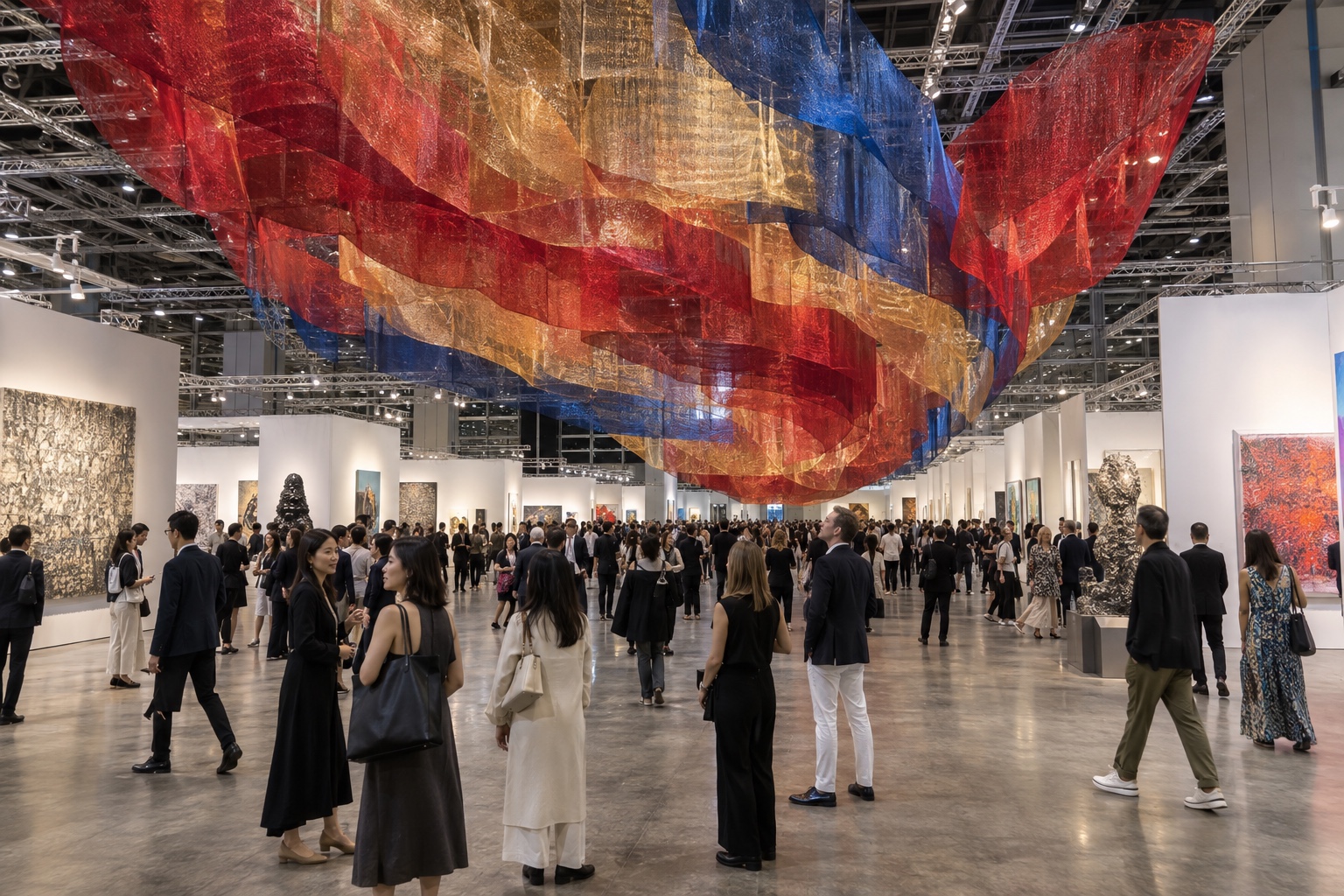
The escalator rises into another hall and the visitor realizes that visual saturation has become physical. A painting glimpsed across the aisle competes with a conversation, a sculptural installation and the knowledge that hundreds of booths remain unseen. The fair’s central challenge is not access to art. It is preserving the ability to look.

Art Basel Hong Kong brings major galleries, collectors, institutions and artists into the Hong Kong Convention and Exhibition Centre while the city develops a wider week of exhibitions, openings and encounters. Its governing experience is compression: markets, ideas, regions and careers meet within limited space and time.

The traveler needs a strategy that preserves attention. Select sectors, return to difficult works and leave the halls before exhaustion flattens every object into inventory. Hong Kong then becomes the necessary second venue, showing how the fair’s international language interacts with local museums, galleries, streets and harbor geography.

Why This Festival Is Special

Art Basel Hong Kong makes proximity intellectually productive. A major international gallery may sit across from a younger regional program; an established artist’s market power becomes visible beside work still forming its audience. The fair does not resolve those differences. It forces them into view.

Hong Kong intensifies the encounter. Harbor crossings, vertical neighborhoods and rapid transitions mirror the fair’s compression while refusing the sealed neutrality of the hall. The city supplies historical, political and commercial context that booth walls cannot contain.

Travelers should invest in contrast: celebrated work and unfamiliar work, fair and museum, international district and local gallery street. The event becomes special when those comparisons change the eye. The lasting result is not a list of objects seen, but a more exact understanding of how attention and value are being organized. Hong Kong makes those organizing forces visible without making them simple.

Festival Experience

What to Expect

Expect dense gallery booths, major modern and contemporary works, emerging positions, collectors, advisers, institutional groups and constant commercial conversation. Some visitors move with exact lists; others browse. The collision can make the hall feel both intellectually alive and transactional.

Visual fatigue arrives before physical fatigue. After repeated strong works, the eye begins to classify; direct encounter begins to disappear. Pause, take notes and revisit a small number of pieces. Photography can support memory, but collecting images without reflection reproduces the problem of the fair itself.

Public sessions may be crowded around celebrated artists and large installations. Talks and performances offer a different pace, while city museums provide curatorial depth beyond the booth. The exceptional trip alternates market concentration with institutional and neighborhood context. The goal is not to see everything available. It is to understand why certain works remained present after leaving.

Festival Highlights

  • The First Hall Survey – An initial walk reveals scale, sectors and visual density. Move quickly without trying to judge every booth, then choose where attention will be spent on the return.
  • Encounters Sector – Large or ambitious works gain space beyond conventional booth rhythm. Check placement and timing early, because these installations can orient the entire fair experience.
  • Regional Gallery Discovery – Galleries from across Asia provide perspectives that may be less visible at Western fairs. Prioritize at least one unfamiliar program and ask focused questions and do not expect wall text to do all the work.
  • The Second Look – Returning to a work after other halls have intervened tests whether curiosity was real or merely produced by novelty. Build this return into the schedule before fatigue makes every decision final.
  • Artist and Curator Conversations – Talks can restore context to an object-heavy day. Pick one connected to a genuine question and come early enough to listen with the intention to listen; a talk is poor background rest.
  • West Kowloon Context – Major museums across the harbor expand the story beyond sales and short presentations. Give them a separate block, not the exhausted final hour after the fair.
  • Hong Kong Gallery Night – Smaller spaces and neighborhood movement reveal the local ecosystem carrying art between international fair weeks. Group openings by district and allow conversation to replace collection.

Getting There & Around

Where It Happens

The core fair occupies the Hong Kong Convention and Exhibition Centre in Wan Chai, directly on Victoria Harbour. Large halls hold gallery sectors, curated presentations, installations, talks and services within a controlled indoor environment. Entrances, levels and escalators shape movement more than visitors expect.

The wider event extends across Hong Kong. Museums in West Kowloon, galleries in Central, Sheung Wan and Wong Chuk Hang, auction houses and artist-run spaces create a distributed art week. These locations are not interchangeable after-hours additions. They reveal different relationships between art, property, institutions and urban life. Treat the convention center as one concentrated chapter and the city as another. Attempting several distant districts after a full fair day reduces both to transit. Group neighborhoods geographically and set aside at least one period when Hong Kong determines the route and the fair calendar recedes. That separation allows the city to challenge conclusions formed inside the hall.

Getting Around

Wan Chai is served by the MTR, buses, ferries and elevated pedestrian connections, but fair crowds compress the final approach. Follow official entrance guidance because the closest point on a map may not be the usable door. Allow time for security escalators and level changes inside the building.

Use the MTR for cross-city reliability and ferries when the harbor journey contributes to the day. Taxis can lose time in tunnel traffic. West Kowloon museums, Central galleries and Wong Chuk Hang spaces belong to different movement plans; grouping them prevents art week from becoming a transport exercise.

Inside the fair, move by sector and aisle, letting visible attractions wait until the return pass. Record booth numbers for returns and select a meeting point away from the busiest entrance. If the group separates, reconnect at a fixed time and stop sending continuous messages. Efficient movement is valuable only when it leaves room for unhurried looking.

Visitor Guide

Festival Food & Drink

Convention-center food is practical but should not consume the best viewing period. Eat before entering or during a deliberate pause, hydrate and avoid allowing low energy to turn the final hall into obligation. Wan Chai offers enough nearby choices for a real reset between sessions. Hong Kong dining can become part of the art-week conversation. A shared table gives visitors time to compare what survived the day, while neighborhood restaurants return scale and texture after the controlled halls.

**Must Try**
• Dim Sum – Shared small dishes encourage the same comparison and conversation as a fair visit.
• Wonton Noodles – A fast, focused meal suited to a demanding schedule.
• Roast Goose – Rich Cantonese craft deserves a meal outside the convention center.
• Egg Tart – A compact café pause restores attention without claiming the afternoon.
• Milk Tea – Strong, smooth and distinctly local, it marks the return from international fair space to Hong Kong.

Budget & Costs

Fair admission is one part of an expensive art-week trip. Hotel rates in Wan Chai, Central and nearby districts can rise, while premium events and dining add quickly. A room close enough for rest may justify its cost when repeated entries are planned.

Public transport remains efficient and relatively controlled. City galleries may be free, while museum admission and special programs require separate budgets. Build the itinerary around value in attention: one excellent museum block may contribute more than another paid event entered from obligation.

Art purchases belong to an entirely different financial decision. Travelers considering acquisition should understand taxes, shipping, insurance, currency and provenance before emotion turns interest into commitment. Everyone else should set limits for catalogs, design goods and spontaneous dining. Confirm current ticket terms and avoid unofficial resale offers. A disciplined budget preserves the freedom to look without converting every response into consumption.

Tips for First-Time Visitors

Begin with the fair map and a short list, not a comprehensive itinerary. Start with a few galleries, one sector and one public program, then leave room for discovery. Walk the halls once for orientation before entering every conversation. Ask gallery staff direct questions about the artist, context or work that holds attention. Serious engagement does not require purchase intent, but it does require respect for staff time and booth activity. Avoid touching work, blocking narrow aisles or photographing where restrictions apply.

Take notes on why something mattered. A booth number alone will not recover the thought later. Rest before visual fatigue becomes cynicism, and leave while curiosity remains. The first-time mistake is treating endurance as sophistication. The best viewer is not the person who saw the most booths, but the one who remained capable of a second look. That second look is where preference becomes understanding.

Safety

The fair is physically controlled, but crowd awareness still matters. Keep valuables secure, follow bag checks and avoid backing into aisles while photographing. Comfortable shoes and hydration sustain concentration across hard floors and long standing periods. Hong Kong’s spring weather may be humid or wet. Elevated walkways and transit connections reduce exposure, but slick surfaces and sudden rain still affect movement. Carry compact rain coverage without bringing items prohibited by venue rules.

Use licensed transport, follow current local guidance and understand that public conduct and laws may differ from home. Art-world invitations should still be verified, especially when money or private locations are involved. Groups need a meeting point and hotel address offline. Fatigue weakens judgment; leaving one event early is safer and more valuable than reaching the next unable to pay attention. Keep enough energy to navigate the final journey deliberately.

Cultural Significance

Art Basel Hong Kong is a meeting point between international art-market systems and the diverse cultural production of Asia. Galleries, collectors and institutions use the fair to establish relationships across regions, while Hong Kong’s financial, logistical and linguistic position gives those exchanges unusual speed.

The event also exposes tensions. Global attention and sales can amplify artists while encouraging simplified regional narratives. A convention-center presentation cannot represent the full complexity of Hong Kong or Asian art. City museums, independent spaces and local galleries are therefore essential, not supplemental.

For travelers, cultural significance emerges through comparison. Notice which histories appear in major booths, which practices are placed in discovery sectors and which conversations occur elsewhere in the city. The fair matters because it concentrates power and possibility. Understanding it requires looking at both what enters the hall and what remains beyond it.

Plan Your Journey

When to Go

The fair is held during Hong Kong’s spring art season, when humidity can rise but outdoor movement remains more comfortable than high summer. Public days concentrate demand into a short window. Entering at opening offers clearer sightlines and fresher attention; late sessions can feel more social but leave less time to revisit work. Decide which day fits by purpose. A serious art traveler may need more than one entry period: an initial survey, followed by a focused return. A first-time visitor should reserve one strong half-day on a strong half-day, free from an already full city itinerary. Talks, performances and institutional events may justify the travel date as much as the fair itself.

Stay across several nights if possible. Hong Kong’s museums, galleries and satellite programs complete the context that a convention center cannot provide. Confirm current public hours, ticket conditions, bag rules and program reservations before travel.

Where to Stay

Wan Chai places the visitor closest to the convention center and is the strongest base for repeated fair access. Walking can replace crowded transport, and the hotel becomes a useful reset between sessions. Prices rise during art week, while the district’s intensity may feel more commercial than restorative. Central and Admiralty offer excellent connections, major dining and proximity to galleries and cultural institutions on Hong Kong Island. The harbor crossing or MTR journey remains manageable, but peak movement requires time. Sheung Wan adds neighborhood character and independent art access while placing the fair slightly farther away.

Tsim Sha Tsui and West Kowloon suit travelers prioritizing museums and harbor views. Reaching Wan Chai is simple in principle but subject to ferry, MTR and tunnel demand. Choose lodging by the whole art itinerary: fair access, museum days, evening openings and the ability to rest. A nearby room matters most when visual fatigue makes a short reset more valuable than another event.

Bottom Line & Key Days

Bottom Line

Art Basel Hong Kong rewards refusal. The visitor must refuse the fantasy of completeness, the pressure to photograph every recognized name and the fear that leaving the hall means missing the center of the week. Those refusals preserve the ability to look.

One work eventually begins to follow the visitor. It returns during the ferry crossing or at dinner, detached from booth number and market conversation. Going back the next day may deepen the encounter or reveal that the first response was temporary. Either result is useful because attention has become active and no longer merely receptive.

Hong Kong completes the lesson. The fair compresses the art world into a building; the city expands it again into institutions, money, neighborhoods and lived history. The trip succeeds when the visitor leaves with fewer claims of coverage and a sharper sense of what deserves another look.

Key Days

• Opening Period – Professional attention, collectors and invited audiences establish the fair’s commercial tempo. Travelers with access should enter with clear priorities and expect conversation to compete with viewing.
• First Public Session – Fresh displays and intense demand make early entry valuable. Survey the halls, mark returns and resist completing every aisle before resting.
• Middle Public Day – Familiarity allows a more focused second visit. Revisit difficult work, attend one meaningful talk and leave time for a city institution.
• Final Public Day – Urgency rises as visitors chase unfinished lists. Choose only the encounters that still matter and avoid converting the closing hours into inventory.
• Museum Day – West Kowloon and other institutions provide curatorial depth beyond booth scale. Give them independent time as their own experience, free from an exhausted fair session.
• Gallery Evening – District-based openings reveal the local ecosystem behind the international week. Group venues geographically and prioritize conversations over volume.

Ready to Experience Art Basel Hong Kong?

You've explored what makes this festival special. Now it's time to plan your trip. Compare flights, book your hotel, arrange transportation, and take care of your travel essentials—all in one place.

✈ Find Flights

Loading booking widget...

Booking is completed on Expedia in a new tab.

🏨 Find Hotels

Search places to stay

Powered by Booking.com

Booking is completed on Booking.com in a new tab.

Rail & Bus Travel

Compare train and coach routes for the journey.

Compare Routes

Things to Do

Discover tours and attractions before or after the festival.

Explore Experiences

eSIM Mobile Data

Stay connected abroad without traditional roaming charges.

Get an Airalo eSIM

Travel bookings are provided by our trusted partners. We may earn a commission when you book through these links, at no additional cost to you.

Independent Editorial Standards

Every Follow the Festivals guide is independently researched and regularly reviewed using official festival information, destination resources, and trusted travel references. We also welcome verified updates from festival organizers, destination marketing organizations, tourism partners, and local experts to help keep our guides accurate, current, and useful for travelers.

Represent this festival or have a verified update to share? We'd love to hear from you through our contact page.