
Follow the Festivals

Fiesta Nacional del Sol

Fiesta Nacional del Sol

San Juan, Argentina

2026-11-19 - 2026-11-22

The Story

Festival Overview

Evening settles over San Juan and the fair begins to look like a map of the province. Musicians, artisans, food producers and public institutions occupy neighboring spaces, each offering a different answer to the same question: what does this dry western landscape make possible?

Fiesta Nacional del Sol is San Juan’s principal civic celebration, bringing music, gastronomy, craft, production and regional storytelling into a concentrated public program. Themes change, but the enduring subject is provincial identity.

The traveler should approach the festival as an introduction, not a self-contained attraction. Wine valleys, earthquake memory, mountain routes and the paleontological landscape at Ischigualasto give the celebration depth. A strong itinerary hears the province describe itself at the fair, then travels far enough to test that description against the land. That invitation should shape the trip from the beginning. Leave space after the fair for a winery, museum or landscape named by someone encountered there; the province becomes legible when festival conversation turns into movement.

Why This Festival Is Special

Fiesta Nacional del Sol makes a province visible to itself. Musicians, entrepreneurs, artisans, municipalities and producers appear together, showing identity as ongoing work, never a finished inheritance.

San Juan gives that gathering unusual depth. The city’s modern life sits within a landscape of vineyards, earthquake memory, high mountains and fossil-bearing desert. An annual theme can open one of those layers and invite the public to reinterpret it.

The traveler should let the fiesta alter the itinerary. A conversation may lead to a valley, museum or dish that was absent from the original plan. The event becomes special at that point: celebration has turned into geographic understanding, and San Juan has begun teaching the visitor how to travel through it. Few national festivals make curiosity so useful. The visitor does not need prior expertise in wine, geology or regional history; attention is enough. Every informed conversation offers a possible road outward, giving the celebration consequences beyond its closing night.

Festival Experience

What to Expect

Expect a broad civic fair more than a single-genre festival. Music stages, food, artisans, tourism stands, social enterprises and provincial producers compete for attention. Major performances draw dense evening crowds, while smaller areas may offer the more revealing conversations.

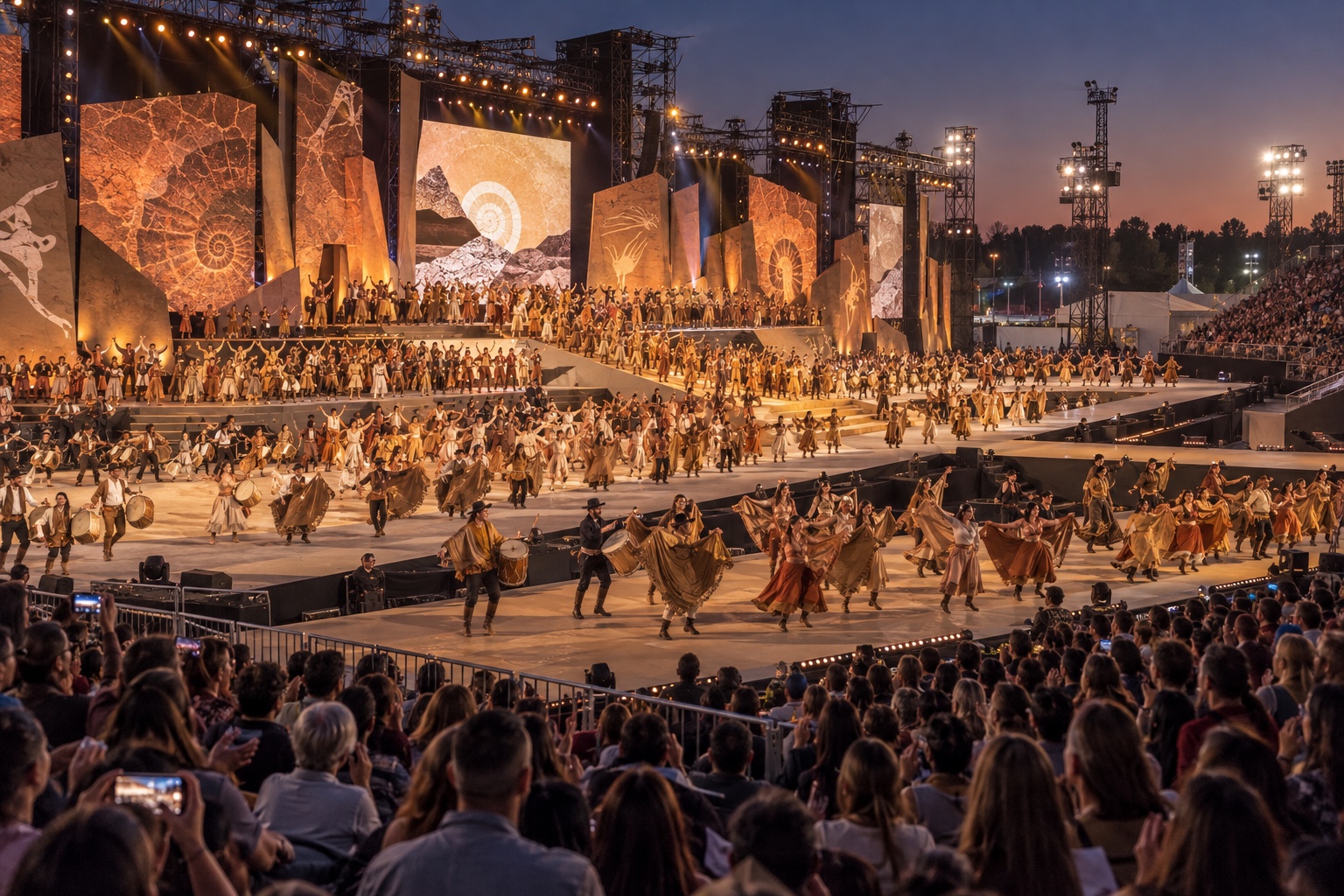
The annual theme influences design and storytelling. A paleontological focus can bring Ischigualasto, ancient life and scientific heritage into installations and performance, yet the underlying structure continues to represent contemporary San Juan.

Families, local groups and visitors share the grounds, creating an atmosphere that can move from educational to celebratory within a few steps. Spend early hours exploring exhibits before concert crowds grow. Eat before the main set, identify the exit and allow one municipal or artisan stand to become a genuine conversation. The fair rewards conversation more than speed. Ask a producer where the grapes grow or an artisan where a technique belongs, then note the answer. These small exchanges turn a busy exhibition ground into a working map of the province.

Festival Highlights

  • The Provincial Fair – Municipalities, producers and institutions compress San Juan’s geography into one walkable encounter. Begin here while staff have time to explain what lies beyond the capital.
  • Music Stages – National and regional performers gather the largest nighttime crowds. Select one essential set and explore smaller stages where local voices carry more context.
  • Artisan Areas – Textiles, ceramics and crafted objects connect landscape to material skill. Ask about origin and process before buying; the conversation often becomes part of the object’s value.
  • Gastronomy – Wine, olive products and regional dishes make agriculture tangible. Taste slowly and note which valley or producer deserves a later visit.
  • The Annual Theme – Design and programming reinterpret one aspect of provincial identity. Follow it across exhibits because a central installation rarely contains the whole argument.
  • Community Recognition – Programs highlighting entrepreneurs and local initiatives reveal who is building San Juan now. These encounters keep heritage from becoming only historical display.
  • The Night Crowd – As heat releases, families and music audiences fill the grounds. An early entrance lets the evening grow around you before peak density turns movement into pressure.

Getting There & Around

Where It Happens

Official venues in and around San Juan city host the fair, stages, gastronomy, artisans, institutional exhibits and major performances. Exact configurations can change, so current maps and transport instructions must guide the visit. The city setting places provincial identity inside an urban gathering. Producers and municipalities can present distant landscapes in one accessible space, but the representation remains compressed.

Ischigualasto lies far to the northeast and belongs to the broader destination journey, not the festival ground. Wineries, mountain routes and earthquake-history sites are also distributed across the region. Understanding where the fiesta ends and the province begins prevents an itinerary from promising impossible same-day combinations. Venue geography may change between editions, making current official maps essential. Once the site is confirmed, identify the principal entrance, transport drop-off and a reunion point; these three decisions prevent the first crowded hour from consuming the evening.

Getting Around

San Juan city is easier to navigate than larger Argentine capitals, but festival traffic and temporary controls change normal routes. Use official shuttles where provided, licensed taxis or verified rides. Save the entrance and pickup point offline before evening crowds build. Walking may work from a central hotel if the current venue and route are appropriate. Heat, dark streets and late hours still require judgment. Groups should leave through one agreed exit and resist changing pickup points while a driver is approaching.

Regional excursions need separate vehicles or tours. Wineries require a sober driver. Ischigualasto involves substantial distance and controlled visitor logistics, so book through reliable operators and avoid pairing it with a late festival night. Movement becomes safe and meaningful when the province is treated as large, not empty. If the itinerary extends beyond the metropolitan area, separate festival transport from regional travel. A dedicated driver or reputable excursion protects flexibility around wineries, while Ischigualasto demands its own timing, distance calculations and official access plan.

Visitor Guide

Festival Food & Drink

San Juan’s dry climate supports wine, olives and produce that give the festival a direct agricultural voice. Fair stalls allow broad tasting, but a winery or city restaurant offers deeper explanation. Use the fiesta to identify producers, then continue the story beyond the grounds.

Eat before the headline crowd and drink water throughout the evening. Wine tasting requires the same pacing as any alcohol service, especially after a hot day.

**Must Try**
• Syrah – San Juan’s emblematic red grape expresses heat, altitude and irrigation through varied styles.
• Empanadas Sanjuaninas – Baked pastry filled with seasoned meat delivers portable regional comfort.
• Punta de Espalda – A local beef cut rewards a seated meal and careful grilling.
• Olive Oil – Provincial production becomes clearest through simple tasting with bread.
• Semitas – Layered savory bread connects everyday baking with local identity.
• Dulce de Membrillo – Quince paste offers a sweet expression of orchard agriculture.

Budget & Costs

Festival admission and headline programs determine the first cost, but regional travel shapes the real budget. Central accommodation, late rides, restaurant meals and excursions to wineries or Ischigualasto should be planned as distinct categories.

The fair can remain affordable when visitors taste selectively and focus on included programming. Purchases from artisans and food producers add meaning when they are intentional. Set a limit before repeated small transactions become invisible.

Ischigualasto tours, vehicle hire and rural lodging can exceed festival spending, yet they may provide the journey’s deepest context. Do not cut safe transport to preserve entertainment money. Keep a reserve for heat supplies, changed pickup arrangements and an additional night if distances prove more demanding than expected. Confirm all current prices and inclusions officially. The fair itself may be only one part of the expense. Winery transport, a guided desert journey and extra hotel nights can outweigh food purchases, so price the provincial itinerary first and treat the festival evening as one component within it.

Tips for First-Time Visitors

Visit the fair before the headline performance. Producers, artisans and municipal displays are easier to understand before sound and crowd density dominate. Mark the stage plan, exit and meeting point on arrival.

Spanish helps in smaller exhibits, but curiosity travels well. Ask where a product was made, what the annual theme means locally and which place the exhibitor would visit first. Those answers can reshape the remaining trip.

Carry water, sun protection for daytime activity and a light layer for the dry evening. Keep cash and digital payment options because small vendors may vary. Do not schedule Ischigualasto after a night likely to finish late. The first-time mistake is treating the fiesta as the destination’s conclusion; it works better as the province’s invitation. Bring water, sun protection for daytime activity and a light layer for the dry evening air. Save the venue map offline, carry modest cash alongside cards and resist scheduling a major desert departure after the latest concert.

Safety

Dry heat, strong sun and dehydration are the main daytime concerns. Carry water, cover exposed skin and reduce activity during the hottest hours. Alcohol feels stronger when the body has already lost fluid. Evening crowds require a specific meeting point and exit. Keep valuables secure, follow staff barriers and move away when compression rises. Children need close supervision near stages and food service.

Regional driving introduces long distances, sparse services and possible wind. Use reputable operators, confirm fuel and communication, and never drive after wine tasting. Ischigualasto visits should follow park instructions and authorized routes; the landscape is remote and environmentally sensitive. Monitor official weather and local travel guidance. A festival night should not weaken the judgment required for the next day’s desert journey. Heat and dehydration can distort judgment before a late program has properly begun. Eat, drink water and establish the return route early. In crowds, keep valuables close and use agreed meeting points when mobile coverage becomes unreliable.

Cultural Significance

The Fiesta Nacional del Sol presents San Juan as a province shaped by intense sunlight, irrigation, seismic history, agriculture, mountains and collective reconstruction. It gives local government, artists, producers and communities a shared stage for defining that identity publicly.

Annual themes can draw attention to natural or historical resources. Paleontological storytelling links contemporary pride to Ischigualasto, where Triassic landscapes hold global scientific importance. The challenge is to turn that heritage into more than imagery.

Travelers should notice who interprets the theme and how local production sits beside cultural performance. A wine stand, artisan object and scientific exhibit may appear unrelated, yet each describes adaptation to place. The fiesta matters because San Juan uses celebration to connect land, work and imagination, then invites visitors to carry that connection into the province. Each edition’s theme can also redirect attention toward a landscape, historical memory or productive tradition that residents know unevenly. The fiesta does cultural work when that shared subject becomes a reason for Sanjuaninos to look again at their own province.

Plan Your Journey

When to Go

The fiesta usually arrives in late spring, when San Juan’s days can be hot, dry and intensely sunny. Most festival energy builds after the afternoon heat, with performances and fair activity continuing into the evening. Use mornings for city museums, wineries or rest, then preserve energy for the night. One evening provides atmosphere; several reveal the program’s range. Select nights after music, forum and cultural schedules are published. A long-weekend date can increase hotel and restaurant demand across the province.

Travelers adding Ischigualasto need a separate full-day or overnight plan, not a rushed extension after a late concert. Distance, heat and controlled park visits require attention. Confirm official festival venues, admission, hours, transport and the current theme shortly before travel. Seasonal wind and temperature shifts should remain part of the daily decision. The wisest schedule also respects the next morning. A late concert followed by a remote excursion can weaken both experiences, so alternate intense festival nights with slower city hours and reserve long regional drives for a properly rested day.

Where to Stay

Central San Juan is the most flexible base. It supports city museums, restaurants and transport while keeping official festival venues within a manageable ride. A room near useful avenues can simplify late returns, though nightlife noise may extend through the celebration.

Winery lodging outside the center creates landscape and calm but makes every festival night dependent on a driver. This can work for a group with a sober transport plan and limited evening ambitions. It is a poor choice when concerts end late and rides are uncertain.

Visitors combining Ischigualasto with the fiesta should separate the journeys deliberately. San Agustín del Valle Fértil is the practical gateway for the park, too far from San Juan city for casual daily movement. Use different bases if necessary. The province becomes more coherent when the itinerary respects its scale. Check how the chosen district behaves after the program ends. A hotel near restaurants can simplify the late return, while a quieter residential base may improve sleep. The best value is the room that supports both the fair and the wider itinerary.

Bottom Line & Key Days

Bottom Line

The Fiesta Nacional del Sol is not strongest when every stage is loud or every stand has been visited. Its value appears when one fragment of the fair unlocks the province beyond it: a winemaker names a valley, an artisan explains local clay, or a paleontological image makes the road to Ischigualasto suddenly necessary. That consequence separates a destination festival from an evening attraction. San Juan uses the fair to gather its many identities, but the traveler completes the lesson through movement after the gates close.

By the end of the trip, sunlight has changed meaning. It is no longer only the fiesta’s symbol. It is the force behind vines, dry air, long shadows and the pace of daily life. The celebration introduced the province; the landscape finished the sentence. Travelers should resist treating that final landscape as an optional add-on. The journey beyond the fair is where the province answers the questions raised inside it, giving the celebration an afterlife measured in roads, tastes and changed attention.

Key Days

• Forum and Opening – Public discussion and inaugural activity establish the annual theme before entertainment takes control. Use this period to understand the questions the fiesta wants to raise.
• First Fair Evening – Producers, artisans and municipal exhibits are fresh and easier to explore. Learn the grounds before headline crowds define movement.
• Major Concert Night – Music brings maximum public energy and transport demand. Enter early, eat before the set and keep the return plan fixed.
• Family Period – Earlier hours favor exhibits, food and cultural programming with less late-night pressure. Build the visit around comfort and conversation.
• Regional Excursion Day – Wineries or city heritage can deepen what the fair introduced. Keep Ischigualasto for a dedicated journey with proper rest.
• Closing Night – Final performances carry pride and urgency. Revisit the stand or idea that changed the itinerary and let that choice complete the festival.

Ready to Experience Fiesta Nacional del Sol?

You've explored what makes this festival special. Now it's time to plan your trip. Compare flights, book your hotel, arrange transportation, and take care of your travel essentials—all in one place.

✈ Find Flights

Loading booking widget...

Booking is completed on Expedia in a new tab.

🏨 Find Hotels

Search places to stay

Powered by Booking.com

Booking is completed on Booking.com in a new tab.

Rail & Bus Travel

Compare train and coach routes for the journey.

Compare Routes

Things to Do

Discover tours and attractions before or after the festival.

Explore Experiences

eSIM Mobile Data

Stay connected abroad without traditional roaming charges.

Get an Airalo eSIM

Travel bookings are provided by our trusted partners. We may earn a commission when you book through these links, at no additional cost to you.

Independent Editorial Standards

Every Follow the Festivals guide is independently researched and regularly reviewed using official festival information, destination resources, and trusted travel references. We also welcome verified updates from festival organizers, destination marketing organizations, tourism partners, and local experts to help keep our guides accurate, current, and useful for travelers.

Represent this festival or have a verified update to share? We'd love to hear from you through our contact page.