
Follow the Festivals

Fiestas de Octubre Guadalajara

Fiestas de Octubre Guadalajara

Guadalajara, Mexico

2026-10-02 - 2026-11-01

The Story

Festival Overview

A family crosses the fairgrounds carrying a paper tray of birria while music from the main forum rolls over the midway. Children point toward illuminated rides, teenagers compare concert plans and older visitors pause at stalls selling crafts from across Jalisco. Fiestas de Octubre works because these experiences occupy the same public space. It is part state fair, part concert season and part annual reunion for metropolitan Guadalajara.

The celebration lasts for weeks, so it does not depend on one ceremonial climax. Its identity accumulates through repeated evenings at the fairgrounds, school visits, family outings, headline performances and the opening parade. Visitors who treat it as a single concert miss that broader rhythm. The useful question is not how to cover everything, but which version of the fair best fits the trip: a music-led night, a family afternoon or a slower visit built around food, exhibitions and local performance.

That range makes the festival approachable, yet it also demands priorities. A successful visit pairs one anchor event with enough unstructured time to wander. The reward is a view of Guadalajara relaxing into its own popular culture, where mariachi, regional food, commercial spectacle and ordinary family ritual share the same crowded avenue.

Why This Festival Is Special

Fiestas de Octubre is special because it gives a major city permission to behave like a shared neighborhood fair for weeks. The scale is enormous, yet the most memorable gestures remain small: a family dividing a torta ahogada, a child measuring courage beneath a ride, friends singing a chorus they already know and an artisan explaining where a piece was made.

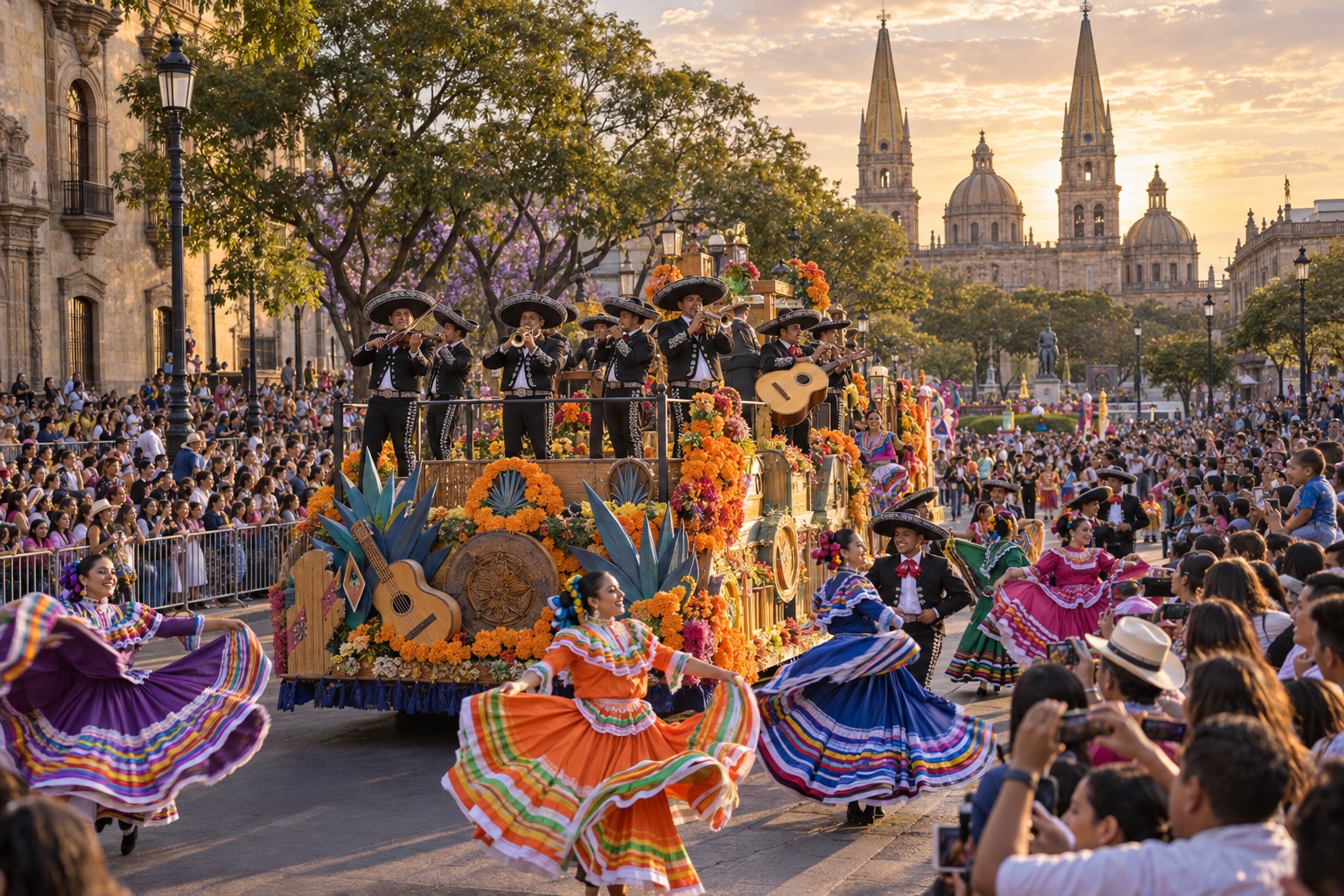
The opening parade connects that intimacy to civic performance. Jalisco’s visual symbols move through Guadalajara before settling into the fairground’s more commercial life. The transition prevents heritage from becoming a museum display. It enters an active marketplace where people argue over music, spend impulsively, revisit old favorites and create new family memories.

Visitors do not need to master the entire program to understand the event. They need one well-chosen night and enough attention to notice how generations use the same space differently. The fair’s value lies in that coexistence. It offers spectacle, but it also exposes the annual habits through which a metropolis recognizes itself.

Festival Experience

What to Expect

Expect a fair that changes personality across the day. Afternoon begins with family attractions, exhibitions, crafts and food. As darkness arrives, ride lights intensify, music grows louder and audiences stream toward performance spaces. The most revealing moment is often the transition, when school groups leave, dinner crowds enter and the same grounds become an evening social world.

The event is highly commercial, and that is part of its popular character. Brand displays, games, vendors and ticketed extras sit beside folkloric dance, mariachi and regional food. Travelers looking only for a heritage pageant may find the mix surprising. Stay with it long enough to see how families use the fair: sharing dishes, revisiting favorite stalls and negotiating one more ride before the concert.

Crowds, sound and choice can exhaust first-time visitors. Set a modest route with an exhibition, a meal, a midway period and one performance. Leave unused time between them. The fair becomes enjoyable when wandering is allowed to remain wandering, not when every hour is forced into an attraction checklist.

Festival Highlights

  • Opening Parade – Floats, dancers, charros and costumed performers carry the celebration through central Guadalajara. Arrive well before the procession, select a side of the route with shade or a clear exit, and remain after the first major float because the parade’s regional variety develops across its full length.
  • Main Forum Concert – A large evening audience gathers for popular music included with, or connected to, fair admission according to the current ticket system. Confirm access rules early, then enter before the headline rush so food, seating and companions are settled before the performance begins.
  • Palenque Night – The circular performance tradition creates a later, more intimate and often premium-priced experience. Treat it as a separate night with its own ticket, transport and budget. The late finish makes a nearby hotel or prearranged pickup especially valuable.
  • La Canica Azul – This family-oriented pavilion turns science, environment or imaginative themes into interactive displays. Visit earlier in the day when children can engage patiently and adults can read the exhibition, then move to rides and food as the grounds become busier.
  • Midway at Dusk – Ride lights and competing music transform the site after sunset. Walk once before buying multiple ride credits, compare height and safety restrictions, and agree on a fixed reunion point before family members divide between attractions.
  • Jalisco Food Circuit – Birria, tortas ahogadas, carne en su jugo, tacos and corn-based drinks make the fair a practical regional tasting room. Share portions across several stalls and save the richest dish for a seated break away from the busiest lanes.
  • Craft and Regional Pavilions – Producers and artisans extend the event beyond entertainment. Ask where an item was made, compare work before purchasing and carry a small reusable bag so fragile or food-based goods survive the rest of the evening.
  • Folkloric Performance – Mariachi and regional dance place the fair’s commercial scale in cultural context. Choose one complete set, stand where costumes and footwork remain visible, and resist leaving after the familiar opening number; the quieter pieces often reveal more of Jalisco’s range.

Getting There & Around

Where It Happens

The principal fair occupies the Auditorio Benito Juárez complex in Zapopan, a large enclosed site designed for concerts, exhibitions, rides, food stalls and heavy daily attendance. Its internal geography matters. The main forum, palenque, family attractions and commercial pavilions serve different audiences, and crossing the grounds takes longer once evening crowds fill the lanes.

The opening parade belongs to central Guadalajara, where floats, dancers, charros and performers turn a civic avenue into the festival’s public threshold. This split explains the event’s character. The parade presents Jalisco to the city, while the fairgrounds turn that identity into weeks of entertainment and social routine.

Do not assume every advertised activity is included with general admission or located inside the same building. Concert seating, premium shows and special attractions can use separate systems. Study the official map and program before arrival, then select a meeting point visible from more than one direction. Mobile reception and crowd movement make vague instructions such as “near the stage” unreliable when a group separates.

Getting Around

The fair’s northern Zapopan location makes movement the central practical decision. Public transport avoids parking searches and can be dependable for the outward trip, but closing times, final services and crowd control must be checked for the specific night. Ride-hailing works best when the pickup point is selected outside the immediate exit surge and shared with the driver in advance.

Driving gives families storage and flexibility, yet the last approach can absorb the time it appears to save. Parking supply, road closures and concert traffic change the calculation. If driving, enter before the evening peak, photograph the parking location and keep everyone together until a clear landmark is reached.

Inside the grounds, walk a deliberate loop before settling into attractions. Identify restrooms, exits, medical support, the main stage and the agreed reunion point. The site becomes harder to read after dark, especially when queues bend across circulation lanes.

For the parade, use public transport or walk from a central base because street closures can isolate vehicles. Keep the fairgrounds visit and historic-center sightseeing in separate blocks. Trying to cross the metropolitan area repeatedly on a major concert day wastes the energy the festival requires.

Visitor Guide

Festival Food & Drink

Food is not a gap between attractions here. It is one of the clearest ways the fair connects metropolitan Guadalajara with the wider state. Busy stalls reward fast ordering, but the best meal comes from slowing down: look for turnover, watch what local families are carrying and share dishes so one heavy plate does not end the evening early.

**Must Try**
• Birria – Slow-cooked, chile-rich meat served in broth or tacos, ideal as a substantial early meal.
• Torta ahogada – A crusty sandwich submerged in tomato sauce, with chile added according to tolerance.
• Carne en su jugo – Beef, beans and broth offering a calmer seated counterpoint to fried midway food.
• Tejuino – A lightly fermented corn drink commonly served cold with lime and a scoop of lime ice.
• Jericalla – Guadalajara’s custard dessert, recognizable by its dark baked surface and soft center.
• Elote or esquites – Corn dressed with lime, chile, cheese and cream for an easy walking snack.

Eat before the headline concert rush, when queues shorten and tables are easier to find. Carry water and alternate rich dishes with fruit or something simple. Ask prices before ordering where menus are unclear, and keep cash in small denominations while retaining a card as backup.

Budget & Costs

General admission can make the fair appear inexpensive, but the total grows through rides, food, games, premium seating and transport. Build the budget in layers: entry first, the essential performance second, then a fixed allowance for food and attractions. That method prevents small purchases from consuming the money reserved for the night’s main purpose.

Headline concerts may have distinct access categories, and palenque events often require a separate ticket. Confirm what admission actually includes. Families should price ride packages before promising unlimited attractions; sharing a set number of credits gives children a clear boundary and reduces negotiations inside the midway.

Transport costs depend heavily on the exit strategy. A surge-priced ride after a major show may exceed the day’s admission and meals. Public transport, a prearranged driver or a hotel with simpler northern access can lower that risk. Guadalajara offers lodging across many price levels, but rooms near convenient corridors gain value during busy weekends. Reserve a contingency amount for water, a late meal or an unexpected taxi. The trip feels generous when its choices were priced before the gates opened.

Tips for First-Time Visitors

Begin with the official program and mark one nonnegotiable experience. Everything else should support it. A family afternoon needs different timing from a palenque night, and combining both without a long break creates fatigue. Screenshot tickets, access instructions and the site map before leaving the hotel because network demand may rise near the entrance.

Enter with small cash, a payment card, water where permitted and a portable battery. Wear closed, comfortable shoes. Fairground surfaces, queues and repeated crossings punish footwear selected only for a concert. Families should place contact information inside a child’s pocket and rehearse the reunion point before anyone becomes distracted.

Inspect prices and conditions before buying ride packages, premium seats or games. Admission rules can change between attractions, and a low entrance price does not predict the final spend. If the grounds feel overwhelming, step into an exhibition or take a seated food break. The fair rewards a second wind. Leaving immediately after the largest concert also creates the worst transport competition, so a brief pause may produce a calmer exit.

Safety

Dense crowds, moving rides, late concerts and alcohol create the main risks. Keep valuables zipped and carried in front, especially at entrances and performance surges. Do not place a phone in an open back pocket. Families should photograph children at the start of the visit and write an adult’s contact details on a card they can carry.

Select a specific reunion point that will remain visible after dark. A branded booth may close or change appearance, while a fixed gate or major structure is more reliable. If separated, stop moving and follow the agreed plan. Official staff and marked medical areas should be located during the first circuit, not after they are needed.

Use established transport and verify the vehicle before entering. Avoid accepting informal rides at congested exits. Pace alcohol, drink water and eat before a late performance. Follow all ride restrictions and keep loose items secured. Weather can leave surfaces slick, while warm afternoons may cause dehydration. The safest visit is not anxious; it is organized enough that the crowd can remain exciting without becoming disorienting.

Cultural Significance

Fiestas de Octubre began as a project to promote Jalisco’s culture and tourism, but decades of repetition have made it part of the metropolitan calendar. Its significance lives less in a single performance than in the annual return of families, school groups, vendors and artists. People remember particular rides, foods and concerts, then bring younger relatives into the same ritual.

The fair also shows how Jalisco presents itself in public. Mariachi, charro imagery, folkloric dance and regional cuisine remain visible, yet they share space with pop music, branded entertainment and international spectacle. That combination is not a dilution of identity. It reveals a state culture confident enough to circulate between heritage and contemporary mass entertainment.

For travelers, the event offers access to a form of civic life that museums cannot reproduce. The crowd is not observing a fixed tradition from outside. It is actively deciding what the tradition becomes this year through attendance, taste and repetition. Watching grandparents navigate the midway with children explains the festival’s durability better than any anniversary display.

Plan Your Journey

When to Go

The festival normally fills most of October and may extend into the opening days of November. Early weeks feel fresh and ceremonial, with the opening parade and newly launched exhibitions giving the fair a sense of arrival. Later weeks often carry greater familiarity and heavier demand around popular concerts. Travelers should confirm the official calendar, ticket rules and operating hours before committing to flights or a hotel.

Weekday afternoons offer the easiest introduction. Families and school groups are present, but walking lanes, food counters and educational displays usually allow more patient exploration. Friday and Saturday evenings bring the strongest collective energy and the greatest transport pressure. Those nights suit travelers who want a headline act and a full midway atmosphere, provided they accept queues and a late return.

Guadalajara’s autumn days can be warm while evenings turn cooler. Light layers, comfortable shoes and rain awareness remain useful. Plan one primary fair visit and keep another evening flexible. If the first night is crowded or weather changes, the second opportunity prevents the entire trip from resting on a single schedule.

Where to Stay

The fairgrounds sit in Zapopan, north of central Guadalajara, so the best base depends on whether the festival or the city leads the trip. Staying near the venue shortens the return after concerts and helps families manage tired children. The trade-off is a more utilitarian neighborhood experience and less immediate access to Guadalajara’s historic plazas, museums and restaurant districts.

Centro suits travelers who want architecture, markets and the opening parade alongside the fair. It creates a richer daytime itinerary, though evening transport to and from the venue requires patience. Americana and Lafayette offer restaurants, cafés and nightlife with reasonable access to several parts of the metropolitan area. They are a strong compromise for adults who want the festival to sit inside a broader city break.

Providencia and parts of Zapopan provide polished hotels and easier northern access. Before booking, map the actual entrance, not merely the venue name, and test the late-night journey. A room beside a rail or bus corridor can be more useful than a nominally closer hotel separated by congested roads. Families should also confirm breakfast hours, sound conditions and whether ride-hailing pickup is practical after major shows.

Bottom Line & Key Days

Bottom Line

Leave after the music softens and the midway is still turning. Families are counting bags, teenagers are sending final messages and food vendors are preparing for another round. The scene explains why Fiestas de Octubre cannot be reduced to its concert roster. Performers change, themes change and ticket systems change, yet Guadalajara returns to the grounds to rehearse a familiar public pleasure.

A strong trip starts with restraint. Select the parade or one major performance, allow time for a regional meal and keep part of the visit unscheduled. Stay where the late return makes sense, verify access rules and give the fair enough hours to change from afternoon into night. These choices create depth without demanding exhaustive coverage.

The lasting memory may be a famous song, but it may also be the moment before it: walking under ride lights with tejuino in hand while several generations move toward different attractions. That is the festival’s real achievement. It makes Jalisco’s popular identity visible as something lived, negotiated and joyfully repeated.

Key Days

• Opening Parade Day – Central Guadalajara becomes the ceremonial entrance to the festival through floats, dancers, charros and public performance. Confirm the route, arrive early and avoid scheduling a tight transfer to the fairgrounds immediately afterward.

• First Fairground Weekend – New exhibitions, rides and food stalls operate with opening energy. Use daylight to learn the site, then remain for the evening transformation if stamina allows.

• Weekday Family Afternoon – Lower pressure makes interactive pavilions, crafts and children’s attractions easier to navigate. This is the best phase for families that value participation over headline atmosphere.

• Major Main-Forum Night – A popular artist draws the largest arrival wave and tests seating, food and transport plans. Enter early and treat access instructions as a separate planning task.

• Palenque Evening – Premium performance, later timing and a distinct audience create a self-contained night. Arrange the return before entering and avoid stacking a full fair itinerary ahead of it.

• Final Full Weekend – Repeat visitors and closing-season demand give the grounds a celebratory, crowded mood. Prioritize attractions that may disappear with the fair and accept slower movement.

• Closing Phase – Last visits carry nostalgia for local families and urgency for vendors and ride enthusiasts. Choose a few favorites, leave space for a final meal and confirm whether individual attractions close on different schedules.

Ready to Experience Fiestas de Octubre Guadalajara?

You've explored what makes this festival special. Now it's time to plan your trip. Compare flights, book your hotel, arrange transportation, and take care of your travel essentials—all in one place.

✈ Find Flights

Loading booking widget...

Booking is completed on Expedia in a new tab.

🏨 Find Hotels

Search places to stay

Powered by Booking.com

Booking is completed on Booking.com in a new tab.

Rail & Bus Travel

Compare train and coach routes for the journey.

Compare Routes

Things to Do

Discover tours and attractions before or after the festival.

Explore Experiences

eSIM Mobile Data

Stay connected abroad without traditional roaming charges.

Get an Airalo eSIM

Travel bookings are provided by our trusted partners. We may earn a commission when you book through these links, at no additional cost to you.

Independent Editorial Standards

Every Follow the Festivals guide is independently researched and regularly reviewed using official festival information, destination resources, and trusted travel references. We also welcome verified updates from festival organizers, destination marketing organizations, tourism partners, and local experts to help keep our guides accurate, current, and useful for travelers.

Represent this festival or have a verified update to share? We'd love to hear from you through our contact page.