
Follow the Festivals

Herjólfsdalur

Herjólfsdalur

Vestmannaeyjar, Iceland

2027-07-29 - 2027-08-02

The Story

Festival Overview

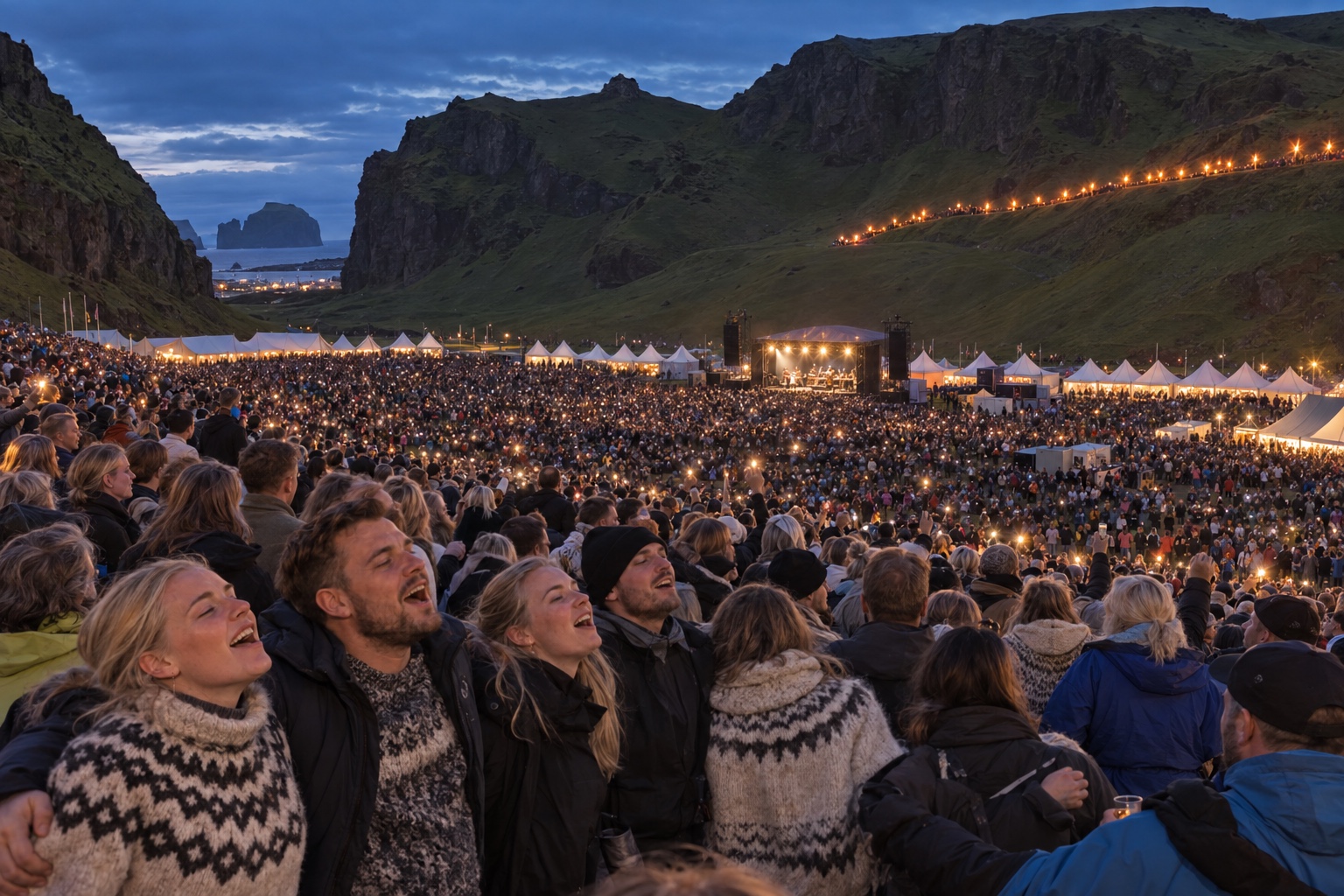
Herjólfsdalur feels built for collective memory. Cliffs and green slopes enclose the valley, tents occupy the floor and thousands gather beneath a stage in the Westman Islands. Over the weekend, concerts, a towering bonfire, fireworks and the Sunday hillside sing-along turn the natural amphitheater into one of Iceland’s defining communal spaces. Þjóðhátíð began when islanders could not join a mainland national celebration and created their own. That origin still governs the festival. Visitors arrive for major Icelandic music and a relentless party, but locals experience a homecoming shaped by island songs, family traditions and repeated gestures.

Travel logistics are inseparable from the event. Every attendee must reach Heimaey by ferry or flight, secure accommodation or camping and accept that weather can alter the plan. The traveler who solves transport first can experience the valley as intended: not a remote concert ground, but an island community gathering itself into song.

Why This Festival Is Special

Þjóðhátíð is special because a small island hosts a gathering large enough to feel national without losing the emotional logic of homecoming. The valley encloses thousands, but its scale never becomes anonymous when local songs begin and families recognize one another across generations.

The sequence of fire, fireworks and song gives the weekend ritual clarity. Each spectacle prepares the next, culminating in a hillside audience that becomes the performer. Brekkusöngur succeeds through memory held collectively, not production technology.

Travel difficulty strengthens the sense of arrival. Everyone has crossed sea or sky and accepted nature’s authority over the timetable. That shared vulnerability makes the valley feel temporarily complete.

The festival is not special because it is easy or polished. It is special because landscape, island history and popular celebration meet in a form that could not be moved elsewhere. Herjólfsdalur does not contain Þjóðhátíð; it helps create it.

Festival Experience

What to Expect

Expect a sustained outdoor celebration where live music, camping and social drinking continue across several days. The audience is heavily Icelandic, and many of the most powerful songs carry shared references that visitors may not immediately understand. Curiosity matters more than instant familiarity.

The valley’s signature events change the mood. The bonfire produces heat, scale and ritual focus. Fireworks turn the cliffs into a visual frame. Brekkusöngur asks thousands to sit or stand on the slope and sing together, often by candlelight or phone light. That moment is less a concert than collective ownership of a repertoire.

Weather, mud, queues and limited sleep are normal pressures. Eat real meals, drink water and preserve dry clothing for later nights. Alcohol intensifies cold and disorientation. The festival can feel exuberant and rough-edged at once. Travelers should enter with companions, boundaries and a transport plan, then let the valley’s rhythm replace the impulse to control every hour.

Festival Highlights

  • Friday Bonfire – The opening fire gives the valley ceremonial scale. Watch from the designated area, follow wind-related instructions and resist pushing toward restricted ground.
  • Saturday Fireworks – Explosions reflect against the cliffs and make geography part of the spectacle. Choose a clear view early and keep hearing protection available.
  • Sunday Brekkusöngur – Thousands sing familiar Icelandic songs from the hillside. Learn several choruses beforehand, settle respectfully and let collective voices remain the focus.
  • Main-Stage Concert – Leading Icelandic artists carry the weekend through large late-night sets. Select one essential performance and keep enough energy to experience it fully.
  • Valley Camping – Tents create a temporary community with constant sound and movement. Use weatherproof gear, secure valuables and mark the campsite with a reliable landmark.
  • Island Homecoming – Returning Vestmannaeyjar residents and families give the event emotional depth beyond tourism. Observe how greetings and local songs change the public atmosphere.
  • Daytime Family Program – Earlier events offer a gentler way to understand the valley before the nighttime party. Families should verify age rules, sound exposure and exits.
  • Monday Farewell – The final movement toward harbor and ferry reveals the festival’s island reality. Pack early, clean the campsite and leave enough time for wristband or baggage procedures.

Getting There & Around

Where It Happens

The main festival occupies Herjólfsdalur, a valley on Heimaey whose slopes form a natural auditorium. The stage, camping areas, food and service zones, bonfire site and hillside audience coexist within a landscape that feels both enclosed and monumental. Terrain and weather shape every movement.

Vestmannaeyjabær provides the harbor, shops, restaurants, swimming pool and residential setting around the event. Supplies should be purchased early because demand concentrates quickly. The walk or shuttle between town and valley becomes a repeated festival ritual.

The harbor is also an emotional threshold. Arrivals bring equipment, families and returning islanders; departures compress everyone into scheduled crossings. Learn the route from ferry terminal to wristband collection, accommodation and valley before the biggest crowds.

Inside Herjólfsdalur, select fixed landmarks for reunions. Tents and temporary structures can look different after dark, and hillside crowds make vague locations useless. Respect closed slopes and safety boundaries around fire and fireworks.

Getting Around

Reaching Heimaey is the first movement problem. Ferries from the south coast carry most visitors, while flights may offer another option. Weather can alter both. Purchase official festival and ferry arrangements early, confirm whether the ticket includes transport and retain barcodes offline.

Leave mainland driving margin for the ferry terminal and understand parking or vehicle-booking rules. Taking a car to the island may be unnecessary if accommodation and the valley are walkable, but luggage and camping gear change the equation.

On Heimaey, walking and festival buses often connect harbor, town and Herjólfsdalur. Verify schedules and eligibility because service may not be continuous. Taxis are scarce during major exits. Keep routes simple after drinking.

Departure requires equal planning. Pack before the final night, confirm the sailing and reach the terminal early. Weather delays can cascade into missed mainland connections. The most resilient itinerary places an extra Iceland night after the festival, not an immediate international departure.

Visitor Guide

Festival Food & Drink

Festival food needs to provide warmth and stamina, not only novelty. Eat a substantial meal in town before the evening program, then use valley food stalls for hot snacks and recovery. Queues expand around major stage changes, so the quiet interval is the best dining time.

**Must Try**
• Fish soup – A warming island meal built around seafood and suited to cold, wet weather.
• Fresh fish – Local catch in a restaurant offers a calm counterpoint to festival stalls.
• Icelandic hot dog – Fast, familiar and practical between performances.
• Lamb soup – Broth, vegetables and meat restore energy after hours outdoors.
• Kleinur – Twisted fried pastries that travel well as a morning snack.
• Icelandic beer – Enjoy only after transport and personal safety plans are settled.

Carry water and alternate it with alcohol. Cold air can hide dehydration, while repeated drinking undermines judgment near slopes, fire and harbor transport. Buy breakfast supplies before shops face peak demand. A warm meal and dry layer often improve the festival more than another late round.

Budget & Costs

The festival budget begins with transport and accommodation, not the wristband. Ferry or flight access, camping fees, luggage and limited island rooms can raise the total quickly. Buy through official channels and understand exactly what each package includes. Camping lowers lodging cost but requires equipment capable of Icelandic weather. Replacing a failed tent or wet sleeping bag on the island is difficult and expensive. Town lodging costs more but provides recovery that may justify the premium across several nights.

Food, drinks and merchandise add up inside the valley. Purchase breakfast and water supplies early, then set a daily spending limit. Alcohol can become the largest discretionary cost and the largest safety liability.

Keep contingency for a weather delay, changed sailing or extra mainland night. Flexible onward travel has real value. The trip is expensive when assembled piecemeal at the last minute; it becomes manageable when ferry, bed, ticket and post-festival buffer are treated as one decision.

Tips for First-Time Visitors

Book the festival ticket, ferry or flight and accommodation as one coordinated package. A successful purchase in only one category can create an expensive dead end. Download every barcode and confirmation because mobile networks may slow when arrivals peak.

Prepare for wet cold. Bring waterproof jacket and trousers, insulating layers, gloves, hat, dry socks and footwear that can handle mud. Campers need a sturdy tent, strong pegs, waterproof storage and a recognizable marker. Protect sleeping gear from moisture above all else.

Attend with trusted companions and agree on reunion points, alcohol limits and the route back to accommodation. Learn basic Icelandic festival etiquette and several brekkusöngur songs. Respect residents, private property and island cleanup.

Do not spend the entire weekend intoxicated. The bonfire, fireworks and hillside singing are powerful because the traveler can perceive their sequence. Sleep, eat and step into town during daylight. The island itself deserves attention beyond the valley gates.

Safety

Weather and alcohol shape the main risks. Waterproof layers, warm clothing and dry sleeping gear are essential. Check official alerts because wind can affect fires, fireworks, tents and transport. Never cross barriers near pyrotechnics or exposed slopes.

Attend with companions, agree on check-ins and use fixed reunion points. Keep valuables secured and identification protected from rain. Pace alcohol, eat and drink water. Never enter the harbor edge, cliffs or unfamiliar terrain while impaired.

The festival has faced serious public concern about sexual violence. Consent must be explicit, ongoing and freely given. Look after friends, intervene safely when someone appears vulnerable and seek security or medical support immediately when needed. No tradition or party atmosphere excuses coercion.

Follow official camping, evacuation and ferry instructions. Keep tent lanes clear and know where medical help is located. A safe weekend depends on collective responsibility, not personal confidence alone.

Cultural Significance

Þjóðhátíð began as an island response to separation. When residents could not easily join a mainland national celebration, Vestmannaeyjar created its own gathering. That act of local self-reliance became a recurring homecoming and one of Iceland’s largest festivals.

The key rituals transform landscape into memory. Fire on Friday, fireworks on Saturday and communal singing on Sunday give the weekend a shared structure repeated across generations. Festival songs become archives of island identity, departures, disasters, affection and return.

Visitors should recognize that the event is both public festival and local inheritance. Its national popularity does not erase the fact that residents host immense pressure in a small town and valley. Respect for homes, cleanup, transport systems and safety is part of participating.

The cultural power lies in the crowd knowing more than the program explains. Brekkusöngur works because thousands carry the songs before the first chord. A traveler enters that continuity as a guest.

Plan Your Journey

When to Go

The festival takes place over Iceland’s summer holiday weekend, with the central program concentrated from Friday through Monday. Friday’s bonfire, Saturday’s fireworks and Sunday’s brekkusöngur form the classic sequence. Exact gates, performance times and ferry packages must be confirmed through official channels each year.

Arrive before the opening rush if possible. Weather can disrupt ferries and flights, while the island’s limited rooms and transport systems operate at exceptional pressure. An earlier arrival creates time to collect supplies, understand the town-to-valley route and recover from travel before the nights lengthen.

Summer daylight does not guarantee warmth. Wind, rain and cold can develop rapidly, especially after dark. Waterproof outerwear, warm layers and dry footwear matter more than a polished festival look. Depart after a full night’s sleep or with a verified ferry plan. The Monday exodus is part of the logistics, and a tight international connection leaves little resilience if nature changes the timetable.

Where to Stay

Camping in or near the festival environment creates the most immersive experience and the least separation from noise. It suits prepared travelers with weather-rated equipment, secure storage and realistic expectations about sleep. Reserve the correct camping access and understand restrictions before carrying gear across the island.

Guesthouses, apartments and hotels in Vestmannaeyjabær provide warmth, bathrooms and recovery, but inventory is extremely limited. Book early and confirm whether a property requires a minimum stay. Walking or shuttle distance to Herjólfsdalur matters because taxis face heavy demand.

Staying on the mainland is not a workable substitute for full festival participation unless ferry travel is explicitly available at the required hours. The sea crossing creates a hard boundary. Visitors who value sleep should select town lodging away from the densest party zones and carry earplugs anyway.

Whatever the choice, secure accommodation and transport together. A ticket without a bed or campsite does not constitute a travel plan.

Bottom Line & Key Days

Bottom Line

On Sunday night, lights spread across the hillside and thousands sing songs many have known since childhood. The valley makes individual voices feel both small and necessary. For an outside visitor, that is the moment the weekend stops being a remote music festival and becomes an island’s public memory.

Earn that moment through preparation. Coordinate the ticket, crossing and accommodation; bring real weather protection; set clear safety boundaries; and preserve enough sleep to experience the signature sequence. Respect the residents and leave the valley cleaner than it was found.

Þjóðhátíð teaches that access can deepen meaning. The ferry, wind and limited ground prevent the celebration from becoming frictionless, yet those conditions clarify why gathering matters. People return because the songs, cliffs and repeated rituals hold a version of community unavailable elsewhere. The traveler leaves understanding that the main attraction was never just the stage. It was everyone choosing to reach the valley together.

Key Days

• Booking Phase – Ticket, ferry or flight and accommodation must be secured together. Confirm inclusions, barcodes, luggage rules and cancellation terms.

• Arrival Day – Reach Heimaey before the main rush, collect wristbands, buy supplies and learn the route between harbor, lodging and valley.

• Friday Bonfire – Fire establishes the weekend’s ritual rhythm. Dress for wind, follow safety lines and keep the return path clear.

• Saturday Fireworks – The cliffs frame the largest visual spectacle. Select the viewing area early and carry hearing protection.

• Sunday Brekkusöngur – Hillside singing becomes the communal climax. Learn choruses, settle respectfully and remain attentive through the full sequence.

• Final Night – Late sets extend the celebration after its emotional high point. Pace alcohol and preserve judgment for packing and transport.

• Monday Departure – Clean the campsite, verify the crossing and reach the harbor early. Keep onward travel flexible in case weather changes the schedule.

Ready to Experience Herjólfsdalur?

You've explored what makes this festival special. Now it's time to plan your trip. Compare flights, book your hotel, arrange transportation, and take care of your travel essentials—all in one place.

✈ Find Flights

Loading booking widget...

Booking is completed on Expedia in a new tab.

🏨 Find Hotels

Search places to stay

Powered by Booking.com

Booking is completed on Booking.com in a new tab.

Rail & Bus Travel

Compare train and coach routes for the journey.

Compare Routes

Things to Do

Discover tours and attractions before or after the festival.

Explore Experiences

eSIM Mobile Data

Stay connected abroad without traditional roaming charges.

Get an Airalo eSIM

Travel bookings are provided by our trusted partners. We may earn a commission when you book through these links, at no additional cost to you.

Independent Editorial Standards

Every Follow the Festivals guide is independently researched and regularly reviewed using official festival information, destination resources, and trusted travel references. We also welcome verified updates from festival organizers, destination marketing organizations, tourism partners, and local experts to help keep our guides accurate, current, and useful for travelers.

Represent this festival or have a verified update to share? We'd love to hear from you through our contact page.