
Follow the Festivals

Gangneung Danoje Festival

Gangneung Danoje Festival

Gangneung, South Korea

2027-06-05 - 2027-06-12

The Story

Festival Overview

Gangneung Danoje Festival is a sacred regional festival that refuses to separate ritual from public pleasure. Shamanic ceremonies, Confucian observance, Buddhist influence, mask drama, folk music, games and a vast outdoor market all belong to the same seasonal gathering.

The main visitor period occupies central Gangneung, but the festival’s ritual life begins earlier with sacred liquor, a mountain deity and the ceremonial movement of a sacred tree. Understanding that sequence changes the crowded grounds. The market and performances are not a modern entertainment layer covering an old rite. They are part of a festival whose social role has long included participation across class and neighborhood.

My advice is to give one serious ritual, one Gwanno mask drama and one unhurried market visit equal attention. Gangneung becomes memorable through the relationship among them.

This is not a festival that requires frantic coverage. It rewards repeated visits to the grounds, careful use of the program and enough curiosity to join a fan-making activity, taste a rice cake and recognize when a public stage has shifted into sacred work.

Why This Festival Is Special

Gangneung Danoje is special because sacred ritual and broad public participation strengthen each other. The festival can honor mountain and tutelary deities while making room for market bargaining, mask comedy, children’s games and seasonal food.

Its time depth is felt through sequence. Sacred liquor is prepared, ritual objects are carried, deities are addressed and the city gathers. Visitors who follow that movement experience more than a collection of performances.

The Nanjang market prevents heritage from becoming remote. Smell, appetite, trade and noise pull tradition into everyday life. Gwanno mask drama adds humor and social observation without relying on spoken explanation.

What I value most is the festival’s confidence. It does not ask every visitor to understand everything immediately. It offers several doors into the same cultural world: prayer, theater, craft, play and food.

That generosity creates an unusual travel experience. A person may arrive for spectacle and leave remembering a handmade fan, a shared rice cake or the moment an ordinary crowd became quiet because a ritual had begun.

Festival Experience

What to Expect

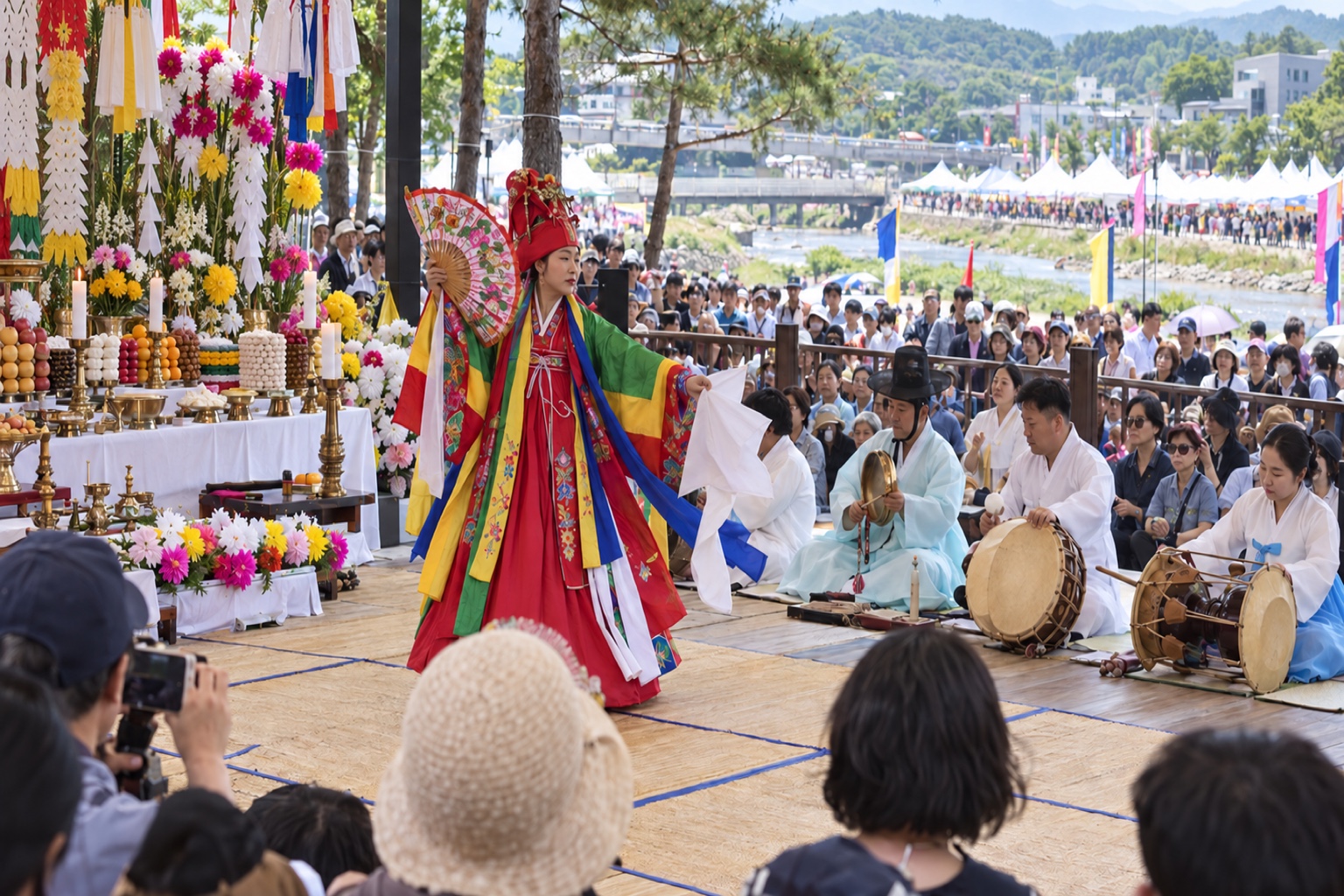
Expect a program with several registers. A shamanic ritual may demand stillness and attention. Gwanno mask drama uses gesture, satire and movement to create public theater. A few minutes later, market noise and carnival play can take over.

The grounds are popular and busy. Families, older residents, school groups and visitors share the same paths. Queues form around well-known foods and participatory activities. Move slowly and keep entrances clear.

Many events are accessible without deep prior knowledge, but context improves them. Read a concise explanation of the deities, sacred tree and ritual sequence before arrival. Translation may be limited at smaller stages.

Participation is part of the pleasure. Visitors may make fans, draw masks, taste surichwi rice cakes or encounter iris-water traditions. Join with respect and follow staff guidance.

The festival’s rhythm feels human because sacred and ordinary life remain adjacent. A solemn chant can be followed by a child winning a game and a family buying dinner. I would not try to resolve that contrast. Danoje’s strength is its capacity to hold protection, memory, trade and amusement inside one shared civic season.

Festival Highlights

  • Sacred Liquor Tradition – Preparations begin before the crowded public phase. Learn its place in the ritual sequence so later ceremonies feel connected to an unfolding obligation.
  • Daegwallyeong Rites – Ceremonies honor the mountain deity and regional guardians. Attend only where public access is invited and follow local behavior closely.
  • Sacred Tree Procession – The sinmok connects mountain ritual with the city’s festival life. Confirm the route, arrive early and avoid obstructing participants.
  • Dano Shamanic Ritual – Music, offerings and performance address protection and communal well-being. Give the rite sustained attention without treating its most dramatic moments as isolated spectacle.
  • Gwanno Mask Drama – Korea’s distinctive nonverbal mask theater uses movement and social humor. Read the short story outline, then watch expressions and audience response.
  • Nanjang Market – Food, crafts, games and public performance make the market a cultural institution in its own right. Visit hungry and allow several unscheduled hours.
  • Participatory Crafts – Fan making and mask drawing give visitors a tactile route into festival symbols. Choose an official activity and let instructors set the pace.
  • Dano Customs – Surichwi rice cakes and iris-water traditions bring seasonal belief into everyday action. Ask what the practice means before joining it.

Getting There & Around

Where It Happens

The main festival grounds occupy central Gangneung around the river and the large Nanjang market. Performance stages, ritual spaces, food stalls, games and craft activities create a dense temporary district that can feel like several events sharing one map.

Sacred geography extends beyond the grounds. Daegwallyeong and the mountain deity belong to the festival’s spiritual structure, while processions connect ceremonial places with the city. Some earlier rites may have limited or specialized access.

Use the official map to distinguish ritual venues from entertainment stages. Arrive during daylight and identify bridges, information points, rest areas and the route back to the hotel. River crossings can become crowd bottlenecks after major programs.

The market deserves to be treated as a destination, not the corridor between performances. Its food, crafts, contests and public sociability express the festival’s inclusive role.

Gangneung’s larger setting also matters. Mountains, city and east coast meet within a short region. I would give the festival its own day, then explore the coast separately. Combining both on a rigid timetable leaves the traveler rushing through two places that reward lingering.

Getting Around

High-speed and intercity rail make Gangneung accessible from Seoul, but festival demand can fill preferred services. Reserve the main travel legs early and keep enough time between arrival and the first fixed program.

Within Gangneung, buses, taxis and walking connect the station, center, coast and festival area. The central grounds are best explored on foot. Wear supportive shoes and save the map offline.

Traffic controls and crowded pickup areas can slow taxis near major events. Walk to a clear landmark beyond the densest zone before requesting a ride. Confirm the vehicle and hotel address in Korean.

Travel to mountain-related sites requires separate planning. Use official festival transport or a reputable tour when offered. Do not assume a remote ceremonial location works as a quick side trip.

Beach districts add another movement axis. Visit them on a separate half-day and protect the return for evening ritual.

My preferred structure is rail into Gangneung, a central walking base and only one planned taxi journey per day. The festival becomes easier when urban movement stays simple enough that the program, not transport, controls attention.

Visitor Guide

Festival Food & Drink

Food is one of Danoje’s central experiences because the Nanjang market is not a decorative food court. It is a major public gathering where regional products, temporary stalls and festival habits become visible. Arrive before peak dinner pressure and browse once before choosing.

**Must Try**
• Surichwi tteok – Dano rice cakes made with a seasonal mountain herb.
• Gamja ongsimi – Potato dumpling soup associated with Gangwon comfort cooking.
• Makguksu – Buckwheat noodles served with a bright, refreshing seasoning.
• Chodang sundubu – Soft tofu linked to Gangneung’s coastal food culture.
• Dakgangjeong – Crisp chicken glazed with a sweet and spicy sauce.
• Gangneung coffee – The city has a strong modern coffee identity beyond the festival grounds.

Choose crowded stalls with good turnover and look for posted prices. Keep hot foods hot and use safe drinking water. Alcohol may accompany social eating, but crowded paths and late transport reward moderation.

I would devote a full meal period to the market and eat another meal in a permanent local restaurant. The comparison shows how Gangneung expresses itself through temporary festival abundance and everyday regional cooking.

The market also has its own timing. Early visits favor conversation and careful choice. Evening brings appetite, performance spillover and greater social energy. Return at both hours if food is a central interest. The queue changes, and so does the market’s social character. It becomes a different civic room after families, ritual participants and visitors all arrive carrying the day with them.

Budget & Costs

Gangneung can be managed at moderate cost, though rail seats and central rooms tighten during popular days. Book transport and lodging early, then keep the daily plan simple.

Many public programs may be free, but reserve money for food, official activities, crafts and any ticketed performance or excursion. Small repeated purchases in the market add up quickly.

A central room may cost more than a remote option yet save daily taxi fares and late-night uncertainty. Compare the complete movement cost alongside the room rate.

Set a craft budget before browsing. Official fan making, mask work and regional products carry greater meaning than generic souvenirs. Pay posted prices and support legitimate vendors.

Keep a contingency for rain, a missed train or an additional taxi. Use cards where accepted and carry limited cash for smaller stalls.

My priority would be location, rail certainty and food. Danoje’s strongest experiences do not require premium access. They require enough time to watch a ritual completely, eat without rushing and return when the market changes character after dark.

Tips for First-Time Visitors

Download the official schedule and mark ritual, mask drama, market and participatory activities in different categories. Protect one event from each and leave several hours unassigned.

Read a short explanation of the festival’s deities and sacred objects. Context helps visitors recognize when entertainment gives way to ceremony.

Carry a compact rain shell, sun protection, water and a charged phone. Use shoes that tolerate wet market paths. Keep hands free in crowds.

Arrive early for Gwanno mask drama and major ritual programs. Sightlines matter because subtle movement carries meaning. Choose a respectful side position over a central spot that blocks others.

Ask before photographing practitioners closely, especially during offerings or preparation. Put the camera down when uncertainty remains.

Try one official participatory activity. Making a fan or tasting a seasonal rice cake provides a better entry into Danoje than collecting stage photos.

The common mistake is treating the market as filler between heritage performances. Give it real time. Danoje’s social openness is easiest to understand where ritual specialists, families, vendors and visitors occupy the same evening.

Safety

Crowd density, summer weather and transport pressure are the main practical risks. Identify bridges, exits and quieter side routes before the largest evening programs. Keep children and companions on a clear reunion plan.

Heat and humidity can build during daytime walking. Drink water, use sun protection and rest before fatigue becomes nausea or confusion. Rain makes temporary paths and market surfaces slippery.

Keep phones and wallets secure in busy market lanes. Carry only needed cash and confirm taxis before entering. Save the hotel name and address in Korean.

Ritual spaces require respectful distance. Follow barriers, staff direction and local cues. Do not step backward into pathways while photographing.

Food stalls should show active turnover and clean handling. Travelers with allergies need written Korean explanations because ingredients in sauces and broths may be difficult to identify.

Mountain or coastal side trips bring their own weather and transport concerns. Check conditions separately.

The safest festival day alternates intensity with rest. Danoje offers enough variety that leaving one dense crowd for a quieter craft area improves both safety and understanding.

Cultural Significance

Gangneung Danoje brings Confucian, shamanic and Buddhist elements into a regional festival concerned with protection, prosperity and social continuity. The mountain deity, tutelary deities, sacred tree and ritual specialists connect the city to a spiritual landscape extending beyond the public grounds.

UNESCO recognition acknowledges a living system that includes music, oral poetry, mask theater, craft, food and popular play. The festival’s community function has historically included participation across social divisions.

The Nanjang market is essential to that significance. Commerce, food, games and encounter create a social commons around sacred practice. Removing the market would not purify the festival; it would misunderstand how public belonging is made.

Gwanno mask drama adds another layer through nonverbal performance and social commentary. Its humor creates accessibility without emptying tradition of local meaning.

Danoje does not preserve heritage by freezing it. Residents keep ritual authority, popular participation and contemporary festival management in active negotiation. The visitor sees a community deciding, again, how sacred inheritance can remain socially alive.

That negotiation is visible in who explains a ritual, how stages frame older performance and which activities invite visitors to participate. Accessibility can strengthen transmission, but it can also flatten differences if every element is presented as interchangeable entertainment. The thoughtful visitor notices when interpretation helps and when silence is more appropriate.

The festival’s social breadth may be its greatest achievement. Ritual specialists retain particular authority, yet the wider population enters through food, games, craft and performance. Danoje remains culturally powerful because belonging is offered in several forms. A resident does not need to perform the same role as a shaman, musician or vendor for the festival to feel collectively owned.

Plan Your Journey

When to Go

The main public festival follows the lunar Dano calendar and generally occupies about a week, while preparatory rituals begin earlier. Confirm the official program because the sequence and public access vary each year.

Opening days provide orientation, fresh market energy and early ceremonies. The central Dano period carries the strongest ritual concentration and crowd pressure. Closing days can feel more local and reflective after day visitors thin.

Attend at least two days. One day should emphasize scheduled heritage performance and ritual. The other should leave room for the Nanjang market, games and activities. A single compressed visit often turns the festival into a list of stages.

Early summer weather can be warm, humid and rainy. Evenings near the river may feel cooler. Carry a light rain shell, sun protection and footwear suited to long outdoor walking.

I would stay through one weekday if possible. Weekend energy is exciting, but a quieter return makes small workshops and market conversations easier. The second visit is when the grounds stop looking busy and begin revealing their internal order.

Where to Stay

Central Gangneung offers the easiest access to the festival grounds, restaurants and urban transport. A room within a comfortable walk can remove the hardest late-evening decision. Check the actual route because river crossings and large blocks can lengthen a short map distance.

Gangneung Station is practical for rail arrivals and broader city movement. Beach districts appeal to travelers pairing Danoje with the coast, but they introduce daily transfers and can feel detached from the festival after nightfall.

Choose air-conditioning, quiet sleep, breakfast and luggage storage before choosing a sea view. Confirm late check-in and ask whether roads near the hotel close during processions.

Traditional guesthouses can add character when expectations around bedding, bathrooms and sound are clear. Larger hotels simplify services for families and travelers with mobility needs.

My preference is central lodging slightly outside the loudest market streets. Danoje benefits from returning over several days. The best base makes that repetition easy, allowing a short evening visit or morning ritual without turning every appearance into a full transport operation.

Bottom Line & Key Days

Bottom Line

Gangneung Danoje Festival should be experienced as a sequence of relationships, not a checklist of attractions. Learn the ritual frame, watch Gwanno mask drama, spend real time in the Nanjang market and join one seasonal activity with care.

Stay centrally if possible and return over at least two days. The repeated visit reveals how the grounds change from family marketplace to performance venue to sacred space.

Practical preparation is simple but important: reserve rail travel, carry rain protection, keep the schedule offline and protect enough time to arrive before major programs.

The final lesson comes through adjacency. A shamanic rite does not lose meaning because food stalls are nearby. A market does not become culturally shallow because it is pleasurable. Gangneung has kept Danoje alive by allowing devotion, performance and public sociability to remain in conversation.

Leave with that complexity intact. The festival’s greatest achievement is not that old customs survive. It is that residents still use them to gather, laugh, trade, pray and imagine collective well-being in the present.

Key Days

• Preparatory Rituals – Sacred liquor and mountain ceremonies begin the larger sequence. Confirm public access and approach them as ritual, not preview entertainment.

• Sacred Tree Arrival – The sinmok connects mountain guardianship with the city. Check the procession route and remain outside participant pathways.

• Opening Public Days – Learn the grounds while the market and stages settle into rhythm. Mark ritual spaces, bridges and return routes.

• Central Dano Period – Major ceremonies, performance and participation converge. Protect the essential ritual and arrive early.

• Market Evening – Nanjang becomes a dense social world of food, games and craft. Browse first, eat deliberately and plan a clear exit.

• Gwanno Mask Drama – Choose a performance with a good sightline and read the story outline beforehand. Audience response adds meaning.

• Closing Phase – Return for a quieter final visit and observe how sacred obligations conclude after the busiest public days.

Ready to Experience Gangneung Danoje Festival?

You've explored what makes this festival special. Now it's time to plan your trip. Compare flights, book your hotel, arrange transportation, and take care of your travel essentials—all in one place.

✈ Find Flights

Loading booking widget...

Booking is completed on Expedia in a new tab.

🏨 Find Hotels

Search places to stay

Powered by Booking.com

Booking is completed on Booking.com in a new tab.

Rail & Bus Travel

Compare train and coach routes for the journey.

Compare Routes

Things to Do

Discover tours and attractions before or after the festival.

Explore Experiences

eSIM Mobile Data

Stay connected abroad without traditional roaming charges.

Get an Airalo eSIM

Travel bookings are provided by our trusted partners. We may earn a commission when you book through these links, at no additional cost to you.

Independent Editorial Standards

Every Follow the Festivals guide is independently researched and regularly reviewed using official festival information, destination resources, and trusted travel references. We also welcome verified updates from festival organizers, destination marketing organizations, tourism partners, and local experts to help keep our guides accurate, current, and useful for travelers.

Represent this festival or have a verified update to share? We'd love to hear from you through our contact page.