
Follow the Festivals

Carnaval de San Miguel

Carnaval de San Miguel

San Miguel, El Salvador

2027-06-07 - 2027-06-07

The Story

Festival Overview

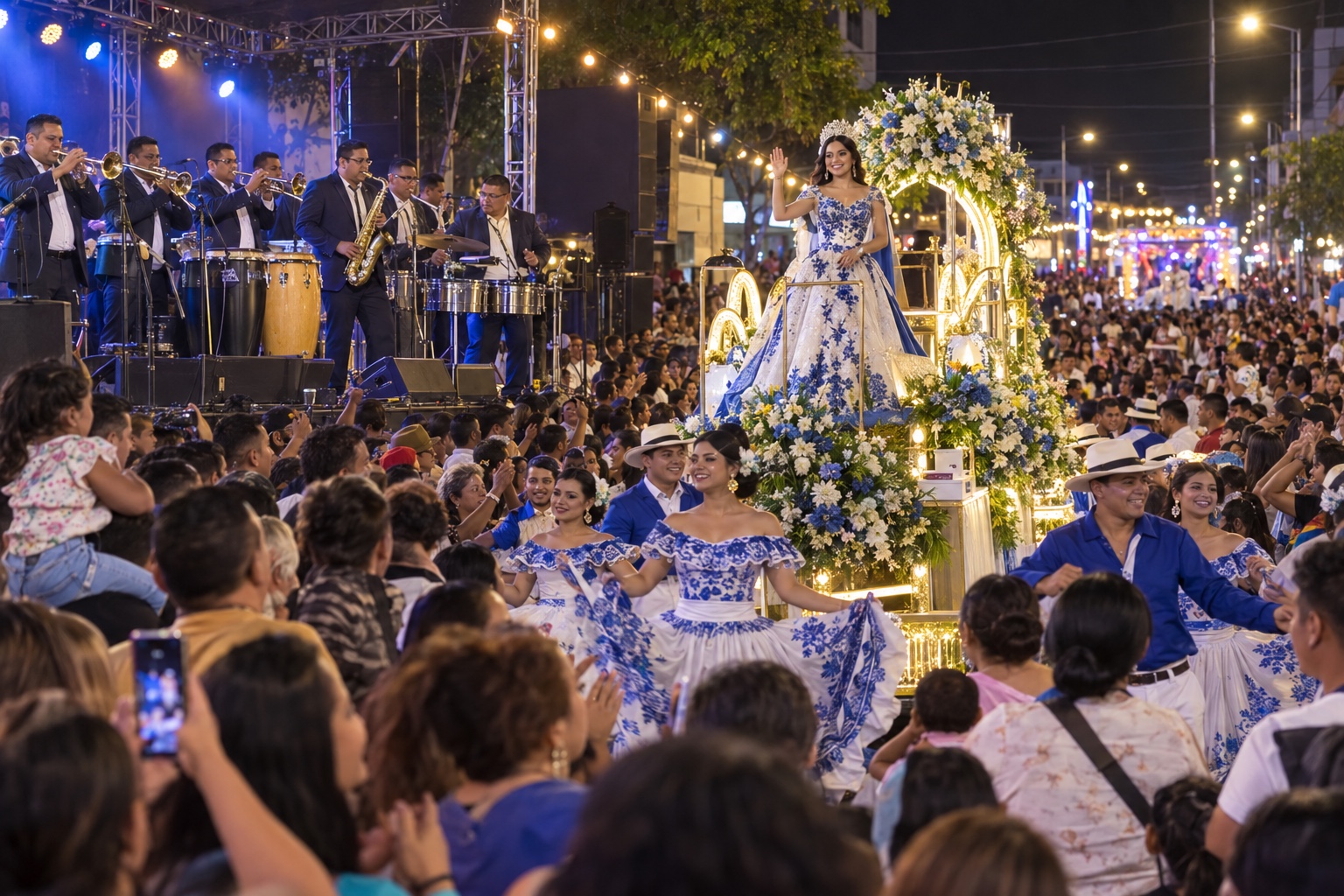
San Miguel spends most evenings as the commercial engine of eastern El Salvador, a hot, energetic city where buses, markets, restaurants, and family life keep the center in motion. During Carnaval de San Miguel, that everyday intensity expands into a vast street celebration. Music arrives from multiple stages, vendors work beside packed avenues, and groups dressed for a long night move between dancing, food, and chance encounters. The carnival is not contained by one grandstand. Its defining sensation is the city itself becoming the venue, with sound and human movement rolling from block to block.

The place gives the celebration its confidence. San Miguel is known as the Perla de Oriente, and the carnival draws people from across the eastern departments as well as Salvadorans returning from abroad. Patronal devotion to the Virgen de la Paz sits behind the public festivities, while popular music and late-night sociability give the closing celebration its unmistakably contemporary character. Travelers get the best account of the destination by noticing both layers: the religious and civic season that prepares the city, and the exuberant final night when San Miguel presents itself to the country.

Why This Festival Is Special

The great editorial insight of San Miguel is that abundance, not a single centerpiece, creates the event. One stage cannot explain it, and no privileged viewing platform contains the experience. The carnival’s meaning emerges from thousands of local decisions—where a family meets, which orchestra draws a crowd, what food is carried into the street, and how a familiar avenue feels at midnight.

That decentralized energy mirrors San Miguel itself. The city’s importance comes from being a regional meeting point, and the carnival magnifies that role until the east seems to converge in one warm, resonant center. The traveler who stops chasing every performance will begin to read the relationships around the music, which are more revealing than any headline act.

Festival Experience

What to Expect

A useful carnival day begins slowly. Walk the center before the loudest programs start, locate the cathedral area, identify the streets that will become difficult to cross, and eat a proper meal while tables are still available. By late afternoon, vendors, stages, police controls, and arriving groups begin to reshape the route. Early evening is the best time to sample more than one music zone because movement remains possible and the crowd has not yet reached its full density.

Darkness changes the scale. Bands and DJs compete for attention, food smoke hangs over the avenues, and dancing spreads wherever a strong rhythm finds enough room. The busiest hours reward staying within one manageable area instead of forcing a complete circuit. Later, the challenge becomes leaving well: side streets clog, phone service may falter, and informal pickup points become confusing. A traveler who has already chosen a meeting place and exit corridor can enjoy the peak without letting the final hour undo the night.

Across the day, notice transitions. Preparation reveals skill, peak activity reveals collective confidence, and dispersal reveals the labor required to restore ordinary space. Eat before fatigue becomes urgency, refill water, and take one genuine pause away from amplified sound or dense visual material. The event becomes more memorable when attention can linger on a person, object, performance, or exchange instead of being consumed by navigation.

Festival Highlights

  • Hearing different music zones overlap as the center fills
  • Watching families and friendship groups turn ordinary avenues into a shared dance floor
  • Tasting eastern Salvadoran street food between stage stops
  • Recognizing the carnival’s connection to the Virgen de la Paz festivities
  • Seeing the Perla de Oriente carry a national celebration in its own voice

Getting There & Around

Where It Happens

The avenues and public spaces of central San Miguel, with music stages and celebration zones spread across the city form the event’s working geography. Read the layout before arrival and distinguish the public entrance, performance or exhibition areas, food zones, toilets, first aid, and the gate needed for departure. The most famous building or route is an anchor, not the whole experience; surrounding barns, streets, memorials, gardens, or neighborhood spaces often carry the destination’s more revealing detail.

Place affects behavior. In San Miguel, El Salvador, allow working participants, residents, worshippers, exhibitors, and service crews to move before taking a photograph or stopping in a doorway. Do not enter animal, backstage, assembly, private, or memorial areas unless they are clearly open. A deliberate route should connect two or three meaningful zones and return naturally toward transport instead of drawing a decorative line across every corner of the map.

Getting Around

Walking inside the closed center and a prearranged authorized taxi or hotel transfer from a pickup point beyond the busiest streets is the practical approach. Save the venue map, mark the correct gate, photograph a parking row or station exit, and assume the final walk will take longer in a crowd. A route that works in ordinary traffic may fail during closures or simultaneous events, so keep one fallback that does not depend on negotiating with a driver in the busiest zone.

Inside, move in loops rather than repeatedly crossing the site. Finish the final activity near the planned exit and begin departure before hunger, weather, or fatigue reduces judgment. Travelers using mobility aids should study surface conditions, accessible entrances, and shuttle provisions in advance. Never accept an unlicensed ride, and do not walk along an unlit road simply because it appears shorter on a map.

Visitor Guide

Festival Food & Drink

Food belongs to the experience because it places local taste inside the day’s rhythm. Begin with something substantial before queues and sensory overload build, then choose smaller items with a clear connection to San Miguel, El Salvador. Ask what an ingredient or preparation means locally; a straightforward regional dish often tells a better story than the concession created only for shock value. Share rich portions, drink water between sweet or fried foods, and make one seated break part of the editorial plan.

Busy vendors can be a good sign, but use ordinary judgment around hot holding, raw ingredients, ice, and cross-contamination. Travelers with allergies should ask direct questions and carry necessary medication. Food prices inside a controlled venue may be high, so a local breakfast or dinner outside the gates can add context while protecting the budget.

Must Try

• Pupusas — Griddled corn cakes filled with cheese, beans, or pork, eaten hot with curtido and tomato sauce.
• Yuca frita con chicharrón — Crisp cassava with pork, cabbage, and salsa; a substantial pause before the densest hours.
• Elote loco — Corn dressed with sauces, cheese, and seasonings, made for eating while moving through the street.
• Atol shuco — A warm fermented corn drink with beans and seasoning, worth seeking from a vendor who can explain the tradition.

Budget & Costs

Budget for admission where applicable, lodging, transport, food, premium programs or rides, and a reserve for disruption. The base ticket rarely represents the full cost of a fair or major exhibition, while a free street celebration can still produce expensive rooms and late transport. Set a food allowance before entering and decide which extras genuinely shape the experience. Families should price rides or special programs separately rather than treating them as incidental.

The best value often comes from a weekday visit, public transport where practical, and one excellent local meal outside the highest-priced zone. Buy only through recognized channels. Keep both electronic payment and a modest amount of cash, stored separately. Direct spending toward local cooks, makers, artists, and cultural organizations when the choice is clear, and preserve enough reserve to leave safely if weather or crowds change the plan.

Tips for First-Time Visitors

The late morning, before sound systems and arriving groups turn the center into a moving crowd is the best orientation period for a first visit. Pick three priorities: one defining experience, one quiet piece of context, and one meal with local meaning. Stable shoes, phone power, water, weather protection, medication, and hearing protection will matter more than an elaborate outfit. Photograph maps and meeting points before service becomes congested.

Observe before participating. Ask permission for close portraits, keep aisles and working areas clear, and never touch art, animals, costumes, devotional objects, equipment, or competitive entries. Learn the names that local people use for traditions and places. If the group separates, meet at a specific physical landmark rather than relying on messages. Leaving one unscheduled hour creates space for the encounter that makes the article feel lived rather than assembled.

Safety

Tropical heat, a warm evening, intense amplified sound, tightly packed streets, and a slow late-night departure require ordinary preparation rather than alarm. Hydrate early, eat at regular intervals, use sun or rain protection, and identify first aid and shelter upon arrival. Keep valuables secured against the body. Around animals, wash hands and follow handlers; around rides, stages, or installations, obey every barrier even when other visitors ignore it.

Crowd safety depends on choices made before the squeeze. Select a meeting point, keep children within direct reach, and step sideways out of a tightening flow instead of pushing forward. Follow staff instructions promptly during severe weather or an emergency. Use authorized transport, avoid isolated pickup zones, and tell a companion when leaving. A good plan protects enough calm to notice the destination rather than spending the day recovering from preventable problems.

Cultural Significance

Carnaval de San Miguel grew from the city’s fiestas patronales honoring the Virgen de la Paz. The modern carnival is commonly associated with musician and broadcaster Francisco “Paquito” Palaviccini, whose mid-twentieth-century work helped shape its popular sound and public identity. In 2008, El Salvador’s legislature declared the celebration a cultural asset, recognizing a tradition that had become important well beyond the city.

That national stature does not erase its regional character. The carnival remains a statement from eastern El Salvador: expansive, musical, commercially active, and held together by families, artists, vendors, municipal workers, religious communities, and residents who absorb the disruption. Its songs and street rituals offer a form of belonging for migueleños at home and abroad. Visitors should enjoy the spectacle without reducing the patronal season to a generic Latin American street party.

Plan Your Journey

When to Go

Late November, when San Miguel’s patronal festivities reach their public climax offers the durable window for Carnaval de San Miguel. Earlier in the run usually gives displays a fresher feel and makes orientation easier; later visits carry stronger last-chance energy. Weekdays are best for attentive time in exhibitions, barns, or cultural spaces, while weekends bring the fullest public atmosphere and the most difficult movement. The best arrival is near opening for a fair or biennale and in late afternoon for a street carnival whose true peak comes after dark.

Build the day around local conditions rather than a calendar claim. Prepare for tropical heat, a warm evening, intense amplified sound, tightly packed streets, and a slow late-night departure. Check the forecast before leaving the hotel, but carry a layer, water, and rain protection even when the morning looks settled. If the priority is after dark, when simultaneous music stages, dancing, street food, and neighborhood groups create the carnival’s full scale, conserve energy with the late morning, before sound systems and arriving groups turn the center into a moving crowd and a seated meal. An early visit and an evening return can be more satisfying than remaining on site through every transitional hour.

Where to Stay

Carnaval de San Miguel is easiest from central San Miguel or a well-connected hotel on the quieter edge of the center. Choose the room by the hardest return rather than by ordinary daytime mileage. A property that looks close on a map may sit across closures, rail gaps, stadium traffic, or a fairground perimeter. Ask about late entry, parking, and realistic travel during the event, then save the address and route offline.

For a richer destination stay, leave room for a neighborhood meal and an unprogrammed walk in San Miguel, El Salvador. A central base costs more but can reduce dependence on peak rides. An outer hotel may offer space and parking but requires a firm transport plan. Flexible terms are worth paying for when weather or operations can change. Wherever the group sleeps, every traveler should know the property name, street address, and independent way back.

Bottom Line & Key Days

Bottom Line

Carnaval de San Miguel suits travelers who can meet a huge street celebration with stamina, curiosity, and respect for the patronal traditions beneath it. Its reward is not a perfect view but immersion in the social confidence of eastern El Salvador. Eat before the crowd peaks, choose one part of the center to understand, and secure the ride home in advance. Long after the loudspeakers fall quiet, the image that remains is San Miguel’s warm avenues carrying music in several directions at once.

Key Days

Patronal Prelude

Spend time around the civic and religious programs that give the carnival season its local foundation.

Carnival Build-Up

Arrive in the center during late afternoon to eat, orient yourself, and compare music zones before movement tightens.

Peak Night

Hold one dependable position after dark, keep the group together, and leave through the exit planned earlier in the day.

Ready to Experience Carnaval de San Miguel?

You've explored what makes this festival special. Now it's time to plan your trip. Compare flights, book your hotel, arrange transportation, and take care of your travel essentials—all in one place.

✈ Find Flights

Loading booking widget...

Booking is completed on Expedia in a new tab.

🏨 Find Hotels

Search places to stay

Powered by Booking.com

Booking is completed on Booking.com in a new tab.

Rail & Bus Travel

Compare train and coach routes for the journey.

Compare Routes

Things to Do

Discover tours and attractions before or after the festival.

Explore Experiences

eSIM Mobile Data

Stay connected abroad without traditional roaming charges.

Get an Airalo eSIM

Travel bookings are provided by our trusted partners. We may earn a commission when you book through these links, at no additional cost to you.

Independent Editorial Standards

Every Follow the Festivals guide is independently researched and regularly reviewed using official festival information, destination resources, and trusted travel references. We also welcome verified updates from festival organizers, destination marketing organizations, tourism partners, and local experts to help keep our guides accurate, current, and useful for travelers.

Represent this festival or have a verified update to share? We'd love to hear from you through our contact page.