
Follow the Festivals

Edinburgh Hogmanay

Edinburgh Hogmanay

Edinburgh, United Kingdom

2026-12-29 - 2027-01-01

The Story

Festival Overview

A torch enters Edinburgh’s Old Town before the new year does.

The flame passes beneath stone façades and down streets that have carried processions, protests, commerce and celebration for centuries. Thousands of other torches follow. From above, separate people become one moving line of fire crossing the winter city together.

Edinburgh’s Hogmanay is Scotland’s largest public New Year festival, unfolding across several days through a torchlight procession, concerts, ceilidhs, street celebrations, midnight fireworks and New Year’s Day cultural programming. The exact programme changes, and its principal events require separate tickets or reservations.

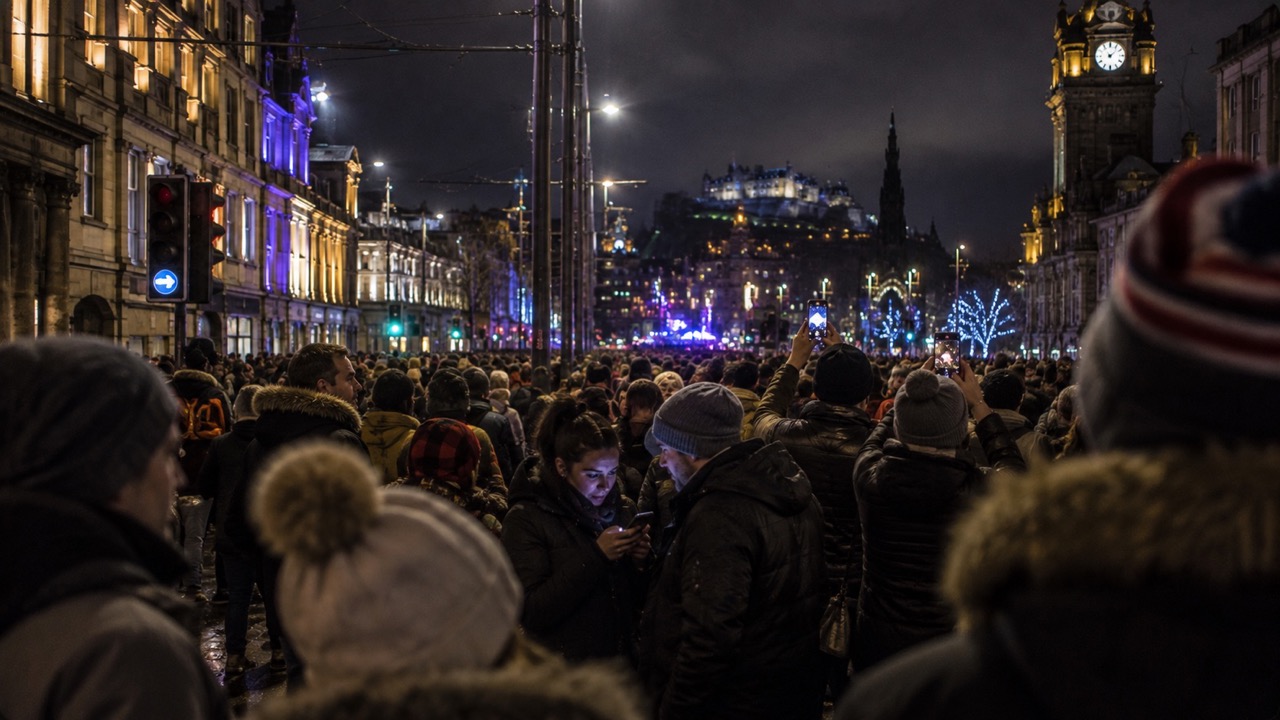
Midnight provides the festival’s most visible moment. Fireworks rise above Edinburgh Castle, music reaches crowds gathered around Princes Street, and voices begin *Auld Lang Syne*. Hands join among friends and strangers while the old year gives way beneath the same dark sky.

Hogmanay does not ask those people to forget what came before.

The song they sing is about remembering old relationships. First-footing welcomes the year through the arrival of another person. Food and drink wait indoors because hospitality must continue after the public spectacle has ended. New Year’s Day sends music and conversation through smaller venues across the city.

Edinburgh builds one of the world’s largest New Year celebrations around an intimate Scottish idea.

A threshold matters because of the people who cross it with you.

Why This Festival Is Special

Most countdowns are built around anticipation.

Edinburgh’s is built around memory as well.

At midnight, the crowd sings *Auld Lang Syne*, the song Robert Burns shaped from an older Scottish tradition. Its question is not what the future will bring. It asks whether old acquaintance should be forgotten.

The answer requires other people.

Hands join. A cup of kindness is raised. Friends who entered the event together discover strangers completing the circle beside them. A celebration measured globally by fireworks becomes, for several minutes, a song about relationships that have survived time and distance.

First-footing carries the same idea through a smaller doorway. The first visitor to enter a home after midnight traditionally brings good wishes and gifts associated with warmth, food or hospitality. The new year does not arrive as an abstraction. It arrives in the form of someone welcomed inside.

Edinburgh places these private traditions within a public city. Fire crosses the Old Town. Music occupies the New Town. The castle becomes a shared point of orientation. Thousands of separate journeys converge for the bells before dispersing again.

The fireworks announce that the year has changed.

The people determine how it begins.

Festival Experience

What to Expect

Edinburgh’s Hogmanay is a sequence of related events rather than one universal ticket.

The Torchlight Procession moves through the historic city on its own evening. Concerts, comedy, ceilidhs and other performances may occupy the following programme. On Hogmanay itself, the Street Party and the principal garden concert operate as distinct ticketed events, even though both participate in the midnight celebration.

A Street Party ticket does not automatically provide access to the headline concert or any other separately advertised programme. Security zones, designated entrances and restrictions on re-entry make advance decisions essential.

The outdoor celebrations are busy, largely standing and fully exposed to a Scottish winter. Cold does not remain a background condition. It enters through wet shoes, uncovered hands and the long intervals between movement. Clothing must work through wind and rain as well as look appropriate for photographs.

Edinburgh’s topography adds effort. Streets climb between the Old and New Towns, bridges conceal changes in elevation, and event barriers can interrupt familiar routes. A short distance on the map may become a longer walk when access controls redirect the crowd.

Midnight is communal but not intimate in the ordinary sense. Tens of thousands of people face the castle, count together and sing within an immense gathering. Anyone needing personal space, easy access to toilets or the freedom to leave immediately should choose a smaller venue, ceilidh, restaurant or pub celebration instead.

The following morning changes the scale. Cultural programmes may move through pubs, churches, cafés and other city spaces, allowing performers and audiences to meet without the physical pressure of the Street Party.

Hogmanay grows quieter after crossing midnight.

That is when some of its oldest meanings become easier to hear.

Festival Highlights

  • The Torchlight Procession opens the festival by moving fire through Edinburgh’s historic streets. Participate with an authorized torch when available or watch from an approved spectator area. The strongest view is not always the broadest; from street level, the procession becomes a sequence of faces illuminated briefly before passing into darkness.
  • Night Afore programming introduces the contemporary Scottish culture surrounding the celebration. Music, comedy and performance change with each festival, so choose an event because it adds another voice to the journey rather than because the schedule appears incomplete without it.
  • A ceilidh turns tradition into physical cooperation. Dances are often taught, mistakes are expected, and strangers must pay enough attention to one another to keep the set moving. Comfortable shoes and a willingness to begin badly matter more than experience.
  • The Street Party occupies the city centre through live music, outdoor stages, performers and the collective approach to midnight. Enter only if dense crowds, long periods outside and limited freedom of movement suit the desired celebration. Once inside, learn the event layout before darkness and attendance make simple decisions harder.
  • The principal garden concert offers a more focused musical programme with its own ticket and access conditions. It should be selected for the performers and concert experience, not because its location appears to offer a superior version of the same Street Party admission.
  • The Midnight Moment draws attention toward Edinburgh Castle as fireworks enter the skyline and the bells announce the new year. Put the phone down before the first chorus of *Auld Lang Syne*. Joining hands requires presence, and the song becomes smaller when experienced through a screen.
  • New Year’s Day programmes bring performers into indoor venues across Edinburgh. Follow one or two artists into spaces that still feel inhabited by the city rather than attempting to complete an entire cultural trail. The people gathered beside the stage have crossed the same night and returned to listen together.

Getting There & Around

Where It Happens

Edinburgh’s Hogmanay occupies both the Old Town and New Town, using the contrast between them as part of its public identity.

The Torchlight Procession traditionally moves through historic streets, although its exact route and viewing arrangements must be confirmed for the current programme. The Old Town’s height, stone façades and narrow approaches make the fire appear contained before it opens into a larger public gathering.

The Street Party is centred around Princes Street and the surrounding New Town event zone. Its boundaries are controlled, and entry depends upon the gate, ticket type and security arrangements established for that year.

The principal concert commonly occupies West Princes Street Gardens beneath Edinburgh Castle. Although it shares the skyline and midnight fireworks with the Street Party, it remains a separate event with its own ticket.

Ceilidhs, comedy, concerts and cultural programmes may appear in venues across central Edinburgh. Assembly rooms, churches, pubs, theatres and temporary stages allow the festival to move between formal production and local hospitality.

New Year’s Day programming spreads attention farther through the city. The First Footin’ trail is strongest when approached as a succession of welcomes rather than a race among venues.

Edinburgh Castle remains visible above much of the public celebration, but the city’s real geography is revealed through movement: climbing, descending, crossing bridges and finding routes around the secure zones.

The skyline gives everyone a common direction.

The streets decide how they meet.

Getting Around

Walking is the most dependable way to move within central Edinburgh during Hogmanay, but walking routes cannot be assumed to remain direct.

Road closures, crowd barriers and secure event zones alter access around Princes Street, the gardens, Waverley Bridge and connecting streets. Consult the current event map and transport guidance before leaving accommodation.

Edinburgh’s hills are not always obvious on a digital map. The Old Town and New Town occupy different ridges, bridges cross above lower streets, and closes may descend by steep steps. Comfortable waterproof footwear is essential.

Buses and trams may operate special services, diversions or extended schedules, but the nearest normal stop may be closed or relocated. Learn the temporary stop name and final walking route rather than depending upon live directions inside a dense crowd.

Waverley station is extremely central, yet access can be affected by event controls. Travelers should not schedule an arrival close to the beginning of a ticketed programme or assume they can cross Princes Street immediately after leaving the train.

Taxis and ride-hailing vehicles cannot reach every central street during closures. Arrange a collection point beyond the restricted zone and expect demand after midnight.

Drivers should leave the car outside the centre. Parking restrictions, alcohol, road closures and pedestrian crowds make private vehicles poorly suited to the principal celebration.

Before entering the Street Party, agree upon a meeting location with companions. Mobile networks may become slow, batteries lose capacity in cold weather, and “beside the stage” is not precise enough among thousands of people.

Plan the journey home while the year is still old.

Visitor Guide

Festival Food & Drink

Edinburgh prepares for Hogmanay with food intended to last through cold, celebration and unexpected guests.

Steak pie carries much of that work. Families may eat it before the bells or on New Year’s Day, with customs varying from one household to another. Beneath the pastry, slow-cooked meat and gravy provide the kind of warmth that makes a winter table feel prepared for whoever arrives.

First-footing traditionally carries gifts across the threshold. Whisky offers a toast. Shortbread provides food. Coal once represented warmth for the household. The gesture matters more than reproducing every object mechanically; no visitor should arrive at a private home uninvited merely to perform a custom.

Public festival food has a different task. Eat a complete meal before entering a ticketed outdoor event. Once inside a secure zone, re-entry may be prohibited and available food will be limited to what the event permits and vendors can serve within the crowd.

The best pre-Hogmanay meal is not the most elaborate reservation. It is the one that ends early enough for layers to be adjusted, toilets used and the correct entrance reached without anxiety.

Edinburgh’s pubs can carry the celebration beyond midnight, but alcohol should never become the only source of warmth. Eat before drinking, alternate with water and remember that intoxication makes cold, crowds and uneven streets more dangerous.

On New Year’s Day, soup, pie and tea restore the body before another performance. The meal becomes an act of return rather than recovery hidden in a hotel room.

**Must Try**

• **Steak pie:** Slow-cooked beef and gravy beneath pastry, widely associated with New Year meals in Scotland.

• **Haggis, neeps and tatties:** Savory haggis served with mashed turnip and potatoes, bringing warmth and substance to a winter day.

• **Stovies:** A comforting preparation of potatoes, onions and meat whose exact form changes between households and kitchens.

• **Cullen skink:** A thick soup of smoked haddock, potatoes and onions suited to Edinburgh’s coldest weather.

• **Scotch broth:** Barley, vegetables and meat cooked into a sustaining soup.

• **Shortbread:** Rich, crumbly biscuits traditionally carried or offered during seasonal visits.

• **Black bun:** A dense fruit mixture enclosed in pastry and historically associated with Scottish New Year.

• **Scotch whisky:** A dram shared slowly in welcome or remembrance rather than treated as a requirement for excess.

A new year begins with a door opening.

The table explains why someone hoped a guest would enter.

Budget & Costs

Edinburgh’s Hogmanay requires separate budgeting for accommodation, travel and individual events.

The Torchlight Procession, Street Party, principal concert, ceilidhs, comedy and other performances may each have their own tickets. Some New Year’s Day programmes are free, but capacity can remain limited.

Accommodation is the largest expense for most visitors. Central rooms can become extremely expensive, and minimum-stay requirements may apply. Booking early with flexible cancellation protects both location and choice.

Staying farther from the centre can reduce nightly cost, but late-night transport must be confirmed. A cheaper room becomes poor value if the return requires an uncertain taxi at peak demand.

Restaurants may offer fixed Hogmanay menus, deposits or special sittings. Confirm the finishing time and whether the meal includes any entertainment; a premium dinner does not automatically provide access to the public festival afterward.

Warm clothing should be treated as part of the travel budget. Waterproof shoes, insulated layers and gloves have more value than event merchandise once the temperature falls.

Public transport is normally more economical than taxis, although special services and holiday fares should be checked. Include enough flexibility for a longer walk from a diverted stop.

Hogmanay can be experienced without the most expensive headline ticket.

It cannot be experienced well without somewhere warm to return to.

Tips for First-Time Visitors

Buy each event ticket separately and read exactly what it admits. A Street Party ticket does not include the principal garden concert, and no ticket should be assumed to provide access across all festival zones.

Confirm the current programme immediately before travel. Torchlight routes, performers, entrances, security rules and New Year’s Day venues can change between editions.

Dress in several weather-resistant layers. A fashionable coat over insufficient insulation will fail during hours of standing, while one heavy layer may become uncomfortable when dancing or entering a crowded indoor space.

Use waterproof footwear with reliable grip. Edinburgh’s cobbles, slopes and winter rain will test shoes long before midnight.

Eat before entering a secure outdoor event. Re-entry may not be allowed, and leaving because of hunger, cold or an unsuitable outfit can end the celebration permanently.

Carry as little as possible. Bag restrictions and security checks make large belongings difficult, and every item must remain manageable inside a standing crowd.

Choose one principal Hogmanay experience. The Street Party, a concert, a ceilidh, a pub gathering and a formal dinner are not interchangeable stops on one spontaneous route.

Learn enough of *Auld Lang Syne* to join the chorus without watching a screen. Perfect Scots pronunciation is unnecessary; attention to the people beside you is not.

Do not attempt first-footing at strangers’ homes. Experience the tradition through an invitation, a hosted programme or friends who genuinely want to welcome you.

Keep New Year’s Day open. Edinburgh still has something to say after the countdown has finished.

Safety

Edinburgh’s principal Hogmanay events are busy, standing and outdoors in winter. Cold, alcohol, crowd density and restricted movement can intensify one another.

Dress for rain and wind as well as temperature. Wet clothing removes warmth quickly, and waiting for midnight offers fewer opportunities for movement than dancing near a stage.

Eat before drinking and alternate alcohol with water. Intoxication makes steep streets, crowded stairs and cold exposure more dangerous while reducing the ability to follow event instructions.

Remain with companions when entering and leaving secure zones. Establish a meeting point outside the busiest area in case the group becomes separated.

Protect phones and wallets in closed internal pockets. Do not depend upon a phone alone for tickets, directions and emergency contact without carrying a backup battery or printed essential information.

Follow staff instructions at entrances, barriers and emergency routes. Never climb monuments, scaffolding or street furniture for a better view of the fireworks.

Personal fireworks and open flames do not belong within the crowd. Participate in torch events only through the authorized procession and follow the handling instructions provided.

Know when cold has become a medical concern. Persistent shivering, confusion, loss of coordination or unusual fatigue require warmth and assistance rather than another drink.

The strongest midnight is the one everyone reaches safely.

Cultural Significance

Hogmanay carries unusual importance in Scotland because New Year long held a greater public and domestic role than Christmas.

Following the Scottish Reformation, Christmas celebrations were discouraged, and Christmas Day remained an ordinary working day in Scotland long after it had become a public holiday elsewhere in Britain. Families placed greater emphasis upon the turn of the year, developing customs around cleaning the home, settling obligations, hospitality and beginning again.

The precise origin of the word *Hogmanay* remains debated. The celebration itself contains layers of winter custom, social visiting, fire, food and communal ritual that cannot be reduced to one neat source.

First-footing gives the threshold particular meaning. The first person entering after midnight traditionally carries good fortune into the household, often accompanied by gifts representing food, warmth or cheer.

*Auld Lang Syne* carries memory into the same moment. Robert Burns recorded and reshaped words drawn from an older Scottish song tradition. Its global familiarity can hide the intimacy of its question: whether old relationships should be forgotten simply because time has passed.

Edinburgh’s large public festival is modern in its organization, scale and ticketing. It should not be mistaken for the complete history of Scottish Hogmanay or treated as the sole authentic way to celebrate it.

Its achievement lies elsewhere.

The city takes customs associated with homes, friends and local gatherings and gives them public expression without entirely removing their original meaning. Fire prepares the passage. Music gathers the crowd. Joined hands acknowledge the people already present.

Only then does the year change.

Plan Your Journey

When to Go

Arrive before the principal festival programme begins.

A first day without tickets or crowd barriers allows Edinburgh to establish itself as a city rather than an event site. Walk between the Old Town and New Town, locate the correct entrances for each booked programme and understand how the accommodation connects with the late-night route home.

The opening procession provides the strongest introduction to the festival’s movement through darkness. Attend if fire, public ritual and the historic streets matter more than headline music.

The Night Afore traditionally carries its own concerts, comedy or cultural programming. It offers a useful middle evening for visitors who want Scottish performers and festival atmosphere without placing every expectation upon the midnight celebration.

Hogmanay night belongs to the major countdown events, smaller venues, pubs, restaurants and private gatherings. Choose one form of celebration and commit to it. Security zones and demand make improvised movement between several headline events unrealistic.

Remain in Edinburgh for New Year’s Day. First Footin’ performances and other cultural programmes allow the city to welcome people into smaller spaces after the scale of the night before.

Winter daylight is brief. Use it intentionally, but do not exhaust the afternoon with sightseeing before an evening spent standing outside. Rest, eat and dress before the temperature begins falling.

The year will reach midnight without assistance.

Arrive with enough energy to meet it.

Where to Stay

The New Town offers the most direct access to Princes Street, George Street and many central Hogmanay events. Staying here can shorten the walk home, although security boundaries may prevent the most obvious route from remaining open.

The Old Town places visitors near the Royal Mile, historic closes and several cultural venues. Its steep streets, cobbles and late-night activity require more physical confidence, but the relationship between festival and city is strongest here.

West End accommodation provides a practical approach to the western side of the city centre and can work well for events around Princes Street Gardens. Confirm the permitted entrance rather than assuming proximity guarantees direct access.

Tollcross and Bruntsfield offer restaurants, pubs and residential streets within walking distance of the centre. The return involves some climbing but may feel calmer than remaining inside the principal event district.

Stockbridge and the wider northern New Town provide neighborhood character with a longer uphill return from Princes Street. They suit travelers who want Hogmanay without spending the entire stay inside its busiest zone.

Leith offers its own food, pubs and waterfront identity. Public transport ordinarily connects it well with central Edinburgh, but late-night changes and event closures must be understood before choosing it as the base for the Street Party.

Accommodation prices rise sharply around New Year, and minimum stays may apply. Book early, favor refundable conditions and verify the true walking route rather than relying on straight-line distance.

At midnight, the whole city may appear connected.

The journey back to bed remains personal.

Bottom Line & Key Days

Bottom Line

Before midnight, everyone is facing the same direction.

The castle stands above the city. The final minutes are counted aloud. Fireworks enter the winter sky, and for several moments Edinburgh becomes almost entirely public: thousands of people cheering beneath one shared burst of light.

Then someone begins *Auld Lang Syne*.

Hands reach sideways instead of upward. Friends complete circles with strangers. The song asks them to remember people who may be standing beside them, living far away or existing now only within the year being left behind.

The fireworks fade before the singing does.

Crowds begin separating into smaller groups. Some enter pubs. Others follow diverted streets toward buses, hotels and homes. Programmes fold into pockets. The city that gathered everyone together begins returning them to individual lives.

Somewhere beyond the barriers, a door opens.

A guest crosses carrying shortbread, whisky or simply the intention to arrive with goodwill. Warmth escapes briefly into the street. Voices answer from inside, and the first welcome of the new year takes place without a stage or countdown.

Edinburgh has already filled the sky.

What matters now is who has been invited across the threshold.

Key Days

The opening evening belongs to the Torchlight Procession. Fire enters the historic city, giving separate arrivals a common direction before the principal celebrations begin.

The Night Afore brings concerts, comedy, dance and other cultural programmes. It allows visitors to encounter Scottish performers before midnight becomes the festival’s dominant concern.

Hogmanay itself gathers the largest audiences. The Street Party, garden concert, ceilidhs, indoor celebrations and private gatherings approach the bells through different experiences and should never be mistaken for one interchangeable event.

Midnight belongs to the castle skyline, fireworks and *Auld Lang Syne*. Wherever the song is sung, the essential gesture remains the same: people join hands before they move forward.

New Year’s Day changes the city’s voice. First Footin’ performances and family programmes bring music, conversation and welcome into smaller spaces.

The public spectacle has ended.

Edinburgh begins opening doors.

Ready to Experience Edinburgh Hogmanay?

You've explored what makes this festival special. Now it's time to plan your trip. Compare flights, book your hotel, arrange transportation, and take care of your travel essentials—all in one place.

✈ Find Flights

Loading booking widget...

Booking is completed on Expedia in a new tab.

🏨 Find Hotels

Search places to stay

Powered by Booking.com

Booking is completed on Booking.com in a new tab.

Rail & Bus Travel

Compare train and coach routes for the journey.

Compare Routes

Things to Do

Discover tours and attractions before or after the festival.

Explore Experiences

eSIM Mobile Data

Stay connected abroad without traditional roaming charges.

Get an Airalo eSIM

Travel bookings are provided by our trusted partners. We may earn a commission when you book through these links, at no additional cost to you.

Independent Editorial Standards

Every Follow the Festivals guide is independently researched and regularly reviewed using official festival information, destination resources, and trusted travel references. We also welcome verified updates from festival organizers, destination marketing organizations, tourism partners, and local experts to help keep our guides accurate, current, and useful for travelers.

Represent this festival or have a verified update to share? We'd love to hear from you through our contact page.