
Follow the Festivals

Overview

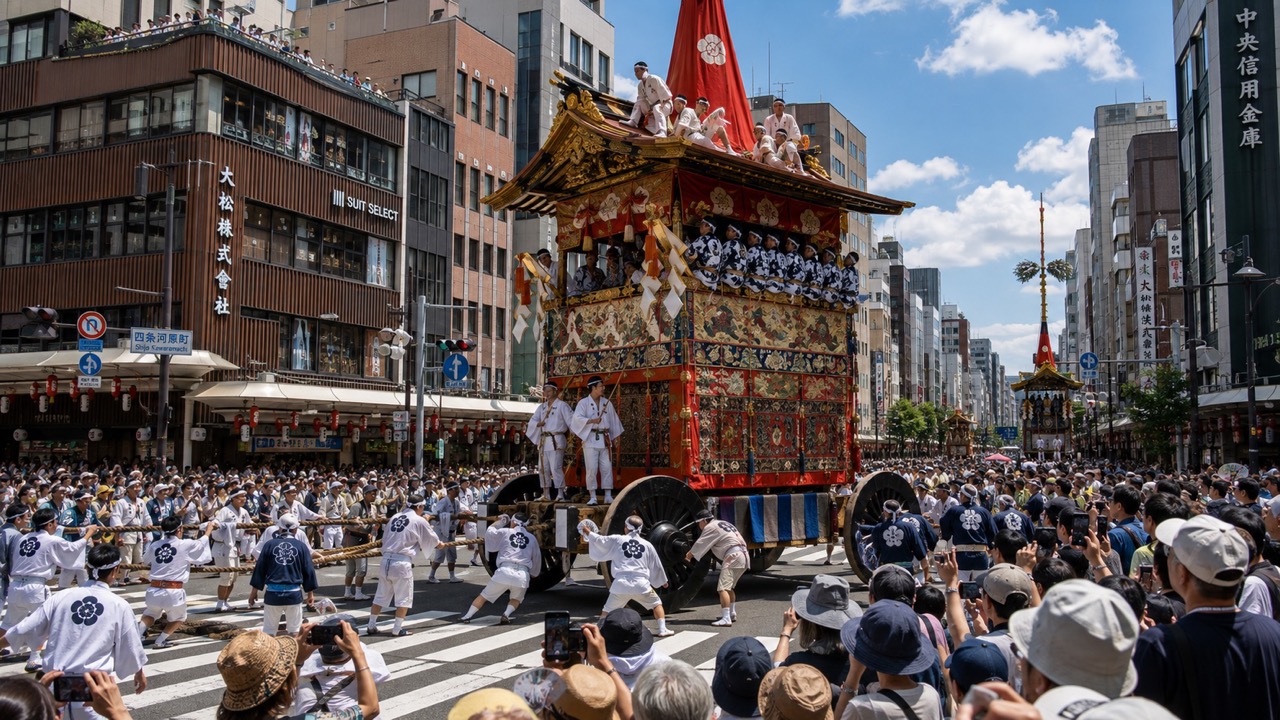
Gion Matsuri unfolds across central Kyoto over the full month of July, with ritual activity anchored by Yasaka Shrine and the most visible street energy gathering in the Shijo Karasuma area. What sets this festival apart is the way shrine ceremonies, float neighborhoods, and major procession routes on Karasuma-dori, Shijo-dori, and Oike-dori remain tied to the city’s everyday fabric rather than being contained inside a single event ground.

Cultural Significance

Gion Matsuri carries cultural weight because it preserves ceremonial forms, local memory, and public participation in ways that remain visible to visitors.

Why it's special

What makes Gion Matsuri special is the balance between spectacle and continuity. It feels tied to place, history, and community rather than built only for visitors.

What to Expect

Early in the month, the pace is more ceremonial, with opening rites and activity building outward from Yasaka Shrine. Around July 14 to 16, afternoon foot traffic thickens and evening Yoiyama streets become the center of attention, with displayed floats, lantern light, stalls, and very slow movement through the downtown grid. Around July 17, the focus shifts to the main procession peak, when spectators line broad streets early and hold their places as floats move through central Kyoto. In the late-month cycle around July 21 to 24, another cluster of observances and procession activity brings the festival back into motion, and by late July the atmosphere tapers through closing rites rather than ending in a single after-dark finale.

Festival Highlights

Yamaboko Junko moving through Karasuma-dori, Shijo-dori, and Oike-dori; Yoiyama evenings in the Shijo Karasuma area with floats on display and packed pedestrian streets; Mikoshi Togyo carrying sacred palanquins through the city from Yasaka Shrine; Byobu Matsuri townhouse displays that open glimpses into traditional interiors and family objects; Yasaka Shrine ceremonies that frame the month with ritual purpose beyond the street spectacle.

Explore guided experiences.

Food & Drink

Food at Gion Matsuri is tied to the slow, crowded evenings around the float districts, where quick festival bites fit the stop-and-start movement of Yoiyama and cold sweets matter in the mid-July heat. Must Try:

  • yakitori
  • takoyaki
  • kakigori
  • taiyaki
  • matcha sweets
Discover local food tours.

Where It Happens

The main activity for Gion Matsuri is centered in Kyoto, usually around the primary park, ceremonial route, festival grounds, or core public venue area. Staying close to the main access points reduces friction on event days.

Find hotels near these areas.

Getting Around

Public transit is usually the safest default in Kyoto, especially on peak event days when closures, congestion, or surge pricing can slow everything down.

  • Walking the core event area is often easier than switching between short rides.
Book airport transfer.

Tips for First Timers

Pick your priority in advance: shrine rites, Yoiyama street atmosphere, or a procession viewing spot. Arrive early for any route on Karasuma-dori, Shijo-dori, or Oike-dori because crossings become restricted and curb space fills fast. In the Shijo-Karasuma downtown streets during yoiyama, set a meeting point outside the densest blocks since phone coordination can fail in the crowd. Use rail or subway into central Kyoto and expect the last segment on foot. Carry water, sun protection, and a backup battery for long hours outdoors.

Budget

Central Kyoto accommodation can tighten sharply around the mid-July peak, especially near the downtown grid and major access stations. Costs rise most for rooms within walking distance of the float districts and procession routes, while places farther out on rail lines can reduce the room bill at the cost of longer returns through crowded stations. Food can stay moderate if you rely on stall snacks and simple meals, but last-minute lodging is the pressure point.

Safety

The main issues are crowd density and heat rather than nightlife risk. Shijo-Karasuma downtown streets during yoiyama can become extremely slow and hard to navigate, procession routes on Karasuma-dori, Shijo-dori, and Oike-dori involve long standing periods with restricted crossings, and central stations can bottleneck at peak entry and exit times. Mid-July outdoor viewing also brings real dehydration and sun exposure risk, so water, shade breaks, and patience matter.

Key Days

July 1 to July 31, 2026

Festival window

July 1 to 2, 2026

Opening days

around July 16, 2026

Peak period

July 30 to 31, 2026

Closing stretch

When to Go

The current edition in your dataset runs July 1 to 31, 2026.

Gion Matsuri is primarily a july event. The most rewarding visit usually centers on the main procession or signature ceremonial day, with extra time on either side for the city itself.

Booking is completed on Expedia in a new tab.

Check typical flight pricing for your preferred travel window before the busiest arrival days fill up.

Where to stay

Stay in Kyoto if you want the smoothest logistics and the most complete festival experience. The best options are usually hotels near the historic center, station, or main parade route, with enough nearby food, late return options, and walkable access where possible.

If central prices rise, look at neighborhoods just outside the core with strong public transit back into Kyoto. That usually gives a better balance of cost, sleep, and access than staying too far out.

Booking is completed on Expedia in a new tab.

Check typical hotel pricing for your preferred travel window before the busiest arrival days fill up.

Extend Your Trip

Nearby Festivals

Seasonal Festivals