
Follow the Festivals

Macau Grand Prix

Macau Grand Prix

Macau, Macau SAR

2026-11-19 - 2026-11-22

The Story

Festival Overview

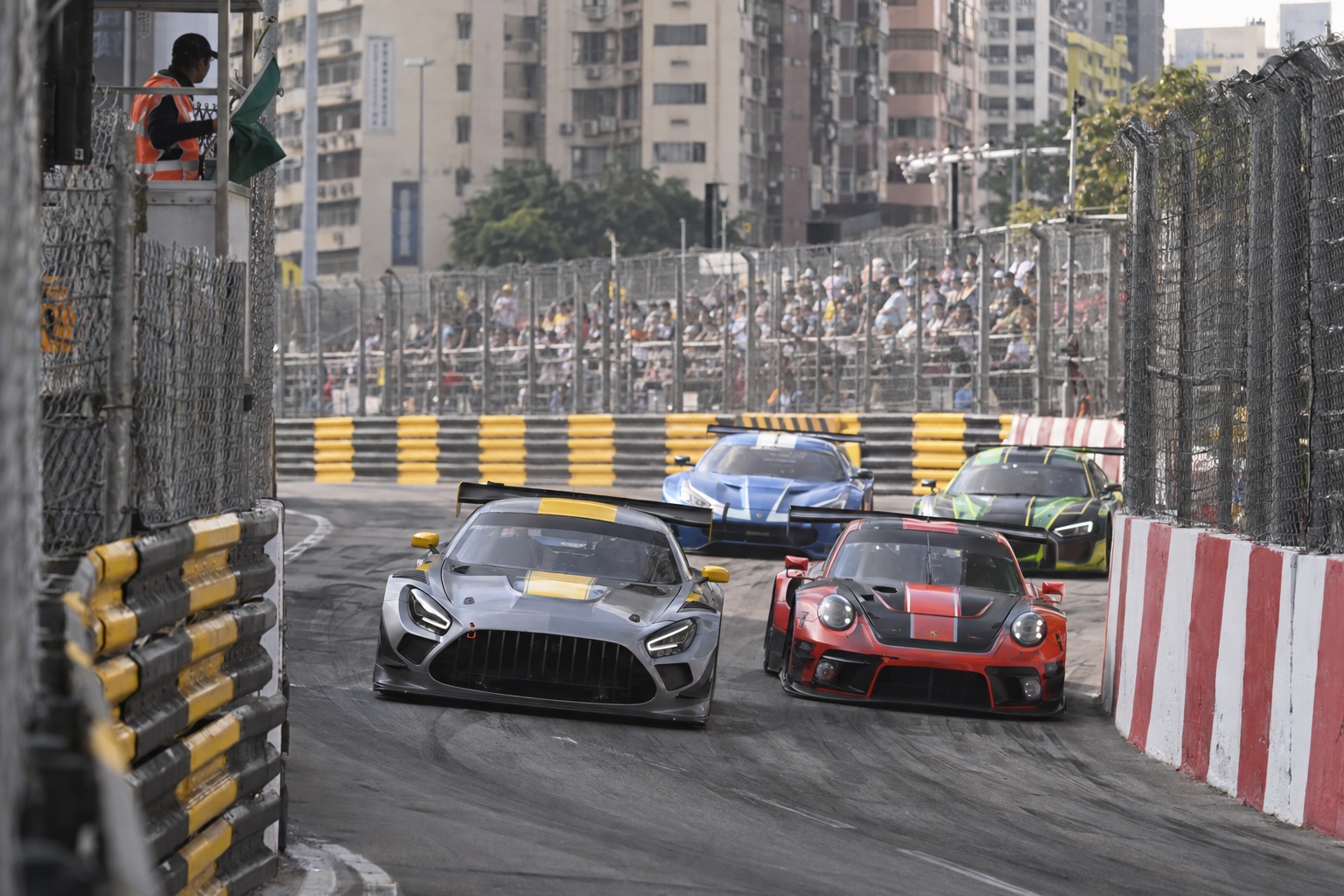
Macau Grand Prix makes the city feel briefly impossible. Cars accelerate beside apartment towers, hotels and reservoir walls, then disappear into a mountain section so narrow that television never quite communicates the nerve involved. The Guia Circuit is not a purpose-built track dressed up to resemble a street. It is Macau’s actual road system, temporarily claimed by racing.

That fact explains both the event’s thrill and its inconvenience. Barriers divide neighborhoods, buses reroute and a short urban journey can become a complicated one. Spectators who accept the disruption begin to see the circuit as a piece of geography: the flat-out waterfront, the braking trap at Lisboa and the constricted climb toward Guia.

My strongest recommendation is to follow fewer categories properly. Formula cars, touring cars, grand touring machines and motorcycles ask different questions of the same walls. Choose a grandstand that reveals one of those questions, learn the timetable and let Macau itself supply the drama between sessions.

Why This Festival Is Special

Macau is special because the circuit never lets the driver forget the city. At many races, speed makes the surroundings blur into abstraction. Here, apartment windows, hotel towers, harbor water and rock face remain close enough to define every decision. The lap feels borrowed from ordinary life.

That intimacy produces a kind of honesty. A mistake is visible in bent suspension and sudden silence. A clean lap looks less like effortless talent once the spectator understands how the road narrows above Lisboa.

The variety of machinery adds another argument. The same corner can look spacious for a motorcycle, combative for touring cars and almost absurd for a wide grand touring car. Macau does not change; the category reveals a different version of it.

The event’s lasting image is not simply a car beside a wall. It is the city closing around the competition and then reopening afterward. Few races surrender their host so completely back to residents each evening. That daily transformation gives the Grand Prix an identity no permanent circuit can manufacture.

Festival Experience

What to Expect

The sound arrives before the cars, bounces between buildings and stays in the body. Ear protection is not optional for children and is sensible for adults, especially near grandstands that trap engine noise. Sessions can also stop abruptly after an incident. Red flags are part of street-circuit racing, not dead time to be resented.

Different categories alter the circuit. Touring cars lean and fight for space. Grand touring cars look almost too large for the mountain. Motorcycles expose the danger with uncomfortable clarity. Formula machinery shows how quickly a young driver must learn a place that punishes hesitation and excess equally.

Grandstand life is fairly fixed. Once a session begins, concessions and toilets may be inconvenient, and dense exits follow major races. Carry the permitted essentials and eat before the priority block.

The city continues around the event. Residents navigate closures, businesses adapt and hotel staff repeat directions to confused visitors. A good spectator notices that labor. The Grand Prix is exhilarating, but Macau pays the logistical price that makes the spectacle possible.

Festival Highlights

  • Thursday Practice – Repeated laps reveal the circuit before results matter. Watch braking points, traffic and driver confidence, then use those observations to read the weekend’s later pressure.
  • Lisboa Bend – The long approach ends in the circuit’s clearest overtaking attempt. Arrive early, expect first-lap intensity and keep the aisle clear when the crowd rises together.
  • Mountain Section – Narrow roads and blind commitment define Macau’s reputation. Follow onboard screens or commentary because a fixed spectator view cannot show the whole sequence.
  • Motorcycle Race – Riders make the circuit’s exposure impossible to ignore. Wear serious hearing protection and watch with respect for the risk, not appetite for an incident.
  • Touring Car Battle – Contact, drafting and local knowledge create a distinctive race. Learn the leading teams before the start so position changes carry meaning.
  • Grand Touring Cup – Powerful cars look enormous against the barriers. Choose a view that combines braking and acceleration, then follow pit and restart strategy through commentary.
  • Formula Qualification Race – Young drivers fight for the grid that will shape the main event. Treat Saturday as a genuine race, not rehearsal for Sunday.
  • Macau Grand Prix Final – The weekend’s accumulated knowledge resolves in one contest. Stay through the podium and allow the first transport surge to clear before leaving.

Getting There & Around

Where It Happens

The Guia Circuit loops around the eastern Macau Peninsula. Its character changes radically along the lap. The harbor-side section rewards speed and slipstreaming; Lisboa compresses several cars into a famous braking contest; the climb and mountain roads leave almost no margin for error. Melco Hairpin is exceptionally tight, while the descent returns the race toward faster city streets.

Spectators experience only fragments of that whole. The main reservoir grandstand areas provide starts, pit activity and broad race context. Lisboa offers overtaking attempts and first-lap tension. Other enclosures reveal speed or cornering, but access, facilities and sightlines differ.

Pick the stand for the kind of racing you want to understand. A famous corner is not automatically comfortable, and a cheaper view may offer more complete timing information. Save the gate and pedestrian approach offline.

The circuit also creates invisible walls through the city. Crossing points open and close around sessions. Do not assume you can leave one stand and reach another between races. Macau rewards committing to a position, then exploring a different part of the city after the roads return.

Getting Around

During the Grand Prix, ordinary Macau transport advice becomes unreliable. The circuit closes major roads, splits bus routes and channels pedestrians toward controlled crossings. The official traffic plan should lead every morning. Hotel staff can explain the current walking route, but confirm it against event signage because conditions change by session.

Walking is often the most dependable option on the peninsula, provided the selected stand is genuinely reachable from the chosen side of the circuit. Comfortable shoes matter. Footbridges, tunnels and long barriers make a short straight-line distance deceptive.

Buses continue on revised routes and can be useful after roads reopen. Taxis face demand and blocked approaches. A resort shuttle may help between Cotai and the peninsula, though it will not solve the final race-side journey.

Do not schedule a ferry, airport transfer or cross-boundary coach immediately after a feature race. A red flag can lengthen the program and reopening takes time. My advice is to treat each race day as geographically self-contained: walk in early, stay through the chosen program, eat nearby afterward and move only when Macau has reopened itself.

Visitor Guide

Festival Food & Drink

Race days start early, so breakfast deserves more respect than a rushed coffee. Eat before entering the stand and carry only what regulations allow. Between sessions, Macau’s compact food culture offers far more character than repeated grandstand snacks, but crossing the circuit for a meal is a poor gamble.

**Must Try**
• Pork chop bun – A crisp roll and seasoned pork chop make an efficient, satisfying meal.
• Minchi – Minced meat, potato and seasoning form one of Macau’s most comforting everyday dishes.
• African chicken – A Macanese dish layered with spice, coconut and complex colonial history.
• Portuguese egg tart – Caramelized custard in flaky pastry, best eaten warm.
• Almond biscuit – A crumbly local sweet that travels well outside the grandstand.
• Milk tea or coffee – A café pause helps reset the senses after hours of engine noise.

Dinner is when the city reclaims the day. Reserve one Macanese meal and let it be unhurried. Alcohol should stay modest before early sessions, and the traveler crossing busy post-race streets needs clear judgment more than another celebratory drink.

Budget & Costs

Practice-day tickets can provide remarkable value because the circuit is active, crowds are lighter and the traveler learns more laps. Weekend grandstands cost more and should be chosen for a clear reason. Compare official packages and avoid resale uncertainty.

Hotel rates rise around the meeting, especially on the peninsula. A cheaper Cotai room may add repeated taxi or shuttle effort. Calculate the complete race-morning route before deciding that distance saves money.

Food outside the circuit can remain reasonable, while grandstand concessions, merchandise and transport accumulate. Set separate limits for tickets, hotel, meals and one museum or souvenir purchase. Electronic payment is widespread, but a modest cash backup remains useful.

The expensive mistake is poor logistics. Missing a session after paying for a premium seat wastes more than choosing a simpler hotel or meal. Spend first on the correct stand, a workable base and hearing protection. Macau offers abundant luxury after that, but none of it improves a race the traveler failed to reach.

Tips for First-Time Visitors

Buy the ticket for a specific sightline, not simply the most famous name. Lisboa is dramatic; reservoir stands make the race easier to follow. Decide whether you care most about overtaking, start procedure, speed or overall context. No seat delivers every part of the Guia Circuit.

Download the timetable and circuit map, then identify the essential sessions. Carry hearing protection, sunscreen, compact rain cover and a charged power bank. Large bags create security friction and become tiresome in narrow grandstand rows.

Learn the categories before arrival. The weekend becomes confusing when every car is treated as part of one championship. A few driver names and basic class differences are enough to give each race shape.

Visit the Grand Prix Museum on a separate day if possible. It provides history and mechanical context without stealing track time.

Most importantly, stop trying to beat the circuit. Road closures will win. Leave early, ask for directions without embarrassment and accept that a missed dinner reservation is less serious than leaving a grandstand before the race you traveled to see.

Safety

The Guia Circuit is unforgiving, and spectators must treat every barrier and instruction seriously. Never lean into restricted space, cross a live road or place objects above fencing. Debris and damaged vehicles can travel unpredictably. Follow marshals immediately after an incident.

Engine noise can damage hearing. Use proper protection, especially for children. Heat, humidity and exposed seating still require water and sunscreen. Rain makes steps and painted surfaces slippery, so move slowly when sessions release.

Crowds compress at gates, footbridges and transport stops. Keep valuables zipped, hold children close and agree on a reunion point outside the densest exit. Do not stop in a moving passage to photograph the circuit.

Macau traffic remains active beyond the closed roads. Look carefully when emerging from barriers or tunnels, since attention may still be on the race. Typhoon or severe-weather instructions override the program.

After feature events, patience is the safest plan. Allow controlled crossings to open and use official routes. The walls that make Macau thrilling also leave little space for careless spectator behavior.

Cultural Significance

The Macau Grand Prix turns urban constraint into sporting identity. Many cities could build a safer, wider circuit. Macau’s meaning comes from using roads whose harbor edge, mountain, hotels and residential blocks already exist. The city is not scenery placed around the race; it determines what the drivers must survive.

The event also connects several strands of Asian and international motorsport. Young formula drivers use Macau as a test of reputation, touring cars bring regional rivalries, grand touring machines deliver manufacturer prestige and motorcycles preserve a severe tradition of road racing.

For Macau, the meeting is part civic disruption and part annual self-portrait. Residents hear the barriers being installed, adapt daily travel and watch familiar streets become globally recognizable corners. That local burden should remain visible to visitors.

Its cultural significance extends beyond speed. The race expresses Macau’s habit of compressing worlds: Portuguese and Chinese histories, dense neighborhoods and large resorts, everyday streets and international spectacle. Few events reveal the city’s physical contradictions so honestly, because the circuit cannot hide them.

Plan Your Journey

When to Go

The meeting runs across four late-autumn days, beginning with practice and qualifying before the decisive weekend races. Thursday and Friday are the best education. Crowds are easier, tickets are often less expensive and repeated sessions teach braking points, traffic and driver confidence. Anyone who arrives only for Sunday inherits the conclusions without seeing how they formed.

Saturday adds qualification races and far more urgency. Sunday is the emotional peak, but also the hardest day for transport, grandstand access and patience. A complete trip should include one learning day and one race day. That combination gives the noise a narrative.

Macau is usually warm and humid enough for light clothing, yet exposed grandstands can feel cooler in wind or rain. Bring sun and wet-weather protection together. The season still carries weather risk, and motorsport timetables can move after incidents. Arrive in Macau before the first chosen session. Border queues, ferry changes and hotel check-in do not belong inside a race-morning plan.

Where to Stay

The Macau Peninsula is the right base for travelers who want the race to shape the trip. Hotels around the Outer Harbour, ZAPE and central districts shorten some approaches to grandstands and keep the circuit’s presence visible. The trade-off is road closure friction. A hotel across the circuit can feel close yet require a long pedestrian detour, so ask about the event-day route, not the ordinary map.

Central Macau and the historic center work well for food and evening exploration. They sit beyond the loudest track edge but remain connected by walking and revised bus services. Taipa and Cotai offer large resorts, pools and entertainment; the distance becomes tiring when the aim is an early grandstand seat every morning.

I would choose convenience over spectacle in the room itself. The best hotel is one with a walkable or clearly served route to the selected stand, reliable breakfast and a calm place to recover from engine noise. Confirm the return after roads reopen. Taxis can be scarce at exactly the moment thousands of spectators decide they need one.

Bottom Line & Key Days

Bottom Line

The first time a car reaches Lisboa at full speed, the instinct is to watch the braking. By the end of the weekend, a more experienced spectator watches everything around it: the draft, the defensive line, the narrow exit and the knowledge that the mountain is still ahead. Macau teaches the lap in layers.

Let the trip develop the same way. Attend practice, commit to one strong grandstand and follow fewer categories with real attention. Stay on the correct side of the circuit, protect your hearing and stop treating road closures as a puzzle you should outsmart.

The city pays for the spectacle through inconvenience, noise and altered routines. A respectful visitor acknowledges that cost and supports Macau beyond the track through food, museums and unhurried evenings after the barriers open.

The Grand Prix earns its reputation because speed never becomes detached from place. The best memory is not merely who won. It is understanding why this particular driver, in this particular machine, managed to make an impossible city road look briefly negotiable.

Key Days

• Ticket Planning – Select a stand by racing view and verify which side of the circuit serves the hotel. A famous corner is valuable only when the route and facilities also work.

• Thursday Practice – Learn categories, braking points and grandstand routines with lighter pressure. Use repeated sessions to build the knowledge that weekend racing will reward.

• Friday Qualifying – Lap time becomes consequential and the mountain section grows less forgiving. Follow commentary closely and stay through the complete priority session.

• Saturday Qualification Races – Grid position and racecraft collide in genuine competition. Arrive early, eat beforehand and do not dismiss these contests as rehearsal.

• Sunday Supporting Finals – Touring cars, motorcycles and grand touring categories resolve their own stories. Give each chosen race full attention and respect the different risks.

• Sunday Grand Prix – The headline formula race completes the meeting’s central arc. Stay through the podium and let the initial exit crowd move before leaving.

• Evening Reopening – Roads return gradually to city use after racing. Walk, eat and observe Macau reclaiming the circuit before attempting a tight onward transfer.

Ready to Experience Macau Grand Prix?

You've explored what makes this festival special. Now it's time to plan your trip. Compare flights, book your hotel, arrange transportation, and take care of your travel essentials—all in one place.

✈ Find Flights

Loading booking widget...

Booking is completed on Expedia in a new tab.

🏨 Find Hotels

Search places to stay

Powered by Booking.com

Booking is completed on Booking.com in a new tab.

Rail & Bus Travel

Compare train and coach routes for the journey.

Compare Routes

Things to Do

Discover tours and attractions before or after the festival.

Explore Experiences

eSIM Mobile Data

Stay connected abroad without traditional roaming charges.

Get an Airalo eSIM

Travel bookings are provided by our trusted partners. We may earn a commission when you book through these links, at no additional cost to you.

Independent Editorial Standards

Every Follow the Festivals guide is independently researched and regularly reviewed using official festival information, destination resources, and trusted travel references. We also welcome verified updates from festival organizers, destination marketing organizations, tourism partners, and local experts to help keep our guides accurate, current, and useful for travelers.

Represent this festival or have a verified update to share? We'd love to hear from you through our contact page.