Follow the Festivals

Moab Music Festival

Moab Music Festival

Moab, United States

2026-09-02 - 2026-09-18

The Story

Festival Overview

The audience leaves Moab before the concert begins.

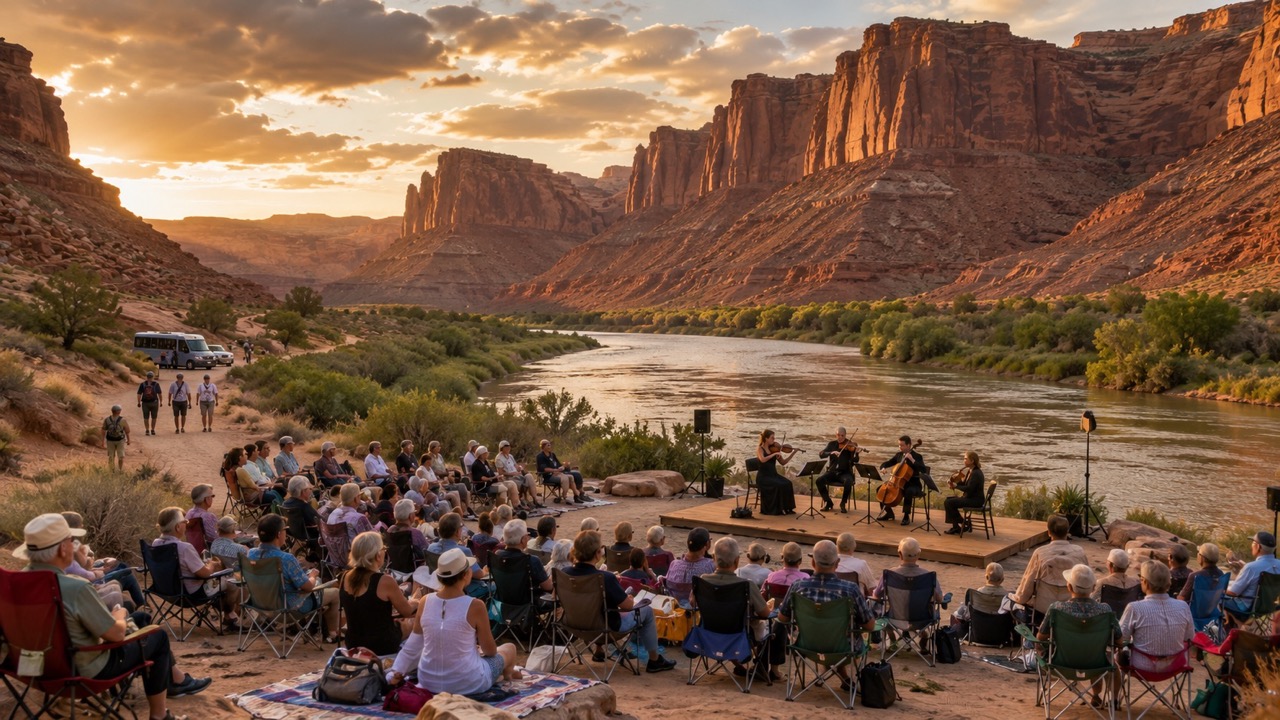
A boat moves onto the Colorado River and follows the water between red-rock walls. Roads disappear. Conversation softens beneath the engine. When the boat finally reaches a wilderness grotto, the passengers step ashore and enter a space shaped by water, stone and time rather than architects.

Chairs are waiting.

So are the musicians.

Moab Music Festival is an annual celebration of chamber music, jazz, Latin music and contemporary composition held in and around Moab, Utah. Its programme combines performances in halls, homes, ranches and outdoor gathering places with concerts reached by boat, trail or raft.

The festival was founded on the idea of making music in concert with the landscape. That relationship becomes clearest when attending requires more than arriving at a theatre door. A wilderness performance may begin with an early meeting time, a river journey or a hike toward a location not disclosed until the group is underway.

By the time the musicians lift their instruments, the audience has already begun listening.

Water has established one rhythm. Footsteps have established another. Wind has moved through grass and cottonwood leaves without requiring applause. The surrounding silence is not empty; it has been preparing the concert.

The first note enters a place that never needed a stage.

Why This Festival Is Special

Outdoor music often asks the landscape to behave like scenery.

Moab allows it to influence the performance.

A grotto changes the resonance of an instrument. Canyon walls hold and return sound. A moving river denies the audience complete stillness. Wind enters an outdoor programme without consulting the score. Light travels across stone while a piece is still unfolding.

The musicians must listen to those conditions as carefully as the audience does.

That mutual attention changes the meaning of intimacy. Listeners may sit close enough to observe the movement of a bow or the breath preceding a phrase, yet the surrounding scale remains immense. The performance feels both concentrated and small within a landscape that continues far beyond it.

The journey also protects the encounter from casual interruption. Someone who has boarded a boat or followed a trail cannot drift into the concert halfway through, check one piece off a schedule and leave for another stage. The group arrives together. It listens together. It returns together.

Nothing outside the music has been eliminated.

Instead, the river, stone, weather and distance have made distraction less persuasive.

Festival Experience

What to Expect

Moab Music Festival does not occupy one central festival ground.

Its events are distributed across town and the surrounding canyon country. One evening may unfold inside historic Star Hall. Another performance may take place beside the Colorado River, at a ranch, in a private home or beneath an open sky. Signature wilderness concerts require audiences to travel with the festival into the landscape.

Each format creates a different day.

For a grotto concert, the audience checks in at an appointed location before boarding a boat. The river journey carries everyone to a natural chamber enclosed by sandstone. Music hikes begin earlier, while the desert remains cooler, and lead participants toward outdoor performance sites selected partly for their acoustic and visual relationship with the programme. Floating concerts keep listeners on the water. Multi-day musical rafting trips extend the encounter through canyons, camps and repeated performances.

These are not interchangeable tickets. A visitor capable of attending a seated evening concert may not be comfortable on a trail, a boat or a remote river journey. Distances, surfaces, boarding requirements, age limits and accessibility vary by event.

The programme also leaves space for Moab itself. Community concerts, educational work and performances in familiar local spaces prevent the festival from treating canyon country as an empty stage discovered by visitors. Music belongs inside the town as well as beyond it.

The audience repeatedly moves between those worlds.

A concert finishes in the wilderness.

The road back leads to a place where people live.

Festival Highlights

  • The Colorado River Wilderness Grotto concerts are among the festival’s defining experiences. A boat carries the audience into the canyon before depositing it near a naturally resonant chamber in the rock. The approach, performance and return form one continuous event.
  • Music hikes replace the theatre entrance with a trail. The precise relationship between difficulty and reward varies, so each description must be read closely. The destination may remain a surprise, but the physical expectations should not.
  • Floating concerts keep musicians and listeners on or beside the Colorado River. The current introduces movement into a form usually built around stillness, while canyon walls alter the scale of even the most intimate music.
  • Performances at ranches, lodges, farms, homes and established halls offer another side of the festival. These spaces reveal the inhabited landscape: cultivated ground, historic buildings and communities that have learned to live beside extreme heat, scarce water and monumental stone.
  • The musical programme moves among chamber repertoire, new composition, jazz, Latin traditions and collaborations that resist a single genre. Artists often perform in several settings, allowing audiences to hear how a musician responds when the room changes from constructed hall to open canyon.
  • The multi-day rafting journey carries the idea farthest. Music appears during an expedition through river country, becoming part of camp, travel and repeated encounters with the canyon rather than a performance separated from the rest of the day.
  • The landscape changes each time.
  • The act of listening must change with it.

Getting There & Around

Where It Happens

Moab stands near the Colorado River within a landscape of sandstone cliffs, mesas, canyons and open desert.

The town provides the festival’s civic center. Historic halls, parks, restaurants and gathering spaces allow musicians and residents to meet without requiring every performance to become an expedition.

The Colorado River creates another route through the programme. Boats carry audiences toward floating concerts and the wilderness grotto, while riverside lodges and ranches place stages near the water without leaving inhabited ground.

Music hikes move into the surrounding backcountry. Their locations may be deliberately withheld to preserve discovery, but they remain organized events rather than invitations to wander independently toward a sound in the desert.

Private homes and ranches create the smallest rooms in the festival. These performances often carry distinct access arrangements and may support the organization through benefit tickets.

The national parks surrounding Moab shape the destination’s global identity, but the festival is not confined to them. Visitors should never assume that a festival ticket grants park entry, replaces a required reservation or permits independent access to a protected concert location.

Moab’s landscape is divided among communities, public lands, protected areas and working properties.

The festival’s achievement lies partly in entering each place by permission.

Getting Around

Moab’s center can be explored on foot, but the festival extends far beyond walking distance.

A car offers the greatest flexibility for reaching lodging, restaurants and events outside town. Parking and check-in arrangements vary, and some wilderness experiences require visitors to meet at a designated location before festival transport takes over.

Use the transportation included or specified for river and remote concerts. A boat destination is not an independent arrival point, and an undisclosed hiking location cannot be reached by following another group’s vehicle.

Shuttles may serve selected performances. Reserve them when required and arrive before the stated check-in time. A wilderness departure cannot wait for someone still searching for parking.

Traffic through Moab’s main corridor can slow considerably. Build extra time around every event, particularly when driving south or north through town during busy periods.

Cycling can work for local movement, but heat, darkness and fast traffic make it unsuitable for every journey. A bicycle should support the programme rather than become another endurance event between performances.

The route to a concert may involve road, trail and river.

Understanding where personal responsibility ends and festival transport begins is part of arriving correctly.

Visitor Guide

Festival Food & Drink

Canyon country teaches the body before it teaches the ear.

Water becomes the first course. The air is dry, the sun removes moisture quickly and an early river departure can disguise how long the audience will remain away from town. Drinking steadily before an event is more useful than trying to recover after the music begins.

Breakfast must support the journey. Eggs, potatoes, green chile and a warm tortilla can carry someone through a boat ride, a concert and the return to shore. Coffee begins the morning, but it cannot replace water.

Moab’s food reflects its position between the Colorado Plateau, the agricultural communities of Utah and the wider Southwest. Green chile brings heat to breakfast burritos, stews and sauces. Trout, locally raised meat and seasonal produce appear in restaurants that range from casual counters to dining rooms along the river.

The wider region contributes peaches, melons and other crops grown where irrigation makes cultivation possible. Their sweetness carries a different meaning in a landscape where water is never visually abundant for long.

Some festival experiences include a meal or reception, while others leave food entirely to the visitor. Confirm what the ticket provides before packing. Remote sites require particular care: bringing the wrong container, leaving food waste or assuming a meal will be available can disrupt both the event and the landscape protecting it.

After an outdoor concert, dinner returns the audience to human scale. Plates arrive. Water glasses are refilled. Someone attempts to describe what a cello sounded like inside stone.

The canyon has already answered more precisely.

#### Must Try

• **Breakfast burrito with green chile:** Eggs, potatoes and cheese wrapped for an early departure, with roasted chile providing warmth before the desert day begins.

• **Colorado River-region trout:** A simple regional meal suited to an evening when the setting has already supplied the spectacle.

• **Southwestern green chile stew:** A substantial bowl that belongs naturally to a cooler night after an outdoor performance.

• **Utah peaches:** Seasonal fruit from the wider region, valued for sweetness sharpened by the dryness of the surrounding landscape.

• **Green River melon:** A Utah-grown seasonal pleasure associated with irrigated farmland north of Moab.

• **Locally raised beef or lamb:** A connection to the ranching landscapes beyond the town’s outdoor-adventure identity.

• **Prickly pear drink or dessert:** A tart, vivid desert flavor that may appear in lemonades, syrups or sweets.

• **Locally brewed beer:** Best enjoyed after returning from the day’s final remote event, accompanied by food and additional water.

The concert asks the audience to listen to the desert.

The meal reveals how people have learned to live within it.

Budget & Costs

Moab Music Festival can range from relatively accessible to exceptionally expensive.

Community and in-town performances may offer the lowest-cost entry. Standard concerts at halls, parks, farms or lodges generally require a conventional event ticket, while intimate benefits and elaborate wilderness experiences cost considerably more.

Grotto and floating concerts include transportation and operational requirements that raise their price. Multi-day musical rafting journeys occupy another category entirely, combining expedition travel, meals, guiding, equipment and performances.

Accommodation adds substantially to the budget during busy periods. Reserving early, sharing a room or rental and balancing premium wilderness events with less expensive town programmes can make a multi-day visit more manageable.

A car rental, fuel or shuttle service may be necessary depending on the itinerary. Once the event transport begins, however, its cost is often included in the ticket; confirm rather than assume.

Meals, national park admission and independent excursions should remain separate from the festival budget. A concert day and a park day may use the same landscape, but they are different purchases with different requirements.

Choose the experience that matters most.

Moab’s scale can make excess feel appropriate, but one carefully selected journey may reveal more than a crowded schedule.

Tips for First-Time Visitors

Choose events by format before choosing them by repertoire.

A beloved composer does not make a difficult hike physically appropriate. An unfamiliar programme does not diminish the value of entering the wilderness grotto. Read every event description for terrain, duration, age requirements, accessibility, transport, food and weather exposure.

Build the visit around one signature wilderness experience, then add in-town or seated performances. This provides contrast without turning every day into an expedition.

Arrive at check-in early. Boat departures, shuttles and guided hikes operate as shared journeys. One late visitor can affect an entire audience.

Carry only what the event permits and what the body can manage. Water, sun protection, secure footwear, light layers and necessary medication matter more than elaborate photography equipment.

Keep phones silent and cameras put away unless the event specifically permits their use. Remote acoustics make small electronic sounds unexpectedly visible.

Do not climb away from the designated audience area for a better photograph. Fragile soils, loose rock and unprotected edges can be damaged or dangerous even when they appear stable.

Allow silence to remain after the final note. Outdoor audiences sometimes rush to applaud because no curtain or lighting cue marks the ending. Watch the musicians. Let the place finish carrying the sound.

The wilderness concert does not begin when the first piece starts.

Do not arrive too loudly for everything that came before it.

Safety

Heat and dehydration are the most persistent concerns.

Carry the amount of water specified for each event and begin drinking before departure. Sun protection should include a hat, sunscreen, sunglasses and clothing appropriate for prolonged exposure. Dry air can conceal perspiration even while the body loses water rapidly.

Temperatures may fall after sunset or along the river. Bring the recommended layers rather than relying on the conditions outside the hotel when leaving.

Wear footwear suited to the actual event. A music hike may cross uneven rock, sand or loose surfaces. A river journey may involve boarding, shore landings or damp ground. Fashionable shoes cannot negotiate terrain on the listener’s behalf.

Flash flooding is a serious desert hazard. Never enter a canyon or drainage against official guidance, and follow festival staff if weather changes an outdoor plan. Rain falling far from the venue can affect waterways and narrow canyons.

Remain within designated routes and seating areas. Biological soil crusts can be damaged by a single footprint, while cliff edges and loose sandstone may be less stable than they appear.

On boats and rafting trips, follow the operator’s safety instructions and wear required equipment. Disclose relevant medical or mobility concerns before departure rather than after reaching a remote location.

Cell service may be unreliable outside town. Carry identification and essential medication, and make sure someone understands the day’s organized itinerary.

The landscape is capable of extraordinary hospitality.

It never promises convenience.

Cultural Significance

Moab Music Festival was created by musicians who recognized that this landscape could change the experience of performance.

Its significance lies not simply in presenting accomplished artists outside. It joins musical interpretation to place. A composition written in another country or century enters sandstone acoustics, river movement and desert weather. The work remains itself, but the conditions of hearing it have changed.

That exchange carries responsibility. Canyon country is not culturally or ecologically empty. Indigenous peoples have lived across the Colorado Plateau for generations, and present-day communities continue relationships with lands that tourism frequently describes as untouched. The festival’s educational and community programmes help keep its work connected to residents rather than addressing only those who travel to Moab for extraordinary settings.

Water adds another layer. The Colorado River makes some of the festival’s most distinctive experiences possible while sustaining communities and ecosystems far beyond Moab. A floating concert may last an hour. The river’s work does not end when the musicians disembark.

Temporary performance leaves no permanent theatre behind.

That impermanence is appropriate.

The landscape has already been holding sound longer than the festival has existed.

Plan Your Journey

When to Go

The main festival takes place as summer begins yielding to early autumn in canyon country.

Days can remain hot and intensely bright, while mornings and evenings become cooler. That contrast allows the programme to use different parts of the landscape at different hours, but it also requires visitors to prepare for temperature changes within a single event.

Attend for several days rather than choosing one isolated concert if possible. A wilderness performance reveals how music behaves inside the landscape. An indoor or in-town concert reveals how the same festival belongs to Moab’s civic life. Experiencing both prevents the signature settings from becoming the entire story.

Arrive at least one day before the first demanding event. This creates time to understand the meeting locations, collect provisions, adjust to the dry climate and learn how long it takes to move through a town whose traffic can increase significantly during busy travel periods.

The surrounding national parks and public lands deserve separate time. Trying to fit a major hike, a long scenic drive and an evening performance into the same day can leave the concert competing with exhaustion.

Moab rewards mornings that begin early.

The festival rewards evenings entered with something still left to give.

Where to Stay

Central Moab is the most practical base for visitors attending several different types of events.

Staying near the town center provides access to restaurants, shops and services while reducing the distance to common departure or check-in points. It also allows an early wilderness start and a late indoor concert to belong to the same trip without requiring a long drive before and after each one.

Properties north or south of central Moab may offer more space, resort facilities or direct views of the surrounding cliffs. They can work well for travelers with a car, particularly when attending performances at ranches or lodges outside town. The tradeoff is greater dependence upon driving.

Camping can deepen the relationship with the landscape but should not be treated as the effortless budget option. Desert camps require water, shade, weather awareness and secure reservations where applicable. A tent warmed by the morning sun after a late concert may provide less rest than the programme demands.

Accommodation fills during Moab’s active travel seasons. Reserve a room when purchasing festival tickets, especially when an event begins early or ends far from town.

A beautiful remote property may appear ideal until the audience must reach a boat check-in before breakfast.

In Moab, distance is part of the experience.

It should not become a surprise.

Bottom Line & Key Days

Bottom Line

The final note enters the sandstone and leaves the instrument behind.

For a moment, nobody moves. The musicians remain still. The audience waits without a curtain, house lights or stage manager telling it that the concert has ended.

The sound thins until it becomes impossible to separate from the river beyond the grotto.

Then chairs shift. Cases close. People begin walking back toward the boat that brought them there.

The return follows the same water, but the canyon no longer seems silent. Every bend contains the possibility of resonance. Wind crossing the rock has acquired phrasing. Even the engine appears to interrupt something that was already underway.

By the time Moab returns, the audience understands that the landscape was never waiting to become a concert hall.

It had been teaching them how to listen before the first musician arrived.

Key Days

#### Arrival in Moab

Settle into town, confirm every meeting location and collect water, sun protection and any permitted trail supplies. Allow the first evening to establish the landscape before the programme begins carrying you through it.

#### Opening Performances

Early concerts introduce the musicians and the season’s musical ideas in a social or established setting. They provide useful context before the programme moves more deeply into canyon country.

#### Grotto Concert Days

The audience checks in, boards together and follows the Colorado River toward a natural chamber in the sandstone. The boat journey, performance and return should be treated as one complete event.

#### Music Hike Mornings

Participants gather early and follow festival leaders toward an outdoor venue. Terrain replaces the theatre aisle, and the first shared rhythm comes from footsteps rather than instruments.

#### Floating Concerts

The river becomes both route and listening space. Audiences remain aboard or move according to the event’s arrangements while music unfolds beneath the canyon walls.

#### Community and Town Concerts

Moab’s parks, halls and gathering places bring the festival back into everyday civic life. These events reveal the community supporting the wilderness programme beyond the visitor’s view.

#### Musical Rafting Journey

A multi-day expedition carries musicians and listeners through remote river country. Performances emerge within travel, meals and camp rather than existing as isolated appointments.

Ready to Experience Moab Music Festival?

You've explored what makes this festival special. Now it's time to plan your trip. Compare flights, book your hotel, arrange transportation, and take care of your travel essentials—all in one place.

✈ Find Flights

Loading booking widget...

Booking is completed on Expedia in a new tab.

🏨 Find Hotels

Search places to stay

Powered by Booking.com

Booking is completed on Booking.com in a new tab.

Rail & Bus Travel

Compare train and coach routes for the journey.

Compare Routes

Things to Do

Discover tours and attractions before or after the festival.

Explore Experiences

eSIM Mobile Data

Stay connected abroad without traditional roaming charges.

Get an Airalo eSIM

Travel bookings are provided by our trusted partners. We may earn a commission when you book through these links, at no additional cost to you.

Independent Editorial Standards

Every Follow the Festivals guide is independently researched and regularly reviewed using official festival information, destination resources, and trusted travel references. We also welcome verified updates from festival organizers, destination marketing organizations, tourism partners, and local experts to help keep our guides accurate, current, and useful for travelers.

Represent this festival or have a verified update to share? We'd love to hear from you through our contact page.