
Follow the Festivals

Oerol Festival

Oerol Festival

Terschelling, Netherlands

2027-06-11 - 2027-06-20

The Story

Festival Overview

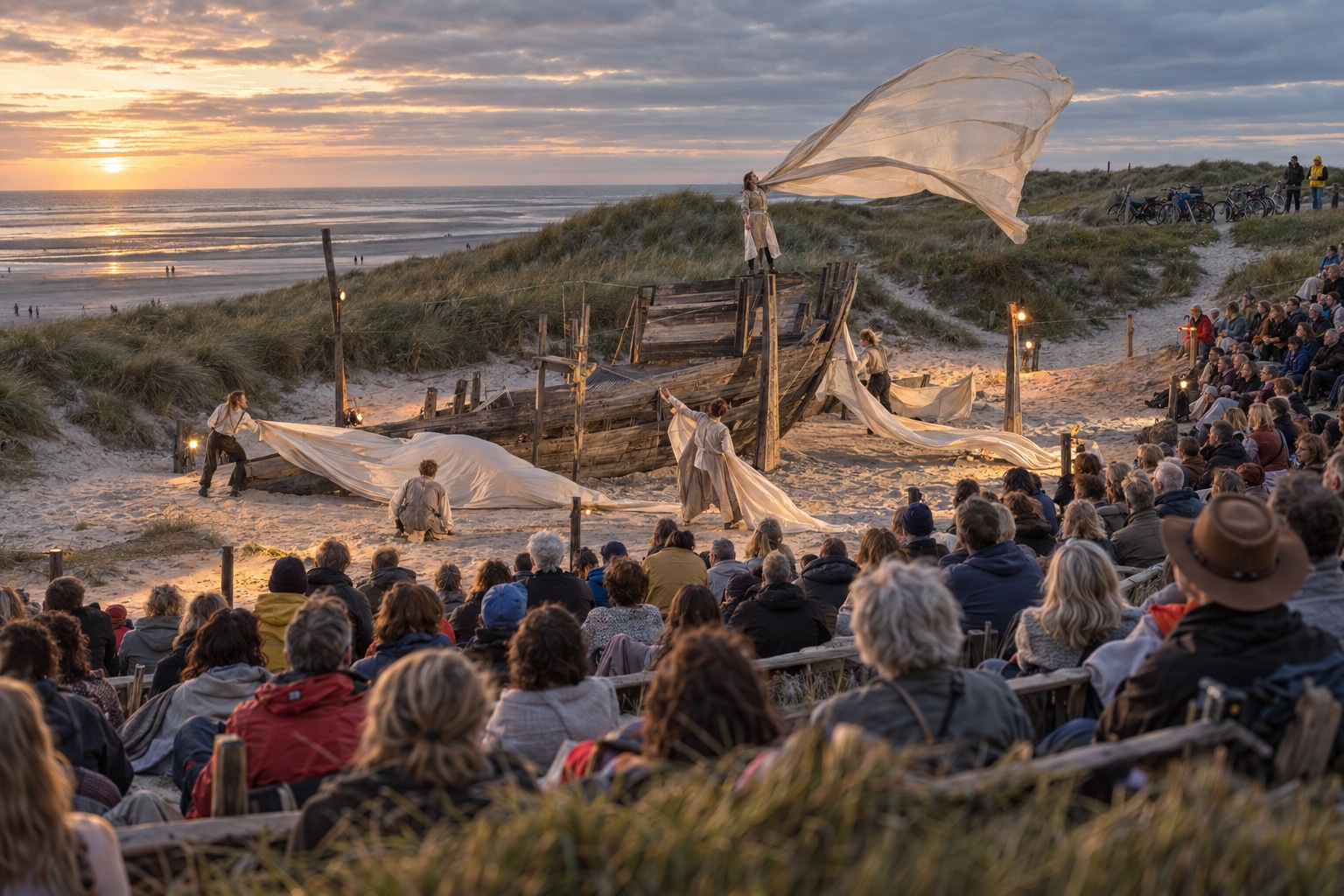
Terschelling is a long Wadden Sea island of dunes, cranberry fields, pine forest, tidal flats, villages, and wide North Sea beaches reached by ferry from the Dutch mainland. Oerol Festival turns that landscape into an immense stage for theater, dance, visual art, music, and site-specific work.

A performance may unfold in a barn, bunker, dune valley, forest clearing, or along the tide line, with the bicycle journey between locations becoming part of its meaning. The festival does not simply decorate the island with culture; artists respond to wind, distance, ecology, and local history.

That intimacy creates responsibility. Travelers share narrow paths with residents, breeding birds, livestock, and other cyclists, and the most rewarding program leaves time for the island to remain more than a schedule.

Why This Festival Is Special

Site-specific festivals exist elsewhere, but Oerol operates at the scale of an entire inhabited Wadden island. The audience must cycle, feel the wind, read the tide, and cross working landscapes before reaching art that could not retain its meaning inside a neutral theater.

Terschelling is therefore collaborator, constraint, and subject, not picturesque background. Travelers choose Oerol when they want performance to change how they move through a place—and when they are willing to protect that place from the pressure created by their own curiosity.

Festival Experience

What to Expect

The day begins with bicycles outside cafés, audiences checking route times, and artists preparing spaces that may have no conventional stage. A small group might walk into a dune valley for theater, sit in a barn for dance, or encounter an installation during a forest transfer.

Wind, birds, machinery, tide, and changing light can enter the work as unplanned collaborators. Performances begin punctually because late arrival may disturb a site or be impossible.

Evenings concentrate music and social energy in village hubs. Expect Dutch-language work, surtitles or limited translation, wet seats, sandy shoes, and meaningful stretches of travel between events.

Festival Highlights

  • Site-specific theater allowing dunes, farms, forests, and tidal landscapes to shape the work
  • Bicycle journeys between performances revealing the island at a human pace
  • Emerging Dutch and international artists testing forms outside conventional theater buildings
  • Public visual art encountered without reducing every island path to a ticketed destination
  • Wind, tide, birds, and changing light becoming active elements in performance
  • Village cafés and evening music gathering audiences after dispersed days in the landscape

Getting There & Around

Where It Happens

The entire island becomes the venue. Villages, dunes, forests, farms, beaches, bunkers, fields, and temporary spaces host ticketed performance and public art, while West-Terschelling and Midsland provide major gathering and service points. Marked bicycle routes connect the program over substantial distances. Protected landscapes and private working land remain governed by access rules even when art draws the audience nearby.

Getting Around

Reserve the ferry and bicycle before arrival, then collect the bicycle with enough time to adjust the seat, brakes, lights, and luggage.

Cycling is the primary movement system, but strong headwinds and crowded paths can double a map estimate. Group performances by west, center, or east and add a generous buffer for parking and walking from the bicycle stand.

Buses provide an alternative for limited mobility and poor weather, though capacity and routes may not match every remote site. Use lights after dark, remain sober, yield correctly, and never ride off marked paths through protected dunes.

Visitor Guide

Festival Food & Drink

Terschelling’s festival table remains tied to an island shaped by sea, dunes, grazing, fishing, cranberries, and limited transport. Food becomes part of the performance journey when it supports local producers and respects the pressure that a temporary audience places on small communities.

Reserve meals around travel time, carry water and a simple snack for remote routes, and never leave waste at a landscape venue. Ask whether an ingredient is island-grown before accepting “local” as a vague label.

#### Must Try

• **Terschelling cranberry preparation:** The island’s cranberry history gives jam, pastry, or sauce a specific local relationship.

• **Wadden Sea shellfish:** Responsible sourcing connects the plate with the tidal ecosystem surrounding the island.

• **Island sheep cheese:** A named producer links grazing and dairy craft with Terschelling’s landscape.

• **Fresh North Sea fish:** A clearly identified catch acknowledges the maritime economy beyond festival tourism.

• **Frisian sugar bread:** The regional loaf provides a practical breakfast before cycling to a distant performance.

Budget & Costs

Budget: Camp or use simple lodging, bring cycling gear, select a focused program, and prepare some meals.

Mid-Range: Add a guesthouse, bicycle rental, several ticketed works, local food, and buffer days for weather.

Higher Spend: Premium island lodging and transport improve recovery, but cannot remove travel time or the environmental limits of remote sites.

Tips for First-Time Visitors

Book fewer performances than instinct suggests. Two substantial works and one public-art route can create a richer day than four anxious crossings.

Carry waterproof layers, a seat cover or small ground layer, water, bicycle repair essentials, and lights that function in rain. Read language and accessibility information before buying tickets, especially for text-heavy theater or remote walking sites.

Respect residents' driveways, livestock, nesting areas, and quiet villages. Leave one half-day entirely open; the island's weather and landscape often provide the most important experience not printed in the program.

Safety

Cycling collisions, strong wind, rain, darkness, tide, and protected terrain require constant attention. Use functioning lights and brakes, wear visible waterproof clothing, and dismount when festival crowds make paths unsafe.

Do not enter tidal flats without qualified guidance; water and weather can change quickly. Remain on marked dune and nesting-area routes.

Alcohol should never precede a dark bicycle return. Carry the lodging address and emergency number offline, and seek staff help when a remote performance path exceeds mobility or weather comfort.

Cultural Significance

Oerol transformed Dutch ideas of where theater can occur, developing site-specific practice on an island whose landscape, communities, and ecology actively shape production. It gives experimental artists access to unusual spatial conditions and invites audiences to understand travel, weather, and place as parts of performance.

The festival also forces ongoing negotiation over tourism pressure, nature protection, and local life. Its importance lies in making that tension visible without pretending culture arrives without environmental or social impact.

Plan Your Journey

When to Go

Arrive before the first ticketed performance so the ferry, bicycle rental, lodging, and island distances can be understood without risking a late entry. Midweek offers calmer paths and better access to popular work, while weekends bring stronger atmosphere and much heavier ferry and restaurant demand.

June can shift between sun, wind, rain, and cool evenings, with open dunes offering little shelter. Three nights are the practical minimum for several performances and one unscheduled island interval.

A full week supports deeper discovery without daily route anxiety. Never stack consecutive events at opposite ends of the island merely because the ticketing system permits it.

Where to Stay

West-Terschelling provides ferry access, shops, restaurants, and the broadest services, making it practical for a first visit but distant from some eastern sites.

Midsland sits more centrally and shortens bicycle travel across the island, with strong demand and a lively festival atmosphere. Formerum, Hoorn, and Oosterend offer quieter village bases closer to eastern landscapes, trading nightlife and transport convenience for place.

Camping increases immersion and weather exposure, while holiday homes suit groups but often require longer commitments. Choose lodging by the geographic spread of booked performances, not only by village charm.

Bottom Line & Key Days

Bottom Line

Oerol is understood in the distance between performances: wind, cycling, dunes, villages, and waiting alter how each work lands. Choose selectively, protect the island, and allow Terschelling to remain an active collaborator.

Key Days

Island Arrival
Take an early ferry, fit the bicycle carefully, and learn the route between lodging and village services.

Western Program
Group performances near West-Terschelling and use the lighter route to understand festival timing.

Landscape Day
Cycle one geographic corridor slowly, combining site-specific work with an unscheduled dune or beach interval.

Village Evening
Return before dark, eat locally, and use music or conversation without another long cross-island ride.

Ferry Farewell
Leave ticket pressure behind, revisit one landscape, and reach the harbor with generous margin.

Ready to Experience Oerol Festival?

You've explored what makes this festival special. Now it's time to plan your trip. Compare flights, book your hotel, arrange transportation, and take care of your travel essentials—all in one place.

✈ Find Flights

Loading booking widget...

Booking is completed on Expedia in a new tab.

🏨 Find Hotels

Search places to stay

Powered by Booking.com

Booking is completed on Booking.com in a new tab.

Rail & Bus Travel

Compare train and coach routes for the journey.

Compare Routes

Things to Do

Discover tours and attractions before or after the festival.

Explore Experiences

eSIM Mobile Data

Stay connected abroad without traditional roaming charges.

Get an Airalo eSIM

Travel bookings are provided by our trusted partners. We may earn a commission when you book through these links, at no additional cost to you.

Extend Your Trip

Continue your journey with festivals in the same destination, country, or region.

More Festivals in Netherlands

Independent Editorial Standards

Every Follow the Festivals guide is independently researched and regularly reviewed using official festival information, destination resources, and trusted travel references. We also welcome verified updates from festival organizers, destination marketing organizations, tourism partners, and local experts to help keep our guides accurate, current, and useful for travelers.

Represent this festival or have a verified update to share? We'd love to hear from you through our contact page.