
Follow the Festivals

Onbashira Festival

Onbashira Festival

Suwa, Japan

2028-04-01 - 2028-05-31

Overview

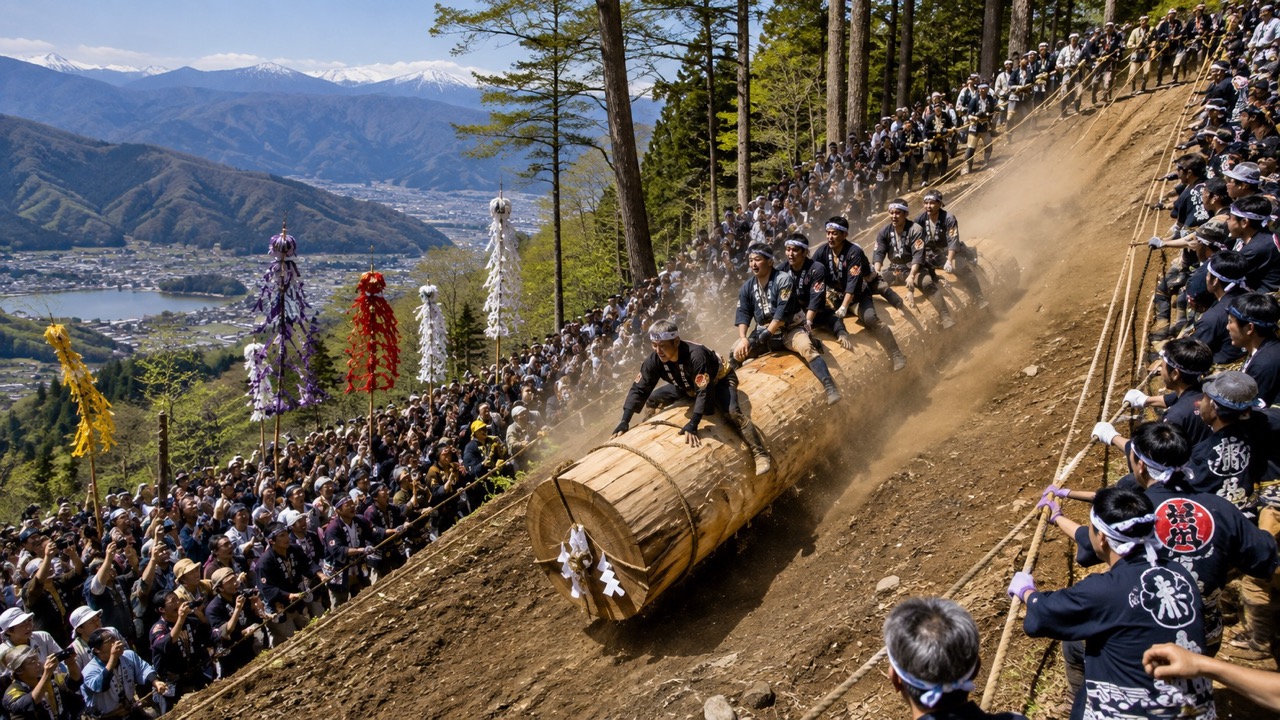
Onbashira in Suwa is built around the movement of giant sacred logs from the mountains to the four Suwa Taisha shrines, ending in shrine renewal rites that locals treat with real gravity. Across April and May, the festival shifts between rough mountain slopes, roadside hauling scenes, and formal shrine observances at Suwa Taisha Kamisha Honmiya, Suwa Taisha Kamisha Maemiya, Suwa Taisha Shimosha Akimiya, and Suwa Taisha Shimosha Harumiya. It feels part pilgrimage, part communal labor, part spectacle, with white-clad participants, shouted coordination, ropes under strain, shrine offerings, and long stretches of waiting that can suddenly turn into a burst of action.

Why It's Special

Onbashira is unusual because its central act is not a parade float or a stage performance but the physical transfer of sacred timber from mountain slopes into shrine life, ending with the renewal of the Suwa Taisha precincts themselves. The festival asks people to follow that journey across real terrain: forest roads, steep descents, hauling routes, and shrine grounds. What stays with you is the contrast between raw force and formal devotion, with shouting teams and sliding logs giving way to offerings, shrine ritual, and the raised pillars that mark the renewal cycle.

Key Days

2028-04-01 to 2028-05-31

Festival window

from 2028-04-01

Opening stretch

usually the main public celebration window in the middle of the event

Peak period

through 2028-05-31

Closing stretch

What to Expect

Early morning starts matter here: people head out first to mountain access roads and steep viewing sections before the big descents begin. From late morning into the afternoon, the daylight hours carry the most dramatic public moments, especially during Yamadashi, Kiotoshi, and the hauling phases when the logs move downhill and onward along public roads linking mountain routes to shrine areas. After those headline actions, the mood shifts as people follow the festival toward shrine precincts for ritual observances, offerings, and the raising of the sacred pillars. Peak days are intense rather than evenly busy across the full two months, and the end of the day can mean long waits on local roads and at stations once everyone leaves at once.

Plan Your Trip

Book around the best days before prices and availability tighten.

When to Go

Where to Stay

Stay in Suwa if you want the smoothest logistics and the strongest connection to the event. The best base is usually near suwa taisha shrine areas and mountain transport routes so you can get in early, step out during quieter periods, and avoid the hardest end of day transport crush. If prices spike, staying one layer outside the core with reliable transit is usually the better value move.

Search for Flights

Booking is completed on Expedia in a new tab.

Powered by Expedia. Affiliate link. We may earn a commission at no extra cost to you.

Search Places to Stay

Booking is completed on Expedia in a new tab.

Powered by Expedia. Affiliate link. We may earn a commission at no extra cost to you.

Plan Your Visit

Where It Happens

Suwa Taisha shrine areas and mountain transport routes

Tips for First Timers

Pick one kind of day instead of trying to chase everything: a mountain transport day for Yamadashi and Kiotoshi, or a shrine-focused day for the formal observances and pillar raising. If you go to a descent area, arrive very early and commit to your viewing place because moving around once the crowds settle is difficult. Wear shoes with grip for dirt, slopes, and roadside edges, and keep a layer for cold morning weather in Nagano even if the afternoon warms up. At the shrines, watch how locals behave before stepping forward for photos, offerings, or close viewing.

Budget

Suwa rooms can tighten sharply around the best-known transport and dedication dates, so booking early matters if you want to stay near the shrine districts rather than commuting in. Staying farther out in the wider Suwa area or along rail links can save money, but you pay for it with earlier departures and slower returns after headline moments. Food costs are manageable if you stick to soba shops, snack stalls, and simple local meals, while taxis on peak days are less reliable than they look on a map because roads around mountain routes and shrine approaches can seize up.

Safety

Treat Kiotoshi and other steep log descent areas as serious hazard zones, not theatrical viewing spots: the moving logs, ropes, and sudden surges of people can be dangerous, and barriers are there for a reason. Along roadside hauling corridors, stay well back from the teams and never assume a quiet stretch will stay quiet. Shrine approach roads can pack tightly during ritual arrivals, so set a meeting point before you lose your group. Mountain access roads and station areas also get jammed after major moments, so carry water, expect delays, and leave extra time for the trip back.

Food & Drink

Festival days in Suwa call for sturdy, local food that fits cold mornings, long waits on mountain roads, and shrine-side breaks between ritual stages. Around the Onbashira period, soba, miso-rich dishes, grilled rice snacks, and warming drinks make more sense than a rushed convenience-store meal, especially if you are moving between slope viewing areas and the Suwa Taisha precincts. Must Try:

  • soba noodles
  • miso dishes
  • oyaki
  • gohei mochi
  • amazake