Follow the Festivals

Patras Carnival

Patras Carnival

Patras, Greece

2027-01-17 - 2027-03-14

The Story

Festival Overview

Long before the Grand Parade, a clue appears somewhere in Patras.

A crew begins arguing over what it means. Someone remembers a street name. Another recognizes a line from a song. Plans are made, rejected and rebuilt. Costumes still need work, a performance must be rehearsed and nobody agrees which answer should be submitted first.

Elsewhere, municipal artists are constructing a satire large enough to roll through the city.

Patras Carnival is Greece’s largest carnival celebration, unfolding from its opening ceremony through weeks of games, dances, performances, children’s events and public festivities before culminating in two major parades and the burning of the Carnival King.

Its scale becomes most visible during the final weekend, when enormous costumed crews fill central Patras. Yet the parade is only the public arrival of something the city has been building for weeks.

The Hidden Treasure Hunt turns Patras into a field of clues, creative assignments and collective problem-solving. Carnival crews develop identities through costumes and shared work. Children learn their own forms of participation. Artists inside the municipal Carnival Workshop transform political frustrations, social anxieties and absurdities from public life into satirical floats.

By the time everyone enters the streets, Patras has already practiced being together.

The carnival does not assemble a crowd.

It rehearses a city.

Why This Festival Is Special

Many carnivals ask visitors to admire what has been prepared for them.

Patras asks its residents to prepare one another.

The Hidden Treasure Hunt turns participation into a sustained civic game. Crews solve riddles, navigate the city, complete artistic assignments and respond to challenges that may involve performance, construction, observation or improbable forms of knowledge.

The value of the game does not rest entirely in winning. Each task teaches a group how to argue, improvise, divide responsibility and continue after a plan fails. By parade weekend, participants have already spent weeks learning one another’s instincts.

The municipal floats carry another form of rehearsal. Satire allows the city to examine political events, public failures and social contradictions through figures exaggerated until their meaning can be read from the pavement. The joke may be immediate, but the craft required to build it is not.

Children receive a distinct place within this system. They do not merely stand behind barriers waiting to inherit the adult carnival. Their own events teach movement, imagination and collective identity at a scale they can occupy.

Every layer eventually enters the street.

The Grand Parade appears spontaneous because the preparation has become invisible.

Festival Experience

What to Expect

Patras Carnival is a season rather than a single parade.

The opening ceremony announces that ordinary time has changed. Events then accumulate across the city: dances, performances, exhibitions, games, children’s activities, street theatre and the long progression of the Hidden Treasure Hunt.

Crews provide much of the carnival’s human structure. Members wear costumes organized around a common theme and participate in games, celebrations and the culminating parades. Some groups return over many years, carrying friendships and rituals that extend far beyond one costume.

Visitors arriving for the final weekend encounter the carnival at maximum intensity.

Saturday’s Night Parade belongs primarily to the costumed crews. Floats are absent or secondary, allowing illuminated costumes, music and the movement of thousands of participants to fill the streets.

Sunday’s Grand Parade brings the complete public image into view. Municipal floats lead with satire, exaggeration and the Carnival King, followed by a seemingly continuous flow of crews. The parade is long, loud and densely attended.

The final act occurs near the waterfront. The Carnival King is burned during the closing ceremony while fireworks illuminate the port.

The city then begins releasing what it spent weeks creating.

Festival Highlights

  • The Hidden Treasure Hunt is one of the carnival’s defining traditions. What began as a smaller navigation game developed into a citywide structure of riddles, creative challenges, performances and crew identity.
  • The Children’s Carnival gives younger participants their own processions, activities and creative programmes. Families do not simply enter an adult celebration with reduced expectations; children become visible contributors to Patras Carnival.
  • The Bourboulia balls preserve another distinctive tradition. Women historically attended in dark domino costumes and masks, allowing anonymity to reverse ordinary expectations around invitation and social approach. Current arrangements should be confirmed before attending because individual dances, admission and dress requirements can vary.
  • The Saturday Night Parade removes attention from monumental construction and places it upon the crews. Costumes become more vivid beneath artificial light, and the streets feel less like a formal procession than a city moving through rhythm.
  • The Sunday Grand Parade brings municipal floats and costumed groups together. Satirical constructions translate current events into enormous characters, while each crew introduces another visual idea behind them.
  • The closing ceremony carries the Carnival King toward destruction beside the port. Fire ends the reign of a figure built specifically to disappear.
  • Patras spends weeks creating the character.
  • One night is enough to let him go.

Getting There & Around

Where It Happens

Patras occupies the northwestern Peloponnese beside the Gulf of Patras.

Its geography has always faced outward. The port connected the city with the Ionian Islands, Italy and wider Mediterranean routes, helping outside customs and ideas enter local life. Western carnival influences became part of Patras without producing a simple copy of Venice or any other city.

The central squares and long streets provide the principal carnival landscape. King George I Square acts as an important civic center, while the main parade routes turn ordinary urban corridors into stages shared by floats, crews and spectators.

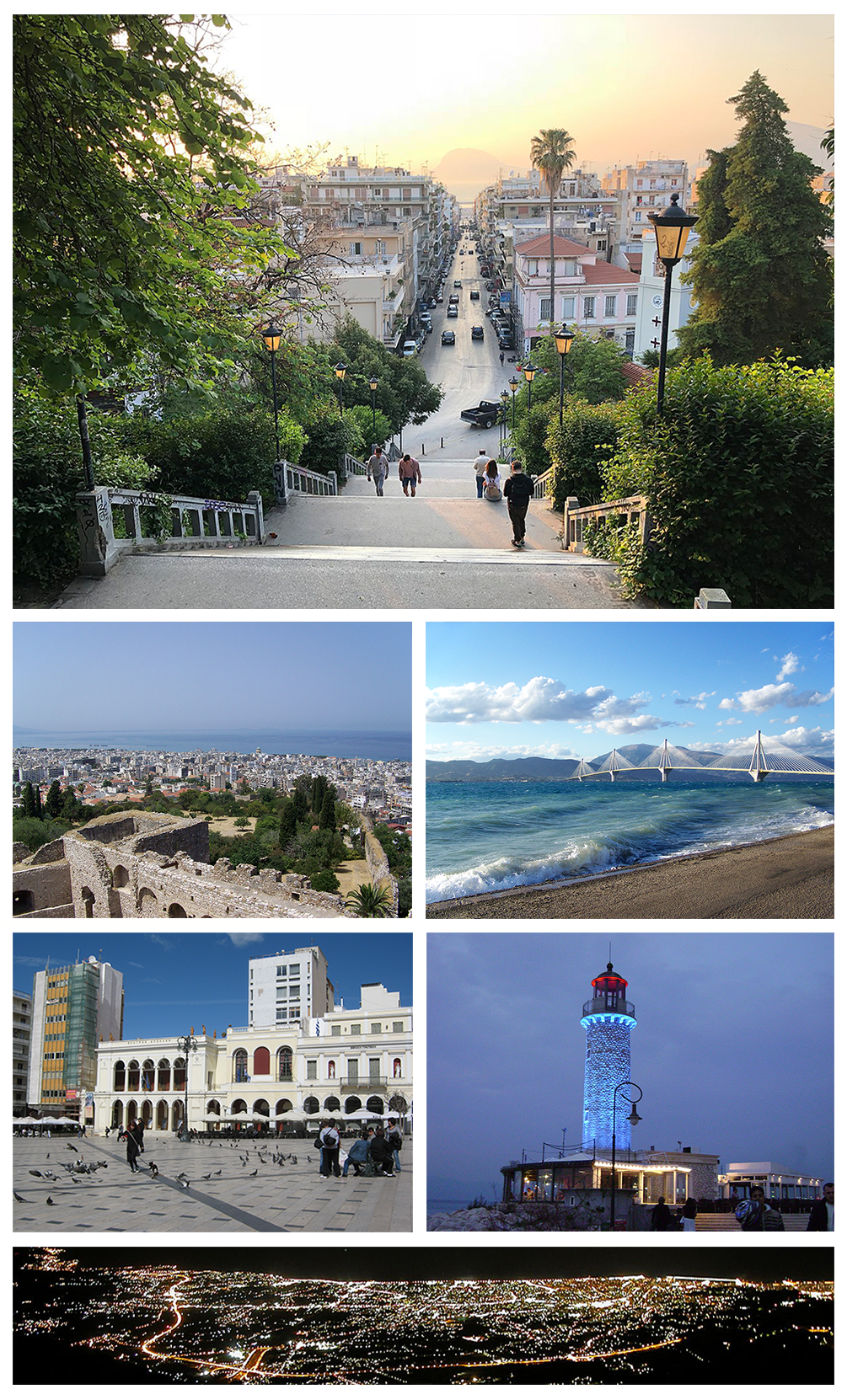
The upper city reveals another Patras. The Roman Odeon, castle and hillside streets rise above the lower commercial center, connected by slopes and monumental stairways. Visiting them before the concluding weekend becomes overwhelming helps explain the layers beneath the modern port.

The waterfront gives the carnival its final direction. The closing ceremony takes place beside the harbor, where the burning Carnival King, fireworks and dark water bring the season to its conclusion.

Patras does not carry the celebration toward an isolated ceremonial ground.

It moves through the working city until it reaches the sea.

Getting Around

Walking is the most reliable form of movement during the final weekend.

Central roads close or become restricted as parade routes, crews and spectators occupy the streets. A short journey attempted by taxi may end farther from the destination than a direct walk would have.

Learn the relationship between the hotel, principal squares, parade route and waterfront before Saturday evening. Streets that feel simple in daylight become difficult to recognize after decorations, crowds and temporary barriers alter them.

Patras can be reached from Athens by road, intercity bus and rail-linked services, though exact connections and journey arrangements should be confirmed for the relevant year. Travelers arriving from elsewhere in Greece may also use regional buses.

The port connects Patras with ferry routes across the Ionian Sea, including international services. Those arriving by ferry should distinguish the passenger port area from the carnival sites and allow time for local transfer.

Driving offers flexibility before and after the weekend but little value inside central Patras during the largest events. Confirm hotel parking and leave the vehicle outside restricted streets.

Public buses may operate amended routes. Use official traffic information rather than relying upon an ordinary map or timetable.

Comfortable footwear matters because Patras changes elevation quickly between the waterfront, center and upper city.

The parade teaches everyone to move in one direction.

Experiencing the rest of Patras requires knowing when to turn away from it.

Visitor Guide

Festival Food & Drink

Patras eats carnival meals in stages.

A table begins with several people and acquires more as crews pass through. Masks are lifted. Costume pieces occupy empty chairs. Someone orders for a friend still approaching through the crowd, then eats part of the dish before that person arrives.

The city’s port history enters through fish, octopus, squid and shellfish, while the surrounding region contributes olive oil, cheese, vegetables, meat and wine. These are not carnival novelties. They are the ordinary flavors Patras carries into an extraordinary period.

During the final weekend, practicality matters. Souvlaki, pies, sandwiches and food held easily in one hand keep people moving between streets and events. A seated meal works best before the largest crowds gather or after a parade route begins clearing.

Mavrodaphne is closely associated with Patras. The dark, fortified wine is commonly served with dessert or enjoyed in a small glass rather than treated as an all-evening drink.

Tentura offers another local identity. The spiced liqueur carries aromas such as cinnamon, clove and citrus, making it particularly suited to the cooler carnival season.

Visitors should also understand the approach of Clean Monday. The day following the final carnival celebrations turns toward Lenten food traditions: lagana bread, olives, legumes, taramasalata and seafood prepared without meat or dairy.

The Carnival King burns on Sunday night.

By the following table, the calendar has already changed.

#### Must Try

• **Mavrodaphne of Patras:** A dark fortified wine with dried-fruit and spice notes, traditionally served in a small glass or beside dessert.

• **Tentura:** A Patras liqueur flavored with warming spices such as cinnamon and clove.

• **Grilled octopus:** A port-city plate dressed with olive oil and lemon and shared before the evening crowds gather.

• **Fried calamari:** Crisp seafood suited to a table of meze or a relaxed meal near the waterfront.

• **Souvlaki:** Grilled meat served on a skewer or inside pita, practical during a weekend organized around moving streets.

• **Tiropita:** Cheese enclosed in crisp pastry and eaten warm from a bakery during the earlier part of the day.

• **Galaktoboureko:** Semolina custard baked inside syrup-soaked pastry, particularly good with coffee after a long walk.

• **Lagana:** Flat, sesame-topped bread associated with Clean Monday and the transition from Carnival into Lent.

• **Taramasalata:** A savory roe spread commonly served with bread during the Lenten table.

Food keeps the crews moving.

The following day reveals what the celebration was moving toward.

Budget & Costs

Most public carnival events and parade viewing do not require an admission ticket.

That accessibility allows the city itself to become the venue, but the concluding weekend still creates substantial travel expenses.

Central accommodation commands the highest rates and sells early. Staying farther away may reduce the room cost while adding transport complications after street closures begin.

Intercity buses and shared travel can offer more economical access than driving alone. A car introduces fuel, tolls and parking concerns while remaining largely unusable within the central carnival zone.

Food can remain affordable through bakeries, souvlaki shops and casual tavernas. Waterfront restaurants, long group dinners and repeated late-night purchases raise the budget quickly.

Balls, indoor performances and selected events may require separate admission. Official crew participation also carries costume, registration or group expenses that do not apply to ordinary visitors.

Costumes need not be elaborate. A comfortable, reusable idea often serves the weekend better than a fragile purchase designed for one photograph.

Reserve funds for the final return rather than relying upon the cheapest transport plan to remain available after midnight.

Patras opens the streets freely.

Reaching a bed after they close around the carnival still requires planning.

Tips for First-Time Visitors

Arrive before the Night Parade and walk the principal route while it is still open. Identify broad intersections, side streets and possible exits rather than choosing a position after crowds have closed around it.

Treat Saturday and Sunday as different events. The Night Parade centers the crews, lighting and movement. The Grand Parade introduces the complete float procession and draws larger daytime crowds.

Do not attempt to join a coordinated crew simply by wearing a costume. Official participation grows through registration, preparation and group involvement. Visitors belong along the route unless they have arranged legitimate participation in advance.

Wear a costume if desired, but choose something that allows walking, hearing, clear vision and access to a phone or identification. An elaborate mask becomes dangerous when it removes awareness inside a dense crowd.

Choose a viewing place according to the people traveling with you. Families and visitors with limited mobility need more room, accessible routes and a realistic exit plan rather than the most famous central position.

Carry only essential belongings. Secure phones and wallets, and keep hands available when the crowd begins moving.

Visit the Carnival Workshop or related exhibitions when public access is offered. Seeing construction changes the Sunday floats from large decorations into visible months of skilled labor.

Remain for the closing ceremony, but avoid compressing toward the fire or fireworks. Follow barriers and staff instructions around the waterfront.

Do not measure the carnival solely by how close the photographs appear.

The city’s best view may be the one from which everyone can leave safely.

Safety

Dense crowds create the principal risk during the final weekend.

Choose a meeting point before entering the busiest streets. Mobile networks may become strained, and a familiar square can be impossible to cross once the parade begins.

Children should carry identification and know how to recognize police, event staff or another designated helper. Keep them away from crowd pressure near barriers and narrow intersections.

Watch for broken glass, slippery surfaces, costume debris and changes in pavement. Secure footwear is more useful than a costume requiring constant adjustment.

Alcohol should never determine the group’s ability to navigate, supervise children or return to accommodation. Alternate water with drinks and eat throughout the day.

Keep valuables close to the body. Costumes, crowds and distraction create easy opportunities for phones and wallets to disappear.

Follow safety perimeters around floats. Large moving constructions have limited visibility and require turning space. Never step into the route for a photograph.

At the closing ceremony, remain behind barriers surrounding the fire and fireworks. Wind can carry smoke and embers, while the waterfront edge introduces another hazard in a dense nighttime crowd.

Anyone uncomfortable with pressure should leave while movement remains possible. Waiting for the next crew can make the same exit considerably harder.

The streets belong to celebration.

They still require people to notice one another.

Cultural Significance

Patras Carnival developed through exchange.

The city’s port brought people, music and customs across the Adriatic and Ionian worlds. Connections with Italy and the arrival of residents from the Ionian Islands influenced an urban carnival that gradually developed its own Greek identity.

That history remains visible in masquerade, balls, public satire and monumental floats, but Patras has made participation its defining language.

The Hidden Treasure Hunt gives residents authorship over the season. Municipal artists give political satire physical form. Crews create thousands of costumes around themes that may be playful, critical or deliberately absurd. Children learn that carnival is something made rather than purchased.

Satire provides temporary permission to rearrange authority. Politicians become oversized caricatures. Public problems acquire ridiculous bodies. The city does not solve its frustrations by parading them, but it makes them visible in a language capable of laughter.

The Carnival Workshop preserves technical knowledge across editions. Sculptors, painters, engineers and builders understand how an enormous figure must move, survive weather, pass beneath urban obstacles and remain readable from a crowded pavement.

The final burning prevents those constructions from becoming untouchable monuments.

Carnival authority lasts only because everyone knows it will end.

Plan Your Journey

When to Go

The carnival season begins weeks before the final parades and follows the movable calendar leading toward Clean Monday and the beginning of Orthodox Lent.

Travelers seeking the fullest experience should arrive before the concluding weekend. Friday provides time to understand central Patras, identify parade routes and experience the city while anticipation is still gathering.

Saturday and Sunday contain the largest public events. Both should be attended because they reveal different forms of the carnival.

The Night Parade shows what happens when the crews become the spectacle. Costumes, choreography, light and continuous movement dominate the streets without the complete procession of municipal floats.

The Grand Parade gathers satire, construction and participation into one long civic performance. It provides the carnival’s fullest visual scale but also its greatest crowds.

Stay for the burning of the Carnival King. Leaving immediately after the Sunday parade removes the ritual that releases everything the city has built.

Visitors with more time should attend earlier events during the carnival season, particularly the Children’s Carnival, public treasure-hunt activities, exhibitions and workshops. These experiences reveal how Patras reaches the final weekend rather than only what it looks like upon arrival.

The last parade displays the carnival.

The preceding weeks explain it.

Where to Stay

Central Patras provides the most practical base for the culminating weekend.

Hotels near the city center allow visitors to reach parade routes, squares, restaurants and the waterfront on foot. That proximity becomes especially valuable when roads close and traffic can no longer follow ordinary patterns.

The same location brings noise. Music, crowds and street activity may continue long after the formal programme ends. Travelers requiring uninterrupted sleep should balance central convenience against a room positioned away from the busiest routes.

Accommodation near the waterfront provides useful access to the closing events and sea-facing parts of the city. Confirm the walking route to the central parades rather than choosing solely for the view.

The area around the upper city offers greater distance from the port and a closer relationship with Patras Castle, the Roman Odeon and historic streets. Slopes and steps can make repeated journeys demanding, particularly after several hours standing at a parade.

Rio, northeast of central Patras, offers additional accommodation and views toward the bridge crossing the Gulf of Corinth. It requires transport into the carnival and becomes less convenient when road restrictions, crowds and late hours complicate the return.

Reserve early. The concluding weekend brings substantial domestic travel into Patras, and the most useful rooms disappear well before the first float enters the street.

The best accommodation allows the carnival to be reached without a vehicle.

The quietest one may require leaving it behind.

Bottom Line & Key Days

Bottom Line

The Carnival King burns beside the port.

For weeks, Patras has been preparing him. Artists gave satire a body. Crews solved clues, rehearsed performances and learned how to move together. Children wore costumes into their own streets before the adults filled them completely.

Now fire removes the figure at the center of it all.

The crews begin separating. Matching costumes move toward different hotels, homes and late tables. Music continues in smaller pockets while municipal workers enter streets that only hours earlier seemed incapable of becoming empty.

At the harbor, the final flames collapse.

Patras has finished destroying the one thing it built to represent the whole carnival.

Everything learned while building it leaves on foot.

Key Days

#### Opening Ceremony

The Carnival King’s season begins and Patras publicly enters carnival time. The city receives the first invitation to behave differently.

#### Hidden Treasure Hunt

Crews solve clues, complete creative challenges and move through Patras as teams. The game develops the coordination later made visible in the parades.

#### Children’s Carnival

Young participants claim streets, costumes and activities scaled around their own involvement. The city teaches carnival before asking another generation to preserve it.

#### Saturday Night Parade

Costumed crews move through central Patras beneath artificial light. Without the complete float procession, human participation becomes the evening’s central image.

#### Sunday Grand Parade

Municipal satire, the Carnival King and thousands of costumed participants gather into the season’s largest public movement.

#### Closing Ceremony

The parade reaches its emotional conclusion beside the port. The Carnival King burns, fireworks cross the sky and the city releases the season before Clean Monday begins.

Ready to Experience Patras Carnival?

You've explored what makes this festival special. Now it's time to plan your trip. Compare flights, book your hotel, arrange transportation, and take care of your travel essentials—all in one place.

✈ Find Flights

Loading booking widget...

Booking is completed on Expedia in a new tab.

🏨 Find Hotels

Search places to stay

Powered by Booking.com

Booking is completed on Booking.com in a new tab.

Rail & Bus Travel

Compare train and coach routes for the journey.

Compare Routes

Things to Do

Discover tours and attractions before or after the festival.

Explore Experiences

eSIM Mobile Data

Stay connected abroad without traditional roaming charges.

Get an Airalo eSIM

Travel bookings are provided by our trusted partners. We may earn a commission when you book through these links, at no additional cost to you.

Independent Editorial Standards

Every Follow the Festivals guide is independently researched and regularly reviewed using official festival information, destination resources, and trusted travel references. We also welcome verified updates from festival organizers, destination marketing organizations, tourism partners, and local experts to help keep our guides accurate, current, and useful for travelers.

Represent this festival or have a verified update to share? We'd love to hear from you through our contact page.

Photo Credits