
Follow the Festivals

Rudolstadt Festival

Rudolstadt Festival

Rudolstadt, Germany

2027-07-01 - 2027-07-04

The Story

Festival Overview

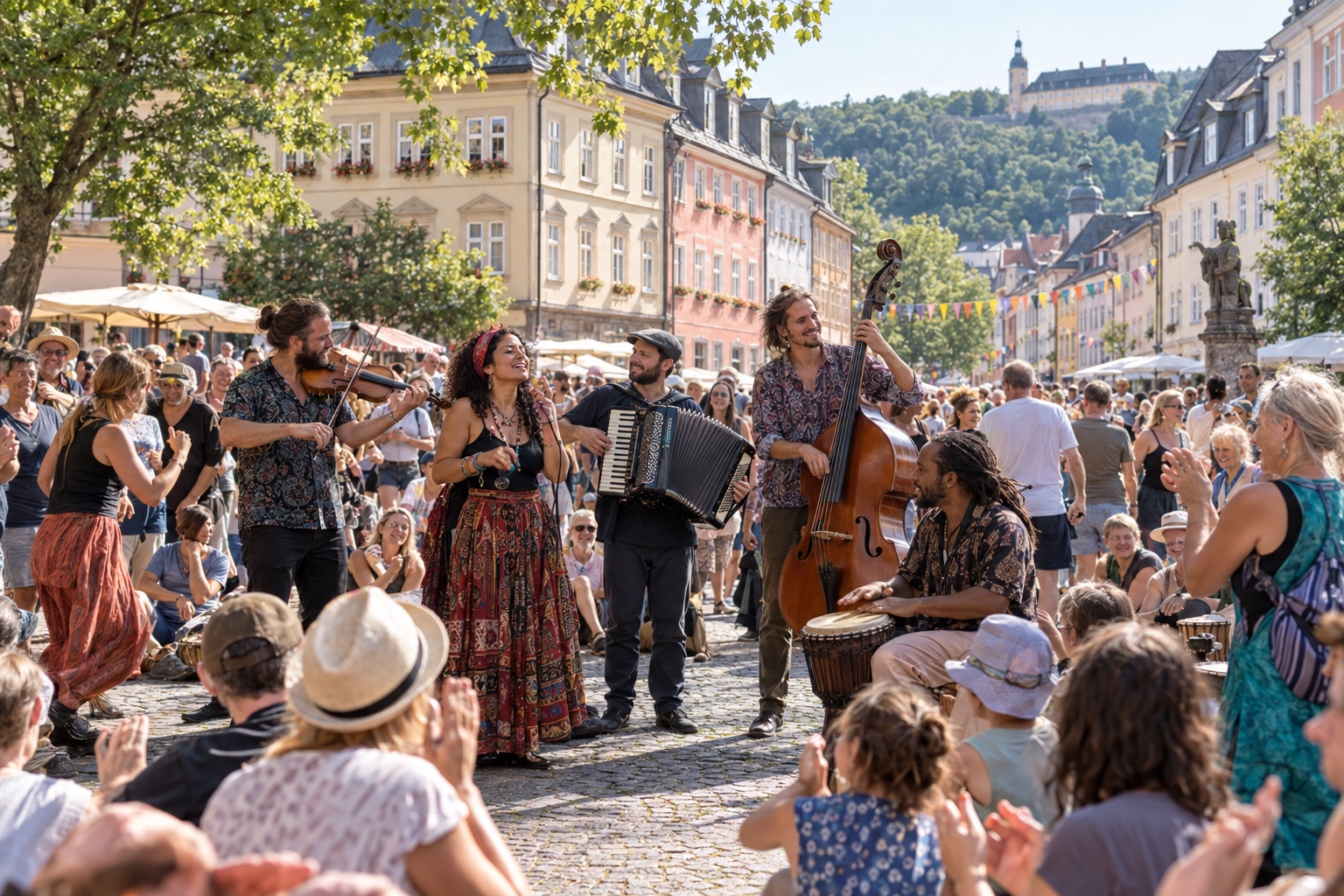
A melody begins in a courtyard and follows the street uphill. Before it fades, another rhythm arrives from a square below, while the castle stands above both like a promise and a warning: every discovery in Rudolstadt requires a route.

The Rudolstadt Festival transforms a compact Thuringian town into a network of folk, roots, and world music rather than enclosing it inside one field. Concert halls, churches, theaters, courtyards, old-town stages, and late-night spaces each give the music a different scale. The result is less a sequence of headliners than a citywide act of listening. Visitors climb, cross, wait for shuttles, abandon one plan, and hear something unplanned on the way.

That friction is part of the festival’s character. Build each day around neighborhoods and elevation, leave room for unfamiliar artists, and treat the walk between stages as part of the program. Rudolstadt rewards curiosity more reliably than perfect scheduling.

Why This Festival Is Special

Rudolstadt does not merely present many kinds of music; it makes the listener move through the relationships between them. A quiet ballad in a hall, a dance rhythm in a square, and an experimental collaboration after midnight belong to one weekend because the same streets connect them. The town’s scale prevents the festival from becoming an anonymous field of stages, while its hills prevent discovery from becoming effortless.

Every choice has weight. That combination—serious curation, civic architecture, physical movement, and the permission to be surprised—creates a festival where listening feels active. The visitor does not stand outside tradition and inspect it. The visitor crosses town inside its changing sound.

Festival Experience

What to Expect

Expect hundreds of events and more plausible choices than one weekend can hold. Mornings and early afternoons feel exploratory: workshops begin, street performers gather listeners, and smaller rooms reward anyone willing to enter without recognizing a name. As the day advances, central paths thicken and travel between stage clusters takes longer.

Evening brings major international acts, dance bands, and packed venues, while after-hours programming extends the music into night. The audience is attentive but mobile, often shifting between seated listening, outdoor standing, workshops, and social dance.

Genres overlap freely—traditional song, experimental folk, global roots, electronic hybrids, and acoustic craft may occupy adjacent stages. Choose a few anchors, accept missed sets, and allow one accidental performance to change the plan.

Festival Highlights

  • Hear folk and roots music inside architecture that changes its meaning: a church, theater, courtyard, or old-town square.
  • Build one day around a country, instrument, dance tradition, or thematic focus in the program.
  • Attend a workshop or artist conversation before hearing the same tradition on a large stage.
  • Leave one open block for street performance and an unknown act discovered while crossing town.
  • Experience a major evening concert, then follow the festival into a smaller late-night dance or club space.
  • Look back across Rudolstadt from a higher route when available, seeing the town as the network that holds the music together.

Getting There & Around

Where It Happens

Rudolstadt itself is the venue. Programming spreads across the historic center and a changing collection of stages, courtyards, churches, halls, theaters, parks, and hillside locations. In some editions, Heidecksburg Castle and its approaches shape the visual and physical geography; in others, access or construction requires alternative venues. That variability makes the current map essential.

Central squares provide the easiest stage-hopping, while indoor rooms offer concentrated listening and shelter. Higher or outer venues require deliberate travel time and may be linked by shuttle. Think in clusters rather than individual stages: build a lower-town block, a hill or theater block, and a late-night block. Crossing the whole city for every favorite artist is the fastest way to hear less music.

Getting Around

Walk within each stage cluster and use official shuttles or transit for the steepest or most distant links. The town is compact on a map but elevation, crowds, and venue queues expand every transfer.

Allow at least one full set’s worth of time when moving between lower town and a hillside location, especially if shuttle capacity is limited. Bicycles can help on outer approaches but are awkward in dense pedestrian areas and demanding on slopes.

Rail is the best arrival option for many visitors, though late-night return times require advance checking. Download or carry the current map, identify fallback routes, and never schedule two must-see performances in opposite clusters without a realistic buffer.

Visitor Guide

Festival Food & Drink

Eating follows the geography of the festival. A morning bakery stop supports an early workshop; a quick Thuringian sausage keeps a stage transfer possible; a longer restaurant meal becomes a deliberate pause from sound and climbing. Vendor areas broaden the options with international dishes that suit the world-music program, but local food gives the town its own voice.

Must Try:
• Thüringer Rostbratwurst — grilled sausage served simply, practical between outdoor stages.
• Thüringer Klöße — potato dumplings best saved for a seated regional meal.
• Local bread, pastries, and cake — useful for early starts and afternoon recovery.
• Seasonal vegetarian plates — increasingly common among festival and town vendors.
• Regional beer — enjoy slowly, especially before steep routes or late-night crowds.
• Coffee and mineral water — the unglamorous foundation of a long multi-stage day.

Eat before the evening surge and avoid building a schedule that allows no real meal. Hunger makes every distant stage feel farther away.

Budget & Costs

Tickets are only one part of the cost. Early lodging, regional rail, camping equipment, meals, and occasional local transport shape the full budget. Staying outside Rudolstadt may reduce room rates but add daily fares and limit late-night flexibility.

Build a food allowance that includes one seated meal each day, not only festival snacks. Workshops or special events may have separate access rules. Reserve a small amount for artist merchandise or recordings—the purchase most likely to extend the festival after travel ends.

Tips for First-Time Visitors

Choose three anchors per day: one essential performance, one tradition or artist you want to understand, and one open period. Group the anchors geographically before filling the gaps. Read program notes, but let live sound overrule the plan when something catches you. Carry water, rain protection, a small seat pad if permitted, and shoes built for cobblestones and hills.

Enter indoor venues early because capacity can be more limiting than distance. Mark the final transport option before committing to a late-night event. If the schedule becomes frustrating, stop crossing town and listen deeply within one cluster. Rudolstadt is not conquered by seeing more; it is understood by hearing connections.

Safety

Steep routes, cobblestones, summer heat, sudden rain, crowded indoor rooms, and late-night transport are the main concerns. Wear supportive footwear, hydrate before climbing, and avoid rushing downhill between sets. Follow capacity instructions and do not block narrow old-town passages.

Keep a light source or charged phone for evening routes, but carry a paper fallback map. Confirm the final train or shuttle and use designated camping and pedestrian areas.

Cultural Significance

Rudolstadt’s importance comes from treating folk and roots music as contemporary practice rather than decorative heritage. The festival brings regional traditions, diasporic music, dance, scholarship, experimentation, and popular performance into conversation. A song may appear first in a workshop as technique, later on a concert stage as art, and finally in a dance space as social use.

The town setting reinforces that continuity because music occupies civic buildings and public routes rather than an isolated entertainment zone. Listeners encounter traditions with distinct histories and responsibilities, but they also hear how musicians borrow, adapt, and collaborate. At its best, the festival resists the idea that “world music” is one sound; it becomes a framework for attentive difference.

Plan Your Journey

When to Go

Check the official site and app for the current early-July dates, venue list, and ticket rules. Arrive a day early if possible so the town’s steep routes and transport links make sense before the schedule begins. Daytime favors workshops, family programming, intimate halls, and lower-pressure discovery.

Late afternoon brings denser movement between major stages. Evening delivers the largest concerts, while late-night clubs and dance events extend well beyond a conventional festival day. A full weekend allows one day for deliberate priorities and another for chance. Summer weather can shift quickly, so carry light rain protection.

Where to Stay

Book as early as possible because Rudolstadt’s scale is part of its charm and its lodging constraint. A room in the old town offers the easiest access to central stages but may bring street noise and late pedestrian activity. Accommodation near the railway station improves arrival and departure while remaining walkable to much of the center.

Nearby towns such as Saalfeld can expand hotel choice if rail or festival transport aligns with your schedule. Camping provides the fullest communal experience but adds weather, sleep, and equipment considerations. Choose the old town for immersion, the station area for logistics, a nearby town for availability, or camping for atmosphere. Do not choose solely by straight-line distance; hills and late-night transport matter more.

Bottom Line & Key Days

Bottom Line

Plan less than the program tempts you to plan. Choose stage clusters, protect time for meals and climbs, and leave one part of every day open to a voice you do not yet know. Rudolstadt’s best moment may not be the performance that justified the ticket; it may be the song heard through an open doorway while walking somewhere else.

The town becomes an instrument for several days, and the most rewarding visitors learn when to follow its sound instead of their schedule.

Key Days

Arrival Day — Walk the old town, test the hill routes, and confirm transport before the first full schedule.
Discovery Day — Combine a workshop, an unfamiliar daytime artist, and one geographically sensible evening anchor.
Major Concert Night — Eat early, enter the stage cluster before peak movement, and protect the final transport plan.
Open Program Day — Follow a theme or instrument rather than headliners and leave room for street music.
Final Morning — Choose one intimate performance and buy a recording from an artist you want to keep hearing.

Ready to Experience Rudolstadt Festival?

You've explored what makes this festival special. Now it's time to plan your trip. Compare flights, book your hotel, arrange transportation, and take care of your travel essentials—all in one place.

✈ Find Flights

Loading booking widget...

Booking is completed on Expedia in a new tab.

🏨 Find Hotels

Search places to stay

Powered by Booking.com

Booking is completed on Booking.com in a new tab.

Rail & Bus Travel

Compare train and coach routes for the journey.

Compare Routes

Things to Do

Discover tours and attractions before or after the festival.

Explore Experiences

eSIM Mobile Data

Stay connected abroad without traditional roaming charges.

Get an Airalo eSIM

Travel bookings are provided by our trusted partners. We may earn a commission when you book through these links, at no additional cost to you.

Independent Editorial Standards

Every Follow the Festivals guide is independently researched and regularly reviewed using official festival information, destination resources, and trusted travel references. We also welcome verified updates from festival organizers, destination marketing organizations, tourism partners, and local experts to help keep our guides accurate, current, and useful for travelers.

Represent this festival or have a verified update to share? We'd love to hear from you through our contact page.