
Follow the Festivals

SCORE Baja 1000

SCORE Baja 1000

Los Cabos, Mexico

2026-11-09 - 2026-11-15

The Story

Festival Overview

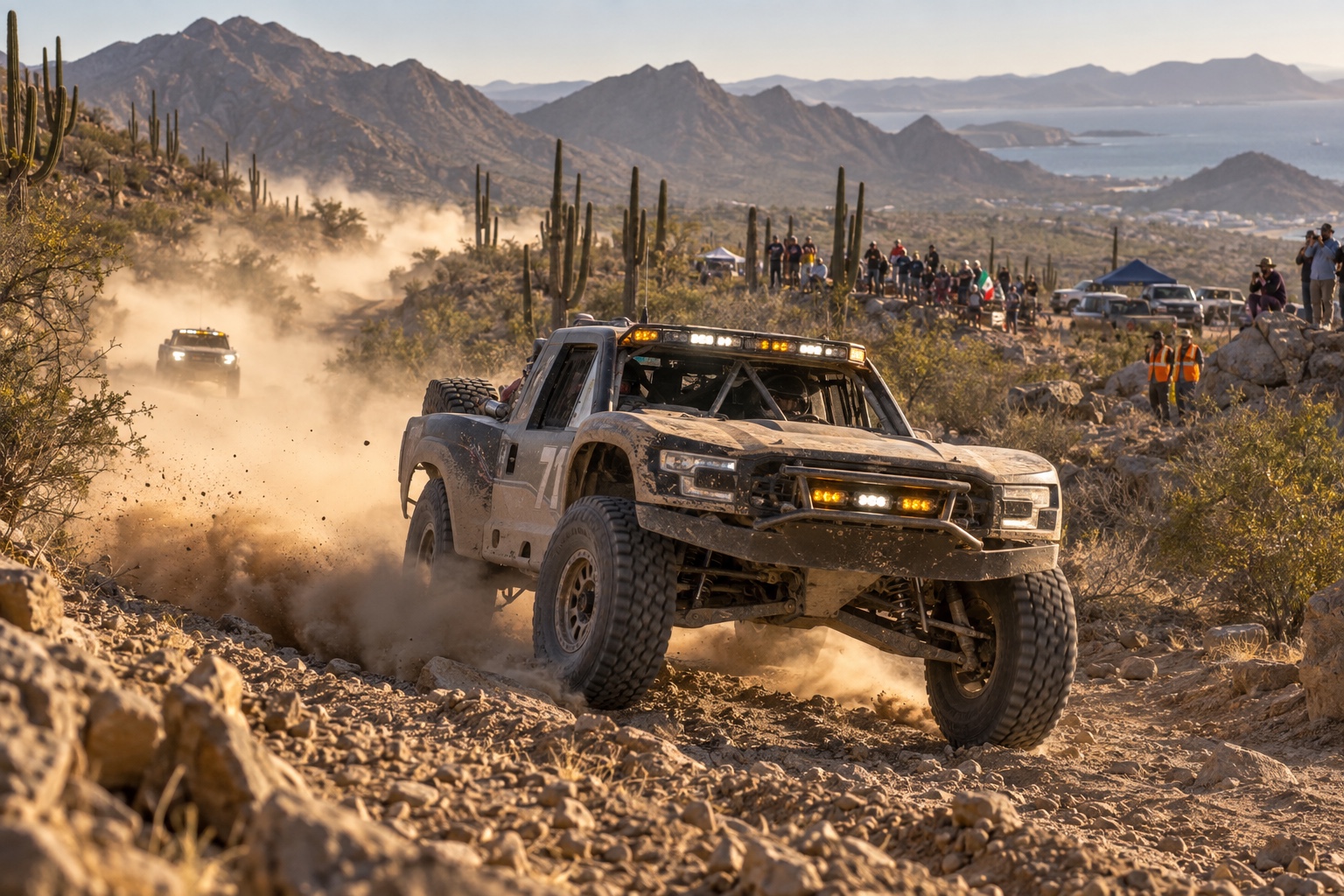
A race truck rolls through inspection surrounded by fans, mechanics and dust-covered crews, while somewhere beyond town a desert course is being marked across terrain that will soon become unforgiving. The SCORE Baja Thousand is not a stadium contest. It is an off-road expedition whose public face includes contingency, start and finish ceremonies, pit work and scattered viewing across an immense course. Motorcycles, cars and specialized trucks confront rock, silt, darkness, fatigue and mechanical failure. The route changes between editions, so no inherited viewing location or road assumption can be treated as permanent. The race’s romance depends on logistics that are exact, technical and sometimes dangerous.

The first-time traveler should center the official start, contingency and finish, then add remote viewing only with experienced local guidance. The goal is not to approach the racing line as closely as possible. It is to understand Baja endurance while remaining far enough away for competitors, support crews and emergency personnel to do their work.

Why This Festival Is Special

The Baja Thousand makes landscape an active competitor. Rock, dust, darkness and distance continuously alter the meaning of speed. The machine is impressive, but adaptation is the real spectacle.

It also expands racing beyond the driver. Navigators, mechanics, pit crews, families and local supporters form a moving system across the peninsula. The finish line compresses all of that unseen labor into the condition of a vehicle and the faces around it.

Few events make completion feel so morally substantial. A battered lower-class vehicle arriving long after headline attention can reveal more endurance than the winner’s celebration. Baja is special because the course refuses to flatter reputation; every entrant must negotiate the land that actually exists. Silence between competitors is part of the experience. It exposes the scale of the land and makes each approaching engine feel like a temporary disturbance in something much larger.

Festival Experience

What to Expect

Expect long quiet intervals interrupted by extreme speed, sound and dust. Classes separate widely, tracking can lag and weather or mechanical problems alter arrival estimates. A remote viewer may wait hours for a brief passage. Patience and safe positioning are the experience, not obstacles to it.

Contingency offers a different rhythm: dense public access, close views of machinery and teams answering questions while managing serious preparation. Respect working space and avoid touching vehicles. At the finish, the emotional focus shifts from horsepower to endurance as crews account for what survived.

The race is dangerous by nature. Vehicles can leave the expected line, visibility can disappear in dust and support traffic may move quickly on public roads. Anyone seeking predictable entertainment should remain at official public zones. Remote viewing belongs to people prepared to accept uncertainty without improvising around safety rules.

Festival Highlights

  • Contingency Row – Race vehicles, crews and technical inspection become accessible in a controlled environment. Arrive early, stay outside work zones and learn the classes before the race begins.
  • Ceremonial Start – Competitors leave under public attention before entering remote terrain. Stand behind official barriers and watch how team energy changes at the final countdown.
  • Motorcycle Departure – Early riders face the course with minimal protection and exceptional exposure. View only from a formally approved location and give the route absolute clearance.
  • Desert Passage – Dust, suspension movement and speed reveal why the event cannot be understood from the start line alone. Use an experienced guide and maintain a large setback with an escape path.
  • Night Racing – Headlights crossing empty terrain show the endurance dimension, but darkness multiplies every risk. Attempt it only with expert support, reliable communication and no roadside wandering.
  • Pit Work – Rapid fueling, tire changes and mechanical decisions expose the team effort behind each vehicle. Observe from authorized areas and remain well beyond regulated safety distances.
  • Tracking and Radio Watch – Following competitors through official systems creates a broader sense of the race than one viewing point. Use it to understand gaps, not to chase vehicles along public roads.
  • Finish Line – Damaged machines and exhausted crews turn completion into the central achievement. Stay for later classes; endurance is not limited to the overall winner.

Getting There & Around

Where It Happens

The race course is rebuilt around Baja terrain, using desert tracks, washes, mountain roads and open sections whose exact sequence changes. In a peninsula or loop-style edition, the start and finish may share a host region while the competition extends far beyond the visitor corridor. The official course map is therefore the only reliable geographic foundation.

Contingency and technical inspection bring teams into an organized public space where vehicles pass through checks and sponsor activity. The start converts the host city into a ceremonial gateway, while the finish reveals the accumulated damage, relief and achievement that distant course points cannot show.

Remote spectator areas differ radically. A safe position requires elevation or setback, escape space, no blind approach and no interference with pits or roads. Terrain that looks empty can become the racing line within seconds. Baja is not an open playground because it lacks fences; responsibility increases where infrastructure disappears.

Getting Around

A rental vehicle is useful, but it does not make every course location accessible. Desert roads may require high clearance, four-wheel drive, navigation skill and recovery equipment. Standard rental agreements can prohibit off-road use, leaving the traveler financially and physically exposed.

Use official spectator information, reputable local operators and experienced race communities. Download maps, carry paper backup and never rely on mobile coverage. Fuel early, because stations and highway corridors can become crowded with support traffic.

Do not chase the race. Speeding between road crossings adds risk to public highways and can interfere with teams. Select one remote location, arrive in daylight and remain until safe departure is clear.

At urban start and finish areas, expect closures and remote parking. Walking from a legal lot is preferable to blocking emergency or pit access. The transport plan must always preserve an exit that does not cross the course.

Visitor Guide

Festival Food & Drink

Race schedules disrupt normal meals, so eat well before contingency or remote travel and carry more water than the apparent duration requires. Dust, sun and adrenaline hide dehydration. Food stored in a vehicle must tolerate heat safely.

Los Cabos offers polished dining, but race week also rewards simple regional food in established local restaurants. Avoid alcohol before driving, remote viewing or any role near a pit.

**Must Try**
• Fish tacos – Batter-fried or grilled local fish with cabbage, salsa and lime, a Baja essential.
• Smoked marlin – Rich local seafood served in tacos, tostadas or spreads.
• Chocolate clams – Regional shellfish named for shell color, prepared by reputable kitchens.
• Machaca – Dried or shredded meat cooked with eggs or vegetables, useful before a long day.
• Flour tortillas – Northern Mexican staple whose freshness changes every taco or breakfast plate.
• Baja wine – Taste on a separate day with a designated driver; race logistics and alcohol should never share the same plan.

Budget & Costs

Urban race-week viewing may have few admission costs, but the trip becomes expensive through accommodation, rental vehicles, fuel, guides, communications equipment and contingency supplies. Los Cabos pricing can rise around major events, so reserve early after confirming the official hub.

Do not economize on tires, fuel margin, water, navigation or experienced guidance. A cheap vehicle unsuitable for remote roads is not value. Check insurance and rental restrictions in writing before leaving pavement.

Set separate budgets for race access and destination leisure. Resort spending can obscure the practical cost of a desert day. Keep emergency funds for towing, changed lodging or delayed return, understanding that some remote problems cannot be solved quickly at any price. The safest first trip often spends less on distance and more on reliable organization. Professional guided access should include a clear safety plan, appropriate vehicle, communications and transparent inclusions. A vague promise of getting close to the action is a warning, not a benefit.

Tips for First-Time Visitors

Base the first trip around contingency, the ceremonial start and the finish. These environments provide close access and context without demanding desert expertise. Add one remote site only through an operator or group that can explain exactly why the position is safe.

Carry water, sun protection, warm layers, eye protection, hearing protection, first aid and offline navigation. Tell someone the route and expected return. A satellite communicator may be appropriate where coverage disappears, but equipment cannot substitute for judgment.

Stand far outside turns, washes, crests and straightaways where vehicles may deviate. Never occupy the outside of a corner or a blind landing. Keep children and pets away from remote course viewing. If experienced officials or locals tell the group to move, move immediately; curiosity does not earn negotiating rights beside a live race. Write the abandonment threshold before departure: low fuel, lost communication, weather or route uncertainty should trigger an immediate return. Decisions made in town are safer than decisions made while stranded.

Safety

Never stand on the course, in a wash, outside a turn, below a jump or near a blind crest. Race vehicles can deviate violently from the visible line, and dust can hide following competitors. Maintain a large setback and a clear escape route. Pits and fueling zones have regulated distances and serious fire risk. Enter only authorized areas, obey crew direction and keep ignition sources away. Public highways may carry exhausted crews and fast support traffic, so drive defensively and never race the race.

Heat, cold, dehydration, mechanical failure and lost communication can become emergencies. Carry redundant water and navigation, tell a contact the plan and turn back before uncertainty becomes isolation. Official course changes supersede every saved map. Spectator safety is not personal preference; unsafe behavior can injure racers, responders and entire communities. Never cross behind a recently passed vehicle until officials confirm the course is clear; another class or competitor may be hidden by dust and arriving far sooner than expected.

Cultural Significance

The Baja Thousand transformed the peninsula’s difficult geography into one of off-road racing’s defining tests. Its reputation rests on distance, improvisation and the idea that finishing can matter as much as winning. Generations of Mexican and international racers, mechanics and communities have built that mythology.

The event also depends on towns, ranches, roads and landscapes that are not empty space. Residents experience traffic, noise, dust, economic opportunity and environmental pressure. Responsible spectators recognize that Baja is home and working land before it is a race course.

Local knowledge gives the competition much of its possibility. Crews rely on people who understand terrain, access and recovery. The cultural meaning is therefore more complex than adventure branding: it is an exchange between global motorsport ambition and a peninsula whose conditions refuse to become predictable. That relationship creates obligation. Racing prestige cannot excuse damage, trespass or the assumption that sparsely populated terrain lacks owners, histories and environmental limits.

Plan Your Journey

When to Go

Race week includes registration, technical inspection, contingency activity, the start, the long competition window and finish celebrations. Arrive before contingency so the vehicles and teams can be seen in a controlled public setting. This is the safest moment to understand classes, preparation and the human scale of the event. The race itself may continue through night and into the next day depending on course design and class speed. Spectators should not construct plans from a headline start time alone. Official maps, road closures, tracking systems and access notices must be reviewed when released.

Baja California Sur can deliver strong sun, cold desert nights, dust and sudden wind. Build a schedule with daylight setup and no rushed highway transfer after prolonged viewing. A recovery day after the finish allows the body to catch up with an event whose excitement can obscure exhaustion.

Where to Stay

For a Los Cabos start-and-finish edition, choose accommodation according to the official race hub, not the general destination name. Cabo San Lucas, San José del Cabo and the corridor are separated by meaningful distance and traffic. A beautiful resort can be poorly positioned for contingency or the finish.

Staying near the official start area simplifies early access and reduces the temptation to drive unfamiliar roads before dawn. A quieter base farther away may support sleep but requires a firm transport plan and awareness of race-related closures.

Remote course viewing should not be paired with casual resort logistics. If an authorized guide or experienced group uses a separate base, confirm fuel, water, communications and the return route. Never book an isolated property because it appears close to a course line on an unofficial map; the crossing, road condition or access point may be unusable.

Bottom Line & Key Days

Bottom Line

The most responsible first experience may look modest: contingency, start, one professionally selected viewing point and the finish. That sequence does not reduce the Baja Thousand. It reveals machinery, risk, terrain and human endurance without pretending a newcomer can master the peninsula in one race week. Do not chase speed through unsafe proximity. Let distance, dust and waiting explain what racers are confronting. The seconds when a vehicle passes will feel more powerful because the spectator has respected the hours and conditions surrounding them.

The race ends when competitors cross a line, but Baja remains. Roads reopen, communities recover and the desert absorbs another story. A worthy visitor leaves with admiration for the event and an equally strong respect for the place that made it difficult. The correct memory is not closeness to danger. It is the moment preparation, landscape and machinery become understandable together, with respect setting the distance from which they are seen.

Key Days

• Registration and Setup – Teams establish the operational base while official information becomes current. Verify maps and abandon assumptions from prior editions.

• Contingency and Inspection – Vehicles and crews are most accessible in a controlled public setting. Arrive early and respect technical working space.

• Course-Reconnaissance Period – Experienced teams study terrain under regulated conditions. Spectators should finalize one safe viewpoint with local expertise.

• Ceremonial Start – Public energy peaks as competitors enter the course. Remain behind barriers and keep exit routes clear.

• Main Race Window – Classes spread across desert and night. Follow official tracking and wait at one authorized location without chasing.

• Finish Period – Crews arrive over a long span, revealing the event’s endurance hierarchy. Stay for competitors beyond the leading class.

• Recovery Day – Roads, bodies and schedules need margin after the race. Use the day to rest and support local businesses without interfering with cleanup.

Ready to Experience SCORE Baja 1000?

You've explored what makes this festival special. Now it's time to plan your trip. Compare flights, book your hotel, arrange transportation, and take care of your travel essentials—all in one place.

✈ Find Flights

Loading booking widget...

Booking is completed on Expedia in a new tab.

🏨 Find Hotels

Search places to stay

Powered by Booking.com

Booking is completed on Booking.com in a new tab.

Rail & Bus Travel

Compare train and coach routes for the journey.

Compare Routes

Things to Do

Discover tours and attractions before or after the festival.

Explore Experiences

eSIM Mobile Data

Stay connected abroad without traditional roaming charges.

Get an Airalo eSIM

Travel bookings are provided by our trusted partners. We may earn a commission when you book through these links, at no additional cost to you.

Independent Editorial Standards

Every Follow the Festivals guide is independently researched and regularly reviewed using official festival information, destination resources, and trusted travel references. We also welcome verified updates from festival organizers, destination marketing organizations, tourism partners, and local experts to help keep our guides accurate, current, and useful for travelers.

Represent this festival or have a verified update to share? We'd love to hear from you through our contact page.