
Follow the Festivals

Cork Jazz Festival

Cork Jazz Festival

Cork, Ireland

2026-10-23 - 2026-10-26

The Story

Festival Overview

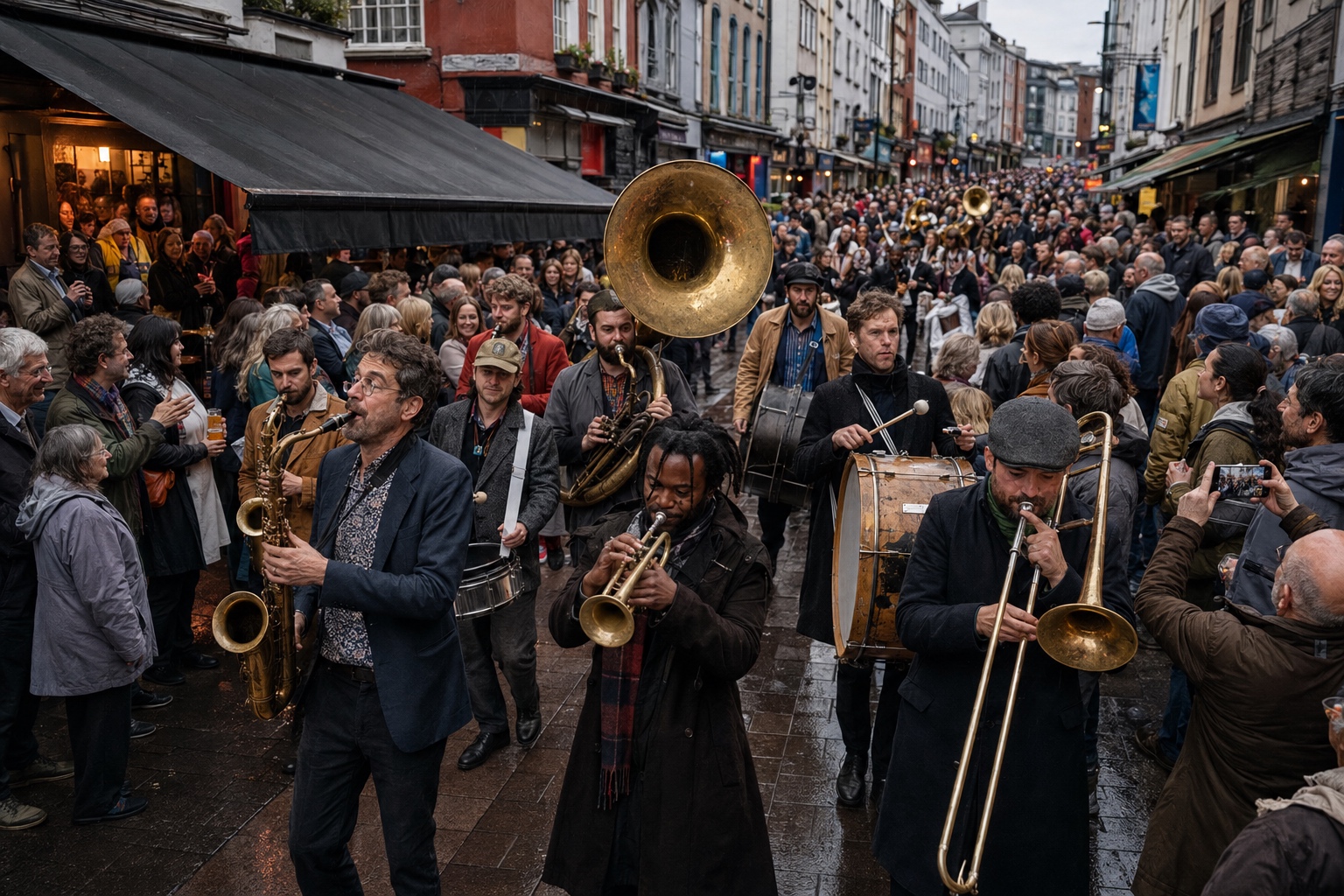
A brass line turns a Cork corner before the band appears, and people spill from one pub doorway toward another. The jazz festival occupies the city as much as its venues. Formal concerts, hotel stages, church acoustics, heritage pubs, marching bands, and chance street encounters overlap during the bank-holiday weekend, making movement through the center part of the listening.

Cork’s compact islands, bridges, slopes, markets, and pub culture give the festival its practical rhythm. The event began in 1978 and grew into Ireland’s largest music-centered city celebration. Jazz remains the name, but the program often stretches through swing, funk, soul, brass, blues, and related traditions.

Reserve one concert where silence and a full set matter, then leave room for discovery. A pub at capacity is not improved by forcing entry; another room may be active a block away. Food, water, and hearing protection preserve musical attention through a weekend whose social energy can otherwise become exhausting.

Why This Festival Is Special

Travelers choose the host destination over a campus jazz festival because formal international programming and spontaneous pub-scale music operate within one compact, walkable city center.

The bank-holiday atmosphere and heritage-pub network create a social density difficult to reproduce in a convention hall. Listeners can compare stagecraft, church acoustics, street brass, and close-room improvisation during one coherent route.

The city itself functions as a routing instrument. Bridges, narrow streets, hotels, churches, theaters, and heritage pubs place contrasting acoustics within walking distance, while the bank-holiday crowd supplies a shared public pulse. Travelers choosing between jazz events should come to the host destination when they want expert ticketed performance and informal social discovery in equal measure. A purpose-built concert campus may offer easier seating; the host destination offers the possibility that the next essential phrase will arrive from a doorway not marked on the original plan. Rain, proximity, and pub culture become musical conditions rather than incidental logistics. The result is a weekend where expert performance and civic sociability continuously revise one another instead of occupying separate cultural zones.

Festival Experience

What to Expect

Begin in daylight with a theater, hotel, church, or family program. Walk the central venue cluster before rain and evening queues thicken. A proper Cork meal creates a better base than grazing exclusively from pub snacks.

Night rewards short distances. Stay for a full set, then move only when the crowd releases naturally. Keep drinks measured, never block musicians or staff, and end near the route to lodging. The city feels most generous when no single packed room is treated as indispensable.

Cork Jazz Festival changes character as its defining program approaches. Preparation reveals skill, peak activity reveals collective confidence, and dispersal reveals the labor required to restore ordinary space. Eat before fatigue becomes urgency, refill water, and take one genuine pause away from amplified sound or dense visual material. The event becomes more memorable when attention can linger on a person, object, performance, or exchange instead of being consumed by navigation.

Festival Highlights

  • Hearing jazz emerge from several pubs within one short walk
  • Balancing a serious ticketed concert with a spontaneous street or bar discovery
  • Listening to brass music animate Cork’s narrow center
  • Using an afternoon church or theater set for acoustic contrast
  • Recognizing local hospitality without letting alcohol replace musical attention

Getting There & Around

Where It Happens

Pubs, hotels, theaters, churches, streets, and concert rooms across central Cork, with formal ticketed sets and informal citywide music overlapping form the event’s working geography. Read the layout before arrival and distinguish the public entrance, performance or exhibition areas, food zones, toilets, first aid, and the gate needed for departure. The most famous building or route is an anchor, not the whole experience; surrounding barns, streets, memorials, gardens, or neighborhood spaces often carry the destination’s more revealing detail.

Place affects behavior. In Cork, Ireland, allow working participants, residents, worshippers, exhibitors, and service crews to move before taking a photograph or stopping in a doorway. Do not enter animal, backstage, assembly, private, or memorial areas unless they are clearly open. A deliberate route should connect two or three meaningful zones and return naturally toward transport instead of drawing a decorative line across every corner of the map.

Getting Around

Walking within the center, city buses for outer venues, and a licensed taxi reserved for the final return connects most directly with pubs. Save that anchor and the real departure edge offline; crowds gathering for the evening when brass, swing, jazz, soul, and improvised music move between ticketed rooms and packed heritage pubs can turn a short final approach into the longest movement of the day.

End the last program on the side of pubs that leads toward lodging. Surface, access, and shuttle questions need answers specific to rain, cool wind, wet pavement, packed pubs, alcohol, standing crowds, small-room acoustics, and late holiday transport. After the evening when brass, swing, jazz, soul, and improvised music move between ticketed rooms and packed heritage pubs, remain with companions and use only the licensed, authorized, or organized transport described in the plan, even when an unlit shortcut looks faster.

Visitor Guide

Festival Food & Drink

Spiced beef sandwich supplies a concrete taste of Cork, Ireland before the evening when brass, swing, jazz, soul, and improvised music move between ticketed rooms and packed heritage pubs. Eat a substantial local dish while queues remain manageable, then use smaller portions to carry energy through the program. Ask cooks about the ingredient, family method, farm, fisher, or regional history behind the plate. Share rich servings, drink water, and protect one seated pause for tasting without stage noise or crowd pressure.

Choose vendors with sound hot and cold holding, especially for seafood, dairy, meat, and ice. Allergy questions need direct answers, and necessary medication belongs on the traveler, not at the hotel. A breakfast or late meal beyond the controlled venue can reveal local food at its ordinary pace while keeping the festival budget in check.

Must Try

• Spiced beef sandwich — Cork-style cured beef served cold or warm.
• Seafood chowder — Creamy soup reflecting the county’s Atlantic produce.
• Drisheen — Traditional blood pudding often paired with tripe in Cork cuisine.
• Barmbrack — Fruit loaf associated with the autumn season.

Budget & Costs

In the compact city center or near a direct bus route, prioritizing a walkable return after late pub sessions is likely to be the largest planning cost, followed by walking within the center, city buses for outer venues, and a licensed taxi reserved for the final return and any premium access tied to the evening when brass, swing, jazz, soul, and improvised music move between ticketed rooms and packed heritage pubs. Price those three pieces before treating the public atmosphere as inexpensive. Set a separate allowance for spiced beef sandwich, drinks, and programs that carry a second ticket.

Value comes from spending where an Irish river city where a major jazz program spills into heritage pubs and public streets rather than remaining inside one concert hall is actually represented: local cooks, makers, musicians, guides, clubs, cultural groups, or working crews. Use recognized sales channels and carry payment methods appropriate to the host destination, Ireland, with emergency funds stored separately..

Tips for First-Time Visitors

An afternoon theater, church, or hotel set before the pub circuit reaches full bank-holiday intensity provides the clearest orientation to Cork Jazz Festival. Build the visit around hearing jazz emerge from several pubs within one short walk, one contextual program, and spiced beef sandwich. Footwear and clothing must answer rain, cool wind, wet pavement, packed pubs, alcohol, standing crowds, small-room acoustics, and late holiday transport; phone power, water, and medication belong on the body. Save the exact meeting landmark near pubs before the signal or crowd deteriorates.

Watch how residents, artists, athletes, worshippers, or crews use the space before joining. Close portraits require permission, and working equipment, devotional objects, costumes, boats, art, or competition areas remain untouched. Local names in the Highlights and Key Days sections should guide conversation. Keep one open hour around an afternoon theater, church, or hotel set before the pub circuit reaches full bank-holiday intensity so a destination-specific encounter can develop without forcing the schedule.

Safety

Rain, cool wind, wet pavement, packed pubs, alcohol, standing crowds, small-room acoustics, and late holiday transport define the real safety profile at pubs. Prepare the body before arrival with food, water, suitable clothing, and any respiratory, motion, or hearing protection the setting demands. Locate first aid and shelter, secure valuables, and respect every route, marine, stage, devotional, or working barrier.

Crowd pressure will be greatest around the evening when brass, swing, jazz, soul, and improvised music move between ticketed rooms and packed heritage pubs. The group needs a physical meeting point and a separation plan before that phase begins. Step out laterally when movement tightens, follow local staff immediately during weather or emergency action, and leave through walking within the center, city buses for outer venues, and a licensed taxi reserved for the final return. Companions should know when anyone departs; isolated pickups and anonymous rides are never worth a shorter wait.

Cultural Significance

The Cork Jazz Festival was founded in 1978 and became closely associated with the Irish bank-holiday weekend. Its expansion through hotels, pubs, theaters, churches, and streets helped transform the whole center into a music district.

Local venues, musicians, visiting artists, publicans, technicians, hospitality workers, residents, and audiences create the citywide character. The festival’s health depends on year-round rooms and on listening cultures that value music as more than background to drinking.

Plan Your Journey

When to Go

The late-autumn bank-holiday period, when cool rain drives brass bands, jazz groups, and dense audiences through pubs, theaters, hotels, churches, and streets offers the durable window for Cork Jazz Festival. Earlier in the run usually gives displays a fresher feel and makes orientation easier; later visits carry stronger last-chance energy. Weekdays are best for attentive time in exhibitions, barns, or cultural spaces, while weekends bring the fullest public atmosphere and the most difficult movement. The best arrival is near opening for a fair or biennale and in late afternoon for a street carnival whose true peak comes after dark.

Build the day around local conditions rather than a calendar claim. Prepare for rain, cool wind, wet pavement, packed pubs, alcohol, standing crowds, small-room acoustics, and late holiday transport. Check the forecast before leaving the hotel, but carry a layer, water, and rain protection even when the morning looks settled. If the priority is the evening when brass, swing, jazz, soul, and improvised music move between ticketed rooms and packed heritage pubs, conserve energy with an afternoon theater, church, or hotel set before the pub circuit reaches full bank-holiday intensity and a seated meal.

Where to Stay

In the compact city center or near a direct bus route, prioritizing a walkable return after late pub sessions gives Cork Jazz Festival its most practical base. Test the room against the difficult return after the evening when brass, swing, jazz, soul, and improvised music move between ticketed rooms and packed heritage pubs, not an ordinary midday map estimate. Closures, rural roads, marina controls, shuttles, or dense pedestrian zones can change the true distance. Confirm late entry and transport with the property, then save its address offline.

A meal and an unprogrammed walk in Cork, Ireland should remain part of the stay. Central rooms cost more but reduce exposure to the festival’s hardest transfer; outer lodging needs a named driver or dependable route. Weather and operations can shift, so flexible terms carry real value.

Bottom Line & Key Days

Bottom Line

the host destination Jazz Festival suits travelers who want serious musicianship without surrendering the pleasure of a city in motion. Book one concert, follow one unplanned brass sound, eat before the pubs fill, and let another room replace any impossible queue. The weekend endures as rain shining on a narrow street while a horn phrase escapes a doorway and briefly reorganizes everyone walking past. It works best for sociable listeners who can protect the music from the drinking culture around it. the host destination’s gift is the sense that the whole center has become a loose, hospitable instrument. The best detour begins with sound, not a queue.

Key Days

Afternoon Listening

Use a theater, church, or hotel set to hear detail before the citywide crowd intensifies.

Pub Circuit

Choose two nearby rooms, remain for complete sets, and keep food and alcohol in balance.

Street Finale

Follow one public brass or parade-style moment and finish near the safe route to lodging.

Book Your Festival Trip

You've explored what makes this festival special. Now it's time to plan your trip. Compare flights, book your hotel, arrange transportation, and take care of your travel essentials—all in one place.

Tickets

Check current ticket availability and prices.

Check Tickets →

✈ Find Flights

Loading booking widget...

Booking is completed on Expedia in a new tab.

🏨 Find Hotels

Search places to stay

Powered by Booking.com

Booking is completed on Booking.com in a new tab.

Rail & Bus Travel

Compare train and coach routes for the journey.

Compare Routes

Things to Do

Discover tours and attractions before or after the festival.

Explore Experiences

eSIM Mobile Data

Stay connected abroad without traditional roaming charges.

Get an Airalo eSIM

Travel bookings are provided by our trusted partners. We may earn a commission when you book through these links, at no additional cost to you.

Independent Editorial Standards

Every Follow the Festivals guide is independently researched and regularly reviewed using official festival information, destination resources, and trusted travel references. We also welcome verified updates from festival organizers, destination marketing organizations, tourism partners, and local experts to help keep our guides accurate, current, and useful for travelers.

Represent this festival or have a verified update to share? We'd love to hear from you through our contact page.