Follow the Festivals

Chicago Blues Festival

Chicago Blues Festival

Chicago, United States

2027-01-20 - 2027-01-20

The Story

Festival Overview

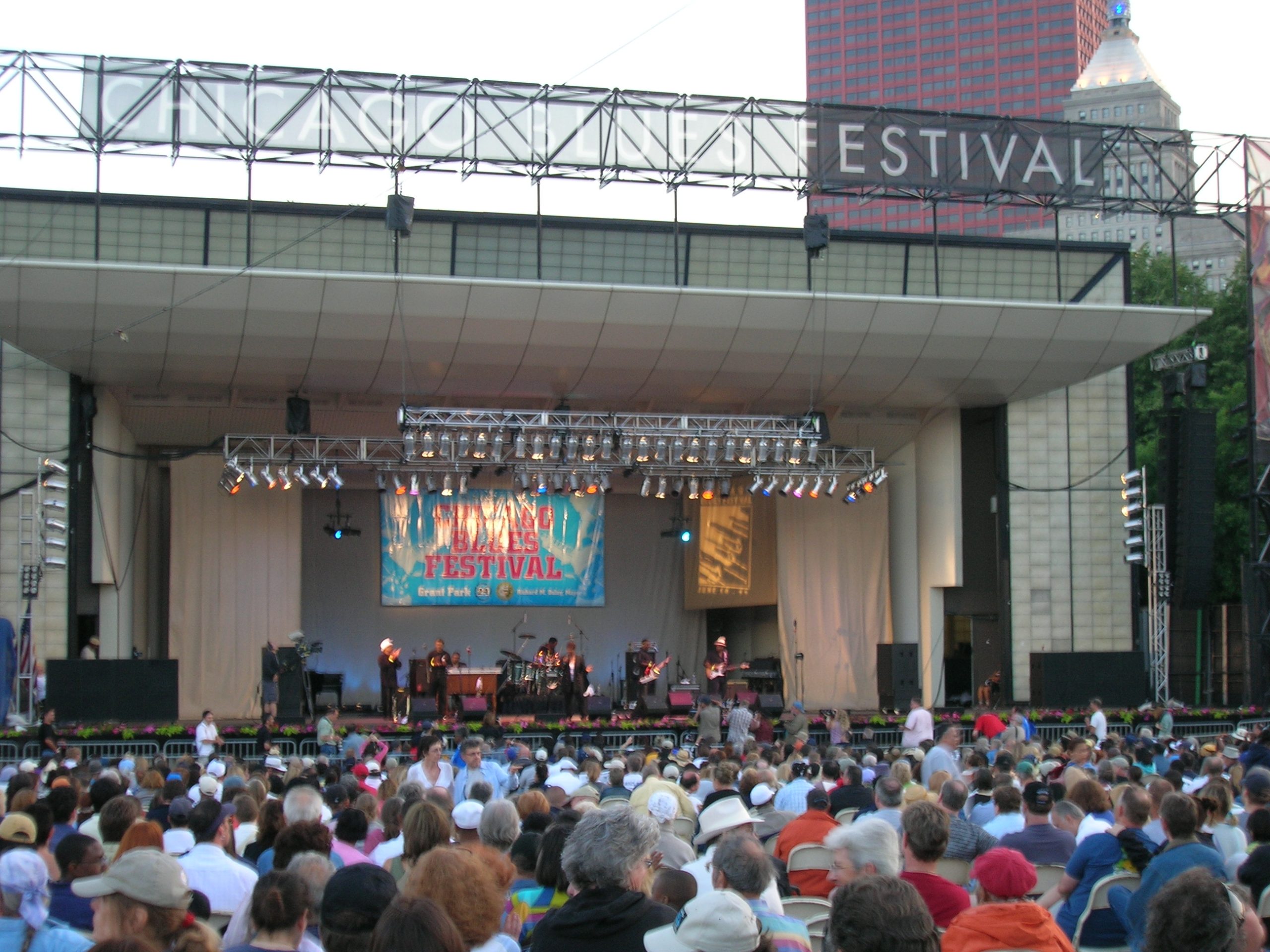
Chicago Blues Festival puts big live blues performances right into downtown Chicago, with Millennium Park as the center of it. The feel is open-air and urban rather than clubby: people spread across the lawn, gather near the stage, drift in from the Loop, and spend long stretches listening to sets with the skyline and Michigan Avenue just steps away.

It is one of those weekends where the city’s blues history is heard in a public setting, with casual daytime listening giving way to a much fuller park by late afternoon and evening.

Why This Festival Is Special

Chicago Blues Festival places music born in working neighborhoods inside the city's monumental public core. Amplified guitar and harmonica travel beneath the Pritzker Pavilion while towers rise beyond the lawn, bringing historical sound and contemporary skyline into one frame.

Free admission changes the audience. Dedicated listeners, families, office workers, students, elders, and accidental passersby share access, allowing blues to function as civic inheritance rather than a specialist commodity.

Its distinction deepens beyond Millennium Park. Ramova Theatre, Maxwell Street, clubs, labels, and neighborhood memory remind listeners that the downtown event is a doorway into a living culture, not its complete container.

Festival Experience

What to Expect

Late morning and early afternoon feel looser, with people arriving from downtown CTA stops, passing through security, and settling into Millennium Park as the first sets get going. As the day moves on, more of the crowd pulls toward the bigger performances, especially around Jay Pritzker Pavilion, where the lawn and standing areas fill in and the sound carries across the park.

By late afternoon and into evening, the Chicago Blues Festival main stage programming becomes the focus, with longer pauses between movements because people tend to hold their spots for headline sets. After the final performances, the park empties in a noticeable wave toward Michigan Avenue, nearby buses, and CTA rail stations.

Expect several free stages, tribute programmes, young musicians, a first-come pavilion, lawn listening, food concessions, and crowds that increase toward evening. Folding chairs belong on the Great Lawn rather than pavilion seating, and outside alcohol is prohibited.

The richest itinerary connects downtown scale with a club or neighborhood institution. Bring permitted food and water, protect hearing, and follow weather announcements when lightning threatens the exposed park.
Festival Highlights

  • Hear an elder and an emerging artist on the same day
  • Follow a tribute programme for its historical argument
  • Visit Maxwell Street or a neighborhood venue with context
  • Settle on the lawn before evening density builds
  • Use public transport rather than downtown parking
  • Carry the festival into a locally rooted club night

Getting There & Around

Where It Happens

Most of the festival is rooted in Millennium Park, with Jay Pritzker Pavilion acting as the main gravitational point once the bigger sets begin. You come in from the Loop side on foot or via nearby Loop CTA stations, pass into the park, and then the space opens into a mix of lawn listening and tighter stage-focused viewing.

The relationship between the two is part of the experience: the wider park lets people spread out earlier in the day, then the crowd gradually compresses toward the Pavilion as the schedule builds. When the music ends, that same flow reverses, with people streaming back out toward Michigan Avenue and the downtown transit grid.

Getting Around

Millennium Park is reached easily by CTA trains, buses, and Metra. Washington/Wabash, Lake, and Washington stations provide common approaches, while garages are costly and slow after major sets.

Neighborhood opening events and Maxwell Street programming require separate routes. Validate the actual schedule, allow time between locations, and do not treat a distant club set as an instant continuation of the park.

Visitor Guide

Festival Food & Drink

Eating here feels like eating in downtown Chicago between sets rather than sitting down for a formal festival meal. People grab something quick, carry drinks back toward Millennium Park, and keep the focus on the music, with classic Chicago street-food choices fitting the pace of the day.

Must Try:
• Chicago-style hot dog
• Italian beef sandwich
• Maxwell Street Polish
• pizza by the slice
• local craft beer

Budget & Costs

Budget: use free admission, CTA, permitted food, and lodging on a direct train line.

Mid-Range: add a Loop hotel, concession meals, museums, and a blues-club cover.

Higher Spend: premium central lodging, private transport, fine dining, and several club nights raise the trip cost.

Tips for First-Time Visitors

Pick one part of the day you care about most. If you want room to settle in and hear more music without standing shoulder to shoulder, come earlier and ease into the daytime sets. If your priority is the bigger evening atmosphere at Jay Pritzker Pavilion, expect slower entry lines and a tighter crowd near the front.

Keep an eye on the sky because June in Chicago can swing from bright sun to a quick shower, and if you leave your spot for food or a restroom break late in the day, getting back into the same viewing area can take time.

Safety

The main things to watch are dense standing crowds near the main stage viewing area, slower security lines at busy entry times, and the push of people heading out after closing. Keep your phone and wallet secure when the evening crowd thickens, and give yourself extra patience on the sidewalks along Michigan Avenue after the last set.

June weather matters here too: open areas of Millennium Park can feel hot and bright in the afternoon, then shift fast if rain moves in, so carry water and something light for changing conditions.

Cultural Significance

Chicago blues grew through the Great Migration as Black musicians carried Southern traditions north and amplified them for urban rooms, reshaping guitar, harmonica, ensemble sound, and the global language of popular music. Labels, clubs, neighborhoods, and working musicians built the tradition long before civic celebration.

Founded in 1984 after Muddy Waters's death, the free festival honors that history while giving contemporary and emerging artists a major public platform.

Plan Your Journey

When to Go

The 2026 Chicago Blues Festival ran June 4–7, opening at Ramova Theatre before three free days in Millennium Park and a Sunday connection to Maxwell Street Market. Future editions should be confirmed through the city before travel is purchased.

Arrive before midday park programming for easier lawn space and smaller stages, then keep enough energy for the evening pavilion. June can bring heat, lake wind, heavy rain, or lightning delays.

Where to Stay

The Loop places Millennium Park within walking distance and simplifies a late finish. River North and Streeterville add dining and hotel choice; South Loop connects well to Grant Park and museums; neighborhoods with direct L service can lower costs while supporting a broader city visit.

Choose lodging that also serves a neighborhood club night. The festival is free, so a room near transit often contributes more than an expensive view.

Bottom Line & Key Days

Bottom Line

Confirm the next city schedule, then pair a full Millennium Park day with one neighborhood or club experience. Arrive early, bring weather protection, and listen beyond the evening names to younger artists and working bands.

The festival's finest gesture is public scale without historical amnesia: blues crossing an open lawn for free, then leading attentive listeners back toward the communities and musicians who made the sound possible.

Key Days

Opening Night — Begin at the announced neighborhood venue where the history feels close.

Friday — Learn the Millennium Park stages before the evening pavilion draw.

Saturday — Follow tributes, younger artists, and one complete headline arc.

Sunday — Connect the park programme with Maxwell Street where scheduled.

Ready to Experience Chicago Blues Festival?

You've explored what makes this festival special. Now it's time to plan your trip. Compare flights, book your hotel, arrange transportation, and take care of your travel essentials—all in one place.

✈ Find Flights

Loading booking widget...

Booking is completed on Expedia in a new tab.

🏨 Find Hotels

Search places to stay

Powered by Booking.com

Booking is completed on Booking.com in a new tab.

Rail & Bus Travel

Compare train and coach routes for the journey.

Compare Routes

Things to Do

Discover tours and attractions before or after the festival.

Explore Experiences

eSIM Mobile Data

Stay connected abroad without traditional roaming charges.

Get an Airalo eSIM

Travel bookings are provided by our trusted partners. We may earn a commission when you book through these links, at no additional cost to you.

Independent Editorial Standards

Every Follow the Festivals guide is independently researched and regularly reviewed using official festival information, destination resources, and trusted travel references. We also welcome verified updates from festival organizers, destination marketing organizations, tourism partners, and local experts to help keep our guides accurate, current, and useful for travelers.

Represent this festival or have a verified update to share? We'd love to hear from you through our contact page.