
Follow the Festivals

Cologne Carnival

Cologne Carnival

Cologne, Germany

2027-02-04 - 2027-02-10

The Story

Festival Overview

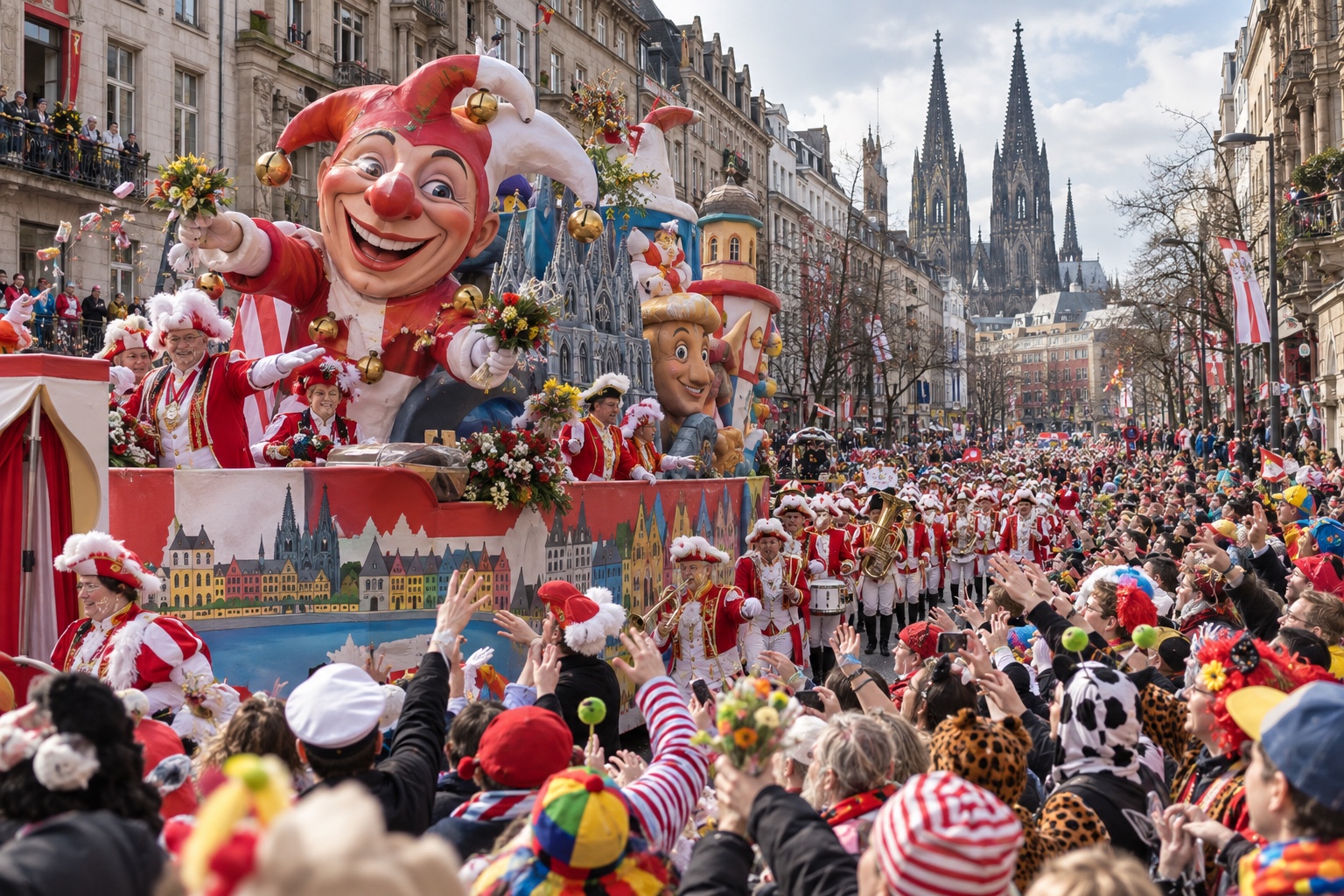
Cologne wears its civic identity loudly during Carnival. The cathedral, Rhine, Altstadt lanes, neighborhood squares, and beer halls become parts of one enormous social stage, but the celebration’s deepest language is local: Kölsch dialect, club uniforms, satirical floats, brass bands, and the greeting Kölle Alaaf. The famous street days are only the public crest of a season sustained by associations and rehearsals. Costumes matter because participation matters. A traveler entering this world encounters not an entertainment zone but a Rhineland city temporarily reorganized around humor, excess, music, and collective belonging. The result is chaotic on the surface yet remarkably legible once the songs, symbols, and neighborhood loyalties begin to register.

Why This Festival Is Special

The distinction lies in the city’s complete participation. Satire belongs to the floats, dialect to the songs, Kölsch to the serving rhythm, and costumes to ordinary tram riders as much as performers. Other carnivals may offer greater visual extravagance, but few make municipal identity feel so conversational and immediate. A traveler chooses Cologne for the chance to enter a social code sustained by local clubs and neighborhood loyalty, where joining one chorus can reveal more about the place than watching an entire procession from behind a barrier.

Festival Experience

What to Expect

Costumed groups begin gathering early, filling trains and squares with singing before formal events reach full volume. Daylight brings family activity, club processions, music, and the clearest view of satirical detail. Afternoon density grows around parade corridors and public squares; evening pours into beer halls, pubs, and neighborhood parties. Sweets fly from floats, familiar songs repeat until newcomers learn the chorus, and personal space becomes scarce. The rhythm rewards commitment to one area, a costume that survives rain, and enough patience to let a street conversation redirect the plan.

Festival Highlights

  • Rosenmontag floats turning national politics into sharp Rhineland satire
  • Weiberfastnacht releasing costumed crowds into central squares from morning
  • Kölle Alaaf shouted between strangers as a citywide social password
  • Carnival societies carrying uniforms, music, and tradition across generations
  • Kölsch beer halls sustaining songs long after street processions disperse
  • Nubbel burning giving excess a symbolic final-night farewell

Getting There & Around

Where It Happens

Alter Markt, Heumarkt, the Altstadt, cathedral approaches, and Rhine-side streets carry the most visible central activity, while neighborhood pubs and squares preserve distinct local personalities. The major procession creates a long corridor rather than a single viewing venue. Tram restrictions and pedestrian controls shift movement throughout the day. Select one district as a base, learn two river or rail landmarks, and resist crossing the entire center repeatedly. The citywide spread is the point, but a compact route produces a more coherent experience.

Getting Around

Trams, S-Bahn, regional rail, and walking carry the celebration; a private car creates more problems than it solves. Service changes near processions, and platforms become crowded before and after major events. Travel into one chosen district early, then move on foot within it. Cross the Rhine only when the itinerary genuinely requires it. After the Monday parade, wait over food or a final song before joining the first transport surge. Save an offline map, identify an alternate station, and establish a meeting landmark because mobile service and group coordination weaken inside dense street crowds.

Visitor Guide

Festival Food & Drink

Carnival eating is designed for cold streets, crowded pubs, and long drinking sessions. Bratwurst and currywurst provide quick heat, reibekuchen brings crisp potato richness, and Halver Hahn confuses newcomers with a rye roll layered with Gouda rather than chicken. Kölsch arrives in small cylindrical glasses so it stays fresh; servers replace it until the coaster signals a stop. Balance each drinking round with food and water, then seek a quieter brauhaus meal outside the peak square hours to understand Rhineland hospitality beyond the crush.

Must Try
• Kölsch — Pale local beer served in small Stange glasses and replenished rapidly.
• Halver Hahn — Rye roll with aged Gouda, mustard, onion, and paprika.
• Reibekuchen — Crisp potato pancakes commonly served with apple sauce.
• Himmel un Ääd — Potato, apple, onion, and blood sausage combining sweet and savory.
• Currywurst — Grilled sausage cut beneath curry-spiced tomato sauce for street eating.

Budget & Costs

Accommodation is the largest variable, especially within walking distance of the Old Town during peak street days. An inner neighborhood or Deutz can reduce room pressure while preserving direct rail access. Public transport, street snacks, and ordinary pubs keep daily costs manageable, but repeated Kölsch rounds, costume purchases, ticketed sessions, and late-night taxis accumulate quickly. Reserve a transport fallback and one substantial meal in the budget. A focused three-night visit often provides better value than a longer stay built around the same crowded central circuit.

Tips for First-Time Visitors

Wear a costume sturdy enough for rain, spilled beer, and hours on foot; visible participation lowers the social barrier far more than expensive detail. Learn Kölle Alaaf and a few song refrains before arrival. For the major parade, choose a viewing corridor early and accept that leaving midstream may be difficult. Carry cash, a compact waterproof layer, and only essential valuables. Beer-hall etiquette moves quickly, so watch the coaster system. Most importantly, follow local mood rather than treating every costume or ritual as a photograph waiting to be taken.

Safety

Parade corridors, central squares, late-night pub streets, and station platforms create the tightest pressure. Pickpocketing, broken glass, intoxication, and separation from companions are realistic concerns. Carry minimal valuables, zip every pocket, and choose a meeting point that remains accessible during closures. Do not climb street furniture for a better view or push against crowd flow. Pace alcohol despite the small beer glasses, eat regularly, and leave any space where movement stalls. A charged phone and an alternate route back are basic equipment, not optional conveniences.

Cultural Significance

Carnival gives Cologne a sanctioned language for turning hierarchy upside down. Satire, parody, mock authority, and communal excess precede Lent, while societies preserve music, uniforms, dialect, and neighborhood affiliation across generations. The event also expresses the city’s postwar confidence and fierce local identity: participation signals belonging more than passive admiration does. Political floats matter because humor is civic argument, not decorative irreverence. Beneath the party lies a durable social infrastructure of clubs, rehearsals, volunteers, and rituals that keeps the Rhineland tradition alive throughout the year.

Plan Your Journey

When to Go

Choose the opening street celebration for spontaneous square energy, the major Monday procession for spectacle and satire, or the final evening for a more local closing ritual. The central weekend offers the broadest nightlife but also the hardest hotel, tram, and crowd conditions. One day gives only a fragment; three nights allow a parade, neighborhood gathering, and recovery period without turning every hour into transit. February weather can be wet and raw. Arrive before the peak day, secure one important viewing plan, and leave the rest flexible enough for invitations and street delays.

Where to Stay

The Altstadt places major squares, pubs, and the Rhine within walking distance, with noise, dense crowds, and premium rates as the tradeoff. Belgisches Viertel and the inner west provide bars, restaurants, and a more residential evening while remaining connected by tram. Deutz offers rooms across the river and useful rail access, though bridge and station routes become busy after processions. Choose the Old Town for immersion, an inner neighborhood for breathing room, or Deutz for transport practicality. Stay close to a direct line rather than relying on taxis during street closures.

Bottom Line & Key Days

Bottom Line

Long after the floats pass, the defining memory is likely smaller: a stranger teaching the refrain, a server marking a coaster, cathedral towers above a ridiculous costume, or satire provoking laughter before recognition. Cologne Carnival turns the whole city into both audience and performer without losing the local grammar that holds the chaos together. Commit to the costume, choose one neighborhood well, and make room for the rituals behind the party. The journey earns its place through an uncommon feeling of civic intimacy at monumental scale.

Key Days

Costume Arrival
Settle near a direct rail line, collect essentials, and learn the chosen district before street closures expand.

Street Opening
Enter the central celebration early enough to hear songs and greetings before the squares reach full density.

Neighborhood Rhythm
Spend a day with one quarter’s pubs, gatherings, and local societies rather than chasing every headline.

Procession Peak
Claim a responsible viewing position for satire, bands, and sweets, then wait out the transport surge.

Ritual Closing
Finish with a final-night tradition and a quiet next morning for recovery and reflection.

Ready to Experience Cologne Carnival?

You've explored what makes this festival special. Now it's time to plan your trip. Compare flights, book your hotel, arrange transportation, and take care of your travel essentials—all in one place.

✈ Find Flights

Loading booking widget...

Booking is completed on Expedia in a new tab.

🏨 Find Hotels

Search places to stay

Powered by Booking.com

Booking is completed on Booking.com in a new tab.

Rail & Bus Travel

Compare train and coach routes for the journey.

Compare Routes

Things to Do

Discover tours and attractions before or after the festival.

Explore Experiences

eSIM Mobile Data

Stay connected abroad without traditional roaming charges.

Get an Airalo eSIM

Travel bookings are provided by our trusted partners. We may earn a commission when you book through these links, at no additional cost to you.

Independent Editorial Standards

Every Follow the Festivals guide is independently researched and regularly reviewed using official festival information, destination resources, and trusted travel references. We also welcome verified updates from festival organizers, destination marketing organizations, tourism partners, and local experts to help keep our guides accurate, current, and useful for travelers.

Represent this festival or have a verified update to share? We'd love to hear from you through our contact page.

Photo Credits