
Follow the Festivals

Jokkmokk Winter Market

Jokkmokk Winter Market

Jokkmokk, Sweden

2027-02-04 - 2027-02-06

The Story

Festival Overview

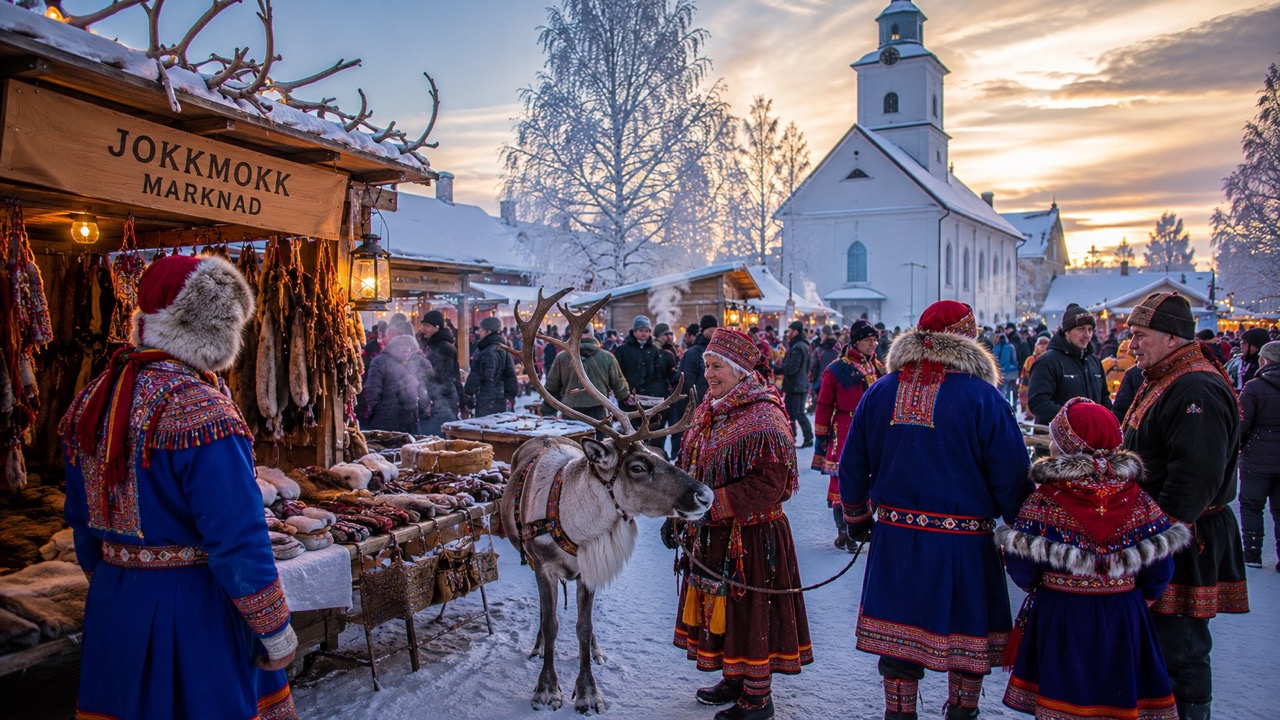
Jokkmokk lies just north of the Arctic Circle, where frozen lakes, spruce and birch forest, blue winter twilight, and severe cold shape daily life. Jokkmokk Winter Market fills this small northern Swedish community with Sámi artisans, reindeer culture, food, music, lectures, exhibitions, and visitors arriving from across Sápmi and beyond.

The market is famous for its outdoor spectacle, yet its depth comes from continuity: trade and gathering here reach back centuries, while contemporary Sámi artists and institutions present living culture rather than a historical display.

Snow, smoke, fur, silver, language, and reindeer create powerful images, but the traveler must approach them with respect and preparedness. Arctic conditions are not decorative atmosphere; they determine every hour.

Why This Festival Is Special

Winter markets exist across Europe, but Jokkmokk is distinguished by its place within Sápmi and by the cultural authority of the people who gather there. Duodji, reindeer knowledge, language, political conversation, and contemporary art are not decorative additions to a seasonal shopping event; they are the reason the market matters.

Arctic cold and limited light intensify every encounter, while Ájtte and local institutions give travelers a chance to replace romantic imagery with context. The journey is worth making for access to a living Indigenous gathering whose complexity cannot be reproduced in a southern Christmas market.

Festival Experience

What to Expect

Morning begins in deep cold with vendors uncovering duodji, food steaming in the air, and visitors moving carefully over packed snow. Midday brings the strongest light, busiest stalls, performances, reindeer, and a crowd wrapped in serious winter clothing rather than fashion layers.

Indoors, exhibitions, lectures, films, and music add historical and political context to what appears outside. As blue twilight returns, firelight and illuminated streets become atmospheric, but exposed hands and feet cool quickly.

Expect multilingual conversation, cash and card transactions, crowded warming rooms, and cultural experiences that require listening rather than constant photography.

Festival Highlights

  • Sámi duodji revealing mastery of silver, leather, wood, textiles, and reindeer materials
  • Reindeer culture remaining visible as livelihood, knowledge, and identity rather than pageantry alone
  • Ájtte museum providing essential context for Sápmi’s peoples, landscapes, and history
  • Outdoor stalls glowing through Arctic twilight and smoke from food or warming fires
  • Contemporary Sámi music, art, and discussion challenging a purely historical view of the market
  • The centuries-old gathering bringing trade, kinship, politics, and celebration into one small northern town

Getting There & Around

Where It Happens

Outdoor market streets, central gathering areas, cultural venues, schools, churches, and Ájtte—the Swedish Mountain and Sámi Museum—form the festival landscape across Jokkmokk. Reindeer-related activity and performances may use specific routes or open spaces beyond the tightest stalls. The compact town is walkable, but snowbanks, ice, cold, and crowd density make every short transfer slower than its distance suggests.

Getting Around

Reach the region through a planned combination of flight, rail, coach, or winter driving, leaving a substantial delay margin in each connection. A rental car requires genuine competence with snow, darkness, wildlife, and extreme cold; public transport is safer for travelers without that experience.

Once settled centrally, walk short loops between outdoor stalls and indoor warming spaces. Use traction aids when appropriate, keep phones and batteries insulated, and never follow an unmarked route across snow or ice.

Evening events outside the center require a prearranged transfer and clear return time. A taxi should be booked before the program, not requested after everyone exits.

Visitor Guide

Festival Food & Drink

Food offers warmth and a direct relationship to the northern landscape. Reindeer meat appears smoked, dried, stewed, or served in suovas, reflecting a herding culture in which the animal carries economic, cultural, and spiritual importance. Bidos combines reindeer with potato and carrot in a broth suited to severe cold. Arctic char, cloudberries, and lingonberries connect meals to rivers, lakes, and seasonal gathering. Buy from Sámi or local producers when possible, ask respectful questions about preparation, and avoid treating reindeer food as novelty. Coffee is a social and practical constant, but hot drinks do not replace water; dehydration still occurs in dry freezing air.

Must Try

• Suovas — Lightly salted and smoked reindeer meat, often served warm with bread or potatoes.
• Bidos — Sámi reindeer stew with potato, carrot, and a clear, deeply flavored broth.
• Arctic char — Cold-water fish prepared smoked, cured, or cooked with restrained seasoning.
• Cloudberries — Amber Arctic berries served as jam, dessert, or accompaniment to dairy.
• Kokkaffe — Coffee boiled in a pot, associated with outdoor hospitality and warming conversation.

Budget & Costs

Scarce lodging and transport into Norrbotten dominate the cost. Central accommodation earns its premium by reducing exposed walks and dependence on late transfers.

Winter clothing should be treated as essential equipment, not an optional purchase; renting or borrowing expedition-quality outerwear may be sensible. Set aside money for authentic duodji, museum admission, local meals, and flexible travel when weather disrupts connections.

A cheap rural cabin is not good value if it lacks a reliable heated transfer. Travel insurance should address winter delays and medical needs in a remote region.

Tips for First-Time Visitors

Dress in layers built for Arctic function: moisture-managing base layers, insulating midlayers, windproof outerwear, warm boots, wool socks, mittens, hat, and face protection.

Carry spare hand protection because a wet glove becomes dangerous. Visit Ájtte early in the stay so the market’s objects and language gain context.

Ask before photographing individuals, children, reindeer work, or private cultural moments. Duodji is skilled cultural production; buy directly from recognized makers and learn the meaning of materials rather than bargaining aggressively.

Plan short outdoor intervals and warm before numbness begins. Keep purchases and camera batteries inside an insulated bag during long outdoor periods, since severe cold can damage both electronics and fragile materials.

Safety

Extreme cold can injure exposed skin quickly and can impair judgment before a traveler recognizes danger. Warm indoors at regular intervals, keep clothing dry, and seek help for persistent numbness, confusion, shivering that stops, or unusual fatigue.

Ice and packed snow require careful steps and traction. Do not approach reindeer without guidance, drive unfamiliar winter roads casually, or enter frozen lakes and rivers based on appearance.

Alcohol accelerates heat loss and should not accompany prolonged outdoor time. Share plans for any excursion beyond town and carry charged communication protected from cold.

Cultural Significance

The market is one of Sápmi’s most visible annual gathering points, rooted in trade routes and social relationships that long predate the modern Swedish state. It offers space for commerce, kinship, political discussion, cultural presentation, and the assertion of Sámi identity across national borders.

Contemporary duodji, music, language, and debate demonstrate survival and adaptation under histories of assimilation and land pressure. The event matters because it is not simply a northern attraction; it is a living forum shaped by Indigenous people and institutions.

Plan Your Journey

When to Go

The central market days provide the fullest craft, performance, food, and gathering experience, with midday offering the best available light and evening events adding music and cultural discussion.

Arrive at least one day early because transport into inland Norrbotten is vulnerable to winter delays and the body needs time to understand the cold. Two full market days are worthwhile: one for outdoor stalls and public activity, another for museums, talks, and slower conversations with makers.

February temperatures can be dangerously low, and daylight remains limited. Schedule outdoor blocks around warming stops rather than trying to remain outside continuously from opening through night.

Where to Stay

Central Jokkmokk is the valuable base because the market, Ájtte museum, restaurants, and many events remain walkable; rooms are scarce and often committed far ahead. Guesthouses, cabins, or hosted lodging outside the center can provide quiet and northern scenery, but they require reliable winter transport and may leave travelers isolated after evening programs.

Luleå offers broader hotels and air or rail connections, yet it is too distant for a comfortable daily commute. Gällivare can serve as a transport stage rather than a festival base.

Choose the town itself whenever possible, and confirm heating, linen, breakfast, and transfer arrangements rather than assuming rural accommodation operates like a city hotel.

Bottom Line & Key Days

Bottom Line

Jokkmokk Winter Market should leave a traveler with more than photographs of snow and reindeer. Its true scale is historical and cultural: artisans carrying knowledge through materials, families renewing ties across Sápmi, and contemporary voices insisting that northern life belongs to the present.

Prepare for cold with humility, spend money with makers, listen before interpreting, and give the town at least two full days. In the blue Arctic light, the market becomes a rare privilege—a meeting place where landscape, trade, identity, and endurance remain inseparable.

Key Days

Arctic Arrival
Reach town early, test every clothing layer, and learn the short routes between lodging and warming spaces.

Museum Context
Begin at Ájtte and use its history to understand the people, materials, and landscapes encountered outside.

Market Day
Browse duodji in the strongest daylight, warm regularly, and leave time for conversation with makers.

Cultural Evening
Attend music, film, or discussion with transport arranged before temperatures fall further.

Sápmi Farewell
Return to selected artisans, eat a final northern meal, and depart with generous weather margin.

Ready to Experience Jokkmokk Winter Market?

You've explored what makes this festival special. Now it's time to plan your trip. Compare flights, book your hotel, arrange transportation, and take care of your travel essentials—all in one place.

✈ Find Flights

Loading booking widget...

Booking is completed on Expedia in a new tab.

🏨 Find Hotels

Search places to stay

Powered by Booking.com

Booking is completed on Booking.com in a new tab.

Rail & Bus Travel

Compare train and coach routes for the journey.

Compare Routes

Things to Do

Discover tours and attractions before or after the festival.

Explore Experiences

eSIM Mobile Data

Stay connected abroad without traditional roaming charges.

Get an Airalo eSIM

Travel bookings are provided by our trusted partners. We may earn a commission when you book through these links, at no additional cost to you.

Independent Editorial Standards

Every Follow the Festivals guide is independently researched and regularly reviewed using official festival information, destination resources, and trusted travel references. We also welcome verified updates from festival organizers, destination marketing organizations, tourism partners, and local experts to help keep our guides accurate, current, and useful for travelers.

Represent this festival or have a verified update to share? We'd love to hear from you through our contact page.