
Berlin International Film Festival (Berlinale
Berlin, Germany
10 February 2027 – 21 February 2027
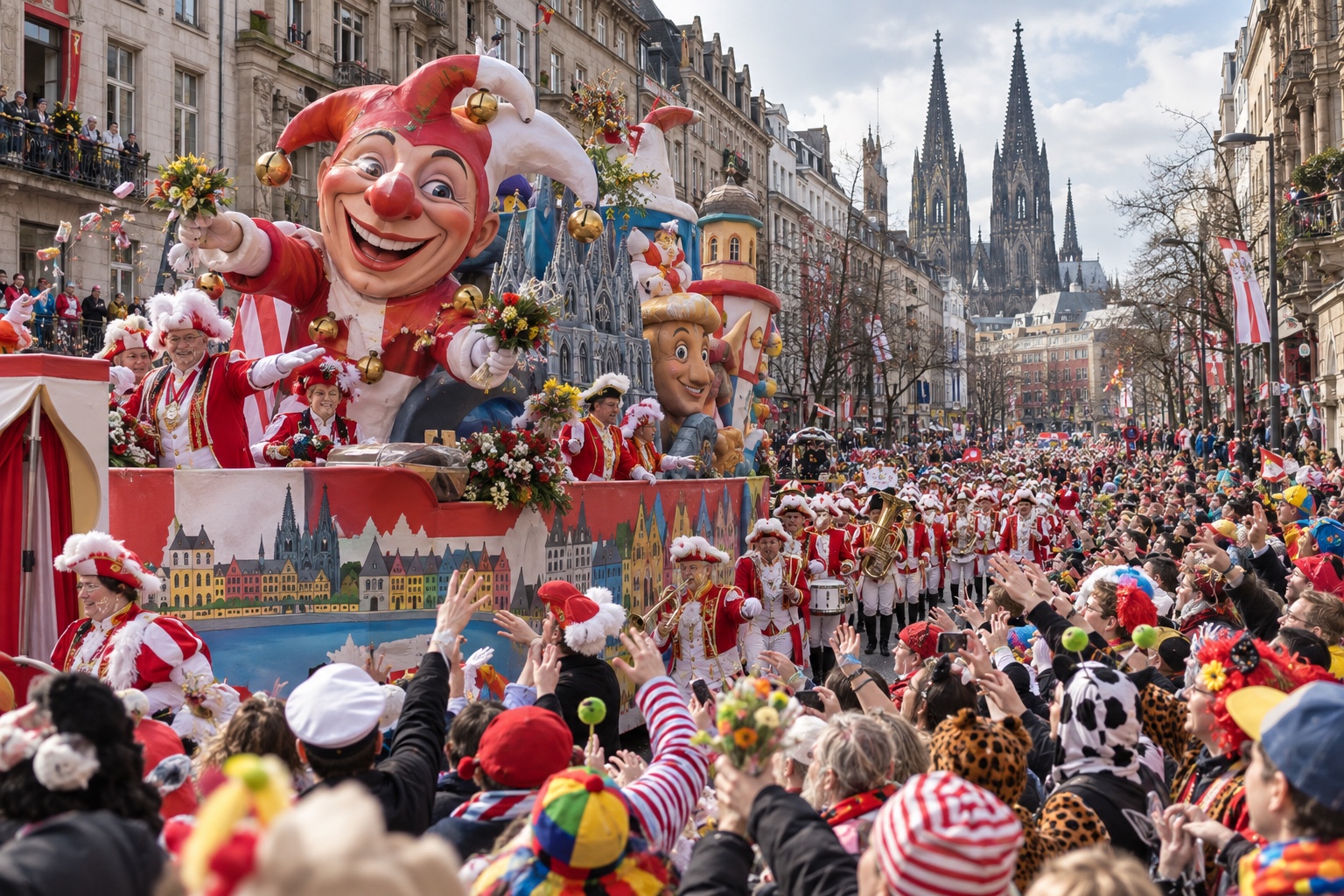
Cologne Carnival turns the city center into a moving street celebration anchored by Alter Markt, Heumarkt, Altstadt (Old Town), the Cologne Cathedral surroundings, the Rhine riverfront, and neighborhood pubs and beer halls. The 2026 peak runs from Weiberfastnacht on Thursday, February 12 through Tuesday, February 17, with costumes, brass bands, shouted greetings, satire, and dense foot traffic linking squares, pub streets, and parade areas. What stands out here is scale tied to local identity: this is not a fenced event site but a citywide carnival culture lived in public space.
Cologne Carnival dates back centuries and reflects the Rhineland tradition of humor as social commentary. It historically allowed citizens to mock authority before the solemn Lenten season. Today it remains a symbol of regional pride and community spirit.
Unlike staged festivals, Cologne Carnival is lived by locals. The city does not host carnival. The city becomes carnival. Visitors are not spectators. They are participants.
Morning activity builds in the central squares and Old Town lanes as costumed groups gather, drink, and sing; by afternoon, foot traffic thickens between Alter Markt, Heumarkt, and nearby pub streets, with smaller events and street parties feeding into the weekend. On Weiberfastnacht the public celebration kicks off hard from daytime into evening, while Friday through Sunday keep a steady rhythm of neighborhood events, costume crowds, and pub spillover. Rosenmontag brings the biggest surge, with long stretches of standing near parade areas, floats, bands, thrown sweets, and political satire floats, followed by slow dispersal after dark. On the final carnival night, the mood shifts toward closing rituals and late indoor singing, with some areas marking the end through Nubbel burning before activity drops sharply by Ash Wednesday.
Rosenmontag Parade with large satirical floats, marching bands, and sweets thrown into tightly packed crowd lines. Weiberfastnacht transforms Alter Markt and Heumarkt into daytime street-party hubs that keep feeding into the evening. Altstadt (Old Town) becomes a dense costume corridor where singing, chanting, and pub spillover run block to block. “Kölle Alaaf” cuts through the noise all day as the local greeting shouted across squares, bars, and parade crowds. Nubbel burning closes the carnival mood with a symbolic final-night ritual tied to the end of excess. political satire floats give the biggest procession a distinctly Rhineland edge rather than a purely decorative parade style.
Explore guided experiences.Carnival eating in Cologne happens standing up between square crowds, on pub streets, and during cold February walks between parade spots, with Kölsch beer and fast, filling Rhineland snacks doing most of the work. The food fits the setting: handheld, salty, hot, and easy to grab around Altstadt and the central celebration zones. Must Try:
The celebration spreads across Cologne, especially:rn
Public transportation is the best option. Streets close and taxis are limited. Cologne’s trams and trains run extended hours during carnival week.rnrnWalking between major squares is often faster than transport during peak times.
Book airport transfer.Wear a costume, even a simple one, because street participation is part of the social code here. Pick a meeting point near the Cologne Cathedral surroundings in case phones fail in dense crowds. On Rosenmontag, arrive early if you want a fixed viewing position and expect delayed exits afterward. Use trams and trains to reach the center, then move on foot between Alter Markt, Heumarkt, and the Old Town. Carry cash, keep valuables zipped away, and save late-night pub streets for when you are comfortable with heavy crowding and noise.
Central accommodation rises sharply during carnival week, especially near the Old Town and parade-access areas. Costs stay more manageable if you sleep outside the core and use trams to get in. Street food, pub snacks, and standing-room drinking can keep daily spending moderate, but last-minute hotel bookings and prime-location rooms are expensive.
The biggest pressure points are Rosenmontag parade corridors, Alter Markt and Heumarkt at peak hours, Old Town pub streets late at night, and tram or train platforms after major events. Expect very dense crowds, slow movement, pickpocketing risk, intoxicated groups, and difficulty reconnecting with companions. Keep your phone charged, set a backup meeting place, watch for broken glass in late-night areas, and leave extra time for transport queues and restricted movement.
February 2027
Check typical flight pricing for your preferred travel window before the busiest arrival days fill up.
Stay near the Old Town for walkable access to parades and nightlife. Hotels fill quickly and prices surge, so booking months ahead is essential. Neighborhoods slightly outside the center offer quieter nights with easy tram access.
Check typical hotel pricing for your preferred travel window before the busiest arrival days fill up.
Berlin, Germany
10 February 2027 – 21 February 2027
Munich, Germany
5 October 2026 – 6 October 2026
Stuttgart, Germany
25 September 2026 – 11 October 2026