
Follow the Festivals

NYC St. Patrick’s Day Parade

NYC St. Patrick’s Day Parade

New York City, NY, United States

2027-03-17 - 2027-03-17

The Story

Festival Overview

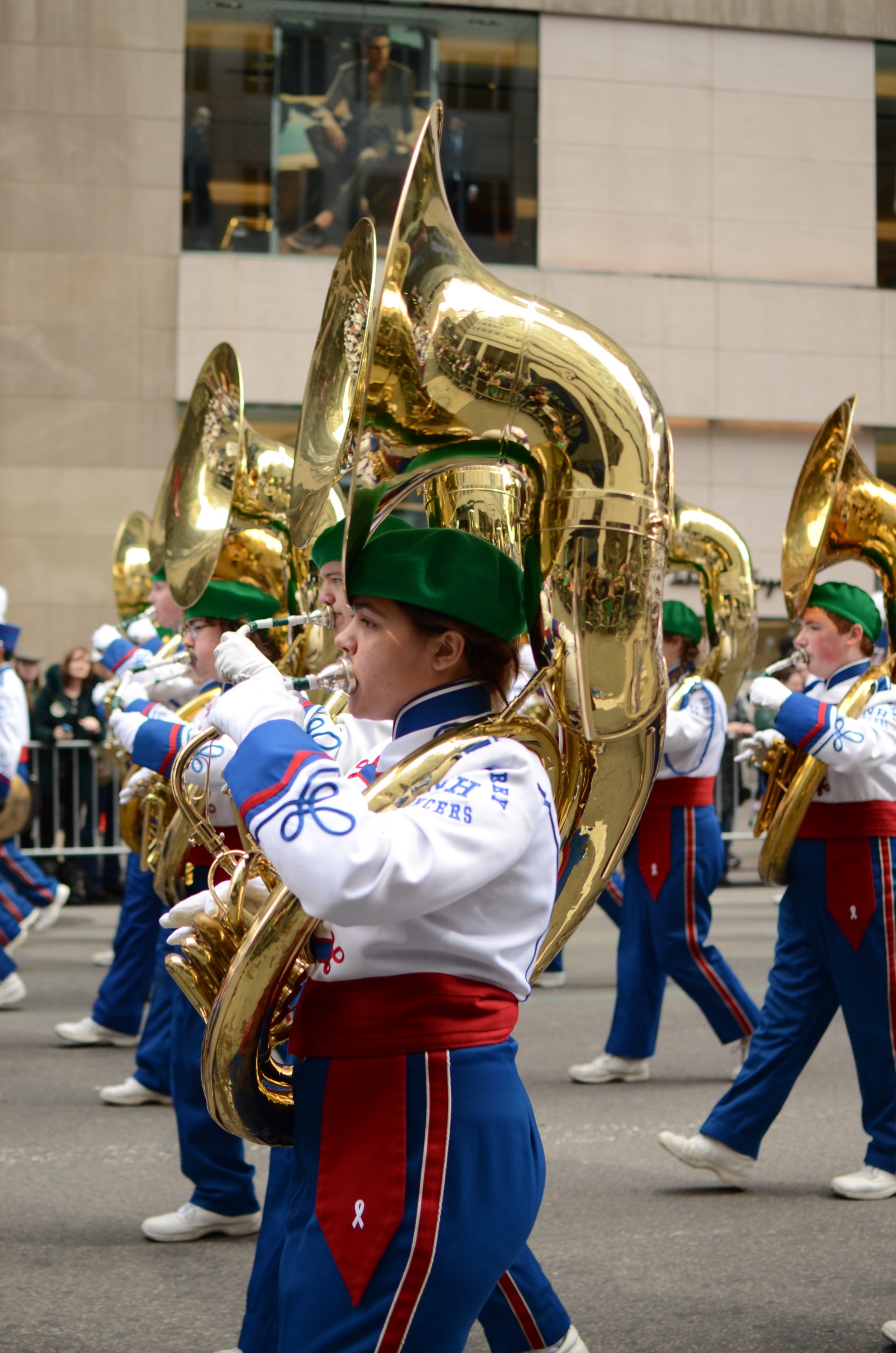
Before green fills Fifth Avenue, there is order: ranks aligning on side streets, flags caught between buildings, pipe bands tuning against the morning traffic, and marchers checking the distance between rows. New York’s St. Patrick’s Day Parade is often described through scale, but its identity comes from discipline. It is a march rather than a float parade, carried by Irish organizations, county societies, schools, bands, police and fire groups, and generations of families moving north past St. Patrick’s Cathedral. The avenue supplies grandeur; the side streets supply intimacy, where uniforms are adjusted and old acquaintances meet before stepping onto the route. Watch both. The public spectacle makes sense only after seeing the human preparation that holds it together.

Why This Festival Is Special

Fifth Avenue is usually a corridor of commerce, museums, taxis, and private ambition. On March 17, measured ranks of marchers give it a different authority. Pipes echo from stone façades, a banner names a county across the Atlantic, and a family at the curb recognizes one face among thousands. The scale is immense, yet the parade endures through small acts of continuity: carrying an organization’s colors, keeping formation, returning with the same band, or watching from a block inherited from relatives. New York supplies the monumental frame; memory supplies the movement inside it.

Festival Experience

What to Expect

There are no giant character balloons and few of the float-driven distractions associated with televised American parades. Expect marching bands, pipes and drums, banners, county associations, civic groups, uniformed services, schools, and long sequences whose distinctions become clearer with attention. The parade can continue for hours, and not every block offers commentary or seating. Spectators stand behind barricades, restaurants fill early, and mobile service may slow in the heaviest crowd. The mood mixes family ritual, civic ceremony, Irish pride, tourism, and an enormous city drinking holiday occurring around—but not defining—the formal march. Morning rewards listening; by afternoon, the accumulated cadence of drums becomes the day’s architecture.

Festival Highlights

  • Watch a pipe band enter Fifth Avenue from a side street and transform rehearsal into procession.
  • Stand near St. Patrick’s Cathedral for the ceremonial exchange between marchers, clergy, and spectators.
  • Read the county and organization banners instead of treating the parade as one undifferentiated green crowd.
  • Move uptown only after a full viewing block, where wider sightlines reveal the geometry of marching ranks.
  • Notice families recognizing relatives in uniform, a small exchange repeated across the avenue.
  • End at an Irish cultural venue or neighborhood pub chosen for music and conversation rather than maximum crowd size.

Getting There & Around

Where It Happens

The march proceeds north on Fifth Avenue, traditionally beginning around East 44th Street and continuing to East 79th Street. St. Patrick’s Cathedral near 50th Street forms the ceremonial heart, where marchers pass church leaders and dense banks of spectators. Midtown blocks deliver the iconic canyon of flags and towers; the 60s and 70s often offer more breathing room and a clearer view of full formations. Side streets serve as staging and dispersal zones and may close well beyond Fifth Avenue itself. Barricades, police instructions, and temporary crossing points determine movement. Pick one side of the route and treat it as home for the main viewing period.

Getting Around

The subway is the reliable approach, but stations close to Fifth Avenue may have entrance restrictions and heavy platforms. Use a station one or two avenues away and walk the final blocks. Crosstown buses face extensive diversions. Once the parade begins, crossing Fifth Avenue becomes difficult or impossible except where police permit it. Keep the chosen restroom, meal, and departure station on the same side. Taxis and rideshares are poor tools near the route; walk away from closures before requesting one. After the parade, allow the first surge to clear in a café or museum rather than joining a packed platform immediately.

Visitor Guide

Festival Food & Drink

The parade is not a food festival, and the most satisfying meal usually happens away from the barricades. Reserve lunch or eat before taking a viewing position.

Must Try:
• Irish breakfast — a substantial start before hours outdoors.
• Soda bread with butter — simple, portable, and tied to Irish-American home tables.
• Shepherd’s pie — warming after a cold avenue.
• Smoked salmon on brown bread — a lighter sit-down option.
• A well-poured stout — best with food and without turning the march into a pub crawl.
• Tea and a scone — an effective thaw after standing in March wind.

For deeper neighborhood character, consider Woodlawn in the Bronx or parts of Queens on another day rather than forcing every Irish-New York experience into Midtown.

Budget & Costs

Viewing is free. The expensive elements are New York lodging, meals, and transport, with Midtown rooms carrying a convenience premium. Subway travel keeps local costs controlled. Reserve one meaningful Irish meal rather than paying inflated prices at the first packed bar. Grandstand access, if offered through official channels, should be verified carefully; ordinary curbside viewing remains the core experience.

Tips for First-Time Visitors

Choose the viewing block before leaving the hotel and arrive fed. Wear warm, waterproof shoes and layers that handle both sun and building shade. A small thermos may help if permitted, but alcohol is not a substitute for warmth. Stand back when bands turn onto the avenue and never step through a formation for a photograph. Learn a few group names from the official lineup; recognition turns repetition into lineage. Families should write a contact number inside a child’s coat and establish a fixed meeting point. If nightlife matters, reserve it as a separate decision after the parade instead of surrendering the entire day to the closest crowded bar.

Safety

Crowd density, cold exposure, blocked crossings, alcohol, and separation from companions are the primary concerns. Follow barricades and police directions, keep bags compact, and protect valuables in packed areas. Establish a meeting point that does not depend on phone service. Do not climb street furniture for a view. Anyone drinking should eat, pace the day, and use the subway or a sober ride after walking clear of closures.

Cultural Significance

New York’s parade traces its origins to 1762, when Irishmen serving in the British military marched in colonial New York. Over centuries it became a public assertion of Irish presence, Catholic identity, immigrant organization, political influence, labor, military service, and civic belonging. Fifth Avenue’s prestige magnified that statement. The parade has also reflected disputes within Irish America and New York, including long conflict over LGBTQ participation before policy changes allowed groups to march under their own banners. Its history is therefore neither a simple heritage pageant nor merely a party. It is a changing record of who could claim visibility, under what name, and within which institutions.

Plan Your Journey

When to Go

The parade is scheduled for Wednesday, March 17, 2027, beginning at 11 a.m. Check the official parade organization and New York City traffic notices before travel. Reach the avenue by 9:30 a.m. for a useful viewing position; earlier is wiser near St. Patrick’s Cathedral and the reviewing stand. The opening hours feel most ceremonial, while later afternoon brings fatigue, looser crowds uptown, and the long continuity of marching groups. March weather ranges from bright cold to rain or wet snow. Dress for several stationary hours in shade between tall buildings.

Where to Stay

Midtown offers the shortest approach but the highest rates and the noisiest St. Patrick’s evening. Hotels east or west of Fifth Avenue require careful route-crossing plans once barriers close. The Upper East Side places lodging near the later parade route and can produce a calmer viewing day, especially north of the densest Midtown blocks. Long Island City, Downtown Brooklyn, and other subway-connected neighborhoods may lower costs while keeping the morning manageable. Choose a hotel on the same side of Fifth Avenue as the planned station and post-parade meal. A few blocks saved on paper mean little if the avenue cannot be crossed.

Bottom Line & Key Days

Bottom Line

Arrive early, choose one side of Fifth Avenue, and watch long enough for the parade’s structure to emerge beyond the color green. The best day pairs the formal march with one quieter encounter—an Irish meal, traditional music, or neighborhood history. What first appears to be mass spectacle becomes a disciplined record of belonging moving north through Manhattan.

Key Days

Arrival Evening — Walk the chosen avenue side, confirm station access, and reserve an early meal.
Parade Morning — Eat well, layer for cold, and claim a position before 10 a.m.
Opening March — Listen for the bands and watch how staging streets feed Fifth Avenue.
Uptown Afternoon — Follow the later procession from a less compressed block if energy allows.
Irish New York Day — Visit Woodlawn, an Irish arts center, or a neighborhood music session beyond Midtown.

Ready to Experience NYC St. Patrick’s Day Parade?

You've explored what makes this festival special. Now it's time to plan your trip. Compare flights, book your hotel, arrange transportation, and take care of your travel essentials—all in one place.

✈ Find Flights

Loading booking widget...

Booking is completed on Expedia in a new tab.

🏨 Find Hotels

Search places to stay

Powered by Booking.com

Booking is completed on Booking.com in a new tab.

Rail & Bus Travel

Compare train and coach routes for the journey.

Compare Routes

Things to Do

Discover tours and attractions before or after the festival.

Explore Experiences

eSIM Mobile Data

Stay connected abroad without traditional roaming charges.

Get an Airalo eSIM

Travel bookings are provided by our trusted partners. We may earn a commission when you book through these links, at no additional cost to you.

Independent Editorial Standards

Every Follow the Festivals guide is independently researched and regularly reviewed using official festival information, destination resources, and trusted travel references. We also welcome verified updates from festival organizers, destination marketing organizations, tourism partners, and local experts to help keep our guides accurate, current, and useful for travelers.

Represent this festival or have a verified update to share? We'd love to hear from you through our contact page.