
Follow the Festivals

Seoul Winter Festa

Seoul Winter Festa

Seoul, South Korea

2026-12-04 - 2027-01-31

The Story

Festival Overview

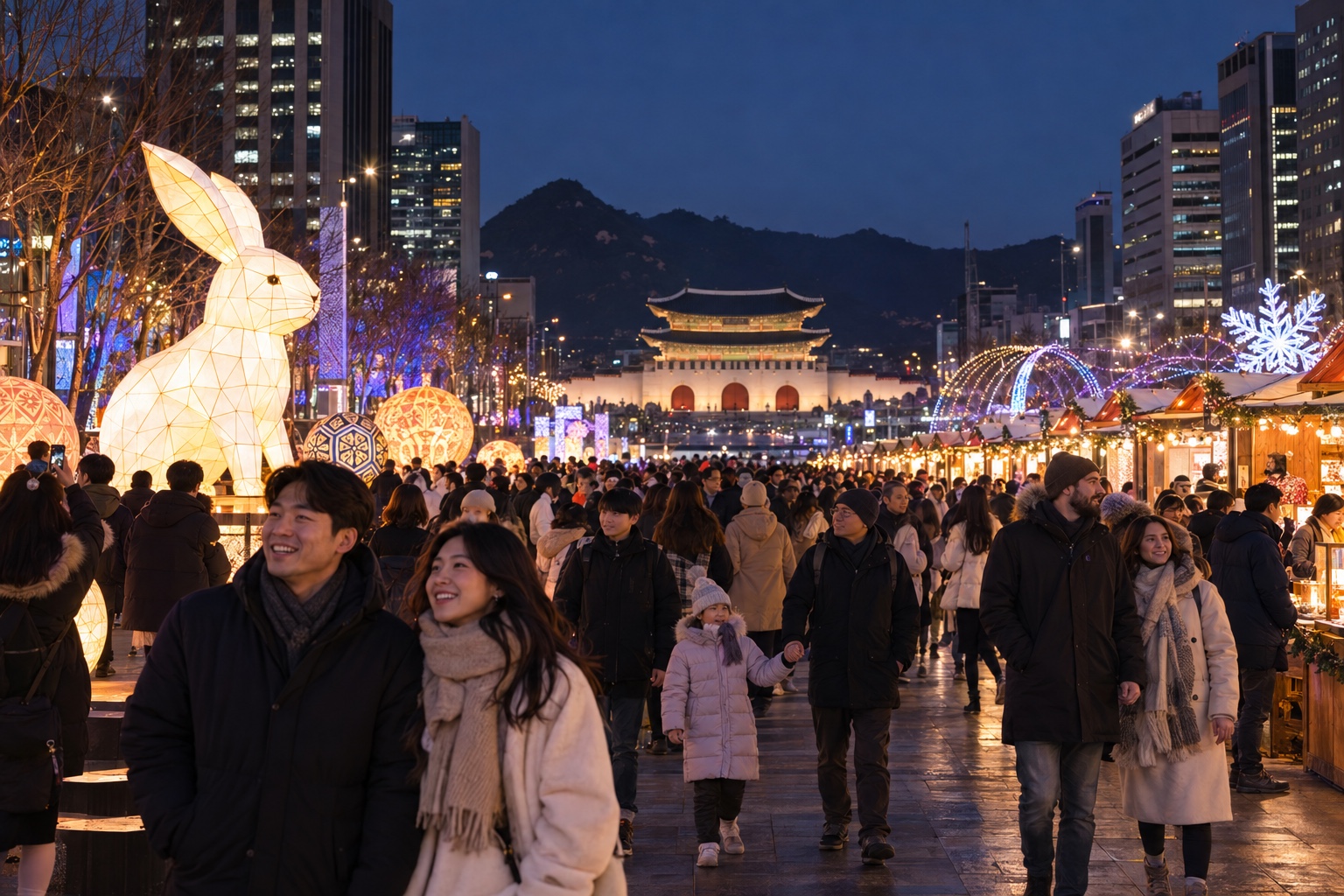
Cold gathers over central Seoul, light moves across a palace-facing square, and people follow the illuminated Cheonggyecheon corridor toward another winter scene. Seoul Winter Festa is not one enclosed festival. It is a linked season of markets, projections, lanterns, skating, performances and public celebrations distributed through the city’s most symbolic spaces.

The experience works through movement. Gwanghwamun presents Seoul at civic scale; Cheonggyecheon lowers the visitor into a more intimate streamside route; Seoul Plaza offers communal activity; DDP turns architecture into a media surface; Bosingak carries the public into the New Year. Each site reveals a different urban identity.

The traveler should resist treating every light as an isolated photo stop. Build an evening with a beginning, a walking passage and a destination. When the route has shape, winter stops feeling like empty weather around attractions and becomes the condition that makes Seoul’s public spaces speak to one another.

Why This Festival Is Special

Seoul Winter Festa makes urban continuity visible. A visitor can move from palace-facing civic space to a restored stream, from a traditional bell to one of the city’s most futuristic buildings, all within a single festival idea. The contrasts do not feel accidental because Seoul lives through them every day.

Light is only the surface language. The deeper subject is how residents share public space during the hardest season: skating after work, carrying food through a market, waiting together for a projection or listening for a bell in the cold.

The festival becomes special when the route reveals that connection. Technology does not replace tradition, and heritage does not freeze the city in the past. Each site lends meaning to the next, producing a winter portrait that could only belong to Seoul. That continuity gives even a short visit depth: the traveler is not merely looking at seasonal decoration, but reading the capital through the spaces it chooses to illuminate.

Festival Experience

What to Expect

Expect several festivals operating under one winter umbrella. Markets, media art, lantern displays, skating and New Year events attract different audiences and may require separate reservations or waiting systems. The branding is unified; the practical experience remains venue-specific. Evenings begin gently and become denser after work hours. Families gather early, photographers wait for full darkness and social groups arrive later for food and atmosphere. Popular installations may create slow-moving queues where the visual reward lasts only a few minutes. Decide whether the image matters enough to justify the cold wait.

The city remains fully active around the program. Commuters use the same stations, traffic continues above the stream and restaurants fill with people seeking warmth. This overlap is part of the appeal. Seoul Winter Festa is not a temporary village separated from daily life; it is the city adjusting its ordinary public spaces to make winter visible.

Festival Highlights

  • Gwanghwamun Light and Market – Civic architecture, seasonal stalls and projected imagery create the festival’s broadest public stage. Arrive before full darkness to watch the square change character.
  • Seoul Lantern Festival – Illuminated forms along Cheonggyecheon reward slow walking and close detail. Enter away from the densest access point when possible.
  • Seoul Light DDP – Media art uses the building’s curved façade as an active surface. Stand far enough back to read the complete composition before moving closer.
  • Seoul Plaza Skating – The rink turns a formal city square into an everyday winter gathering. Reserve or queue according to current rules, then watch how families inhabit the space.
  • Gwanghwamun to Cheonggyecheon Walk – The transition from monumental square to lowered stream reveals Seoul’s layered urban design. Treat the walk itself as a principal event.
  • Bosingak Bell Tradition – The year-end gathering carries historic ritual into a contemporary mass celebration. Crowd controls and station closures require a precise return plan.
  • Winter Food Break – A warm meal between outdoor sites restores judgment and sensation. The pause is part of the route, not time lost from the festival.
  • Quiet Weeknight Return – Revisiting one installation with fewer people can reveal scale, sound and setting hidden by the weekend crowd.

Getting There & Around

Where It Happens

Gwanghwamun Square is the festival’s ceremonial axis, framed by government buildings, mountains and the approach toward Gyeongbokgung. Markets and light programs occupy a place already charged with national history and public gathering. The scale encourages broad views, while the open exposure demands proper winter clothing.

Cheonggyecheon offers a different rhythm. Visitors descend below street level and follow lanterns or illuminated installations along water, bridges and stone paths. The route can become crowded at narrow access points, so begin at a less obvious entrance or walk only one thoughtfully chosen section.

Seoul Plaza, Bosingak and DDP complete the network through skating, countdown tradition and architectural projection. These sites are not one continuous pedestrian venue. Metro connections link them, and each deserves its own arrival. The festival becomes coherent when the traveler understands why civic square, restored stream, bell pavilion and futuristic design landmark each hold a distinct piece of Seoul’s winter identity.

Getting Around

The subway connects the festival districts efficiently, but major nights can change station access and crowd flow. Save the nearest two stations for each venue, not only the obvious one. If staff close an entrance or direct passengers along a detour, the alternate route prevents confusion in the cold.

Walking is central to Gwanghwamun and Cheonggyecheon, while DDP usually requires a separate metro journey. Footwear must handle long pavement, streamside steps and possible ice. Allow extra time when snow or freezing conditions reduce pace.

The year-end countdown needs its own transport plan. Streets may close, trains can bypass crowded stops and mobile service may slow. Agree on a meeting point outside the primary crush and decide how long the group will wait before using the backup route.

Taxis are useful late at night but may struggle near controlled zones. Walk to a known, active pickup street before requesting one. The easiest evening has one outward metro journey, a connected walking route and one simple return.

Visitor Guide

Festival Food & Drink

Winter food gives the festival physical coherence. Hot broth, grilled snacks and sweet drinks restore warmth between exposed sites, but the busiest market stall is not always worth a long queue. Eat a complete meal before the main outdoor route, then use snacks to extend the evening.

Central Seoul offers restaurants within a short walk of every major venue. Plan one indoor stop near the midpoint and confirm its last order time. Removing gloves repeatedly to manage food, phone and payment becomes tiring in deep cold.

**Must Try**
• Tteokbokki – Rice cakes in a spicy red sauce, especially satisfying in cold air.
• Eomuk – Fish cake served with hot broth, a practical warming snack beside a market.
• Hotteok – Griddled pancake filled with sugar, nuts and cinnamon; allow the center to cool.
• Mandu – Dumplings filled with meat or vegetables, served steamed or in broth.
• Gukbap – Rice with hot soup, substantial enough to reset a long winter evening.
• Sikhye or yuja tea – Sweet rice drink or fragrant citrus tea offering different seasonal comforts indoors.

Budget & Costs

Many public installations and markets can be experienced without admission, making the festival accessible at street level. Costs rise through skating, paid activities, seasonal food, shopping and the transport choices made after a cold late night. Set a daily limit before market atmosphere turns small purchases into an expensive walk. Central lodging may cost more but reduce repeated transfers and taxi dependence. Compare that premium with the value of returning on foot after a winter evening. A distant bargain can become inconvenient when the temperature drops and the last activity ends near midnight.

Reserve funds for warm meals and one emergency ride. These are comfort and safety expenses, not indulgences. Souvenirs should follow the route’s real priorities. The festival’s most meaningful experiences are largely public; spending more does not automatically deepen them. Before buying anything, decide whether the evening’s lasting object should be a meal, a market item or simply the route itself; all three do not need equal spending.

Tips for First-Time Visitors

Dress in layers that can be adjusted indoors. A warm coat, gloves that still allow phone use, insulated footwear and a hat matter more than an elaborate festival outfit. Carry a small battery because cold shortens phone life just when maps and tickets become important.

Choose one visual priority and one atmospheric route each evening. A plan built entirely from headline installations can become a sequence of queues. Smaller lights, a streamside walk and an unhurried meal often produce the stronger memory.

Save Korean venue names and subway exits offline. Check whether skating, workshops or timed attractions require advance booking. At crowded sites, step aside before stopping for a photograph and keep pedestrian lanes open. The festival is experienced collectively; considerate movement is one of the ways a visitor participates. A brief warm-up indoors before the final outdoor stop preserves patience, dexterity and the ability to notice the details that justified staying out after dark.

Safety

Cold exposure, icy pavement and crowd compression are the main practical risks. Warm the body indoors before numbness affects judgment, and watch for frozen sections near water or shaded paving. Follow staff directions at narrow stream entrances and busy square crossings.

Countdown night requires heightened awareness. Establish a meeting point, keep identification and transit fare accessible, and avoid forcing movement against the crowd. If a station is temporarily closed, use the planned alternate route without lingering at the entrance.

Secure phones and wallets during dense movement. Step fully out of pedestrian flow before taking photos, especially near stairs or Cheonggyecheon edges. Check current weather warnings and event notices each afternoon. A beautiful winter city remains a cold, active metropolis, and the safest plan respects both facts. Families should place contact information inside a child’s coat and identify uniformed assistance points on arrival. Cold can make a minor separation more serious than it appears.

Cultural Significance

Seoul Winter Festa links contemporary media culture with spaces carrying older civic meaning. Gwanghwamun faces a royal and governmental landscape, Bosingak preserves a bell tradition tied to the city’s public time, and DDP represents Seoul’s global design ambitions. Bringing them into one season creates a compressed portrait of the capital. The program also responds to winter as an urban challenge. Cold weather can empty public space, so markets, skating and light art offer reasons to remain outdoors and gather. The city uses design and event infrastructure to turn climatic difficulty into social activity.

That transformation is never purely decorative. Public squares in Seoul hold protest, ceremony, commerce and daily passage. Winter Festa adds celebration to those functions without erasing them. Its cultural value lies in showing how quickly the city can shift register while remaining recognizably itself. The festival therefore becomes a seasonal study of civic design: Seoul is testing how history, commerce, mobility and collective pleasure can occupy the same winter night.

Plan Your Journey

When to Go

The festival season generally begins in December and extends into the New Year, with individual programs operating on different calendars. Early weeks suit visitors interested in markets, lanterns and light installations before the largest holiday crowds. The period around the year-end countdown carries the strongest civic energy but also the most demanding transport and crowd controls.

Seoul winter is genuinely cold, with wind making open squares and stream corridors feel harsher after dark. Select one major outdoor route per evening and place an indoor meal or museum before it. Snow can beautify the city, yet ice changes walking conditions and may affect operating plans.

Check each component’s official schedule on the day of the visit. Lighting times, skating sessions, performances and market hours do not necessarily align. A weekday evening often gives installations more breathing room, while weekends bring fuller atmosphere. The ideal plan uses both: quiet looking first, communal celebration later.

Where to Stay

Jongno and the Gwanghwamun area place travelers close to the festival’s historic-center spine, with straightforward access to the square, Cheonggyecheon and Bosingak. This is the strongest base for repeated winter walks and an early return after outdoor nights. Prices can be higher, and major-event controls may alter taxi access. Myeongdong and Euljiro offer dense transport, food and shopping between the historic center and DDP. They suit visitors who want several festival districts without sacrificing indoor options. Dongdaemun is especially useful when Seoul Light DDP carries the itinerary, though the atmosphere differs from palace-facing central Seoul.

Do not choose a room only by neighborhood reputation. Confirm the nearest subway entrance, late-night route and walking exposure in cold weather. A property one block from a useful line may deliver more comfort than a more fashionable address reached through a long, windy transfer.

Bottom Line & Key Days

Bottom Line

The final lights fade behind the traveler, but the route remains legible: square, stream, market, station, warm restaurant, another stretch of cold pavement. Seoul Winter Festa succeeds when those transitions feel as important as the installations themselves.

Do not attempt to collect the entire citywide program. Build one complete evening, then return for a different district or mood. The contrast between a quiet lantern walk and a crowded countdown explains more than a frantic checklist of illuminated objects.

Winter is not merely the season in which the event occurs. It is the force that sharpens sound, makes warmth meaningful and turns shared endurance into atmosphere. Seoul uses light to attract attention, then lets the city’s public life finish the lesson. When the journey is planned as a complete progression, no single installation needs to carry the night. Seoul itself becomes the work that remains after the seasonal structures disappear.

Key Days

• Opening Period – Fresh installations and markets invite exploration before holiday crowds peak. Use the first visit to understand the citywide layout.

• Weeknight Light Route – Lower demand creates space for careful viewing along Gwanghwamun and Cheonggyecheon. Build a slow route with an indoor meal.

• Weekend Market Night – Families and social groups give the festival fuller energy. Expect queues and select only one high-demand attraction.

• DDP Media-Art Evening – Projection and architecture deserve a dedicated journey. View from several distances and allow time for Dongdaemun afterward.

• Skating Session – Seoul Plaza becomes participatory public space. Confirm reservation and age rules before promising the experience.

• Year-End Countdown – Bosingak and connected sites carry maximum civic intensity. Follow official crowd controls and activate the backup return plan.

• New-Year Period – The atmosphere becomes calmer and more reflective. Revisit the route that best revealed Seoul’s relationship with winter.

Ready to Experience Seoul Winter Festa?

You've explored what makes this festival special. Now it's time to plan your trip. Compare flights, book your hotel, arrange transportation, and take care of your travel essentials—all in one place.

✈ Find Flights

Loading booking widget...

Booking is completed on Expedia in a new tab.

🏨 Find Hotels

Search places to stay

Powered by Booking.com

Booking is completed on Booking.com in a new tab.

Rail & Bus Travel

Compare train and coach routes for the journey.

Compare Routes

Things to Do

Discover tours and attractions before or after the festival.

Explore Experiences

eSIM Mobile Data

Stay connected abroad without traditional roaming charges.

Get an Airalo eSIM

Travel bookings are provided by our trusted partners. We may earn a commission when you book through these links, at no additional cost to you.

Independent Editorial Standards

Every Follow the Festivals guide is independently researched and regularly reviewed using official festival information, destination resources, and trusted travel references. We also welcome verified updates from festival organizers, destination marketing organizations, tourism partners, and local experts to help keep our guides accurate, current, and useful for travelers.

Represent this festival or have a verified update to share? We'd love to hear from you through our contact page.