
Follow the Festivals

Hawaiʻi Food & Wine Festival

Hawaiʻi Food & Wine Festival

Multiple islands, United States

2026-10-16 - 2026-11-08

The Story

Festival Overview

A chef places one island-grown ingredient at the center of a dish, and the plate begins carrying a geography larger than the dining room. Hawaiʻi Food & Wine Festival unfolds across several islands and multiple weekends, bringing visiting culinary talent into direct relationship with local farmers, fishers, ranchers, chefs, students and food traditions.

The events range from grand tastings and collaborative dinners to brunches, agricultural experiences and professional discussion. Luxury is visible, but the festival’s most meaningful promise is not abundance. Participating chefs are asked to work with ingredients grown, raised or caught in Hawaiʻi, turning sourcing into the bridge between visitor experience and local food systems.

The traveler must decide which island story to hear. Flying between every weekend can produce a costly sequence of events with little connection to place. A stronger trip selects one island, pairs a signature tasting with an agricultural or educational experience, and allows the landscape behind the food to become part of the meal.

Why This Festival Is Special

The festival’s defining rule is simple but powerful: global culinary talent must engage with something grown, raised or caught in Hawaiʻi. That requirement turns local sourcing from a menu note into the foundation of the event.

Its statewide structure also refuses to treat Hawaiʻi as one undifferentiated destination. Each island brings different producers, landscapes, hospitality systems and community concerns. The traveler experiences the festival most honestly by accepting those distinctions and choosing depth.

What makes the event special is the possibility that pleasure leads toward responsibility. An excellent dish can introduce a farmer, a fishery, a traditional practice or a question about food security. When the plate redirects attention to the land and people that made it possible, the festival has completed its real work. The pleasure remains genuine, but it carries an address. That specificity prevents world-class dining from floating free of the islands whose resources and knowledge sustain it.

Festival Experience

What to Expect

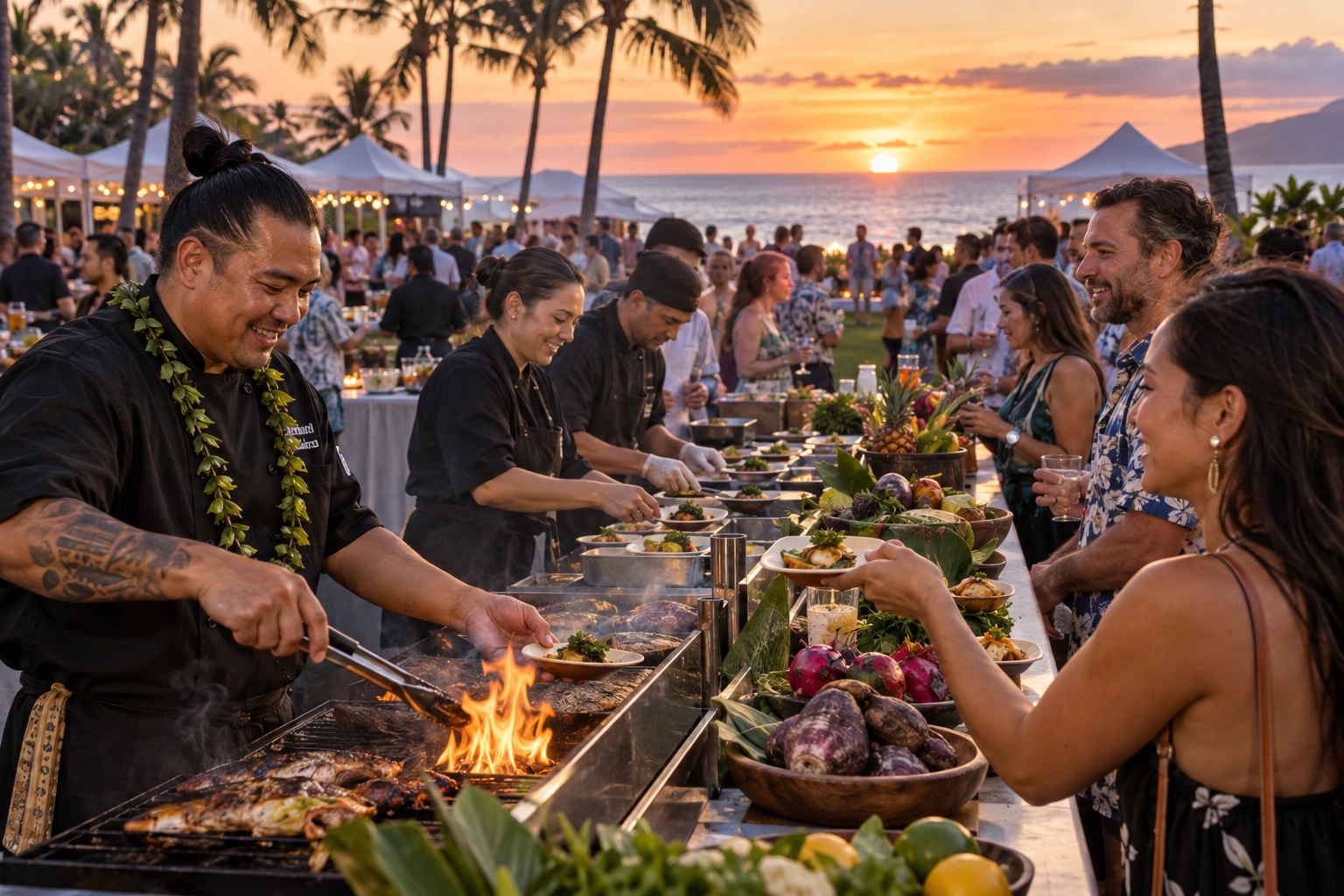
Expect polished hospitality supported by complex preparation. At grand tastings, many chefs serve small plates while wine and spirits producers pour alongside them. The useful strategy is selective: identify local ingredients or chefs of greatest interest, taste slowly and ask concise questions when service pressure allows.

Seated dinners create a more controlled narrative, often pairing visiting and Hawaiʻi-based talent across courses. Agricultural and educational events shift attention toward production, sustainability and the people who make the culinary scene possible. These experiences may carry less glamour but greater destination value.

Alcohol is prominent at many events, yet tasting every pour weakens both memory and safety. Hydrate, eat in a deliberate sequence and use arranged transport. The goal is not maximum consumption. It is understanding how technique, migration, Indigenous knowledge and island agriculture meet on the plate. Service may move quickly during large events, so step away from a station before discussing the dish. This gives the next guest room and preserves the producer’s story in memory.

Festival Highlights

  • Island-Grown Ingredient Requirement – Every chef’s use of local produce, meat or seafood creates the festival’s essential link to place. Ask what the ingredient is and who produced it.
  • Grand Tasting – Many chefs and beverage makers gather in one event, offering breadth and energy. Walk the room once before eating so the strongest priorities receive attention.
  • Collaborative Dinner – Visiting and local chefs build a shared menu across courses. Listen for where interpretation respects the ingredient and where personality changes it.
  • Agricultural Experience – A farm, fishpond or producer visit reveals the labor behind a luxury plate. Treat the host’s knowledge as the main event, not background content.
  • Hawaiʻi Island Weekend – Ranching, seafood and volcanic agriculture give this program a distinctive physical context. Leave room for landscape beyond the venue.
  • Maui Gathering – Kāʻanapali events connect destination dining with an island hospitality community deserving thoughtful support. Follow current local guidance and spend beyond the ticket responsibly.
  • Oʻahu Program – Urban culinary diversity, education and large public events broaden the festival’s social range. Pair a showcase with food-system discussion or a local neighborhood meal.
  • Student and Workforce Presence – Culinary students and emerging professionals reveal how the industry renews itself. Notice who is learning, serving and building the festival’s future.

Getting There & Around

Where It Happens

The festival’s geography is its central editorial fact. Hawaiʻi Island events can connect volcanic landscapes, ranching, fisheries and resort hospitality. Maui programs bring Kāʻanapali’s visitor infrastructure into conversation with an island whose food and hospitality communities carry ongoing economic and cultural pressures. Oʻahu adds urban culinary range, major institutions, farms and the statewide center of professional discussion.

Within each island, venues range from beaches and resort lawns to golf courses, educational campuses, restaurants and working agricultural sites. Dress codes and physical conditions can change completely from one event to the next. Read the location as carefully as the menu.

The distance between islands should prevent casual compression. An event on another island is not an evening transfer; it is a separate travel chapter involving airports, rental cars and recovery time. The festival becomes coherent when the visitor lets one island’s ingredients, people and landscape lead.

Getting Around

There is no practical ground transport connecting festival islands. Interisland flights require airport time, baggage planning and a rental or transfer at the destination. Unless the trip is deliberately designed as a longer island journey, attend one weekend and travel deeply within that island.

On Hawaiʻi Island, distances between resort areas, farms and towns can be substantial. On Maui, event locations may appear close but still require driving through busy visitor corridors. Oʻahu offers more taxis, buses and ride-hailing, though agricultural sites beyond Honolulu need advance planning.

Alcohol changes every transport decision. Use designated drivers, official shuttles or prearranged cars. Do not assume a ride will be readily available after a large resort event, and never plan to drive because the pours seem small.

Build a margin around flights and ticketed meals. A late aircraft, rental-car line or road incident can erase an event that cannot be rescheduled. Island travel should support the festival, not compete with it.

Visitor Guide

Festival Food & Drink

Food is the subject, so this section begins with restraint. A tasting is not improved by eating every dish or accepting every pour. Start with seafood and delicate preparations, move toward richer meat and sweets, drink water throughout and return only to the plate that taught something worth repeating.

Outside ticketed events, eat at local restaurants, bakeries, markets and food counters connected to the chosen island. Ask where ingredients come from and avoid reducing Hawaiʻi cuisine to a short list of vacation foods. Native Hawaiian, Japanese, Chinese, Filipino, Portuguese, Korean, Pacific Islander and other influences have shaped a layered culinary history.

**Must Try**
• Poke – Seasoned raw fish whose quality depends on freshness, cut and balance.
• Laulau – Meat or fish wrapped in leaves and slowly cooked, carrying Indigenous Hawaiian technique.
• Poi – Pounded taro with a flavor and texture best understood alongside other foods.
• Saimin – Noodle soup reflecting plantation-era cultural exchange and local comfort.
• Malasada – Portuguese-style fried dough, ideally eaten warm and without unnecessary embellishment.
• Island fruit and coffee – Taste varieties grown in Hawaiʻi and ask about farm, elevation and season.

Budget & Costs

Premium tastings and dinners can be costly, and the ticket is only the beginning. Add interisland airfare if relevant, resort lodging, rental cars, parking, gratuities and safe transport after alcohol service. A single well-chosen event supported by a longer local stay may deliver more value than an overfilled weekend.

Book accommodation and transport before purchasing nonrefundable tickets when an island has limited inventory. Compare packages carefully; included food and drink do not remove the need for breakfast, recovery meals or the rest of the trip.

Set aside spending for local producers and independent restaurants beyond the festival. That money connects the visitor economy to the community more directly than another premium pour. Keep an emergency travel reserve because island flights and weather can force an extra night or changed route. Shipping food products home, checking baggage or extending a rental car can create additional costs. Price these practical consequences before treating a market purchase as a bargain.

Tips for First-Time Visitors

Select events by learning style. A grand tasting suits curious breadth; a dinner suits focused culinary storytelling; a farm or cultural program suits travelers who want the ingredient’s origin. Combining one of each creates a fuller trip than buying several similar luxury events.

Read dress codes, weather exposure and age restrictions before packing. Comfortable shoes matter on lawns and agricultural sites. Carry sun protection, water and a light rain layer, while leaving oversized bags behind when venue rules request it.

Ask respectful questions and pronounce place names with care. Farmers, fishers and cultural practitioners are not decorative suppliers to visiting chefs. Their work is the reason the festival belongs in Hawaiʻi. Tip service staff where appropriate, pace alcohol and leave enough unprogrammed time to support local businesses beyond the official venues. Carry a small note with the names of producers and ingredients worth revisiting. A festival plate becomes useful travel knowledge only when those connections survive the event.

Safety

Alcohol, sun exposure, food allergies and island driving are the primary practical concerns. Hydrate before the event, eat at a measured pace and stop drinking while judgment remains clear. Arrange the return in advance and do not allow a designated driver plan to become negotiable during the evening. Communicate serious allergies directly with organizers and culinary staff, understanding that cross-contact can occur in large tastings. Carry necessary medication and do not rely on a menu label alone when the risk is significant.

Outdoor venues may involve heat, rain, uneven lawns and shoreline conditions. Follow staff instructions and respect barriers around working farms or cultural sites. When visiting areas affected by environmental or community stress, follow current local guidance. Safe participation includes reducing the burden the trip places on residents and responders. Seafood, nuts, alcohol and unfamiliar preparations can interact with medical conditions in ways enthusiasm obscures. A clear question before tasting is always appropriate.

Cultural Significance

The festival presents food as a defining part of Hawaiʻi’s visitor experience while directing attention toward agriculture, education, sustainability and workforce development. Its nonprofit structure and local sourcing requirement give the events responsibilities beyond culinary entertainment.

Those responsibilities matter in islands where imported food dependence, land pressure, tourism economics and cultural preservation are connected. A locally grown ingredient represents flavor, but it can also represent agricultural continuity, knowledge, employment and resilience. The festival is strongest when it makes those relationships visible without turning them into marketing shorthand.

Hawaiʻi cuisine has emerged through Indigenous foundations and successive migrations, plantation histories and contemporary innovation. Bringing global chefs into that context can create meaningful exchange only when local producers and practitioners remain central. The plate should point back toward the islands, not simply toward the visiting name printed on the menu.

Plan Your Journey

When to Go

The festival generally spans several fall weekends, with distinct programs on Hawaiʻi Island, Maui and Oʻahu. The schedule is not a continuous statewide fair. Each island has its own cluster of events, so travel decisions should begin with the program and the kind of culinary experience desired. Book after reading menus, venue details and participating-chef lists.

Large tastings offer range and social energy, while seated dinners or agricultural visits provide deeper explanation and fewer competing bites. Popular events can sell out, and interisland flights become more expensive as the date approaches.

Weather varies by island and coast. Outdoor events may involve sun, wind or brief rain, while resort settings can cool after dark. Arrive at least a day before the first ticketed event, especially when flying between islands. Airline disruption should never be allowed to consume an expensive, time-specific meal.

Where to Stay

On Hawaiʻi Island, stay near the event’s resort coast if the program is concentrated there. Distances are large, roads can be dark and a wine-centered evening requires transport planned before the first pour. A scenic property far away may undermine the practical value of the visit.

In Kāʻanapali, resort-area lodging simplifies Maui festival access and reduces the need for late driving. Travelers who want more independent local dining should compare Lahaina-area recovery and current business conditions carefully and follow respectful visitor guidance. On Oʻahu, Waikīkī offers the broadest hotel choice and transport, while events outside the resort core may still require a dedicated ride.

Choose the island first, events second and accommodation third. A room should support the actual venue sequence, not an imagined central point between places separated by ocean. Confirm parking, shuttle service and safe return options directly with each event or property.

Bottom Line & Key Days

Bottom Line

The last plate is cleared, but the important flavor should remain connected to a name and place: a ranch, a fishpond, a farmer, a student, a chef or an island landscape. Without that connection, the festival risks becoming a beautiful sequence of anonymous luxury. Choose one island and let its food system organize the trip. Attend a signature event, seek the origin of an ingredient and eat beyond the official program. This slower structure respects distance and gives local context enough time to challenge the visitor’s assumptions.

Hawaiʻi Food & Wine Festival succeeds when appetite becomes attention. The traveler arrives expecting exceptional cooking and leaves understanding that every memorable plate depends on land, water, labor, culture and choices about what tourism should support. The best final response is continued support: remember the producer, respect the island’s limits and let future food choices carry forward what the festival made visible.

Key Days

• Island Opening Event – The first gathering introduces the chosen island’s producers and culinary identity. Listen for local names before pursuing visiting chefs.

• Grand Tasting Night – Maximum variety requires a selective plan. Walk the venue, hydrate and prioritize dishes centered on unfamiliar local ingredients.

• Agricultural Experience – Farms, fishponds or cultural sites reveal the plate’s origin. Follow host guidance and treat knowledge as the principal offering.

• Collaborative Dinner – A structured menu allows deeper comparison between chefs and ingredients. Arrange transport before wine service begins.

• Education or Food-Systems Program – Industry discussion connects hospitality to agriculture, workforce and sustainability. Attend with questions grounded in earlier tasting.

• Brunch or Closing Meal – A slower final event encourages reflection and conversation. Revisit the ingredient or producer that changed the trip.

• Community Dining Day – Eating outside the official festival supports local businesses and tests what the ticketed experience taught about Hawaiʻi cuisine.

Ready to Experience Hawaiʻi Food & Wine Festival?

You've explored what makes this festival special. Now it's time to plan your trip. Compare flights, book your hotel, arrange transportation, and take care of your travel essentials—all in one place.

✈ Find Flights

Loading booking widget...

Booking is completed on Expedia in a new tab.

🏨 Find Hotels

Search places to stay

Powered by Booking.com

Booking is completed on Booking.com in a new tab.

Rail & Bus Travel

Compare train and coach routes for the journey.

Compare Routes

Things to Do

Discover tours and attractions before or after the festival.

Explore Experiences

eSIM Mobile Data

Stay connected abroad without traditional roaming charges.

Get an Airalo eSIM

Travel bookings are provided by our trusted partners. We may earn a commission when you book through these links, at no additional cost to you.

Independent Editorial Standards

Every Follow the Festivals guide is independently researched and regularly reviewed using official festival information, destination resources, and trusted travel references. We also welcome verified updates from festival organizers, destination marketing organizations, tourism partners, and local experts to help keep our guides accurate, current, and useful for travelers.

Represent this festival or have a verified update to share? We'd love to hear from you through our contact page.