
Follow the Festivals

Festival Internacional Santa Lucía

Festival Internacional Santa Lucía

Monterrey, Mexico

2026-10-22 - 2026-11-01

The Story

Festival Overview

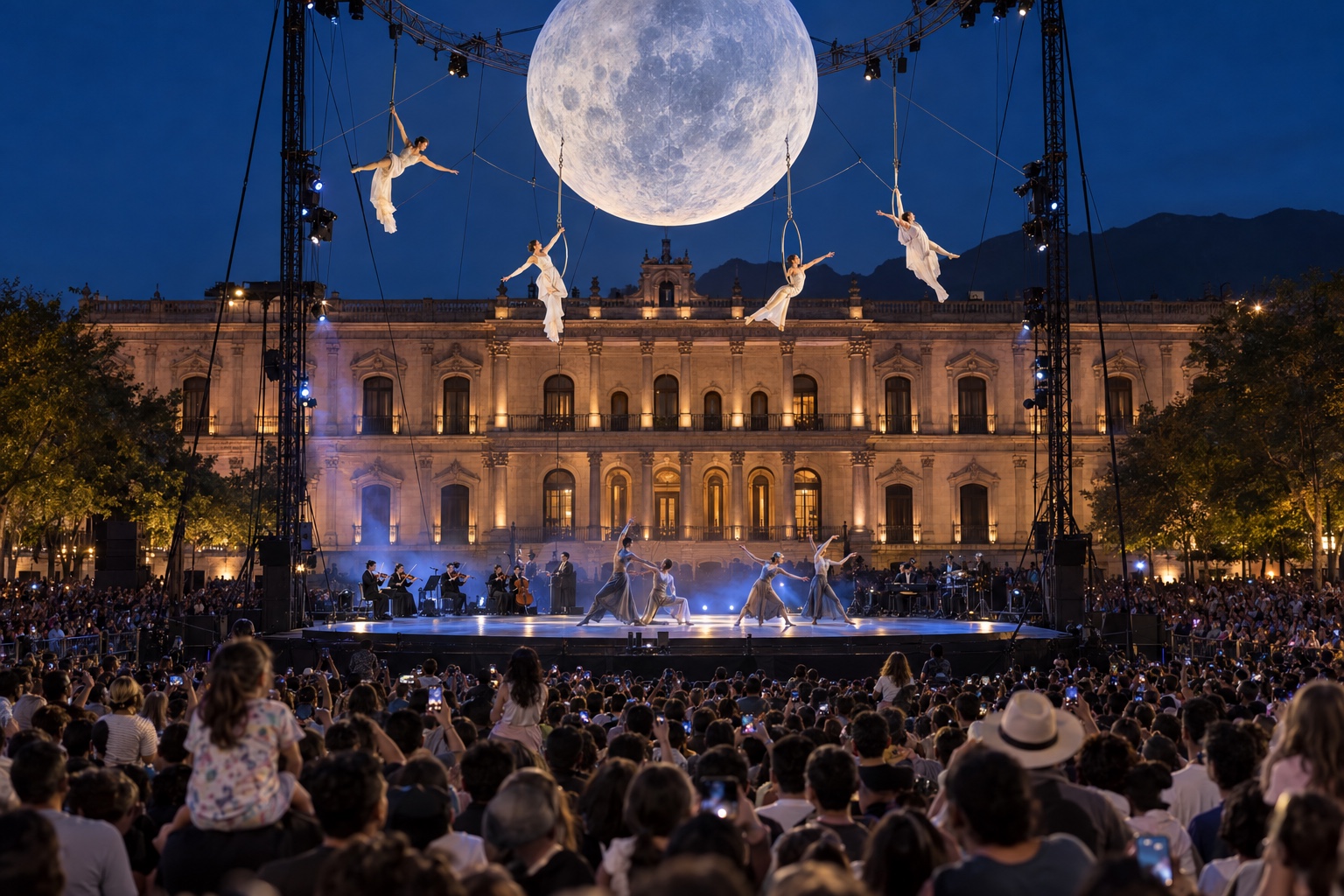
At dusk beside Paseo Santa Lucía, a public walkway becomes a theater foyer. Families slow beside the canal, students gather near temporary seating and a performance begins with Monterrey’s mountains still visible beyond the city.

Festival Internacional Santa Lucía uses moments like this to place art inside ordinary urban movement. Music, dance, theater, visual work and public conversation appear across cultural institutions, plazas and outdoor spaces. The festival is distributed, often free and intentionally broad. That generosity can mislead visitors into treating the program as an unlimited menu. In practice, distance, capacity and overlapping start times reward editing.

The best itinerary joins one major outdoor production with a smaller indoor work, an exhibition or a dialogue that reveals another side of Nuevo León’s cultural life.

Monterrey’s industrial scale gives the event its tension. Art enters monumental civic spaces and a city associated with commerce, heat and hard geography. The festival becomes most compelling when the setting remains visible: dancers framed by mountains, an orchestra heard across a plaza or families encountering an installation during an evening walk.

Why This Festival Is Special

The festival’s distinguishing image is not a stage isolated from its setting. It is performance entering a city already in motion. A family walking beside the canal pauses for music; an industrial structure becomes scenery; a government plaza holds dance. Monterrey does not disappear behind the program, and that visibility gives the art consequence.

The range of disciplines also changes how visitors understand access. A free outdoor spectacle may lead someone into a museum, while a dialogue can make the next theatrical work feel less remote. The program builds cultural confidence through adjacency. People do not need to identify as arts specialists before participating.

For travelers, this creates a rare guide to the metropolitan character. Mountain scale, industrial heritage, civic ambition and family public life appear in the same route. The festival is special because it trusts that serious art can survive openness and that ordinary movement can become cultural attention. Its strongest nights feel less like attending an event than discovering that the city has been performing around you.

Festival Experience

What to Expect

Expect a public festival with sharp changes in scale. One hour may involve a quiet exhibition or discussion; the next may place thousands before an outdoor stage. Free access lowers the barrier to entry, but it does not remove capacity. Popular performances can require early arrival, registration or patient standing, and families often claim practical viewing positions well before the formal start.

Programs combine local, national and international artists across disciplines. The variety is the point, not a promise that every work will suit every visitor. Let one unfamiliar form into the itinerary. A contemporary dance work, public-art installation or community ensemble may explain the festival’s civic purpose more clearly than the most recognizable headline.

Monterrey remains physically present throughout the experience. Heat stored in plazas, long walks, traffic and the dramatic mountain edge affect mood and stamina. Carry water, use shade and schedule a seated meal. If one event disappoints, do not chase the schedule in frustration. Stay within the same cluster and allow the next encounter to emerge from the surrounding public space.

Festival Highlights

  • Explanada de los Héroes Spectacle – Large dance, music or theatrical productions gain civic scale in Monterrey’s central plaza. Arrive early enough to understand sightlines, stand away from circulation routes and watch how the audience transforms the formal government setting.
  • Paseo Santa Lucía Walk – The canal links museums, public art and festival activity through an evening pedestrian journey. Begin before sunset, allow unscheduled stops and wear shoes suited to a longer distance than the compact map suggests.
  • Parque Fundidora Performance – Industrial structures and mountain light give outdoor work a distinctive frame. Verify the correct entrance and internal venue because the park is extensive, then remain after the performance for a calmer exit.
  • International Dance or Theater – Visiting companies bring the festival’s global ambition into focus. Read the synopsis, arrive before doors close and give the work time to establish its own language without demanding immediate familiarity.
  • Local Artist Program – Monterrey and Nuevo León creators reveal the culture beneath the headline schedule. Pair a local performance with an international one and notice how both respond to the same urban audience.
  • Museum Exhibition – MARCO, the history museums and smaller institutions provide depth during hot afternoons. Select one exhibition connected to the program, read beyond the opening wall and avoid using the museum merely as air-conditioned waiting space.
  • Public Dialogue – Talks and forums turn cultural access into active civic reflection. Choose a subject with local consequence, arrive with one question and listen for disagreement as carefully as polished conclusions.
  • Closing Gathering – Final performances concentrate the festival’s communal purpose. Enter with fewer logistical ambitions, revisit a familiar public space and allow the audience’s recognition of the ending to complete the trip.

Getting There & Around

Where It Happens

The festival’s signature geography runs from Monterrey’s civic center through Paseo Santa Lucía toward Parque Fundidora. Explanada de los Héroes can hold monumental public productions; the canal walk creates a moving sequence of museums, installations and stages; Fundidora provides industrial architecture, lawns and specialized cultural venues. Together they form an unusually legible cultural spine.

Important events also occupy MARCO, the Museo de Historia Mexicana, Teatro de la Ciudad, the Centro de las Artes and other institutions. Each changes the audience relationship. A plaza invites accidental discovery, a museum asks for concentration and a theater rewards punctuality. The program may extend into municipalities across Nuevo León, reflecting a mission larger than a central-city showcase.

Never group venues simply because they share “Monterrey” in the address. Walking distances along the canal are pleasant but substantial, and crossing the metropolitan area can consume an entire interval. Build each day around one geographic cluster. The festival then feels connected by the city’s landscape, not fragmented by repeated transport recovery.

Getting Around

Monterrey’s metro can connect central districts, Parque Fundidora and other useful areas without exposing the itinerary to every traffic delay. It works best when stations, final service times and the walk at each end are understood beforehand. The festival’s central cultural spine is walkable in sections, but the complete distance requires time, shade awareness and comfortable footwear.

Ride-hailing fills gaps after late performances and for venues outside the rail network. Move a block or two from the largest exit when safe, select a clear landmark and verify the vehicle. Road journeys between San Pedro, Centro and eastern venues can expand abruptly during rush periods, so avoid building a schedule that depends on consecutive cross-city transfers.

Inside Parque Fundidora, the entrance is only the beginning. Confirm the specific stage, museum or theater and allow for internal walking. Along Paseo Santa Lucía, bridges and access points affect the shortest route.

Municipal events outside Monterrey deserve separate transport planning. A program listing is not proof of a convenient late return. Use an organized excursion, private driver or verified regional connection, and keep those days free from essential central-city events.

Visitor Guide

Festival Food & Drink

Festival days work best when Monterrey’s food is treated as part of the route. A heavy midday meal can slow an outdoor itinerary, while skipping dinner creates exhaustion during a long plaza performance. Eat substantially before the evening rush, then use a small snack and water to bridge late events. Barrio Antiguo, Centro and districts near Fundidora offer different levels of speed and comfort.

**Must Try**
• Cabrito – Roasted young goat, best ordered at a specialist restaurant with time for a seated meal.
• Carne asada – Northern grilling culture expressed through beef, tortillas, salsa and shared table rhythm.
• Machacado con huevo – Dried beef cooked with egg, tomato and chile for a practical festival breakfast.
• Glorias – Soft milk-and-pecan sweets from Nuevo León that travel easily between venues.
• Frijoles con veneno – Beans enriched with pork or meat drippings, rich enough to share as a side.
• Tostadas or tacos – A flexible late meal when a formal reservation conflicts with performance times.

Reserve destination restaurants on busy weekends but keep at least one meal close to the day’s venue cluster. Check closing hours because the festival may end after ordinary kitchens do. Carry water continuously and limit alcohol before long outdoor standing periods.

Budget & Costs

Many public events are free, making the festival unusually accessible, but the trip itself still requires budgeting for lodging, meals and movement across a large metropolitan area. Treat free admission as room to improve the itinerary, not permission to ignore costs. A centrally located hotel may cost more yet save repeated rides and protect the ability to attend late performances. Ticketed theater events, special experiences or reserved seating should be separated from the free program. Confirm each event’s access method before assigning money. Build a transport allowance for nights when metro timing or weather makes a ride necessary, and keep a contingency for an unexpected venue change.

Food can range from quick tacos to destination restaurants. Alternate them. One planned regional meal carries more meaning than several rushed expensive dinners between events. Travelers visiting municipal programs should price the entire excursion, including the return. The festival offers strong cultural value when the schedule remains geographically disciplined. Its greatest hidden cost is not admission; it is unnecessary movement created by an overambitious plan.

Tips for First-Time Visitors

Download or screenshot the daily program and group events by geography before ranking them by appeal. A brilliant schedule that crosses the city repeatedly will collapse in traffic. Select one anchor performance, one supporting cultural experience and a meal within the same district. Keep a nearby alternative for capacity problems or weather.

Free events still demand preparation. Check whether registration, a ticket pickup or first-come entry applies. Reach major outdoor productions early with water, a light layer and something comfortable for waiting where permitted. Do not occupy accessible routes or block seated viewers while searching for a photographic angle.

Spend time with a local work. International names attract attention, but the festival’s identity depends on how Nuevo León artists and audiences occupy the program. Learn a few venue names, pronounce Santa Lucía naturally and treat public plazas as shared civic space. If fatigue develops, remove an event and resist rushing through three. One fully experienced performance and an attentive walk along the canal will teach more than a checklist of entrances.

Safety

Outdoor crowds, heat, long walks and late transport are the principal concerns. Carry water, use sun protection and recognize that autumn does not eliminate strong daytime exposure. At night, remain on active routes between central venues and use established transport for isolated or unfamiliar stretches. Keep valuables secured in front during large plaza events.

Locate exits and medical support when entering a major gathering. Families should select a fixed reunion point and place contact information with children. Noise protection is useful for young audiences and anyone standing near amplified stages. Do not climb structures or enter restricted production zones for a better view.

Monterrey traffic requires patience at pickup points. Verify vehicle and driver details and avoid stepping into moving lanes while watching an app. Weather can shift quickly around outdoor productions; follow official cancellation and evacuation instructions without attempting to preserve a viewing position. For events outside the urban core, verify the return before departure. Good planning allows public space to feel open while keeping the practical boundaries clear.

Cultural Significance

The festival was created to bring arts to people and people to arts, a mission visible in its extensive use of free public space. That language matters in Monterrey, where cultural institutions sit inside a metropolitan identity often described through industry, entrepreneurship and physical toughness. The festival makes artistic encounter a public entitlement open well beyond specialist circles.

Its distribution across municipalities extends that argument beyond the capital. International companies and local artists enter communities that may not regularly receive large cultural productions, while exhibitions and dialogues broaden the definition of performance. Access is not perfect—distance and capacity still shape participation—but the program makes inclusion an operational goal.

For visitors, cultural significance appears in the audience. Families remain for contemporary work, passersby become spectators and civic plazas temporarily support reflection as well as ceremony. The festival does not hide Monterrey’s modern identity. It adds another layer, showing a city capable of using its infrastructure, institutions and public confidence to make art part of collective life.

Plan Your Journey

When to Go

The festival usually takes place during the autumn cultural season, when outdoor evenings become more comfortable but daytime sun can remain strong. Confirm the current program before travel because individual events may be concentrated across selected dates and municipalities. A festival window does not mean every venue is active every day, and some high-demand performances require free registration or advance collection.

Opening and closing weekends often carry large civic productions and the strongest crowds. Midweek creates space for galleries, talks, chamber performance and slower movement through Paseo Santa Lucía or Parque Fundidora. Travelers who value spectacle should anchor a weekend night. Those seeking artistic range gain more from several days that include a quieter weekday.

Weather and venue type should shape the daily sequence. Keep exposed plazas for evening, museums for the hottest hours and one flexible indoor option for rain or wind. Arrive in Monterrey a full day before the first essential performance. The city’s distances and traffic deserve a rehearsal, and one unhurried walk between central venues will make the rest of the schedule easier to understand.

Where to Stay

Monterrey Centro offers the clearest festival base. It places the Explanada de los Héroes, major museums, Barrio Antiguo and the beginning of Paseo Santa Lucía within walking distance or a short ride. The area varies block by block, so select a well-reviewed property near an active corridor and inspect the nighttime route, not only the daytime map.

Staying near Parque Fundidora works well for travelers whose program emphasizes large outdoor events, the Centro de las Artes or repeated canal-side movement. It reduces cross-city travel but can feel removed from the restaurant choice and evening texture of central neighborhoods. A base in San Pedro offers polished hotels and dining, yet traffic makes it less efficient for a public-space festival centered in Monterrey.

The decisive factor is the final event each night. Map its exit before booking and consider how public transport hours align with the schedule. A hotel beside a useful metro station may outperform a more luxurious room reached only by congested roads. If attending municipal events outside the core, treat them as dedicated excursions and confirm the return because urban transport patterns may not continue unchanged.

Bottom Line & Key Days

Bottom Line

A final performance ends beside the canal, but the audience does not leave as one body. Some walk toward Centro, others continue into Fundidora and families stop for photographs under the city lights. That dispersal completes the festival’s idea: art has entered public movement and returns people to Monterrey with their attention altered.

The best visit respects that geography. Stay near the cultural spine, build each day around one cluster and pair spectacle with a smaller work that requires concentration. Confirm access even for free events, leave space for weather and resist converting abundance into an impossible schedule. The festival’s generosity becomes meaningful only when the traveler remains present long enough to receive it.

What lasts is the relationship between performance and place. Mountains frame a plaza, industrial steel holds stage light and a canal becomes a route between artistic forms. Festival Internacional Santa Lucía shows Monterrey not as a city softened by culture, but as a city using its own scale and confidence to carry culture openly.

Key Days

• Program-Planning Phase – Registration rules, venues and daily clusters determine whether the trip will work. Reserve essential indoor events and map alternatives before travel.

• Opening Civic Performance – A major public production introduces the festival’s scale and access mission. Arrive early, learn the plaza and allow the audience’s gathering to become part of the experience.

• First Weekday Circuit – Museums, talks and smaller works become easier to combine without weekend pressure. Use this phase to build depth beyond the headline schedule.

• Paseo Santa Lucía Evening – Several nearby experiences can form one coherent route. Begin before sunset, keep the walking pace slow and finish near the final transport connection.

• Parque Fundidora Night – Large grounds and industrial venues require extra navigation time. Confirm the gate, stage and return before committing to another event.

• Municipal Excursion Day – Programming beyond Monterrey expands the festival’s regional purpose. Treat the journey as the day’s main plan and verify the return independently.

• Closing Gathering – Final works carry recognition among repeat audiences and volunteers. Revisit a favorite public space, reduce the checklist and let the city complete the festival’s lesson.

Ready to Experience Festival Internacional Santa Lucía?

You've explored what makes this festival special. Now it's time to plan your trip. Compare flights, book your hotel, arrange transportation, and take care of your travel essentials—all in one place.

✈ Find Flights

Loading booking widget...

Booking is completed on Expedia in a new tab.

🏨 Find Hotels

Search places to stay

Powered by Booking.com

Booking is completed on Booking.com in a new tab.

Rail & Bus Travel

Compare train and coach routes for the journey.

Compare Routes

Things to Do

Discover tours and attractions before or after the festival.

Explore Experiences

eSIM Mobile Data

Stay connected abroad without traditional roaming charges.

Get an Airalo eSIM

Travel bookings are provided by our trusted partners. We may earn a commission when you book through these links, at no additional cost to you.

Independent Editorial Standards

Every Follow the Festivals guide is independently researched and regularly reviewed using official festival information, destination resources, and trusted travel references. We also welcome verified updates from festival organizers, destination marketing organizations, tourism partners, and local experts to help keep our guides accurate, current, and useful for travelers.

Represent this festival or have a verified update to share? We'd love to hear from you through our contact page.