
Follow the Festivals

Ptuj Kurent Carnival

Ptuj Kurent Carnival

Ptuj, Slovenia

2027-02-03 - 2027-02-09

The Story

Festival Overview

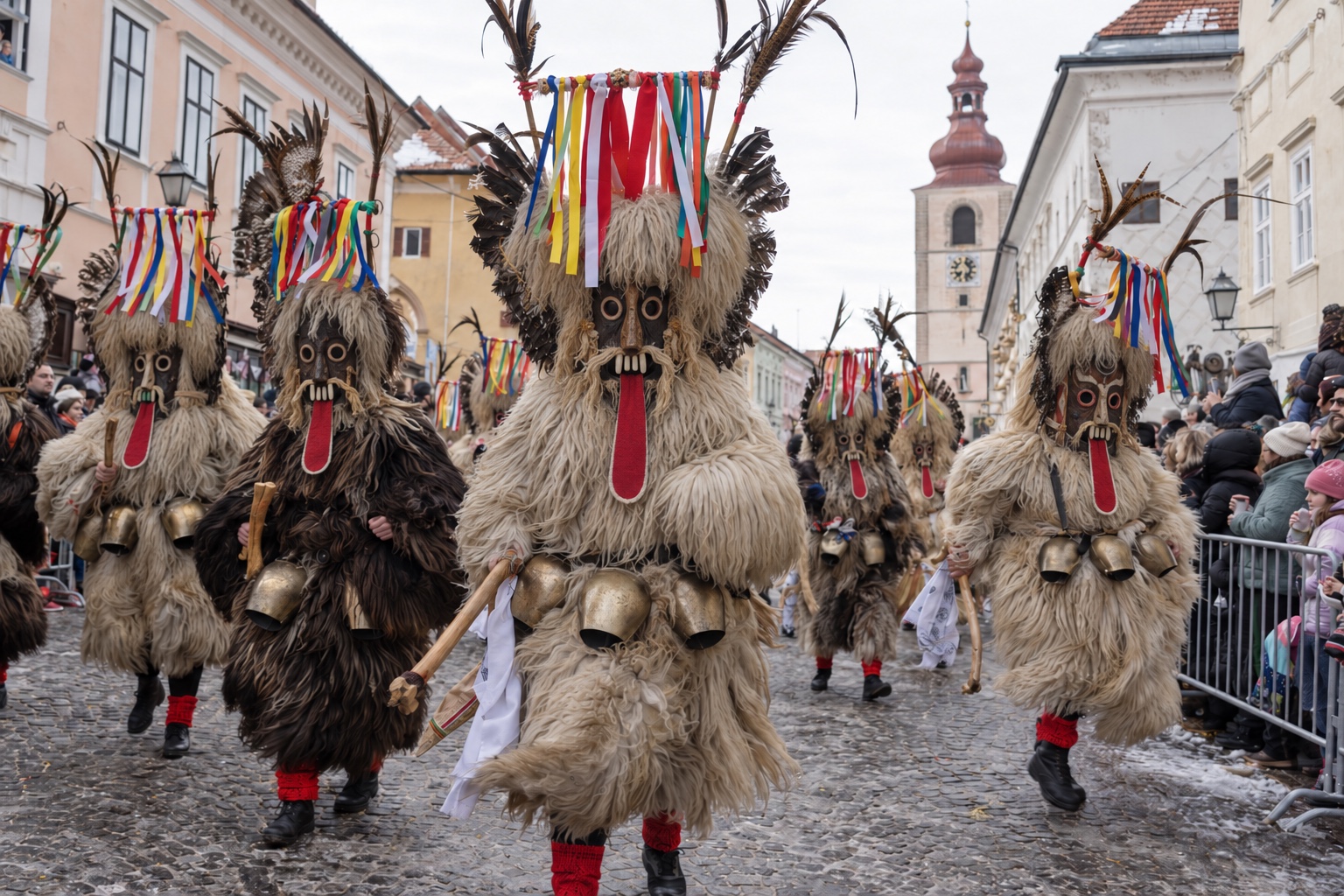
A Kurent enters Ptuj through sound before appearance. Cowbells strike against a shaggy sheepskin costume, feathers and ribbons move above a carved mask, and the old streets suddenly feel governed by winter figures. Kurentovanje gathers this door-to-door tradition into a citywide carnival of ethnographic characters, parades, music, art and public ceremony.

The Kurent is central, but the festival contains a wider vocabulary. Ploughmen, spearmen, fairies, whip crackers and other regional figures carry their own clothing, movement and purpose. Modern masquerade culture joins them without dissolving the older customs. The result feels layered, not like one costume repeated at scale.

Travelers gain most by following the sequence from smaller displays to the international parade and the Shrove Tuesday burial. The governing experience is recognition. What first appears wild becomes legible as groups return, bells acquire rhythm and the city reveals how carefully it has kept winter ritual inside everyday urban life.

Why This Festival Is Special

Kurentovanje is special because its most famous figure cannot be separated from effort. The sheepskin is heavy, the bells demand strength and the carved mask changes how its wearer sees and breathes. When a group moves through winter streets, the spectacle carries the physical cost of keeping tradition alive.

Ptuj provides a setting where sound can reorganize the whole city. Bells ricochet between facades, a procession disappears around a medieval corner and ordinary pedestrians resume the street moments later. That repeated change makes the old town an active participant.

The festival also allows distinctions to survive. Kurents remain central, yet children, artisans, regional characters, visiting groups and contemporary masqueraders each occupy a recognizable place. Variety does not require flattening everything into carnival color.

By the final burial, the visitor understands that winter has been addressed through a complete civic sequence. Authority was handed over, figures appeared, crowds gathered and Carnival was dismissed. The ending gives weight to every earlier encounter. Ptuj’s achievement is not simply displaying heritage; it lets heritage control the city’s time.

Festival Experience

What to Expect

Expect sound to be physical. Large cowbells swing with every step, whips crack across open space and bands compete with crowd noise. Kurents may approach closely, circle spectators or create sudden movement. Their appearance is intimidating by design, but the encounters belong to a shared ritual environment with established local understanding.

Traditional groups do not all perform the same way. Some advance in disciplined formations; others tease, dance, bless or enact agricultural customs. Watch their objects and relationships before reaching for a photograph. The differences reveal why Kurentovanje functions as an open-air ethnographic encounter, not a generic masked parade.

Crowds grow sharply for the principal procession. Arrive early, use toilets before barriers close and keep children away from moving edges. Horses, carts and performers need room. Evening programs can feel more intimate, though low light, cold and alcohol alter the atmosphere.

The festival rewards patience. Remain in one position long enough to hear a group approach, see it occupy the street and watch the ordinary city return after it passes. That full cycle turns a striking costume into a living social practice.

Festival Highlights

  • Kurent’s Jump – The first ceremonial appearance begins the carnival season through bells, fire and midnight energy. Attend only with confirmed local access information and dress for a long cold wait.
  • Handover of Power – Carnival authority symbolically replaces ordinary civic order. Watch the ceremony as a public declaration that the city is entering a different social season.
  • Evening Character Displays – Smaller groups present clothing, sound and movement at close range. These sessions provide the best opportunity to distinguish one tradition from another before parade scale takes over.
  • Children’s Parade – Young participants show how carnival knowledge moves between generations. Give them space, applaud complete groups and resist treating the event as a shortened adult parade.
  • Night Spectacle – Fire, masks and bells transform the old town after dark. Secure a safe viewing position early and protect hearing while keeping all fire lanes open.
  • Carnival Promenade – Contemporary costumes and public masquerade broaden the city’s playful side. Join with imagination while keeping traditional figures and their ritual roles clearly respected.
  • International Ethnographic Parade – Regional and visiting groups fill the route with distinct customs. Choose one excellent sightline and watch the entire procession develop without chasing individual photographs.
  • Burial of Carnival – Shrove Tuesday closes the season with ceremony and local emotion. Stay through the ending to understand why the festival needs conclusion as much as spectacle.

Getting There & Around

Where It Happens

Ptuj’s old town is the primary stage. Slovenski trg, Mestni trg, the streets beneath the castle and the river approaches concentrate ceremonies, character presentations and parade movement. Medieval facades make the masks visually powerful, yet the narrow street pattern also creates crowd pressure. One block can feel open while the next becomes impassable.

The international parade moves through a managed route, while evening displays and smaller encounters appear across squares and connecting streets. Carnival Hall and temporary venues host concerts and masquerade activity. Museums, galleries and craft presentations provide the context that the street alone cannot explain.

Treat the old town as a changing map. Review the official route each morning, decide which side of the procession you want and avoid crossing just before groups arrive. The castle offers a wider understanding of Ptuj, though steep approaches and winter conditions require time.

The city’s compactness is an advantage only when the traveler stops trying to cover every point. Select a square for one complete sequence, then move during a genuine lull. Ptuj teaches its carnival through repetition, proximity and the way sound travels between stone buildings.

Getting Around

Ptuj is compact enough to experience largely on foot. The railway and bus stations sit within walking distance of the old town, though luggage, winter surfaces and the climb toward higher streets can make the first approach slower than a map suggests. Once the program intensifies, walking becomes the only sensible way to move through the center.

Road closures and managed parking expand around major events. Drivers should follow current municipal signs and official festival guidance, then leave the vehicle parked for the day. A distant legal space with a clear walking route is more useful than circling near a closed street. Never rely on a last-minute curbside drop beside a parade route.

Rail from Maribor offers a strong regional option when outbound and return times match the program. Check the final service before attending evening events. Taxis may be limited during peak release.

Inside the old town, move between major sessions, not during them. Narrow streets can trap cross-town plans behind one procession. Save the hotel location offline, agree on a reunion square and let staff direct any crossing. The most effective route is often one thoughtful loop followed slowly.

Visitor Guide

Festival Food & Drink

Winter food in Ptuj is practical hospitality. Warm dishes restore attention after hours outside, and the carnival’s social life often moves through inns, courtyards and stalls between public events. Eat before the main parade, when central tables and service become crowded. Reserve one unhurried regional meal away from the largest program so local food does not become only fuel.

**Must Try**
• Kurent doughnut – A soft fried carnival pastry filled with jam and dusted with sugar.
• Ptuj chicken – A regional poultry tradition served in several hearty preparations.
• Haloze gibanica – A layered cottage-cheese pastry associated with the nearby wine hills.
• Bograč – A warming stew of mixed meats, potatoes and paprika suited to cold festival days.
• Buckwheat dishes – Dumplings or žganci bring earthy grain flavor to traditional plates.
• Šipon wine – The local name for Furmint, offering a direct taste of the surrounding vineyards.

Hot drinks and local wine can make the cold feel manageable, but bells, cobbles and crowds still demand balance. Alternate alcohol with water, eat consistently and keep both hands available when streets become dense.

Budget & Costs

Many street ceremonies can be experienced without a grand admission cost, but a low ticket burden does not make the trip automatically inexpensive. Central lodging fills early, regional transport requires planning and food purchases accumulate during long outdoor days. Build the budget around accommodation and access first, then add paid concerts, Carnival Hall events or special seating only when they serve a clear priority.

Staying in Ptuj can cost more but saves repeated transfers and allows rest between programs. A Maribor base may offer broader inventory, though rail fares, late transport and travel time reduce part of the saving. Compare the complete evening return, not only the room rate.

Set aside money for one quality regional meal, museum entry and authentic craft purchased from a documented maker. Cheap imitation masks do not offer the same connection to the tradition. Carry both card and a modest amount of local currency because temporary stalls vary.

Warm clothing should be treated as trip infrastructure. Buying boots or gloves after arrival is a preventable expense. The best-value visit invests in time, context and comfort, then uses free public events with patience.

Tips for First-Time Visitors

Learn the difference between Kurent and Korant names without turning the visit into a terminology test. Local usage varies by area, and respectful curiosity matters more than performing expertise. A museum or craft presentation early in the stay gives masks, bells and group behavior enough context to become recognizable later.

Wear waterproof boots with reliable grip. Add thermal layers, gloves and hearing protection for children. Keep bags small and hands free. A costume can be welcome in contemporary masquerade settings, but copying protected traditional dress or using a sacred-looking mask as novelty misses the festival’s cultural structure.

Ask before posing with individual participants when the moment allows. During a moving procession, remain behind barriers and avoid stepping into formation. Flash can flatten the atmosphere and distract at close range, so work with available light.

Plan one priority per program block. Arrive early for the international parade, find toilets and food beforehand, and keep a quieter indoor stop available. The first-time mistake is treating every bell as a cue to run. Ptuj becomes intelligible when the traveler stays still enough to notice differences.

Safety

The main risks are dense crowds, loud sound, winter surfaces, fire effects and moving parade elements. Keep behind barriers and never enter the path of horses, carts, Kurent groups or service vehicles. Bells can be extremely loud at close range, so use hearing protection for children and step back when a group compresses around a narrow street.

Wear footwear that grips wet cobbles, snow and mud. Layer clothing so waiting does not produce dangerous cold. Warm indoor breaks, water and regular food protect judgment. Alcohol can disguise fatigue and make street edges harder to read.

Agree on a fixed reunion point outside the busiest square. Mobile service may be slow and visual contact disappears quickly behind masks and spectators. Keep valuables closed and carry only what can remain secure against the body.

Follow police, steward and fire instructions immediately. Never cross a procession for a photograph or touch costume parts without invitation. After evening programs, stay on lit routes and use known transport. Safety at Kurentovanje depends on understanding that apparent chaos is still active ceremonial space with real weight, flame and movement.

Cultural Significance

Kurent rounds are recognized as intangible cultural heritage because they remain connected to communities, seasons and knowledge transmitted through practice. The figure’s sheepskin, mask, bells, feathers and movement carry more than visual drama. They belong to local groups whose preparation, routes and relationships extend beyond the public festival.

Kurentovanje gives these traditions a citywide meeting place while also welcoming other Slovenian and international carnival characters. That balance creates both opportunity and responsibility. Presentation can support transmission when context stays visible; spectacle can weaken it when every masked figure is reduced to the same photograph.

Ptuj’s role matters because the city does not separate heritage from contemporary life. Civic ceremony, children’s participation, art exhibitions, nightlife and old customs occupy the same week. Residents negotiate how a living tradition can receive visitors without losing local authorship.

The traveler sees continuity through scale: an artisan shaping a mask, a child entering a first parade and an experienced group making bells move as one body. Cultural significance lives in that chain. The festival is powerful because winter banishment still gives people a reason to gather, dress, sound and recognize one another.

Plan Your Journey

When to Go

Kurentovanje occupies the final stretch of the carnival season, when cold weather gives the Kurent’s heavy sheepskin and bells their physical meaning. Early evenings offer close views of traditional characters and easier movement through the old town. The main weekend expands into family events, public masquerade and the international ethnographic parade. Shrove Tuesday provides the clearest ritual ending.

Choose the central parade for maximum variety and scale. Arrive several days earlier if craft, costume detail and smaller encounters matter more than a single enormous crowd. A stay through the burial of Carnival lets the festival resolve as a seasonal custom, not merely peak as a spectacle.

Expect cold, damp conditions and occasional snow or slush. Waterproof footwear, warm layers and gloves matter because much of the experience happens while standing outdoors. Confirm the official program near travel, then leave room for unscheduled street encounters. Ptuj is at its most revealing between advertised events, when bells approach around a corner and residents already know which group is coming.

Where to Stay

Staying inside or beside Ptuj’s old town gives the strongest festival rhythm. Morning streets are quiet enough to study the medieval setting, while evening displays and processions remain walkable after road access tightens. The trade-off is noise, limited parking and high demand. Confirm vehicle arrangements before arrival and do not expect a central hotel to provide effortless doorstep access during the largest gatherings.

Properties near the railway station or across the Drava can offer a practical balance. The walk into the center is manageable, and the return avoids searching for transport after bells, music and food have filled the streets. Check the route for hills, cobbles and winter surfaces if mobility is limited.

Maribor provides a broader range of hotels and restaurants, but it changes the trip into a daily transfer. Rail can work well when the timetable matches the program; driving requires attention to closures, parking controls and sober return plans. Choose Ptuj for immersion and Maribor for inventory. In either case, book early, verify late access and prioritize warmth, drying space and a dependable walk over decorative luxury.

Bottom Line & Key Days

Bottom Line

After several days in Ptuj, bells stop sounding like random noise. A traveler begins to recognize distance, group size and approach before a mask appears. That change in hearing is the festival’s deepest gift. Kurentovanje teaches through repeated encounters until the old town’s apparent disorder develops structure.

Build the trip around that learning. Stay close enough to walk, see a museum or craft presentation, attend an evening display and protect a strong position for the international parade. Wear serious winter footwear, give moving groups room and keep enough energy for Shrove Tuesday.

The festival reaches beyond a collection of spectacular costumes. It shows how a community can place inherited figures inside contemporary city life without making them harmless or decorative. Fire, bells, children, civic ceremony and cold weather all complete the lesson.

Leave only after the carnival has been allowed to finish. The burial does not erase the Kurent; it returns the figure to community memory until the season turns again. A visitor who witnesses that conclusion carries away more than an image. They understand why Ptuj waits for winter to make itself heard.

Key Days

• Opening Transition – The city enters carnival time through ceremonial authority and the first concentrated appearances. Use this phase to learn the old town before the largest crowds arrive.

• Traditional Display Evenings – Ethnographic figures appear in readable groups with close public access. Watch costume details and movement patterns, then identify them again during the main procession.

• Children’s Carnival – Young participants take over the street with inherited and imaginative characters. Attend for cultural continuity, maintain family space and let each group complete its presentation.

• Saturday Promenade – Public masquerade, food and entertainment expand the contemporary carnival. Enjoy the playful side while reserving energy and logistics for the following day.

• International Parade – Traditional and visiting groups create the festival’s greatest concentration. Arrive early, select one sightline, secure food and toilets beforehand and remain through the full sequence.

• Post-Parade Fire – The crowd gathers around winter symbolism after the procession. Respect fire controls, keep children close and avoid forcing a rapid departure through the densest release.

• Shrove Tuesday Burial – Carnival authority ends and the season receives its formal closure. Stay for the ceremony, reduce photographic ambition and allow residents to complete the ritual on their own terms.

Ready to Experience Ptuj Kurent Carnival?

You've explored what makes this festival special. Now it's time to plan your trip. Compare flights, book your hotel, arrange transportation, and take care of your travel essentials—all in one place.

✈ Find Flights

Loading booking widget...

Booking is completed on Expedia in a new tab.

🏨 Find Hotels

Search places to stay

Powered by Booking.com

Booking is completed on Booking.com in a new tab.

Rail & Bus Travel

Compare train and coach routes for the journey.

Compare Routes

Things to Do

Discover tours and attractions before or after the festival.

Explore Experiences

eSIM Mobile Data

Stay connected abroad without traditional roaming charges.

Get an Airalo eSIM

Travel bookings are provided by our trusted partners. We may earn a commission when you book through these links, at no additional cost to you.

Independent Editorial Standards

Every Follow the Festivals guide is independently researched and regularly reviewed using official festival information, destination resources, and trusted travel references. We also welcome verified updates from festival organizers, destination marketing organizations, tourism partners, and local experts to help keep our guides accurate, current, and useful for travelers.

Represent this festival or have a verified update to share? We'd love to hear from you through our contact page.