
Follow the Festivals

Puno Candelaria Festival

Puno Candelaria Festival

Puno, Peru

2027-01-30 - 2027-02-09

The Story

Festival Overview

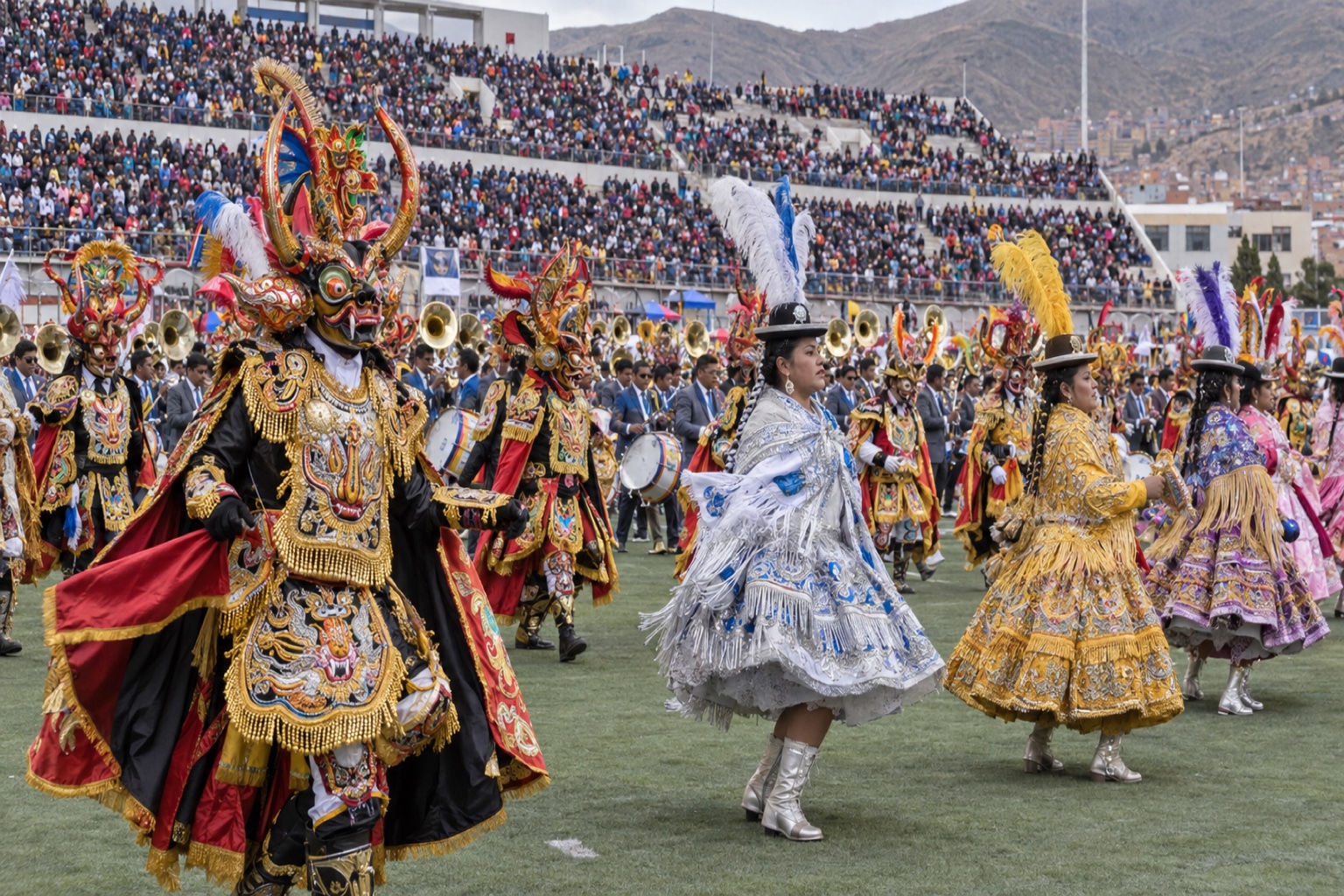
Puno Candelaria Festival is devotion expressed through physical scale. Brass bands, embroidered costumes, masked characters and immense dance ensembles fill a high-altitude city beside Lake Titicaca, yet spectacle is only the visible surface. The celebration joins Catholic observance with Quechua and Aymara understandings of community, land and sacred obligation.

The traveler encounters several festivals inside one. Religious ceremonies focus attention on the Virgin. Traditional dance competitions bring rural and urban communities into formal performance. Later parades and contests of elaborate costumes produce the images most visitors recognize.

My advice is to stop treating the biggest parade as the whole event. Attend one devotional moment, one traditional dance gathering and one large costume spectacle. Their differences explain Puno more clearly than a sequence of photographs ever could.

Altitude changes the pace. Walking, cold nights and long viewing days demand restraint. Puno rewards the visitor who arrives early, acclimatizes and stays long enough to recognize that dancers are carrying family, neighborhood and regional identity as well as costume.

Why This Festival Is Special

Puno Candelaria is special because scale never fully erases personal obligation. Tens of thousands may dance and play, yet participation still belongs to associations, families and communities that have rehearsed, funded and taught the work.

The festival’s visual language is unusually rich. Rural dance, embroidered urban costume, sacred procession, brass music and masked characters share a city without becoming one uniform tradition. The differences matter.

Altitude sharpens the experience. Sound travels through thin cold air, sunlight catches metal and embroidery, and physical effort becomes impossible to ignore. Dancers are not floating images; they are breathing hard, carrying weight and maintaining formation.

What moves me is the point where performance and promise become inseparable. A group may compete, entertain and honor the Virgin in the same passage. The traveler cannot reduce that complexity without losing what makes Puno distinctive.

Many festivals display heritage. This one reveals the continuing work required to keep heritage alive. It asks communities to return, rehearse and contribute again. The result feels less like a preserved object than a vast public act of renewal.

Festival Experience

What to Expect

Expect sound before sight. Brass and percussion travel through streets, and a group may announce itself long before its costumes appear. Major events involve hours of procession, repeated musical phrases and waves of dancers separated by pauses.

Crowds become dense around judging points, church approaches and narrow sections of the route. A reserved seat may protect the view but not the walk to it. Unreserved spectators need patience and a willingness to accept partial sightlines.

Costumes carry extraordinary detail. Masks, embroidery, feathers and metalwork reward close attention, but performers are not props. Ask before photographing someone at rest and keep movement corridors clear.

Devotional moments call for a different behavior from competition. Watch local cues. Remove hats where appropriate, lower the camera and allow worship to remain worship.

The altitude magnifies fatigue, alcohol and dehydration. Eat, drink water and take breaks before discomfort becomes a problem.

What stays with me is the labor behind the abundance. A few minutes of choreography may represent months of rehearsal and family expense. Once that effort becomes visible, the festival stops looking like an endless parade and begins to feel like a city keeping promises.

Festival Highlights

  • Dawn Devotion – Early religious observance places the celebration in its spiritual frame. Arrive quietly, follow local behavior and let the ceremony establish meaning before the streets become theatrical.
  • Traditional Dance Competition – Rural and urban ensembles present forms tied to community history. Read the program, watch complete entries and notice differences in music, clothing and movement.
  • Procession of the Virgin – The sacred image moves through streets accompanied by music and dance. Choose a respectful position away from bottlenecks and lower the camera during prayer.
  • Costume Workshops – Masks and embroidery reveal the skilled work supporting public spectacle. Visit only through an appropriate tour or invitation and pay fairly for authorized craft.
  • Lights-Costume Competition – Elaborate ensembles turn mythology, satire and devotion into large-scale theater. Secure an official seat, bring rain protection and stay long enough to compare several traditions.
  • Grand Parade – Bands and dancers transform the route for hours. Select one viewing zone, carry food and water, and accept that the procession’s duration is part of its force.
  • Sikuri Music – Panpipes and drums connect sound to highland community traditions. Give a full group your attention and hear the music as more than background for costume.
  • Neighborhood Rehearsal – A smaller gathering can reveal teaching, repetition and social ties more clearly than the main route. Observe from the edge and leave space for participants.

Getting There & Around

Where It Happens

The festival occupies Puno itself: churches, plazas, stadium or competition grounds, broad parade routes and neighborhood streets all take different roles. There is no single gate through which the celebration can be understood. A religious procession and a dance contest may be geographically close yet emotionally distinct.

Confirm every venue from the current program. Competition locations, parade routes, judging points and traffic controls can change. Save maps offline and identify a landmark outside the most crowded zone for reunions.

The city’s elevation and sloping streets matter. A short transfer can become demanding after hours of standing. Sidewalks narrow when vendors and spectators gather, while road closures shift taxi access.

Lake Titicaca remains the larger landscape even when it is not visible from the parade. The plateau light, cold air and surrounding communities belong to the festival’s identity. Leave time to experience that setting without forcing a lake excursion into the morning before a major event.

I think Puno makes sense only after the traveler stops searching for one festival center. The city becomes a network of devotion, preparation and performance. Each location teaches a different part of the celebration.

Getting Around

Walking is the core movement strategy in central Puno, but road closures, altitude and crowds make ordinary distances deceptive. Learn one route between the hotel, main square and primary viewing area before peak events begin.

Taxis and app-based services can help at the edges of the festival. They may not reach central blocks during processions. Arrange pickups at clear landmarks beyond barriers and confirm the vehicle before entering.

Competition venues may require a dedicated transfer. Follow current official guidance and leave a wide buffer for security and traffic. A late arrival can mean missing the group that justified the day.

For airport or bus connections, build in weather and road delay. Juliaca commonly serves as a regional gateway, but the transfer to Puno is a separate journey. Do not place a fixed departure immediately after a major parade.

Inside crowds, travel light and keep companions from drifting apart. Mobile service can weaken. Agree on a physical meeting point and a time.

I would organize each day around one movement corridor. Crossing the city repeatedly wastes breath and attention. Puno feels generous when the traveler accepts a smaller radius and lets the festival pass through it.

Visitor Guide

Festival Food & Drink

Puno’s food should support altitude and long festival days. Warm, substantial meals work better than constant snacking, especially when rain and cold arrive after sunset. Eat before entering a dense route because leaving a good viewing position can be difficult.

**Must Try**
• Chairo – A sustaining highland soup with meat, vegetables and dried potato.
• Quinoa soup – A warm, gentle meal built around an Andean staple.
• Trucha – Lake trout commonly grilled or fried and served with simple sides.
• Kankacho – Seasoned roasted meat associated with the southern highlands.
• Pesque de quinua – Creamy quinoa preparation with local comfort and substance.
• Muña tea – An aromatic highland infusion often chosen after meals.

Choose busy restaurants with visible turnover and drink sealed or safely treated water. Alcohol hits harder at elevation and weakens judgment in crowded streets. Save it for a controlled evening after the main commitment.

My favorite rhythm is a full lunch, a light pre-event meal and something warm afterward. Festival food keeps the body moving. A quieter restaurant later provides the space to understand what the day actually contained.

Budget & Costs

Accommodation and transport rise around the main festival days, so reserve early and compare the total cost of location. A cheaper room far from the center can create repeated taxi expense and difficult late returns.

Official seating for major competitions or parade zones may be worth the cost. It can provide a defined entrance, rest and a clearer view. Verify legitimacy and understand that even paid seating may involve long waits and exposure to weather.

Budget for warm layers or rain gear, reliable transfers, substantial meals, water and one recovery day. High-altitude illness or weather disruption can require an extra night.

Craft purchases deserve room in the budget. Buy directly from reputable makers or authorized sellers when possible. Intricate masks and embroidery represent skilled labor; bargaining aggressively can ignore that reality.

Keep emergency funds separate and use official ticket channels. Avoid carrying the full trip budget in crowds.

My priority order would be a quiet central room, safe event access and enough time. The festival does not require luxury. It does punish false economy when poor sleep, distant lodging or an unreliable ticket removes the traveler from the experience they crossed the Andes to understand.

Tips for First-Time Visitors

Acclimatize before the most important day. Walk slowly, eat lightly at first and seek medical advice for severe headache, confusion, breathlessness at rest or worsening symptoms. Travel insurance should cover high-altitude care.

Use the official program to distinguish competitions, processions and devotional events. Names can be translated inconsistently, and a broad online summary may collapse several days into one.

Buy official seating when it materially improves safety or visibility. Verify the section, entry and permitted items. Carry cash in small amounts, a charged phone, rain shell, sun protection and warm layer.

Learn a little about the dance forms before attending. Recognition changes the experience from a stream of costumes into a conversation among communities.

Do not block dancers, bands or religious participants for a photograph. Ask before close portraits and support crafts through legitimate purchases.

The first-time temptation is to stay until the body fails because the procession keeps offering one more group. Decide an exit time while judgment is still clear. Leaving with energy preserves the following day and keeps admiration from turning into endurance.

Safety

Altitude is the first safety issue. Acclimatize, hydrate and avoid heavy exertion or alcohol on arrival. Severe or worsening symptoms require prompt medical evaluation and descent may be necessary. Do not dismiss confusion, breathing difficulty at rest or loss of coordination as ordinary tiredness.

Crowds create pressure around narrow streets, judging points and entrances. Stay near the edge if dense movement causes anxiety. Never push against a procession or band. Identify exits before settling into a viewing position.

Protect phones and wallets from opportunistic theft. Carry only needed cash, use a cross-body bag and avoid displaying valuables during nighttime dispersal. Choose registered transport and confirm the vehicle.

Rain, cold and strong sun can occur in one day. Use waterproof footwear with grip, sunscreen, warm layers and an approved water container. Wet streets become slippery around heavy costumes and instruments.

Respect barriers and instructions. Dancers need room, and pyrotechnics or moving structures may create temporary hazards.

The safest plan is deliberately modest: one major event, a known return route and enough energy to notice changes around you. Puno’s intensity is exhilarating when the traveler has not exhausted the capacity to make good decisions.

Cultural Significance

The Festivity of the Virgen de la Candelaria joins Catholic devotion with Quechua and Aymara relationships to sacred landscape, reciprocity and community obligation. The Virgin is not simply the subject of a parade. Masses, offerings and procession establish the devotional reason that music and dance occupy Puno’s streets.

Traditional dance groups often connect directly to rural communities, agricultural cycles and regional memory. Their clothing, instruments and choreography carry specific local references. The later dances in elaborate embroidered costumes emerge from a more urban association culture and draw on histories of mining, colonial encounter, satire and exchange. Seeing both prevents the visitor from treating every ensemble as a variation of one spectacle.

Competition adds another layer. Groups rehearse for months and enter judged events with real ambition. Technical precision, costume investment and association reputation matter, even when performers also understand dancing as homage. Devotion and competitive pride can exist in the same performance without canceling each other.

Migration helps explain the festival’s scale. People from Puno who live elsewhere return to dance, play music, fund costumes or support family associations. Their return keeps identity connected to the region across distance. For a traveler, conversations about where participants now live can reveal why the festival feels both intensely local and larger than the present-day city.

Transmission happens through rehearsals, band practice and workshops where embroidery and mask-making skills pass between generations. Those preparations carry costs. Families and associations contribute money, time and social labor long before visitors arrive.

Tourism and commerce are part of the contemporary celebration, but they do not define every moment. The useful distinction is situational: a devotional procession calls for restraint, a judged competition invites sustained observation, and a craft purchase can support skilled work. Recognizing which cultural register is active helps the traveler respond with respect and see beyond the festival’s visual abundance.

Plan Your Journey

When to Go

The main festival period unfolds across late January and early February, with central events concentrated around devotional days, dance competitions and major parades. Exact programs change, so the official schedule should decide the final itinerary.

Arrive several days before the event you care about most. Puno sits at very high altitude, and a rushed arrival followed by hours in a crowded stand is a poor introduction. A slower first day also reveals rehearsals, costume preparation and bands moving through neighborhoods.

The traditional dance competition and the later elaborate-costume events offer different experiences. Traditional forms reveal relationships to rural communities and local memory. The large parade and lights-costume competition deliver greater theatrical scale and denser crowds.

Days can be bright, wet or sharply changeable during the rainy season. Nights become cold quickly. Carry rain protection, sun protection and warm layers even when the morning looks settled.

I would build the trip around two anchor events with recovery between them. The festival is too physical to experience well through constant attendance, and Puno deserves at least one quiet lake morning after the brass finally stops.

Where to Stay

Central Puno is the strongest base for first-time visitors because it keeps restaurants, the main square and many procession routes within reach. The same convenience brings noise, blocked streets and crowded entrances. Confirm whether a taxi can reach the property during major events.

Rooms toward the lake may provide more calm and open views, though every festival journey then requires transport or a longer walk. Properties on steep streets can be tiring at altitude. A map that looks compact does not show gradient, paving or crowd barriers.

Choose reliable hot water, heating or heavy bedding, early breakfast and luggage storage before choosing decorative charm. Ask directly about nighttime music. Earplugs help, but a hotel above an all-night gathering will still shape the trip.

For competition days, accommodation near the chosen viewing area saves energy. For processions, a central base supports walking and flexible returns. Reserve early through a reputable channel and keep the address offline.

My preference is a modest central hotel on a quieter side street. The festival should remain audible enough to feel present, but sleep must be protected. At this elevation, recovery is part of the itinerary, not time stolen from it.

Bottom Line & Key Days

Bottom Line

Puno Candelaria Festival deserves time, humility and physical preparation. Arrive early enough to acclimatize, choose a few central events and let the differences among worship, traditional dance and large-scale spectacle become clear.

The practical decisions shape how clearly the festival can be understood. A quiet room protects attention. A reliable seat can make hours of dance legible. Warm clothing and water allow the traveler to remain respectful when weather and altitude begin demanding energy.

Do not measure success by how many groups you photographed. Measure it by whether you learned to see the labor inside the costume, the community inside the choreography and the devotion inside the public celebration.

My final image is not the largest mask or loudest band. It is the moment after a group passes, when relatives move forward, musicians reset their breathing and the next ensemble can already be heard approaching. Puno continues because thousands of people accept that the promise must be made again. The traveler’s privilege is to witness that renewal without getting in its way.

Key Days

• Arrival and Acclimatization – Reach Puno before the first essential event. Walk gently, confirm venues and let the body adjust to altitude.

• Opening Devotion – Early masses and ceremonies establish the festival’s sacred purpose. Attend quietly and follow local cues around photography.

• Traditional Dance Phase – Community ensembles present forms connected to regional memory. Read the program and watch complete performances.

• Principal Feast Day – Procession, prayer, music and civic attention converge. Choose a position that respects worship and avoids narrow crowd pressure.

• Lights-Costume Competition – Elaborate urban dance groups create the most theatrical spectacle. Use official access and prepare for a long exposed day.

• Grand Parade – Music and dance occupy the route for hours. Commit to one zone, protect water and warmth, and plan the exit before darkness.

• Farewell Observances – Closing ceremonies return attention to the Virgin and the obligations behind the celebration. They offer a quieter, more reflective conclusion.

Ready to Experience Puno Candelaria Festival?

You've explored what makes this festival special. Now it's time to plan your trip. Compare flights, book your hotel, arrange transportation, and take care of your travel essentials—all in one place.

✈ Find Flights

Loading booking widget...

Booking is completed on Expedia in a new tab.

🏨 Find Hotels

Search places to stay

Powered by Booking.com

Booking is completed on Booking.com in a new tab.

Rail & Bus Travel

Compare train and coach routes for the journey.

Compare Routes

Things to Do

Discover tours and attractions before or after the festival.

Explore Experiences

eSIM Mobile Data

Stay connected abroad without traditional roaming charges.

Get an Airalo eSIM

Travel bookings are provided by our trusted partners. We may earn a commission when you book through these links, at no additional cost to you.

Independent Editorial Standards

Every Follow the Festivals guide is independently researched and regularly reviewed using official festival information, destination resources, and trusted travel references. We also welcome verified updates from festival organizers, destination marketing organizations, tourism partners, and local experts to help keep our guides accurate, current, and useful for travelers.

Represent this festival or have a verified update to share? We'd love to hear from you through our contact page.