
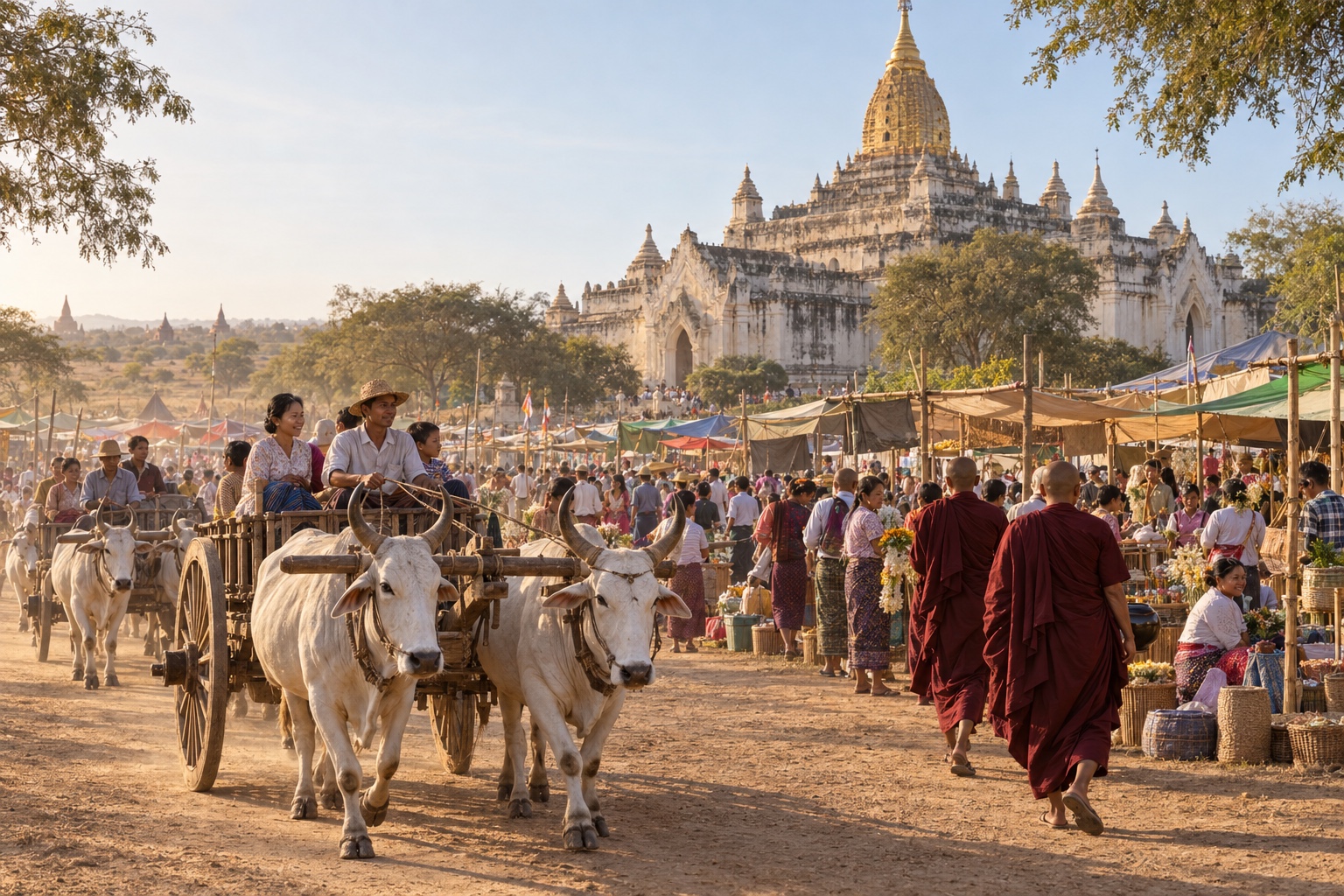
Festival Overview
Before the market becomes loud, pilgrims move toward Ananda Temple with offerings while monks receive alms and ox carts stand beyond the sacred approach. The festival joins forms that outsiders often separate: Buddhist worship, rural travel, household shopping, temporary camps, food, and entertainment. Ananda’s white-and-gilded architecture remains the fixed center around which this post-harvest gathering forms.
Bagan contains thousands of Buddhist monuments across a dry plain shaped by the Pagan kingdom. Ananda Temple, built under King Kyanzittha in the early twelfth century, is among the landscape’s most revered and architecturally distinguished sites. The annual festival brings living religious practice into a place often consumed primarily as archaeology.
Visitors must place worship before sightseeing. Remove shoes where required, dress modestly, keep offering routes open, never enter pilgrim camps without invitation, and avoid using monks or ox-cart families as portrait props. Conditions in Myanmar require current, authoritative security judgment outside the evergreen article.