
Follow the Festivals

Antigua Charter Yacht Show

Antigua Charter Yacht Show

English Harbour, Antigua and Barbuda

2026-12-21 - 2026-12-21

The Story

Festival Overview

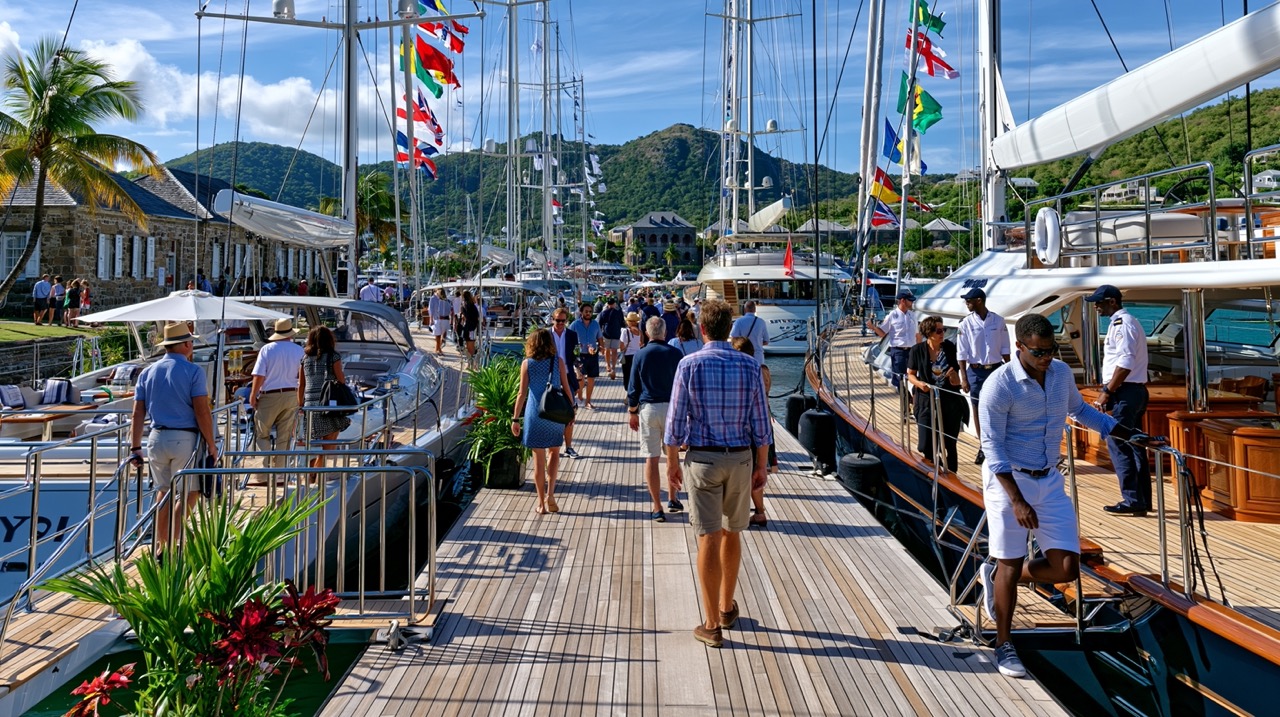
Polished passerelles lead from eighteenth-century stone quays to floating homes staffed for weeks of private travel. Captains brief crews, brokers inspect cabins and deck plans, chefs prepare judged dishes, and tenders cross water once controlled as a British naval base. The contrast is the Antigua Charter Yacht Show’s visual signature: a modern luxury-charter marketplace operating inside a harbor whose geography shaped imperial maritime power.

English Harbour and neighboring Falmouth Harbour remain active marine communities, not a scenic stage assembled for visitors. Nelson’s Dockyard forms part of a UNESCO World Heritage Site, while sail lofts, chandlers, yards, marinas, guesthouses, and restaurants support the Caribbean season. The show makes sense here because sheltered water, trade winds, technical services, heritage, and international crews already meet in everyday harbor life.

This is primarily a professional event. Access depends on accreditation and scheduled appointments; a traveler without industry credentials should experience the harbor, museum, trails, restaurants, and public waterfront without expecting yacht entry. Qualified visitors should arrive prepared with vessel criteria and respect the crew’s work areas. Watching the Concours de Chef reveal culinary standards expected at sea becomes the most useful way to slow the scene down. From there, moving among three marinas inside one of the caribbean’s defining natural harbors gives the visit another layer, while reading nelson’s dockyard as both colonial infrastructure and a living maritime workplace reconnects the program to English Harbour, Antigua and Barbuda. The contrast between an early scheduled yacht viewing before docks, brokers, chefs, and hosted appointments reach full intensity and the broker viewing periods and Concours de Chef, when vessel design, crew service, culinary skill, and charter strategy are assessed together shows how much the setting changes with time and participation. Travelers who leave room for both encounter a destination with its own working rhythms, not a temporary event that could have been installed anywhere.

Why This Festival Is Special

Industry travelers choose Antigua over a conventional boat show because the vessels are evaluated as crewed charter experiences, not static products. Layout, hospitality, culinary performance, maintenance, toys, and itinerary suitability can be assessed in the same appointments.

The three-marina setting adds a distinction few exhibition halls can match. Nelson’s Dockyard, Falmouth Harbour, and the superyacht marina place the fleet inside a functioning Caribbean season base, giving brokers direct evidence of harbor operations and destination character.

A conventional boat show emphasizes manufacturers and equipment; Antigua evaluates how a yacht actually functions as a staffed holiday. Brokers can inspect guest circulation, crew professionalism, food, water access, entertainment systems, and the fit between vessel and Caribbean itinerary. Because the fleet is distributed through working marinas rather than a trade-hall floor, the assessment includes tender movement, dock service, harbor character, and the practical competence of a destination already operating at the center of the charter season.

Festival Experience

What to Expect

Begin at the hospitality desk and group viewings by marina rather than vessel prestige. On each yacht, assess circulation, cabin fit, shade, water access, crew presentation, and the way service feels in practice. Leave immediately when an appointment ends so the next broker can board on time.

The chef competition and hosted events reveal how food, service, and relationships convert hardware into a charter product. Step outside the commercial circuit for a dockyard walk or harbor-view meal, acknowledging the place that supports the fleet. Wet docks and evening transfers require sober footing and authorized transport.

Antigua Charter Yacht Show changes character as its defining program approaches. Preparation reveals skill, peak activity reveals collective confidence, and dispersal reveals the labor required to restore ordinary space. Eat before fatigue becomes urgency, refill water, and take one genuine pause away from amplified sound or dense visual material. The event becomes more memorable when attention can linger on a person, object, performance, or exchange instead of being consumed by navigation.

Expect comparing charter yachts through layout, crew service, itinerary fit, and onboard atmosphere to demand more concentration than a quick photograph suggests. Understanding that the show serves brokers and industry professionals rather than casual boat sightseeing adds a second point of focus, and the interval between them is where the destination becomes legible: people reset equipment, friends compare what they have seen, cooks replenish a named local dish, and streets or waterfront paths absorb the next movement. Protect that interval instead of filling it with another transfer. It provides the physical rest and cultural context needed for the broker viewing periods and Concours de Chef, when vessel design, crew service, culinary skill, and charter strategy are assessed together.

Festival Highlights

  • Comparing charter yachts through layout, crew service, itinerary fit, and onboard atmosphere
  • Watching the Concours de Chef reveal culinary standards expected at sea
  • Moving among three marinas inside one of the Caribbean’s defining natural harbors
  • Reading Nelson’s Dockyard as both colonial infrastructure and a living maritime workplace
  • Understanding that the show serves brokers and industry professionals rather than casual boat sightseeing

Getting There & Around

Where It Happens

Nelson’s Dockyard Marina, Falmouth Harbour Marina, and Antigua Superyacht Marina within the historic English Harbour yachting district form the event’s working geography. Read the layout before arrival and distinguish the public entrance, performance or exhibition areas, food zones, toilets, first aid, and the gate needed for departure. The most famous building or route is an anchor, not the whole experience; surrounding barns, streets, memorials, gardens, or neighborhood spaces often carry the destination’s more revealing detail.

Place affects behavior. In English Harbour, Antigua and Barbuda, allow working participants, residents, worshippers, exhibitors, and service crews to move before taking a photograph or stopping in a doorway. Do not enter animal, backstage, assembly, private, or memorial areas unless they are clearly open. A deliberate route should connect two or three meaningful zones and return naturally toward transport instead of drawing a decorative line across every corner of the map.

Getting Around

Walking between nearby harbor zones, accredited water taxis or tenders, and licensed local taxis for outer island travel connects most directly with Nelson’s Dockyard Marina. Save that anchor and the real departure edge offline; crowds gathering for the broker viewing periods and Concours de Chef, when vessel design, crew service, culinary skill, and charter strategy are assessed together can turn a short final approach into the longest movement of the day.

End the last program on the side of Nelson’s Dockyard Marina that leads toward lodging. Surface, access, and shuttle questions need answers specific to strong sun, trade-wind showers, wet docks, moving tenders, restricted vessels, commercial appointments, and marina traffic. After the broker viewing periods and Concours de Chef, when vessel design, crew service, culinary skill, and charter strategy are assessed together, remain with companions and use only the licensed, authorized, or organized transport described in the plan, even when an unlit shortcut looks faster.

Visitor Guide

Festival Food & Drink

Fungee and pepperpot supplies a concrete taste of English Harbour, Antigua and Barbuda before the broker viewing periods and Concours de Chef, when vessel design, crew service, culinary skill, and charter strategy are assessed together. Eat a substantial local dish while queues remain manageable, then use smaller portions to carry energy through the program. Ask cooks about the ingredient, family method, farm, fisher, or regional history behind the plate. Share rich servings, drink water, and protect one seated pause for tasting without stage noise or crowd pressure.

Choose vendors with sound hot and cold holding, especially for seafood, dairy, meat, and ice. Allergy questions need direct answers, and necessary medication belongs on the traveler, not at the hotel. A breakfast or late meal beyond the controlled venue can reveal local food at its ordinary pace while keeping the festival budget in check.

Must Try

• Fungee and pepperpot — Cornmeal accompaniment with a richly seasoned Antiguan stew.
• Ducana and saltfish — Sweet grated-potato dumpling paired with savory fish.
• Antigua black pineapple — Fragrant local fruit with a notably sweet flavor.
• Conch water — A peppery seafood soup associated with island kitchens.

Budget & Costs

Within English Harbour or Falmouth Harbour so accredited appointments, marina transfers, and evening industry events remain walkable is likely to be the largest planning cost, followed by walking between nearby harbor zones, accredited water taxis or tenders, and licensed local taxis for outer island travel and any premium access tied to the broker viewing periods and Concours de Chef, when vessel design, crew service, culinary skill, and charter strategy are assessed together. Price those three pieces before treating the public atmosphere as inexpensive. Set a separate allowance for fungee and pepperpot, drinks, and programs that carry a second ticket.

Value comes from spending where a working Caribbean yachting harbor where restored naval infrastructure now supports a modern charter industry is actually represented: local cooks, makers, musicians, guides, clubs, cultural groups, or working crews. Use recognized sales channels and carry payment methods appropriate to English Harbour, Antigua and Barbuda, with emergency funds stored separately..

Tips for First-Time Visitors

An early scheduled yacht viewing before docks, brokers, chefs, and hosted appointments reach full intensity provides the clearest orientation to Antigua Charter Yacht Show. Build the visit around comparing charter yachts through layout, crew service, itinerary fit, and onboard atmosphere, one contextual program, and fungee and pepperpot. Footwear and clothing must answer strong sun, trade-wind showers, wet docks, moving tenders, restricted vessels, commercial appointments, and marina traffic; phone power, water, and medication belong on the body. Save the exact meeting landmark near Nelson’s Dockyard Marina before the signal or crowd deteriorates.

Watch how residents, artists, athletes, worshippers, or crews use the space before joining. Close portraits require permission, and working equipment, devotional objects, costumes, boats, art, or competition areas remain untouched. Local names in the Highlights and Key Days sections should guide conversation. Keep one open hour around an early scheduled yacht viewing before docks, brokers, chefs, and hosted appointments reach full intensity so a destination-specific encounter can develop without forcing the schedule.

Safety

Strong sun, trade-wind showers, wet docks, moving tenders, restricted vessels, commercial appointments, and marina traffic define the real safety profile at Nelson’s Dockyard Marina. Prepare the body before arrival with food, water, suitable clothing, and any respiratory, motion, or hearing protection the setting demands. Locate first aid and shelter, secure valuables, and respect every route, marine, stage, devotional, or working barrier.

Crowd pressure will be greatest around the broker viewing periods and Concours de Chef, when vessel design, crew service, culinary skill, and charter strategy are assessed together. The group needs a physical meeting point and a separation plan before that phase begins. Step out laterally when movement tightens, follow local staff immediately during weather or emergency action, and leave through walking between nearby harbor zones, accredited water taxis or tenders, and licensed local taxis for outer island travel. Companions should know when anyone departs; isolated pickups and anonymous rides are never worth a shorter wait.

Cultural Significance

English Harbour became a major British naval base in the eighteenth century because its enclosed waters and position offered protection and strategic reach. Restored Nelson’s Dockyard later became central to Antigua’s heritage and yachting economy, while the charter show developed into a longstanding opening marketplace for the Caribbean season.

Captains, chefs, stewards, engineers, deck crews, brokers, agents, marina workers, boatyards, heritage staff, taxi drivers, restaurants, and residents sustain the gathering. The event’s luxury presentation depends on skilled labor that should remain visible in any honest account.

Plan Your Journey

When to Go

The opening of the Caribbean winter charter season, when trade winds return and the marinas fill with professionally crewed yachts offers the durable window for Antigua Charter Yacht Show. Earlier in the run usually gives displays a fresher feel and makes orientation easier; later visits carry stronger last-chance energy. Weekdays are best for attentive time in exhibitions, barns, or cultural spaces, while weekends bring the fullest public atmosphere and the most difficult movement. The best arrival is near opening for a fair or biennale and in late afternoon for a street carnival whose true peak comes after dark.

Build the day around local conditions rather than a calendar claim. Prepare for strong sun, trade-wind showers, wet docks, moving tenders, restricted vessels, commercial appointments, and marina traffic. Check the forecast before leaving the hotel, but carry a layer, water, and rain protection even when the morning looks settled. If the priority is the broker viewing periods and Concours de Chef, when vessel design, crew service, culinary skill, and charter strategy are assessed together, conserve energy with an early scheduled yacht viewing before docks, brokers, chefs, and hosted appointments reach full intensity and a seated meal.

Where to Stay

Within English Harbour or Falmouth Harbour so accredited appointments, marina transfers, and evening industry events remain walkable gives Antigua Charter Yacht Show its most practical base. Test the room against the difficult return after the broker viewing periods and Concours de Chef, when vessel design, crew service, culinary skill, and charter strategy are assessed together, not an ordinary midday map estimate. Closures, rural roads, marina controls, shuttles, or dense pedestrian zones can change the true distance. Confirm late entry and transport with the property, then save its address offline.

A meal and an unprogrammed walk in English Harbour, Antigua and Barbuda should remain part of the stay. Central rooms cost more but reduce exposure to the festival’s hardest transfer; outer lodging needs a named driver or dependable route. Weather and operations can shift, so flexible terms carry real value.

Bottom Line & Key Days

Bottom Line

Antigua Charter Yacht Show is valuable to charter professionals who arrive with focused questions and respect the crew time behind every viewing. For other travelers, the richer choice is to experience the harbor without trying to cross a private passerelle. Either route ends with the same revealing image: mast lights rising above Georgian dockyard walls while kitchens, engine rooms, and marina crews continue the unseen work of the season. The harbor is most impressive when heritage, skilled work, and luxury are visible in the same honest frame, with the trade wind moving through rigging above the old stone quay at dusk.

Key Days

Harbor Orientation

Collect credentials, map the three marinas, and group appointments by walking or tender route.

Viewing Peak

Assess vessels systematically and leave crews enough time to reset between professional visits.

Culinary Showcase

Use the chef competition and service presentations to evaluate the human side of chartering.

Ready to Experience Antigua Charter Yacht Show?

You've explored what makes this festival special. Now it's time to plan your trip. Compare flights, book your hotel, arrange transportation, and take care of your travel essentials—all in one place.

✈ Find Flights

Loading booking widget...

Booking is completed on Expedia in a new tab.

🏨 Find Hotels

Search places to stay

Powered by Booking.com

Booking is completed on Booking.com in a new tab.

Rail & Bus Travel

Compare train and coach routes for the journey.

Compare Routes

Things to Do

Discover tours and attractions before or after the festival.

Explore Experiences

eSIM Mobile Data

Stay connected abroad without traditional roaming charges.

Get an Airalo eSIM

Travel bookings are provided by our trusted partners. We may earn a commission when you book through these links, at no additional cost to you.

Independent Editorial Standards

Every Follow the Festivals guide is independently researched and regularly reviewed using official festival information, destination resources, and trusted travel references. We also welcome verified updates from festival organizers, destination marketing organizations, tourism partners, and local experts to help keep our guides accurate, current, and useful for travelers.

Represent this festival or have a verified update to share? We'd love to hear from you through our contact page.

Photo Credits