
Follow the Festivals

Cabarete Jazz Festival

Cabarete Jazz Festival

Cabarete, Dominican Republic

2026-12-25 - 2026-12-25

The Story

Festival Overview

Cabarete stretches along the Dominican Republic’s north coast, where trade winds fill kites above the Atlantic, palms edge the beach, and restaurants open directly onto sand. Cabarete Jazz Festival adds live music to that easy coastal geography, pairing Caribbean rhythm, improvisation, and evening performance with a town already organized around outdoor life.

The scale is more intimate than a resort-arena event: sea air moves through the audience, diners hear rehearsals from nearby tables, and musicians perform within sight or memory of the water.

Jazz here carries Afro-Caribbean context rather than existing as an imported formal language. A complete trip allows daylight for the beach and nearby communities, then protects the evening for focused listening rather than treating the music as background to nightlife.

Why This Festival Is Special

Many beach music events use the coast as decoration. Cabarete Jazz Festival gains its identity from a more specific exchange: Atlantic trade winds, Dominican rhythm, an international watersports town, and musicians who can move between jazz vocabulary and Caribbean forms without treating either as novelty.

Its intimate scale keeps the audience close enough to hear that conversation. Travelers choose it over a large resort festival for the union of serious improvisation and a lived coastal setting, where the transition from kite-filled afternoon to percussion-led night feels natural rather than staged.

Festival Experience

What to Expect

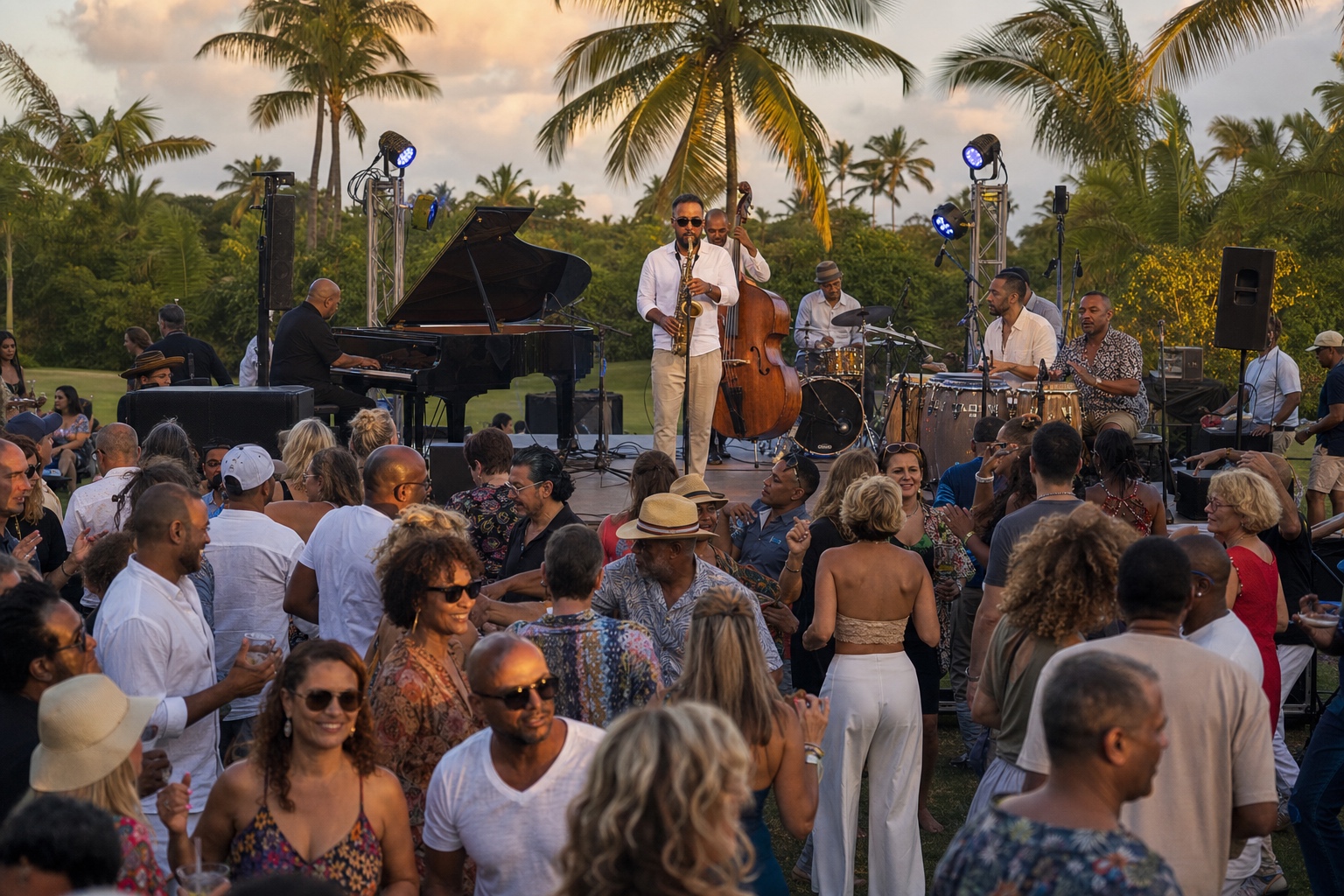
Late afternoon begins with beach activity winding down, instruments arriving, tables filling, and a crowd that mixes residents, Dominican travelers, international watersports visitors, and serious music listeners. Sunset changes the visual focus from ocean to stage.

Performances may move through straight-ahead jazz, Latin jazz, fusion, merengue, bachata, and Afro-Caribbean rhythm, with improvisation connecting traditions rather than separating them. Outdoor sound competes with wind and surrounding nightlife, while rain can create delays or tighter shelter.

Expect standing and seated areas, informal dress, restaurant spillover, and an evening that becomes livelier without losing the musicians at its center.

Festival Highlights

  • Jazz improvisation meeting Dominican and wider Afro-Caribbean rhythmic traditions
  • Atlantic sunset and trade winds creating a performance setting unique to Cabarete
  • Dominican musicians receiving focus beside visiting regional or international artists
  • Beachfront scale allowing performers and audience to share a relaxed but attentive atmosphere
  • Merengue, bachata, Latin jazz, and fusion revealing links across musical forms
  • The transition from watersports town by day to listening destination after dark

Getting There & Around

Where It Happens

The festival experience centers on Cabarete’s beachfront and nearby performance spaces, where stages, restaurants, public gathering areas, and the main road remain close together. The Atlantic and beach are part of the visual and acoustic setting rather than an offsite attraction. Precise movement depends on the program layout, but the compact town allows most evening activity to be grouped within one coastal corridor.

Getting Around

Walking handles the central beachfront corridor, but the main road is busy, poorly suited to distracted pedestrians, and less comfortable after dark.

Use a hotel-arranged taxi for returns to Kite Beach, Sosúa, or Puerto Plata, agreeing on the fare and pickup point before the final set. Motoconchos are common but require helmet, sober judgment, and comfort with local traffic; they are not a good late-night default for unfamiliar travelers.

Avoid driving after rum or through heavy rain. During the festival, choose one evening zone and remain there rather than making repeated road crossings between distant restaurants and stages.

Visitor Guide

Festival Food & Drink

Cabarete’s dining reflects Dominican staples, coastal seafood, and an international community drawn by surfing and kites. Begin with a proper early dinner before tables and kitchens fill, then keep festival snacking light. La bandera—rice, beans, and meat—offers the structure of a Dominican midday meal, while pescado frito and tostones connect directly to the north coast. Mofongo brings plantain, garlic, and pork or seafood into a dense dish better eaten well before a late set. Mamajuana is culturally visible but potent and variable; taste it sparingly from a reputable bar. Coconut water and bottled water matter more than another rum drink in heat and salt air.

Must Try

• Pescado frito — Whole fish fried crisp and commonly served with lime, tostones, or salad near the coast.
• La bandera dominicana — Rice, stewed beans, meat, and salad forming the classic Dominican lunch plate.
• Mofongo — Fried plantain mashed with garlic and pork crackling, sometimes filled with seafood or meat.
• Tostones — Twice-fried green plantain rounds served hot with salt or garlic sauce.
• Morir soñando — Chilled drink of orange juice, milk, sugar, and ice with a creamy citrus balance.

Budget & Costs

Beachfront lodging, airport transfers, watersports, restaurant meals, and evening drinks form the main costs. Central accommodation may cost more but removes repeated taxi fares and protects flexibility after late sets.

Eat the substantial meal at lunch or before the program, then set a modest festival drink allowance. Secure transport from Puerto Plata or Santiago in advance rather than bargaining while tired.

Include cash for small vendors, backup power or communications, sun protection, and a weather contingency. A cheaper room far along the main road may lose its savings through nightly transport.

Tips for First-Time Visitors

Separate the watersports plan from the concert plan. A hard afternoon of kitesurfing followed by several late sets can produce dehydration and poor attention, particularly for beginners.

Carry insect repellent, a light rain layer, hearing protection, and footwear suitable for both sand and uneven pavement.

Reserve dinner before the music crowd arrives and keep valuables out of sight on the beach. Listen closely when Dominican rhythms enter a jazz arrangement instead of waiting only for familiar standards.

Ask before photographing musicians or local audience members at close range. Save the hotel name and return route in Spanish, since loud music and weak beach lighting can make a simple late pickup harder to coordinate.

Safety

Traffic, ocean conditions, alcohol, theft, heat, and severe weather deserve attention. Cross the main road only with full visibility, avoid carrying a phone openly near traffic, and use transport arranged through a trusted property.

Swim or participate in watersports according to local flags, instruction, and ability; evening currents and alcohol are a dangerous combination.

Keep drinks controlled and valuables secured. Tropical rain can flood roads and disrupt power quickly, so follow local guidance and remain at lodging when conditions make movement unsafe.

Cultural Significance

The festival gives a small north-coast town a platform for music shaped by African diasporic rhythm, Caribbean exchange, and Dominican creativity. Jazz becomes a meeting language through which merengue, bachata, percussion, and contemporary improvisation can be heard in relation rather than hierarchy.

Local musicians and students gain visibility in a place internationally branded more often through beach sports. The event matters because it broadens Cabarete’s cultural identity without severing music from the coastal community that hosts it.

Plan Your Journey

When to Go

Arrive in Cabarete at least one day before the principal performance period so wind, transport, and the evening layout can be understood without urgency. Sunset and the first hours after dark deliver the strongest atmosphere, while later sets may become more social and crowded.

Coastal weather brings heat, humidity, salt air, showers, and wind strong enough to alter outdoor production. One evening captures the public mood; two nights are better for hearing contrasting artists and allowing a beach day that does not compete with soundcheck or dinner.

Keep the final morning unhurried because late music, road noise, and tropical heat make an immediate departure less appealing than the map suggests.

Where to Stay

Central Cabarete places the beach, restaurants, and nightlife within walking distance, making it the most immersive base, but street and bar noise can continue late. The eastern beach area offers quieter sand and access to watersports with a longer walk or motoconcho journey into town.

Kite Beach suits travelers focused on wind sports and morning activity, though evening festival returns require transport along a busy road. Puerto Plata and Sosúa provide larger hotel inventories but turn each concert night into a road transfer.

Choose a property with secure access, backup power, and a well-lit return route rather than selecting only by ocean view.

Bottom Line & Key Days

Bottom Line

Cabarete Jazz Festival makes the strongest case for travel after the sun disappears. The kites leave the sky, salt remains in the air, and Dominican rhythm begins to reshape the language of jazz beside the water.

Plan the road return, eat before the tables fill, and preserve enough energy to listen rather than simply continue a beach day into nightlife. The reward is a portrait of Cabarete that resort advertising rarely captures: musically curious, culturally Caribbean, internationally connected, and still governed by wind and sea.

Key Days

Coastal Arrival
Settle near the beach, arrange nighttime transport, and learn the walking route before dark.

Wind-and-Water Morning
Enjoy the coast early, hydrate fully, and leave the afternoon open for rest before music.

Sunset Opening
Eat before the crowd builds and arrive while the ocean remains visible behind the stage.

Jazz Night
Listen for Dominican and Afro-Caribbean connections, then use the prearranged return route.

North-Coast Farewell
Close with a slow breakfast, beach walk, or seafood lunch rather than an immediate transfer.

Ready to Experience Cabarete Jazz Festival?

You've explored what makes this festival special. Now it's time to plan your trip. Compare flights, book your hotel, arrange transportation, and take care of your travel essentials—all in one place.

✈ Find Flights

Loading booking widget...

Booking is completed on Expedia in a new tab.

🏨 Find Hotels

Search places to stay

Powered by Booking.com

Booking is completed on Booking.com in a new tab.

Rail & Bus Travel

Compare train and coach routes for the journey.

Compare Routes

Things to Do

Discover tours and attractions before or after the festival.

Explore Experiences

eSIM Mobile Data

Stay connected abroad without traditional roaming charges.

Get an Airalo eSIM

Travel bookings are provided by our trusted partners. We may earn a commission when you book through these links, at no additional cost to you.

Independent Editorial Standards

Every Follow the Festivals guide is independently researched and regularly reviewed using official festival information, destination resources, and trusted travel references. We also welcome verified updates from festival organizers, destination marketing organizations, tourism partners, and local experts to help keep our guides accurate, current, and useful for travelers.

Represent this festival or have a verified update to share? We'd love to hear from you through our contact page.