
Follow the Festivals

Dominican Carnival

Dominican Carnival

La Vega, Dominican Republic

2027-02-27 - 2027-02-27

The Story

Festival Overview

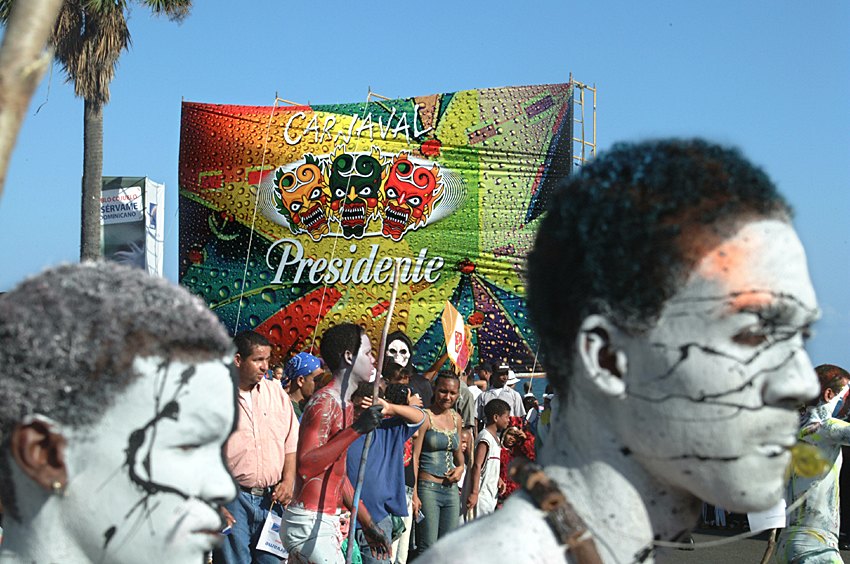
La Vega spends February turning its streets into one of the Dominican Republic's defining carnival landscapes. Diablos Cojuelos appear in horned masks and richly worked costumes, comparsas claim the avenue with coordinated movement, and the slap of inflated vejigas signals a tradition that is playful, intimidating, and intensely local. The celebration builds across successive Sundays before the national holiday brings another civic layer. Families, carnival clubs, artisans, musicians, and vendors all contribute to a city center that feels less like a parade corridor than a temporary public world. Visitors enter that world at street level, close enough to see beadwork and carved expressions, but responsible travel requires understanding the rules of interaction rather than treating masked performers as props.

Why This Festival Is Special

La Vega differs from a carnival designed primarily for distant spectators. Its identity comes from close street contact, the unmistakable Diablos Cojuelos, highly organized carnival clubs, and a city that repeats the celebration across the month. The masks are not interchangeable decoration: their horns, expressions, beadwork, and movement belong to a local tradition carried by named groups and artisans. The result is more intimate and demanding than a conventional parade. Travelers choose it to encounter Dominican carnival where the craft, neighborhood pride, civic celebration, and audience response remain inseparable.

Festival Experience

What to Expect

Before the principal procession, costume groups assemble, families claim curb space, and vendors work the streets under strong afternoon sun. Diablos Cojuelos then move assertively through the route, their elaborate masks and padded costumes matched by vejigas used within the tradition. Comparsas bring coordinated themes, choreography, and music, while spectators shift between watching, reacting, and making room. The crowd becomes most compressed toward evening, when sound systems and major groups hold attention at central intersections. Participation is physical and close rather than seated or detached. After the formal flow loosens, music, food, and conversation continue, but transport from the center becomes slower.

Festival Highlights

  • Diablos Cojuelos advancing in horned masks and elaborate costumes.
  • Carnival clubs revealing months of carving, sewing, and preparation.
  • Comparsas combining choreography, music, satire, and group identity.
  • The carnival avenue becoming a shared stage for performers and families.
  • Independence celebrations adding civic intensity to the closing period.
  • Parque Duarte and nearby streets remaining animated after groups pass.

Getting There & Around

Where It Happens

The public celebration concentrates along La Vega's carnival avenue and central streets, with Parque Duarte serving as a useful orientation point rather than a single viewing venue. Carnival groups enter the route from clubhouses and assembly areas, music vehicles create moving crowd pockets, and intersections become tighter whenever a comparsa pauses. The geography changes as the afternoon builds: a comfortable curb can become a dense standing zone within minutes. Arrange a meeting point one or two blocks beyond the busiest avenue and learn the exit direction before masks, music, and spectators fill the center.

Getting Around

Walking is the only reliable method inside the central carnival zone once closures and spectators take over. Arrive by taxi, organized transfer, or private vehicle well before the afternoon peak, then finish the approach on foot from a named point outside the route. Do not expect a driver to reach Parque Duarte after the streets fill. Move only once or twice between viewing areas, using parallel blocks rather than pushing along the active avenue. For a Santiago day trip, reserve the return and choose a pickup landmark beyond the barriers. At night, allow the densest departure surge to pass before walking to that point with companions.

Visitor Guide

Festival Food & Drink

Carnival requires food that can support hours of heat, standing, and noise. Eat a full Dominican meal before the street reaches peak density, then rely on smaller snacks and cold nonalcoholic drinks near the route. Sancocho or mangú belongs at a table; yaniqueques and chicharrón are easier to carry but should not replace water.

Beer and rum become more visible as evening approaches, yet the tight crowd and assertive street interaction reward moderation. Choose a restaurant away from the loudest avenue for the main meal and return with hands free.

Must Try
• Sancocho — A substantial stew of meats, root vegetables, plantain, and seasoning.
• Mangú — Mashed green plantains commonly served with onions and savory accompaniments.
• Chicharrón — Crisp pieces of seasoned fried pork eaten as a rich snack or meal component.
• Yaniqueque — Thin fried dough, salty and crisp enough for street eating.
• Morir soñando — Chilled orange and milk drink with a creamy citrus flavor.

Budget & Costs

Street viewing does not require a formal grandstand budget, but transport and lodging tighten around peak Sundays and the closing holiday. A central room costs more and carries noise, yet it removes the hardest post-carnival transfer. Santiago lodging may offer better value if a round-trip driver is reserved in advance. Food remains manageable at local restaurants and stands; private pickups, last-minute rooms, and repeated drinks create the larger increases. Carry small cash securely and keep a separate reserve for the return. Paying for a dependable transfer is more valuable than spending heavily on a viewing position.

Tips for First-Time Visitors

Learn what the Diablos Cojuelos and their vejigas represent before joining the crowd. Keep distance from active performers, ask before close portraits, and never step into a comparsa's path for a photograph. Establish a meeting place outside the route because mobile contact becomes unreliable in noise and density. Bring water, sun protection, minimal valuables, and closed shoes. Families or travelers uneasy with physical interaction should use an area identified for gentler viewing where available. One stable curb position reveals more than chasing every group through packed streets.

Safety

Dense streets, heat, vejiga interaction, and evening alcohol require attention. Keep valuables zipped in front, remain outside the path of comparsas and music vehicles, and follow any family or reduced-contact zone rules. Glass containers and weapons are prohibited, and visitors should respect every barrier and municipal instruction. Agree on an external meeting point before entering the crowd. If compression becomes uncomfortable, leave by a side street rather than forcing forward movement. Use an identified taxi or prearranged driver after dark, and walk to the pickup with companions instead of waiting alone beside a blocked avenue.

Cultural Significance

Carnaval Vegano is a living expression of La Vega's civic identity, sustained by clubs, mask makers, costume designers, performers, families, and local institutions. The Diablos Cojuelos carry a recognizable regional form, while comparsas turn social memory and contemporary creativity into public performance. Preparation extends far beyond the parade days, supporting artistic skill and neighborhood affiliation. The closing connection with Dominican independence gives the celebration an added national dimension without erasing its specifically Vegano character.

Plan Your Journey

When to Go

A Sunday in the middle of the carnival season offers mature costumes and strong participation without concentrating every expectation on the final celebration. The closing holiday period carries the greatest national energy, but it also brings the densest crowds, harder transport, and the least freedom to change viewing position. Afternoon is the principal street window; heat and sun precede a louder, tighter evening. Two nights are worthwhile for travelers who want one carnival day and time to understand the city beyond the route. A day trip can succeed when arrival is early and departure is arranged outside the central closures. La Vega rewards seeing the buildup, not only the most crowded climax.

Where to Stay

Central La Vega keeps the carnival avenue and Parque Duarte within walking reach, making it the most immersive base and the simplest choice after roads close. Rooms are limited and noise continues into the evening. Santiago offers much broader lodging and dining, but the road transfer must begin early and the return pickup should be outside the parade core. Jarabacoa provides a cooler mountain setting for a wider regional trip, though it is the least efficient option for a late carnival departure. Choose the center for street-level access, Santiago for hotel variety, or Jarabacoa when carnival is one part of a longer Cibao itinerary.

Bottom Line & Key Days

Bottom Line

La Vega stays in memory through a mask seen at arm's length, a comparsa turning an ordinary avenue into theater, and the realization that an entire city has prepared for this encounter. Come ready for noise and density, but also for discipline, artistry, and local pride. The journey becomes worthwhile when the Diablos Cojuelos are understood not as exotic spectacle but as a living language the city continues to speak for itself.

Key Days

City Orientation

Learn the carnival avenue, Parque Duarte, and an external meeting point.

Costume Arrival

Reach the center before peak density to observe masks and groups assembling.

Carnival Afternoon

Hold one respectful viewing position as comparsas and Diablos Cojuelos pass.

Evening Crest

Expect stronger music, tighter crowds, and slower movement near central intersections.

Planned Exit

Leave by a parallel street and meet transport beyond the road closures.

Ready to Experience Dominican Carnival?

You've explored what makes this festival special. Now it's time to plan your trip. Compare flights, book your hotel, arrange transportation, and take care of your travel essentials—all in one place.

✈ Find Flights

Loading booking widget...

Booking is completed on Expedia in a new tab.

🏨 Find Hotels

Search places to stay

Powered by Booking.com

Booking is completed on Booking.com in a new tab.

Rail & Bus Travel

Compare train and coach routes for the journey.

Compare Routes

Things to Do

Discover tours and attractions before or after the festival.

Explore Experiences

eSIM Mobile Data

Stay connected abroad without traditional roaming charges.

Get an Airalo eSIM

Travel bookings are provided by our trusted partners. We may earn a commission when you book through these links, at no additional cost to you.

Independent Editorial Standards

Every Follow the Festivals guide is independently researched and regularly reviewed using official festival information, destination resources, and trusted travel references. We also welcome verified updates from festival organizers, destination marketing organizations, tourism partners, and local experts to help keep our guides accurate, current, and useful for travelers.

Represent this festival or have a verified update to share? We'd love to hear from you through our contact page.