
Follow the Festivals

Bayreuth Festival

Bayreuth Festival

Bayreuth, Germany

2027-07-24 - 2027-08-24

The Story

Festival Overview

Bayreuth Festival asks for commitment before the first note. Tickets can be difficult, performances are long, summer heat gathers inside the theatre and the repertoire belongs entirely to Wagner. None of that is incidental. The Festspielhaus was created for these works, and its unusual acoustics make the orchestra seem to rise from beneath the drama while leaving unusual space for the voices.

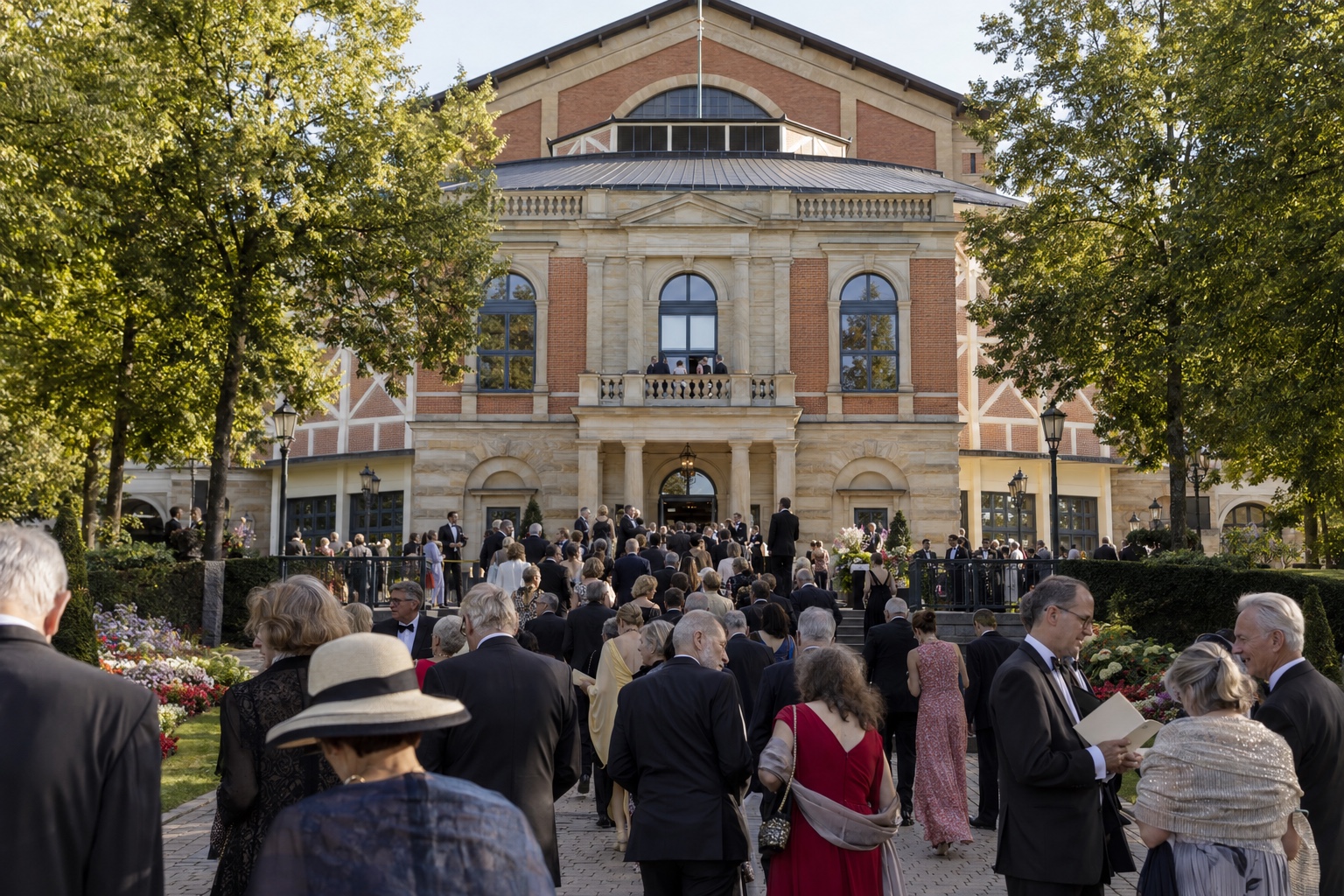
The result can be astonishing and exhausting in the same afternoon. Audiences climb the Green Hill in formal clothes, talk intensely through long intervals and return to a darkened auditorium where ordinary opera-house habits feel slightly altered. Bayreuth is not a sampler festival. It is a sustained encounter with one composer, one theatre and generations of argument about both.

My view is that the trip should include one opera done properly, not several performances survived for status. Read the work, prepare for the physical demands and leave time to think afterward. Bayreuth rewards concentration, and it exposes anyone who arrives mainly to say they were there.

Why This Festival Is Special

Bayreuth is special because theatre architecture becomes interpretation. Before a singer acts or a director presents an image, the hidden orchestra has already changed the relationship between sound and sight. The building tells the audience how to listen.

That control could make the festival feel frozen, yet the stagings often resist it. Directors place contemporary arguments inside a theatre built for one composer’s ideals. When the tension works, Bayreuth feels less like a shrine and more like a laboratory with a very long memory.

The audience is part of the experiment. Long intervals encourage judgment before the performance is finished. Conversations on the hill can sharpen perception or harden premature opinions. Learning when to speak and when to keep listening is part of the visit.

Most festivals offer variety as freedom. Bayreuth offers restriction: one composer, one theatre, a small repertory and enormous historical weight. That narrowness creates depth. It forces the traveler to confront how much complexity can remain inside works that the world has been debating for generations.

Festival Experience

What to Expect

Expect a performance day to occupy most of your emotional bandwidth. Wagner’s operas are long, the staging may be provocative and the audience arrives with strong expectations. Some productions divide the house sharply. That argument is part of Bayreuth, though no amount of disagreement justifies disrupting the performance.

The hidden orchestra changes the sound. Voices can emerge with unusual clarity, while instrumental color seems detached from visible labor. It may take an act to adjust. Resist the urge to compare every moment with recordings.

Seating is historic and comfort is limited. Legroom, ventilation and long stretches without movement can be difficult. Eat lightly, hydrate during intervals and use every break. Phones must be fully silent and remain away. Late seating may be impossible.

The audience dresses with care, but Bayreuth is less about fashion than ritual seriousness. A breathable suit, dress or equivalent polished clothing is wiser than theatrical formality that cannot survive heat. The evening goes best when physical planning disappears and the work has room to become complicated.

Festival Highlights

  • First Walk Up the Green Hill – The approach establishes the festival’s ritual pace. Arrive early, notice the audience gathering and let the climb separate ordinary travel from performance time.
  • Festspielhaus Acoustics – The covered pit changes the balance between stage and orchestra. Listen through the first act before deciding what the sound is doing.
  • Extended Interval – Long breaks are built into the architecture of the day. Eat, hydrate and discuss one concrete observation while resisting the urge to solve the entire production.
  • New Staging – Bayreuth productions often test familiar works through unfamiliar images. Read the director’s premise, then judge whether the stage earns its argument across the whole evening.
  • Chorus Entrance – The festival chorus can make collective sound feel architectural. Watch how staging and acoustics turn a crowd of singers into dramatic force.
  • Wahnfried Visit – Wagner’s home and museum complicate the composer, family and festival history. Go before the opera so the performance arrives with context, not worship.
  • Margravial Opera House – This ornate earlier theatre reveals another Bayreuth and another operatic world. Its scale sharpens understanding of what the Festspielhaus rejected.
  • Final Bow – Applause at Bayreuth can be passionate, prolonged or contentious. Stay present through the response; the audience’s verdict completes the social drama of the performance.

Getting There & Around

Where It Happens

The Festspielhaus stands on the Green Hill north of Bayreuth’s center. Its restrained exterior gives little warning of the radical theatre inside. The covered orchestra pit, fan-shaped auditorium and absence of conventional boxes focus attention toward the stage. Sightlines and acoustics differ by seat, but the building’s governing idea is collective listening.

The grounds matter almost as much during intervals. Audiences move outside, eat, walk and debate the production before bells call them back. Those breaks are long because the operas are long; use them for recovery, not a frantic dash into town.

Bayreuth itself provides essential context through Wahnfried, museums, the Margravial Opera House and streets shaped by festival visitors. The Festspielhaus is not the only significant building, and Wagner is not the city’s entire history.

Walk the route before the performance. The hill is gentle but noticeable in formal shoes and heat. Arrive early enough to pass ticket checks, find the seat and become still. There is no graceful way to enter late once the musical architecture has begun.

Getting Around

Bayreuth is compact enough that walking should lead the plan. The station, center, Wahnfried and Festspielhaus form a manageable urban triangle for travelers in ordinary shoes. On performance day, formal footwear, heat and rain change the calculation, so test the hill route beforehand.

Local buses and festival transport can reduce the climb, but they fill around arrival and release. Taxis are limited when an entire audience leaves together. If mobility support is needed, arrange it well before the trip and verify the exact drop-off.

Rail connects Bayreuth with larger German hubs, often through transfers. Build generous margins because a missed regional connection can threaten the performance. I would never rely on the final plausible itinerary into town.

Driving offers regional flexibility but does not eliminate parking and traffic near the hill. Follow official guidance and expect a walk. After the opera, let the crowd disperse or walk back into town slowly. The transition is useful: Wagner rarely benefits from being followed immediately by a frantic platform sprint.

Visitor Guide

Festival Food & Drink

A Bayreuth performance day needs food that sustains without weighing down the body. Eat a substantial late breakfast or early lunch, then use intervals for smaller portions and water. Restaurant timing near the hill is constrained, so reserve carefully or accept official catering. This is not the day for an experimental multi-course meal.

**Must Try**
• Bratwurst – Franconian sausages offer a direct, practical regional meal.
• Schäufele – Slow-roasted pork shoulder with crisp skin suits a non-performance evening.
• Klöße – Potato dumplings accompany many hearty Franconian dishes.
• Bayreuth beer – Local brewing traditions deserve a measured tasting after the opera.
• Lebkuchen – Spiced gingerbread provides a portable regional sweet.
• Seasonal cake – A café slice creates the right pace for an afternoon without a performance.

Alcohol before a long opera is usually a mistake. It intensifies heat, dehydration and fatigue. Save local beer for afterward or a rest day. During intervals, choose what lets you return alert. The culinary reward of Bayreuth comes from regional meals around the performance, not from turning intermission into a race against a buffet.

Budget & Costs

The ticket is only one part of the expense. Scarcity encourages costly packages, premium lodging and unauthorized resale. Begin with the official ticket process and set a firm limit before emotion takes over. No opera is improved by financial resentment.

Bayreuth hotels command festival prices. Staying near the center or station can reduce taxi dependence and protect the performance day. A regional base may look cheaper, but late rail, transfers and fatigue narrow the saving.

Allow for museums, program material, meals and formal clothing adjustments. You do not need a new wardrobe; well-chosen existing clothes are enough. Spend on comfortable shoes before ornamental accessories.

The open-air concerts provide genuine musical access without a ticket charge, while city museums create valuable context. Build them into the trip on their own merits.

The best value comes from one excellent, fully supported performance. Add a second only if attention and budget remain strong. Bayreuth can tempt visitors into collecting titles. A single opera that you were ready to hear will stay longer than an overfilled week of endurance.

Tips for First-Time Visitors

Read a synopsis and listen to the opera before arrival. You do not need scholarly command, but the musical and mythic structure is too dense to meet cold while also adjusting to the theatre. Choose one recording and one reliable essay; endless preparation can become another form of avoidance.

Verify ticket rules, identification and collection instructions directly with the festival. Avoid unauthorized resale. Bayreuth has enough anxiety without wondering whether the seat exists.

Dress well but intelligently. Breathable fabric, comfortable formal shoes and a discreet rain layer will outperform costume-like elegance. Carry little. The auditorium asks for stillness and has no interest in your luggage.

Use intervals deliberately: bathroom first, water next, food after that, conversation last. Bells are not suggestions.

My strongest advice is to stop trying to have the correct opinion. Bayreuth audiences can make newcomers feel examined. Listen closely, decide what moved or failed for you, and let that response remain provisional. The festival is most alive when the work continues to argue inside you the following morning.

Safety

Summer heat inside and outside the Festspielhaus is the most common physical concern. Hydrate before seating, use intervals for water and wear breathable clothing. Anyone with cardiac, respiratory or heat-sensitive conditions should seek medical advice and discuss venue access in advance.

Long periods of sitting can cause stiffness or circulation problems. Move during every interval without rushing on steps. Historic seating and crowded aisles require patience. Keep bags minimal and passages clear.

Rain makes the hill and formal shoes slippery. Use stable footwear and a restrained waterproof layer. During storms, follow staff instructions and do not shelter in unsafe outdoor areas.

Tickets and accommodation attract scams. Use official channels, verify communication and never send payment based only on social-media contact. Keep identification and ticket documents secure.

After the performance, crowds move toward buses, taxis and the center together. Walk on lit routes and do not push for the first vehicle. Fatigue after a long opera is real. A calm return, modest alcohol and a hotel route known in advance protect the final part of the evening.

Cultural Significance

Bayreuth is inseparable from Wagner’s artistic ambition and from the troubling political history attached to his writings, family and later reception. Any guide that treats the festival as pure musical pilgrimage is incomplete. The work’s power and the institution’s history must be held in the same frame.

The Festspielhaus changed opera production through architecture, acoustics and concentrated attention. Its influence reaches far beyond Wagner performance. Bayreuth also established a model of repertory renewal in which new stagings repeatedly challenge inherited interpretation.

That renewal can be sincere, fashionable or infuriating. The important point is that the works are not allowed to become untouchable monuments. Directors, singers, conductors and audiences reopen them each summer.

The city provides another necessary correction. Bayreuth existed before Wagner and contains histories beyond the Green Hill. Visiting the Margravial Opera House and ordinary streets prevents the festival from swallowing the destination whole.

Its cultural significance lies in unresolved tension: extraordinary art, radical theatre, institutional prestige and a legacy that demands moral scrutiny. Bayreuth matters because none of those elements can be comfortably separated.

Plan Your Journey

When to Go

The festival occupies the heart of summer, with performances spread from late July through August. Individual operas recur on different dates, so the correct travel window begins with the ticket, not with a general holiday plan. Opening days carry ceremonial attention and heightened demand. Later weeks can feel calmer, though desirable performances remain scarce.

Do not schedule a long-distance arrival on performance day. Delayed trains, hotel access and formal clothing create needless pressure. Reach Bayreuth the previous afternoon, collect any required documents and walk the route to the Festspielhaus.

Most performances begin in the afternoon and continue through extended intervals into evening. Summer can be hot, and the historic auditorium is not a modern climate-controlled venue. Choose breathable clothing that still respects the occasion. Rain is equally plausible, so protect formal shoes and carry a restrained waterproof layer.

If tickets remain unavailable, the public open-air events and city’s Wagner sites can still support a worthwhile visit. I would prefer an honest ticketless day on the hill to an inflated or questionable resale purchase.

Where to Stay

Central Bayreuth is the most satisfying base. It keeps restaurants, museums and the old town within walking distance while making the Festspielhaus reachable on foot for anyone comfortable with the climb. After a long opera, the ability to walk back through a quieter city is worth more than a luxurious room outside town.

Hotels near the station simplify rail arrival and the route toward the Green Hill. Properties farther out may offer parking and calm, but taxis become scarce around curtain and release. Confirm late reception, breakfast timing and whether the room has effective cooling.

Private rooms and guesthouses are part of festival tradition, though standards and cancellation terms vary. Book early and read carefully. Nuremberg can work as a fallback base, but a return after a lengthy performance adds strain and exposes the trip to rail disruption.

The essential hotel feature is recovery. You need quiet, water, somewhere to hang formal clothes and enough morning space to read or rest. Bayreuth is intellectually and physically demanding; an inconvenient room follows you into the auditorium.

Bottom Line & Key Days

Bottom Line

When the final chord ends in the Festspielhaus, applause does not immediately clarify what happened. The performance may have been musically overwhelming, theatrically maddening or both. Bayreuth’s maturity lies in allowing that confusion to survive the walk down the hill.

Prepare enough to recognize the work, then stop preparing and experience it. Arrive the day before, dress for heat as well as ceremony, eat with restraint and use every interval to recover. Visit the city’s museums so the institution is never mistaken for the whole destination.

The festival does not require reverence. It requires attention and historical honesty. Wagner’s achievement, the theatre’s innovation and the legacy’s darkness belong in one conversation.

My measure of a successful Bayreuth trip is not whether the traveler loved the production. It is whether the opera became harder to dismiss, harder to worship and more alive as a question. If the next morning begins with an argument you did not have before, the Green Hill has done its work.

Key Days

• Official Ticket Phase – Follow the festival process, verify every document and reject questionable resale. Build travel only after the seat and performance are genuinely confirmed.

• Arrival Afternoon – Check into Bayreuth, walk the route to the Green Hill and keep the evening quiet. Travel disruption should end before performance day begins.

• Context Day – Visit Wahnfried, the Margravial Opera House or another city museum. Use history to complicate the opera before the theatre asks for full attention.

• Performance Morning – Review the synopsis, eat well and prepare clothing for heat or rain. Stop sightseeing early enough for the body and mind to settle.

• Green Hill Arrival – Reach the Festspielhaus with ample time for checks, seating and stillness. The opening of a Wagner opera is no place for a breathless entrance.

• Long Intervals – Prioritize facilities, water and food, then discuss one precise observation. Return at the bell without forcing a final verdict too soon.

• Following Morning – Leave space to reflect before another performance or departure. Bayreuth’s meaning often appears after sleep, when musical memory and historical unease begin speaking together.

Ready to Experience Bayreuth Festival?

You've explored what makes this festival special. Now it's time to plan your trip. Compare flights, book your hotel, arrange transportation, and take care of your travel essentials—all in one place.

✈ Find Flights

Loading booking widget...

Booking is completed on Expedia in a new tab.

🏨 Find Hotels

Search places to stay

Powered by Booking.com

Booking is completed on Booking.com in a new tab.

Rail & Bus Travel

Compare train and coach routes for the journey.

Compare Routes

Things to Do

Discover tours and attractions before or after the festival.

Explore Experiences

eSIM Mobile Data

Stay connected abroad without traditional roaming charges.

Get an Airalo eSIM

Travel bookings are provided by our trusted partners. We may earn a commission when you book through these links, at no additional cost to you.

Independent Editorial Standards

Every Follow the Festivals guide is independently researched and regularly reviewed using official festival information, destination resources, and trusted travel references. We also welcome verified updates from festival organizers, destination marketing organizations, tourism partners, and local experts to help keep our guides accurate, current, and useful for travelers.

Represent this festival or have a verified update to share? We'd love to hear from you through our contact page.