
Follow the Festivals

Black and White Carnival

Black and White Carnival

Pasto, Colombia

2027-01-02 - 2027-01-07

The Story

Festival Overview

High in the Andes, Pasto’s Carnaval de Negros y Blancos turns the first days of January into a sequence of public play, satire, music, artisan competition, and enormous moving sculpture. The city’s steep streets carry comparsas, murgas, choreographed groups, and monumental floats whose color and scale reflect months of workshop labor.

The carnival reaches its symbolic center on Black Day and White Day, when participants mark one another first with dark cosmetic color and then with white powder or foam. These practices must be understood through the festival’s layered history rather than copied without context. Earlier parades, the Castañeda family arrival, and the great final parade give each day a distinct identity.

Why This Festival Is Special

Pasto’s carnival gives artisans the scale of architects. Faces, animals, myths, satire, and moving mechanisms rise above the street, yet every monumental float still bears evidence of hands shaping, painting, and engineering it. The city becomes a gallery whose works must move, turn, perform, and survive mountain weather.

The days surrounding the final parade add a second distinction: public play changes meaning as the calendar advances. Children, regional dance, comic history, dark color, white powder, and monumental art are not random attractions. Together they form a deliberate sequence through which Pasto examines identity and renews community.

Festival Experience

What to Expect

The cycle builds through distinct narratives. The children’s carnival centers young performers; the Canto a la Tierra showcases choreographed collectives; the arrival of the Familia Castañeda stages comic memory of travelers entering Pasto. Music, dance, satire, regional identity, and public participation become progressively more visible.

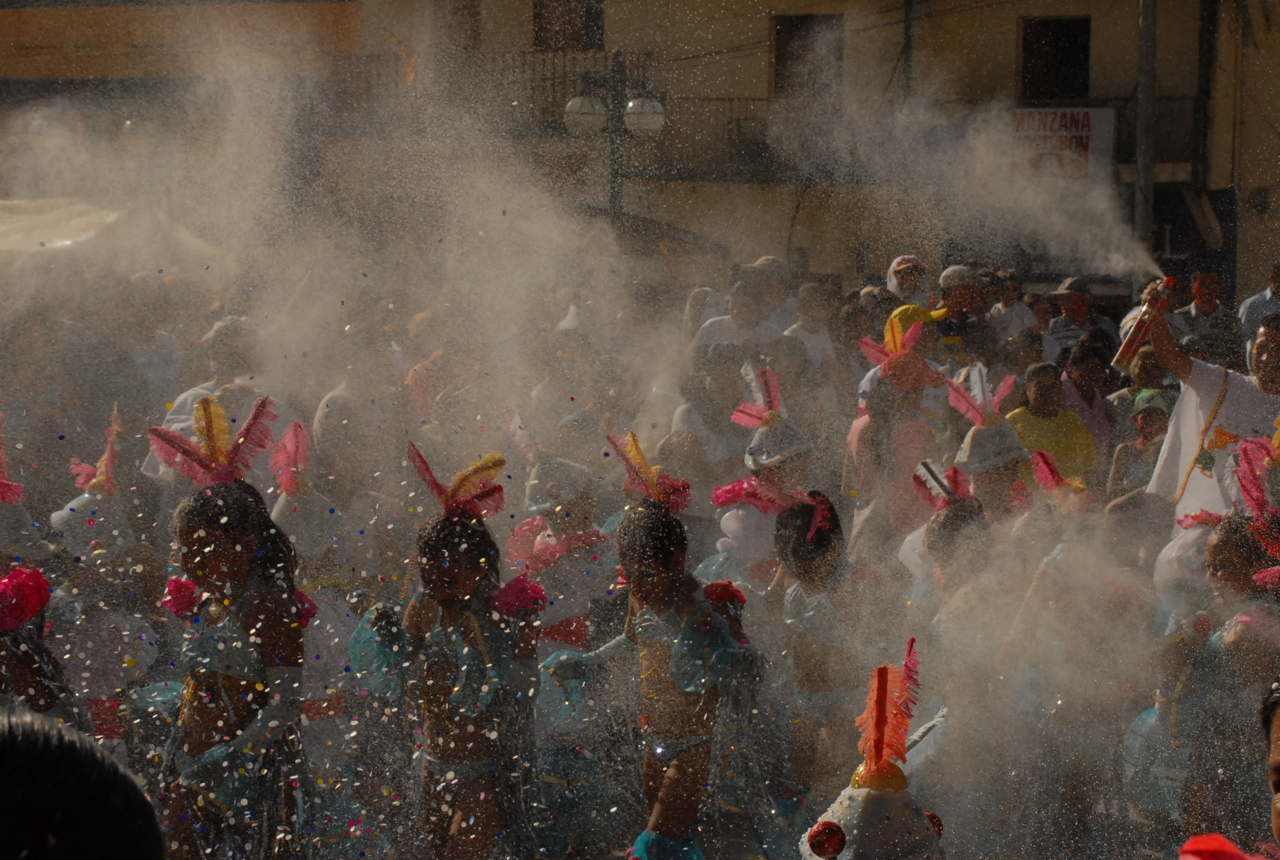
On Black Day, people use approved dark cosmetic color in a ritual of temporary social play associated with the festival’s complex histories of race, enslavement, freedom, and inversion. On White Day, white powder and foam spread through the streets. Participation should remain consensual: no one is entitled to touch, mark, or spray another person.

The Desfile Magno presents towering floats, smaller figures, musicians, dancers, and artisan teams in an hours-long procession. Detail matters as much as size—faces, mechanisms, painted surfaces, and political or mythic themes reveal workshop skill. Expect cold rain, strong sun, dense crowds, blocked streets, and a slow departure after the final float.

Festival Highlights

  • Watching monumental artisan-built floats negotiate Pasto’s streets during the Desfile Magno
  • Seeing choreographed Andean groups combine movement, costume, and live music
  • Following the narrative progression from children’s events to the Castañeda arrival and final parade
  • Learning the historical context of Black Day and White Day before participating
  • Meeting Pasto through the work of its carnival artists rather than through spectacle alone

Getting There & Around

Where It Happens

Carnival events use Pasto’s historic center, plazas, performance spaces, artisan workshops, and long parade corridors through the city. The Desfile Magno requires broad streets and controlled viewing sectors for floats whose height and turning radius are considerable. Smaller events may gather at different civic or neighborhood locations.

Routes and grandstand arrangements can change, so archived maps are unreliable. Barriers divide the city and make crossing difficult once a procession begins. Select one official sector, identify toilets and exits, and remain on that side. Artisan workshops should be visited only through authorized tours or invitations that respect active production.

Getting Around

Walking is unavoidable within the controlled center, but Pasto’s altitude, hills, rain, and crowds make short distances tiring. Use hotel-arranged or authorized taxis outside closure times and confirm a pickup landmark beyond the parade zone. Do not rent a car for central carnival days; parking and route changes create more problems than freedom.

Flights into the region can be affected by mountain weather, so avoid a tight connection to the principal parade. Arrive early enough to acclimatize and recover from travel. Save offline maps, carry the hotel address, and ask staff which streets remain crossable. After a parade, wait for the first crowd surge to pass before seeking transport.

Visitor Guide

Festival Food & Drink

Carnival days demand a substantial breakfast, safe water, and meals timed outside the longest parade wait. Pasto’s highland cooking is part of the destination, but busy temporary stalls should be judged by cleanliness, turnover, and proper heating. Eat unfamiliar rich foods gradually while adjusting to altitude.

Must Try

• Cuy — Roasted guinea pig, a regional ceremonial and celebratory dish best tried at a reputable restaurant.
• Empanadas de añejo — Nariño-style fermented-corn empanadas, crisp and commonly served with ají.
• Hervido — A warm fruit drink with aguardiente; enjoy moderately because alcohol and altitude interact.
• Helado de paila — Fruit ice cream traditionally churned in a metal pan, well suited to a daytime break.

Budget & Costs

Street events may be public, while grandstand seats, concerts, tours, and special programs can carry charges. January accommodation and transport sell quickly, so early booking matters more than searching for a last-minute bargain. Budget for a reliable hotel, airport transfers, rain gear, eye and phone protection, meals, and an extra travel day.

Buy seats and tours only from official or authorized sources. A central room may cost more but reduce repeated taxi journeys and difficult hill walks. Keep cash divided and secure, but use established payment points where possible. Weather-flexible flights and lodging provide real value in this mountainous region.

Tips for First-Time Visitors

Learn the daily sequence before choosing dates. Use only organizer-approved cosmetic products, protect eyes and skin, and ask before applying color, powder, or foam to anyone. Wear layered old clothing, waterproof shoes, sunscreen, eye protection, and a sealed cover for the phone.

Arrive early for the final parade and stay behind barriers; large floats require clear turning and emergency space. Ask permission before close portraits of artisans or performers. Pace the first day at altitude, hydrate, and limit alcohol. Do not treat Black Day as permission for racial caricature, costumes, or language detached from the local tradition.

Safety

Altitude can cause headache, fatigue, nausea, and shortness of breath. Rest on arrival, hydrate, eat normally, limit alcohol, and seek medical help for severe or worsening symptoms. Strong ultraviolet exposure persists in cool weather, so use sunscreen and a hat. Rain makes painted streets, powder, and curbs slippery.

Use only approved, non-toxic carnival products and keep them away from eyes and mouths. Never spray drivers, police, animals, unwilling participants, or performers managing equipment. Secure valuables in dense crowds, follow barriers, and give floats substantial clearance. Use trusted transport after dark and follow official crowd, weather, and emergency instructions.

Cultural Significance

The Carnaval de Negros y Blancos brings together Indigenous Andean practices, Catholic festive calendars, histories of African enslavement and resistance, mestizo urban traditions, and modern artisan culture. Black Day and White Day developed through changing forms of social play and inversion, but their meaning cannot be reduced to paint color or a simple claim that difference disappears.

Pasto’s artisans are central cultural authors. Families and workshops transmit sculpture, papier-mâché, painting, mechanics, satire, and parade design across generations. UNESCO recognition of the carnival as Intangible Cultural Heritage has increased international attention, while local responsibility remains essential to keeping the practice creative rather than turning it into a static display.

Plan Your Journey

When to Go

The principal carnival cycle runs from late December into the first week of January, with the most important public days concentrated from January 2 through January 6. Arrive before the opening January processions and stay through the Desfile Magno if the monumental floats are the priority. Each day has its own theme; there is no single interchangeable parade.

Pasto’s altitude produces cool mornings, strong ultraviolet exposure, rain, and rapid temperature shifts even in the same afternoon. Parade routes fill early, especially for the final procession. Confirm the current calendar, route, ticketed viewing rules, and permitted products through the official carnival organization.

Where to Stay

Central Pasto provides the simplest access to procession corridors, plazas, and museums but also the greatest noise and road disruption. Neighborhoods near a direct route to the center can offer calmer nights, though taxis may stop beyond closures. Choose a reputable hotel with secure entry, hot water, luggage storage, and staff who understand carnival transport.

Book well ahead of the January peak and confirm the actual walking route from the hotel to an approved viewing area. Altitude and hills make distance more demanding than a map suggests. A room away from the street helps recovery after long days, while flexible arrival is useful when flights over the Andes face weather delays.

Bottom Line & Key Days

Bottom Line

The Black and White Carnival is one of the Andes’ great public art traditions, with Pasto’s makers and layered social history at its center. The final parade is extraordinary, but its force depends on understanding the days that lead to it.

Arrive early, acclimatize, participate only with consent, and give the artisans’ work the attention it deserves.

Key Days

January 3 — Canto a la Tierra

Watch regional groups combine large-scale choreography, costume, and Andean music in a distinct procession.

January 4–5 — Castañeda and Black Day

Follow the comic family arrival, then approach dark-color play with historical context, approved products, and explicit consent.

January 6 — Desfile Magno

Take an official viewing position early for the monumental floats, performers, and artisan teams that close the principal cycle.

Ready to Experience Black and White Carnival?

You've explored what makes this festival special. Now it's time to plan your trip. Compare flights, book your hotel, arrange transportation, and take care of your travel essentials—all in one place.

✈ Find Flights

Loading booking widget...

Booking is completed on Expedia in a new tab.

🏨 Find Hotels

Search places to stay

Powered by Booking.com

Booking is completed on Booking.com in a new tab.

Rail & Bus Travel

Compare train and coach routes for the journey.

Compare Routes

Things to Do

Discover tours and attractions before or after the festival.

Explore Experiences

eSIM Mobile Data

Stay connected abroad without traditional roaming charges.

Get an Airalo eSIM

Travel bookings are provided by our trusted partners. We may earn a commission when you book through these links, at no additional cost to you.

Independent Editorial Standards

Every Follow the Festivals guide is independently researched and regularly reviewed using official festival information, destination resources, and trusted travel references. We also welcome verified updates from festival organizers, destination marketing organizations, tourism partners, and local experts to help keep our guides accurate, current, and useful for travelers.

Represent this festival or have a verified update to share? We'd love to hear from you through our contact page.