
Follow the Festivals

Cheung Chau Bun Festival

Cheung Chau Bun Festival

Hong Kong, China

2027-05-22 - 2027-05-27

The Story

Festival Overview

Three white bun towers rise beside Pak Tai Temple, but the island’s deeper work has already begun. Incense burns, residents prepare altars, Taoist rites address the unseen world, and the community observes a period traditionally associated with vegetarian discipline. The Cheung Chau Jiao Festival, widely known as the Bun Festival, is a prayer for peace, safety, and protection from misfortune rooted in local memory of plague and disorder.

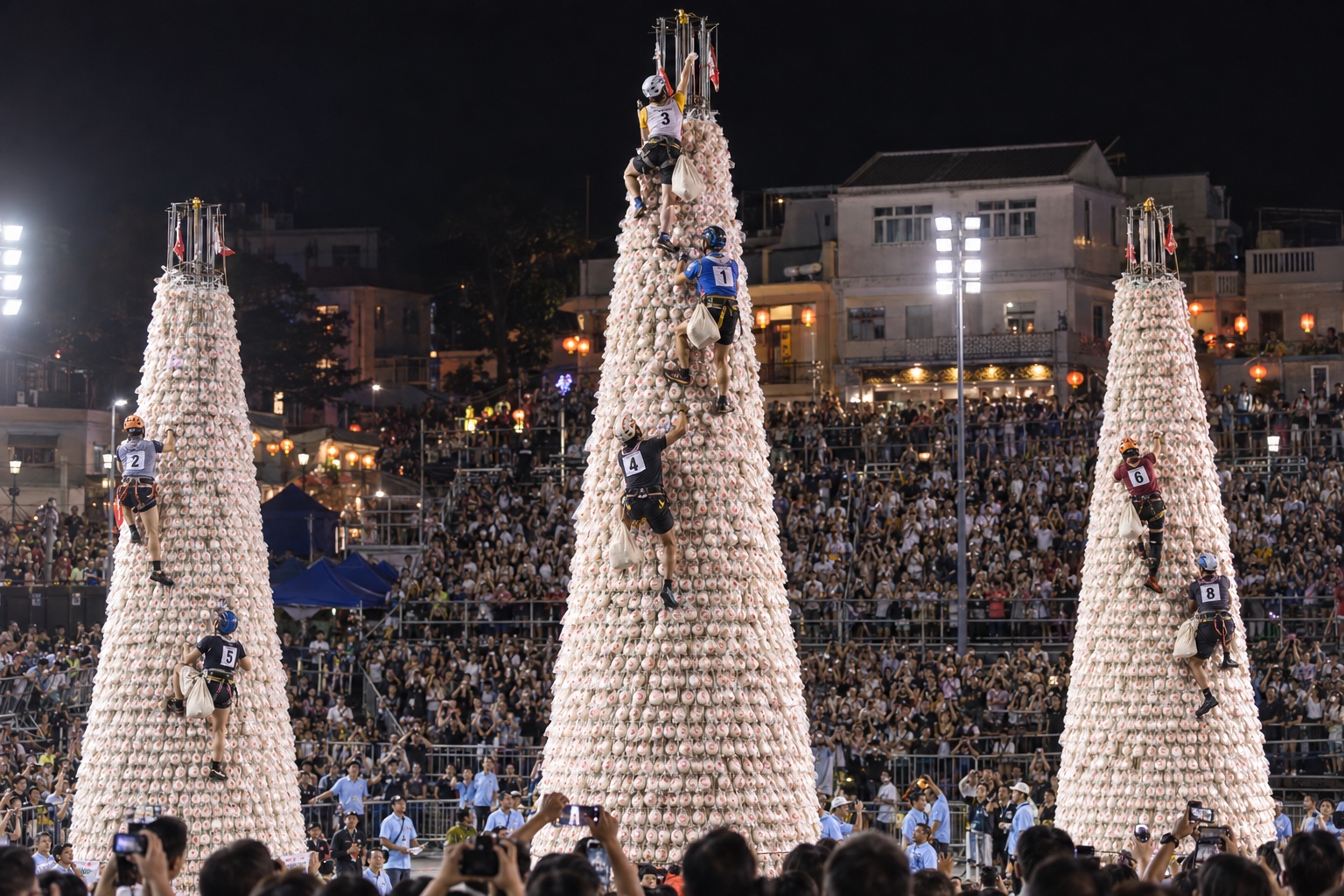
The famous Piu Sik parade and midnight bun-scrambling final draw enormous attention, yet neither should detach the celebration from its ritual center. Children appear to float above the procession on concealed supports, embodying deities, historic figures, or sharp contemporary commentary. Athletes later climb a purpose-built tower of replica buns. Between them lies an island community carrying tradition through narrow lanes crowded far beyond their ordinary scale.

Why This Festival Is Special

A humble steamed bun becomes architecture, blessing, costume, commerce, memory, and sport, yet the symbol never fully explains the observance. Cheung Chau’s narrow geography keeps every layer close: temple incense, family doorways, floating children, ferry crowds, and the tower waiting for midnight.

The festival is distinctive because adaptation remains visible. Dangerous scrambling became regulated competition; topical characters join sacred figures; tourism surrounds a ritual that continues to pray for communal peace. The island does not preserve tradition by freezing it. It keeps negotiating how the old purpose can move safely through the present.

Festival Experience

What to Expect

Religious ceremonies, deity processions, vegetarian observance, community offerings, lion and unicorn dance, Piu Sik floats, bun imagery, and the modern scrambling competition occupy different parts of the calendar. The parade’s “floating” children are mounted on carefully engineered frames and costumed to conceal support, often presenting topical satire beside traditional characters.

The competition uses safe replica buns on a regulated tower and trained climbers, a modern revival after the historic scramble was suspended following a 1978 tower collapse. Expect humid heat, crushing ferry demand, narrow sightlines, and restricted movement. A clear view is never worth blocking a resident or procession marshal.

Festival Highlights

  • Visit Pak Tai Temple before peak crowds and understand why prayers for peace stand at the festival’s center.
  • Walk the island on a quieter day when bun makers, altars, and neighborhood preparations remain visible.
  • Watch the Piu Sik parade from a legal position and notice its mixture of sacred figures and contemporary satire.
  • Eat a stamped peace bun while remembering that the symbol belongs to blessing, not merely souvenir culture.
  • Observe the evening build around the competition grounds without surrendering the return plan to the crowd.
  • Attend the midnight bun-scrambling final only with confirmed access and enough time to let the island clear afterward.

Getting There & Around

Where It Happens

Cheung Chau is a compact outlying island of lanes, harborfront activity, beaches, temples, and dense village housing. Pak Tai Temple and the adjacent playground form the ceremonial and competition center. The Piu Sik procession travels through narrow settlement streets where residents and visitors stand close to the route.

Ferries arrive at the main pier, after which movement is on foot. Crowd controls may create one-way routes and long detours despite short map distances. The island remains home to residents and a working fishing community; doorways, alleys, shrines, and emergency passages cannot become spectator space.

Getting Around

Ferries depart from Central Pier 5, with fast and ordinary services differing in journey time and deck experience. Special schedules and queue systems may operate on the main day, but capacity remains finite. Arrive at the pier far earlier than an ordinary island trip suggests.

Cheung Chau itself is walked, with bicycles impractical in festival crowds. Follow one-way pedestrian controls and never push against a procession route. Know the final return ferry before attending the midnight competition. If staying on Hong Kong Island, a missed sailing can become an overnight problem rather than a minor delay.

Visitor Guide

Festival Food & Drink

Vegetarian practice is part of the ritual period for many residents and businesses. Respect that context rather than treating meat-free menus as a novelty.

Must Try:
• Ping on bao, the stamped peace bun — steamed bread commonly filled with lotus seed, sesame, or red bean paste.
• Vegetarian dim sum — convenient and aligned with the festival period.
• Mango mochi — a popular island snack with fresh fruit inside soft rice dough.
• Tofu pudding — light, cooling, and useful in humid weather.
• Cantonese vegetarian noodles — a substantial meal before the parade.
• Water and electrolyte drinks — essential through ferry queues and exposed streets.

Buy from established island businesses and dispose of packaging carefully. Avoid eating in a way that obstructs temple access or residential lanes.

Budget & Costs

Public ritual and parade viewing are generally free, while ferries, food, island lodging, and any regulated competition admission create costs. Cheung Chau rooms become scarce and expensive near the main day.

Budget: Travel by ordinary ferry, visit before peak day, eat at local vegetarian shops, and skip the midnight final.

Mid-Range: Stay one night on the island and attend both parade and evening build without rushing.

Higher Spend: Use a comfortable Hong Kong Island hotel plus an island overnight, recognizing that money cannot purchase exemption from public crowd controls.

Tips for First-Time Visitors

Spend one non-peak morning on Cheung Chau if the itinerary allows. On parade day, carry water, sun protection, a compact rain layer, and minimal baggage. Choose one viewing position and accept obstructed moments; chasing the Piu Sik route through narrow lanes adds pressure to an already dense community event.

Ask before close photography of children, ritual specialists, or private altars. Do not touch buns or offerings placed for ceremonial use. Keep temple clothing modest and voices low. Families should write a contact number inside a child’s bag and establish a meeting point away from the pier.

Safety

Heat, humidity, ferry crowding, narrow lanes, blocked movement, and late-night fatigue are the central risks. Hydrate, wear sun protection, follow one-way systems, and leave dense areas before discomfort becomes panic. Keep children close and avoid elevated walls or unstable objects.

Never enter the parade route or competition zone. Follow marine, police, and event instructions. Strong swimmers should still avoid harbor water during festival operations; vessel traffic and crowd conditions make casual entry dangerous.

Cultural Significance

The festival is linked to local accounts of a nineteenth-century plague or misfortune, when residents invited ritual specialists, paraded deities, and performed ceremonies to restore peace and protection. Its formal name, Cheung Chau Jiao Festival, emphasizes the Taoist sacrificial and communal renewal tradition more accurately than the tourist shorthand about buns.

Piu Sik links religious procession with theatrical craft and social commentary, while the bun towers materialize prayers for peace and safety. The modern climbing contest preserves communal memory through regulated sport rather than recreating the dangerous free-for-all of the past. The event survives because island residents continually adapt form without abandoning purpose.

Plan Your Journey

When to Go

The 2027 festival period is expected May 22–27, with the principal parade and bun-scrambling finale aligned with the Buddha’s Birthday holiday. Exact ritual, parade, ferry, crowd-control, and competition times should be confirmed through Hong Kong and Cheung Chau authorities closer to travel.

Arrive on an earlier day for temple context and ordinary island life. On the main day, morning ferries fill quickly, the Piu Sik parade occupies the afternoon, and the bun-scrambling final occurs around midnight. Staying overnight protects the experience from the last-ferry calculation.

Where to Stay

Cheung Chau guesthouses and holiday rooms provide the only true immersion, allowing early temple visits and a late return after the competition. Inventory is limited, standards vary, and luggage must travel by ferry and handcart because ordinary private cars do not circulate on the island.

Central, Sheung Wan, or Kennedy Town on Hong Kong Island offer convenient access to Central Pier 5 for day trips. A mainland or Kowloon base adds another transit layer after midnight. Choose Cheung Chau for the full ritual rhythm and Hong Kong Island only if prepared to leave before the final or join exceptional late-ferry demand.

Bottom Line & Key Days

Bottom Line

Confirm the 2027 programme and ferry plan, stay overnight if the midnight final matters, and build the visit around Pak Tai Temple rather than the bun tower alone. Hold one parade position, protect residents’ access, and expect heat.

The celebration becomes meaningful when peace buns, Piu Sik, and competition are understood as parts of an island-wide prayer for safety and renewal.

Key Days

Context Day — Visit Pak Tai Temple, walk the lanes, and learn the island before peak crowds.
Festival Morning — Take an early ferry or wake on Cheung Chau and confirm route controls.
Piu Sik Afternoon — Hold one legal position and let the procession come to you.
Evening Interval — Eat, hydrate, and decide honestly whether the midnight final fits the return plan.
Final Night — Watch from authorized areas and allow long queues to clear without pushing.

Ready to Experience Cheung Chau Bun Festival?

You've explored what makes this festival special. Now it's time to plan your trip. Compare flights, book your hotel, arrange transportation, and take care of your travel essentials—all in one place.

✈ Find Flights

Loading booking widget...

Booking is completed on Expedia in a new tab.

🏨 Find Hotels

Search places to stay

Powered by Booking.com

Booking is completed on Booking.com in a new tab.

Rail & Bus Travel

Compare train and coach routes for the journey.

Compare Routes

Things to Do

Discover tours and attractions before or after the festival.

Explore Experiences

eSIM Mobile Data

Stay connected abroad without traditional roaming charges.

Get an Airalo eSIM

Travel bookings are provided by our trusted partners. We may earn a commission when you book through these links, at no additional cost to you.

Independent Editorial Standards

Every Follow the Festivals guide is independently researched and regularly reviewed using official festival information, destination resources, and trusted travel references. We also welcome verified updates from festival organizers, destination marketing organizations, tourism partners, and local experts to help keep our guides accurate, current, and useful for travelers.

Represent this festival or have a verified update to share? We'd love to hear from you through our contact page.